Miskatonic Tales: Journey to Innsmouth review (review copy provided)
Games in This Video
1 game is featured in this video — it unlocks as you watch.
Transcript
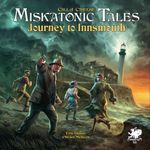
Hey everybody, this is Mike with the One Stop Co-op Shop, and today I'm reviewing Miskatonic Tales: Journey to Innsmouth. And disclaimer that I got a review copy of this one. And if you like the content on the One Stop Co-op Shop, consider supporting us through Patreon. You get early access to our videos and exclusive videos every month you can't see anywhere else. You can also listen to our weekly podcast for reviews and design discussions, or join the conversation and say hi on our Discord. So, I'm going to break my usual review structure here and not do a five and five for this because I was having a lot of trouble trying to fit in all the things I wanted to say into the five-point format cuz things are kind of all over the place with this one. And I think this game has major, major issues. And I just wanted to kind of detail why. There are some things to enjoy in here, so don't get me wrong. This is not like a game I I don't recommend for anybody. But yeah, let's dive into what's going on for this one. So, this is a game from Chaosium, who is, I think, also the company that currently publishes the Call of Cthulhu role-playing game. And as far as I'm aware, these are missions that are based on existing Call of Cthulhu adventures. I might be wrong about that. But anyway, kind of like Mansions of Madness second edition, this is sort of trying to let you go around and explore and find things in a Call of Cthulhu Arkham Horror-esque adventure.
You're going to have four characters out of a bunch to choose from. They each have slight differences in that they have a different special ability they can use a few times. They've got a different keyword. They've got a different sets of action cards. We'll get to those. And they start out with a different starting item or weapon. If you have fewer than four players, some of the characters can turn into these allies actually exist on the board, don't really do anything. They just basically give you extra actions to explore and to help with your dice tests. Which is a system that works decently well. Although, I will say it has major, major issues for true solo because then movement becomes too much of a hassle cuz you can only use cards from your own hand to move. But anyway, yeah, so you are investigating these things. And how it works is you'll have an adventure book. The first one is the Whispering Caves. Then there's a two others, so it's a three adventures total. And you'll be going through these books to see the locations you get to.
So, as you move into different little areas of this map I'll show in a second, you are going to these locations and it'll tell you which actions are available in these locations, which will take you to these passages in the book, which will sometimes tell you tests you have to take, uh describe the things you're encountering, start combats. Now, right off the bat, kind of annoying is that there's tons of errata in the game. Now, to their credit, they clearly caught them before the game fully went to print. But instead of fixing them in the booklets, which I guess had already been printed, they instead have these errata sheets. And then they have these errata stickers. So, when you get to a place, so I put the sticker in the book in this case. When you get to a place that has the sticker, you go and check oh, what was the errata? So, it's like, okay. It's it's a bit of a cludgy solution, but it's better than having to like look online for the errata and that kind of thing. Uh that being said, I still found many errors and things that didn't quite connect correctly and misspelled or miswritten words. So, they didn't get all the errata and that's still pretty annoying. And just on the topic of clarity and writing, the rulebook is not great. It leaves tons of stuff vague or under-explained. don't get me wrong. You can still get through the main meat of the game. You're just going to run into like weird situations where you don't quite know what they meant. And they've been hit or miss when I looked through the BGG rules forum.
Sometimes they would respond to questions, sometimes they wouldn't. So, you can still, again, get through the game, but it's not going to be the cleanest experience for learning and teaching. But yeah, so what's actually happening in the game most of the time, and you can go watch my play-through of this cuz I have a video of the first scenario, is you'll be moving your standees around, exploring those things, and moving into locations. And you can see they kind of add new locations to the map. So, it's got sort of a Seventh Continent, Seventh Citadel vibe to it. Or again, Mansions of Madness second edition. So, your character will have a mix of stats and basically they will randomly get, generally, five of those cards. And these become your five actions for the turn. So, let's say like explore a bookcase, I got to play one of my cards. To open up that box, I got to play one of my cards to see what's inside of it. But then also, you'll have tests that use your cards. This one will be like, okay, you have to do a blue power test and get at least two successes. And how that works is you can play cards that exactly match the test, like this power card that'll give me an automatic success. Or you can play cards that are adjacent cuz basically the attributes are kind of like in a circle of six. So, in this case, like constitution would give me a die roll.
And that goes into skill tests. So, when you take a skill test, even if you used enough cards that give you the exact stars successes you already needed, you have to roll one of these red dice. And then additionally, you can roll as many white dice as your skills gave you. And some of them are going to take away stars, some of them are going to add stars. You can spend magic as a recurring resource to re-roll some of the dice. There are exploding dice. Although, again, because they can sometimes give you a minus star, they're not necessarily that great. So, it's a bit of a swingy dice system. I don't think everybody's going to like it. But I found you do tend to have enough magic that re-roll statistic. And you can often just play enough cards to guarantee the stars you need that we weren't really failing skill tests very often. So, that part's fine. The part that I don't love in the skill test is the red die cuz it is a 50/50 chance, there they are, of getting one of these black results, which is going to put tokens on this board here. And when you build up enough tokens of a given type, you'll get these negative events that have terrible things happen to you, like adding ongoing negative cards to your deck, that sort of stuff. And this die cannot be re-rolled. So, I just found it, compared to the white dice, a very frustratingly swingy aspect of the game because sometimes you would just roll a bunch of these and you would have like a lot of negative stuff going up your deck very early. And sometimes you would just roll a lot of stars. And just, you know, the lack of re-rolling when you have re-rolling so easily for everything else in the game, I found a little bit annoying. But so again, you're using these cards as basically your actions.
So, it's kind of like each player usually has five actions on a turn. You can also play cards on each other. So, if I'm in your room and you're taking constitution test, I can use my cards to boost your test. I think that works pretty well for co-op. Although, honestly, we found very few reasons in most of our playing of the game to split up at all. So, it kind of often just became sort of a conglomeration of actions and stat boosts. But that's okay. That was kind of our play style. Some of the scenarios allow splitting up more successfully than others. The very first one, the Whispering Cave one, is super linear. I'll get to that later. Now, another wrinkle with the cards is that as bad things happen, as you get into fights, you'll add injury cards to your deck. As you see Eldritch things that are horrifying, which happens all the dang time cuz it's Call of Cthulhu, you'll get stress cards to your deck. And when you're drawing at the beginning of your turn, you draw out a five cards. But if you get stress cards or injury cards, if you get too many, it can cause damage to your character. Eventually, your character can be defeated. But you can choose to draw more cards if you would like to to try to still get to a full hand of five actions. But you might draw more injuries. You might draw more stress. So, it becomes a semi-interesting push-your-luck element.
Although again, I just found it kind of frustratingly swingy at times. And also, it's just kind of annoying to have your deck full of negative stuff. Although, I guess it does represent the sort of theme of Eldritch Horror pretty well. Now, they do have an action that allows you to get rid of these cards from your deck if you spend some power or some constitution. We found that way too punishing as an option because that's a single test for every single one of these cards you get you want to get rid of. You can't like get rid of three stresses at once. And you have to roll the red die every single time, which could advance those negative event tracks. So, yeah, it didn't really feel like it was a real option in our games. So, overall, the card play is fine. You know, again, it's just kind of a way to mechanically mandate a limited number of actions cuz once you run out of cards, you all end the round. And that'll move a time tracker along this little track, triggering certain events, and eventually triggering an auto loss of the game if you get to the end. Which is fine, you know, I don't want these games necessarily allow you to explore forever. I think a time pressure element is good. And it's used to better effect in some scenarios. Like the second scenario actually has like enemies popping up and hunting you. That's pretty neat. So, I do understand why they have the limits of actions in your hand. I'm not sure if it's very thematically interesting that like sometimes I'm strong, but other turns I don't draw any my strength cards and I'm not strong. I don't love the negative cards you draw. But I mean, it all works fine to give sort of a limit on what you can do. And also have some cooperative options in how you help your fellow players. What are you helping them to do? Well, it's a ton of reading. It's a ton of reading.
So, like I want to study the intricate patterns on the door. I got to flip to 108. And then after we read a really long paragraph that says I didn't find anything. By the way, very odd choice. At every single end of like a paragraph you read, it says your investigation stops here. I don't know about you all, but if you've like played old Choose Your Own Adventure games and such, you will remember that they would often say like your adventure ends here or your, you know, investigation ends here. So, they sort of use phraseology that makes it sound like you are dying every single time you read anything in the book. Not really a big deal, just kind of an odd choice. But yeah, so this is a game where you're going to be flipping to pages, reading stuff over and over again. You just got to be ready for that. When I played it multiplayer, it's often put some players to sleep, you know, because there's just so much. And and here's the thing. Here's really why this is an issue because I'm sort of burying the lead here. You know, a lot of games have reading books. A lot of games have apps that you read in. That's not necessarily a big deal in and of itself. What is a big deal, and it's a big, big deal, and it's one of the biggest kind of cons for the game, is that 95% of what you're going to explore is vague, unimportant nothingness. So, here, let's uh show you. So, you go into this room, all right? You can examine the barrels in the corner. You can look at the sealed wooden crates. You can look at the shelves. All right? So, I'll spend like one of my cards for the turn or my allies' cards for the turn to go.
And okay, I got some tools. Like that one was actually useful. But very quickly, you'll stop getting useful items. And there's just so many things to investigate. And every single one of them has a long paragraph to read of like kind of nothing, like describing the wood in the barrel or describing how the seaweed smells. It just gets very, very repetitive, and very, very dull. It feels like grinding through exploration is easiest way I can describe it. Cuz you'll have these objective cards that tell you the kind of stuff you're wanting to do, and they'll say what you need to find. So, it's like, "Hey, you want to find two keywords connected to feeling better." These might be keywords you mark from exploring things. It might be keywords that are on items you find. But, that's kind of all the clarity that you get. You're just kind of blindly looking through every nook and cranny.
Like, "Hey, I'll look under the bed. Hey, I'll I'll look in the shelf." I mean, you don't have to do that. You could just rush through things and not explore very much at all. But, then you miss tons of stuff. The game actively kind of teaches you that you should be an obsessive like nook and cranny searcher, which I find a little frustrating. You know, there's sort of a rule of thumb for any of you out there who are RPG players, that if as a DM, like if I'm running Dungeons & Dragons, if I have a trap in a hallway once, then I'm going to teach my players that they need to slowly investigate every square foot of a hallway in case there's another trap. So, you would lead to this very like slow-paced drudgery of gameplay. And Miskatonic Tales does the exact same thing in a board game format. They teach you very quickly that if you don't investigate every single stupid little piece of a room, that you're going to miss useful items and major things that could help your investigation. So, the game pushes you in a repetitive grindy fashion, which yeah, can just be very frustrating. Now, don't get me wrong, eventually you do find some cool stuff. The maps aren't too big, so it's not like you're moving through a billion places. And the later scenarios vary things up with kind of like these overland maps that you can move around, and I found that a lot more interesting than just kind of the mapped out tiles here, and they go back and forth. So, I did appreciate some of that design choice. I thought that was pretty cool. Another big part of the game is, as you're investigating, I mentioned keywords, so you're marking them off on this sheet. And then when you finish an adventure, you check how many of each keyword you got, and which like items you got, and it's going to give you percentages for different things you could have figured out. This is
basically like what your ending or your conclusion is generally made up of. And then you get to this final page that basically for each of them, it's like, "Hey, did you get at least this many clues of this? We'll just tell you what happened. Did you get at least this many clues? We'll just tell you what happened." So, I don't know. It's very odd for me. Like, don't get me wrong, the scenarios do have an ending where it's like, "Hey, you actually managed to escape. You actually managed to survive." But, then like kind of the wrap-up is just telling you stuff you already know if you got enough of the things or not telling you stuff. You know, I guess it's nice if you weren't paying attention, so you can kind of have something like explained to you like a dummy. Like, "Hey, do you know it was cultists?" Uh but,
here's another thing. Just kind of looking at the story in the game in general. It's so It's Innsmouth again. So, I don't know if y'all are like me, but if you've played video games and board game adaptations of Lovecraft and related works for years and years, like how many times have you seen Innsmouth? How many times have you seen fish people? How many times has it been Dagon? You know, it's it's the same stuff, and they really don't do anything interesting or new here. Spoiler, there's cultists. They're doing bad stuff. People got involved with them and died. Like, that's that's it. That's basically
You know, there's a bit more going on in the three scenarios, but that's kind of it. And the other annoying thing is that the scenarios don't connect very well. It feels like they took three sort of separate adventures from the RPG and just kind of cobbled them together a little bit. Especially the first one. The first one feels like very distinct. I mean, it has like the same monsters, and it has the same maybe antagonist sort of. But, then the second one is kind of jumps off in a totally different direction. And then the third one is like kind of connected to the second one like a little bit. I don't know. I I did not find the story very cohesive. Uh the writing, even when you take away the parts that are just endless drudgery and saying, "Hey, you found another barrel." Even when you get to like the parts that are actually focused on the storyline, it's still repetitive and not that exciting. That's if you take away the errata. So, yeah, this game was unfortunately a pretty big miss for me, as you can probably tell from this review. Uh now, who might like it? I do think if you want to get the experience of playing the Call of Cthulhu role-playing game, and you don't have a DM, or you want to have a more kind of organized experience with more mechanical bells and whistles, I think this is doing that pretty well. You know, it has the whole exploring things.
It has your character slowly going crazy. And it has very uninspiring combat. Sorry, I should have mentioned combat. Like, sometimes you'll just get a guy you got to fight, and you just like do a test for combat or do a test for like talking to him, and then you do it again usually, cuz each person usually has like two or three steps to the combat, and then that's it. And then usually they die, and you loot their body. Like, literally, there might be two to three combats in each scenario, and that's pretty much everything that happens. So, it's not an exciting combat system. Not that it needs to be. I don't think combat is is the focus here. But, combat is almost like a worse version of the regular skill test you do throughout the game. So, yeah, if you want to play sort of a Call of Cthulhu-ish RPG experience, I think it could be fun. Uh if you have players that really love reading a lot and exploration and don't mind just like paragraph after paragraph, I think the cooperation kind of works well. So, if you have a group that's like that, then you could enjoy it that way. If you want a good story and like interesting mysteries, I would not say the game provides that. Um so, yeah. On the other hand, you might want to avoid this one if you don't like swinginess, cuz there's a lot of swinginess in the red dice. Uh there's a lot of swinginess in the card draw and how many of those like sanity killing cards you draw. If you want a game that respects your time, I don't know if that's really the case here, cuz it really does feel like drudgery. It just takes forever to get through the scenarios. Also, replay-wise, there's not very much at all. There were some things I missed in the second and third scenario. I didn't go everywhere. The first scenario is so linear, it's kind of hard to miss anything. But, still, you're seeing the same beats, and you find out what the general story was. So, I really don't see almost any need to
play through these scenarios again. And yeah, I don't know. This game is just rough to recommend because there are way better games doing similar things. If you want a game where you're moving along little maps like this and investigating things and finding cool discoveries, play Seventh Continent or Seven Citadel. If you want a game that's Cthulhu-themed where you're moving around looking at benches and tables and cabinets, uh play Mansions of Madness second edition. It's a little bit more expensive, but it's got a lot more content. It's got more replay, and uh it respects your time better. I mean, it's still a very long game, but like it keeps the uh
you don't have to read nearly as much when you look at like a random cabinet, and I think it just has more kind of dynamic and exciting things going on. If you want a game that has Cthulhu theme and throws in a lot of bells and whistles, I would play Arkham Horror: The Card Game. I mean, that's a a somewhat different beast, but uh this game like tried to do things kind of in a complicated way. It definitely has like way more tokens than it needs, way more cards than it needs. So, at some point you're kind of getting to Arkham level, and Arkham I would say is a way more interesting and exciting Arkham style game than this one. Or if you want to see Call of Cthulhu in action, maybe just play Call of Cthulhu, cuz then you can actually like do whatever you want instead of being very limited by what the game allows you to try. So, there you go. That is Miskatonic Tales: Journey to Innsmouth. Hope that longer review was useful. Uh again, not trying to hate on games. That's not really what I do the channel for. Uh but, this one I just think has a lot of potential issues for it. But, hey, you might have a great time with it. Uh it can work for solo.
It can work for co-op. If you want to have some Arkham adventure, you can go give it a try. But, it definitely was not for me. All right, thanks for watching everybody. Special thank you to our biggest Patreon supporters, Jay William F, Steve Wren, Casey W, Andrew R, and Chris C. We'll see you at the next stop.