Beyond Solitaire Podcast 174: Dave Neale and David Thompson on War Story
Games in This Video
1 game is featured in this video — it unlocks as you watch.
Transcript
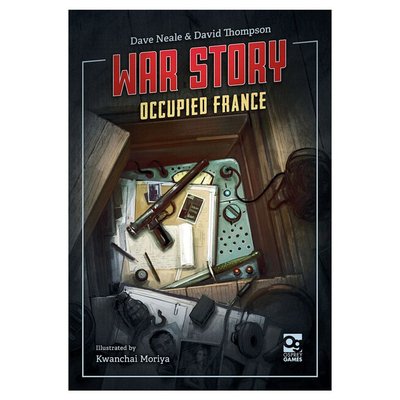
it's adbreak time I'm proud to announce that the beond soliter podcast is sponsored by Central Michigan University Center for Learning through games and simulations 500y old vampire Jason Cox's Cooperative role playing game is now shipping and even better there's a Halloween sale for orders placed before the end of the month on top of that there is a new crowdfunding campaign on the horizon in mid January 2025 look out for keep the faith a role playing game about building a religion which will be on backer kit the designer is Greg lauring Albright who designed a Hoy and I'm very proud to say that I'm at work on the curriculum guide so I'm extra excited about this one also if you want to support this podcast please visit patreon.com onol and let me keep the lights on but for now let's get on with the show hey Gamers this is Liz Davidson for be on soliter and this week on the podt I have two special guests I've got routine show favorites or curse David Thompson depending on how you label it and then I also have Dave Neil and they are the Cod designers of War story how you doing today gentlemen good yeah good thanks for having me yeah yeah it's bright and early for us Dave thanks for phoning in from a few hours later in the UK um but I was really interested Ed by War Story um because not only do I really enjoy it as a game um and I I don't always enjoy story games so I kind of wanted to like get kind of down to the bottom of that um but uh but I also just um I'm Amazed by the amount of planning that goes into a game like this so I just want to know um what first of all how did you get started uh with the
plan to make this game together and what was the original scope that you were planning well we met each other in Cambridge when David was here and then and then yeah you wrote a bit about what happened next in the designer diary David right yeah I think you just kind of cover yeah so so like Dave Dave mentioned um we met in Cambridge 2014 is right when I first moved there and and we so we're part of a a large design play test group in Cambridge um the the sort of normal thing every other week we would meet and we would all just bring games play each other's games like you do um Dave and I often played each other's games so we were familiar with each other the type of work we did and this is a generalization I mean obviously we each do different things but most of Dave's games have to do with narrative driven games or deduction type games most of mine either are um you know military related war games that kind of stuff so again over generalization but that's a general theme and so um um we knew each other for for you know the four years I lived there and then I came back to shiel in 2019 and Dave was also there and so we were talking then and Dave had brought up the idea of a collaboration and it would be basically this Fusion of you know a narrative game with a sort of a military history backdrop we talked about it we both said hey we like this idea um but we really didn't do anything
with it after that for about a year and then Dave reached out to me um and just message me and say hey I've been thinking about the idea we discussed um what do you think you know what kind of stories could we tell with a narrative driven game from a military history perspective that would be sort of new and fresh and that was the that was the origin and after that message um I went back and looked at the Timeline when I was writing the design diary on Board Game Geek and it was interesting we went really quickly like from that message for the first year or so work um like there was a lot of a flurry of activity right from that but that was that was the Genesis is like what what would it look like to combine a narrative game with with a military history background and at that point we had no idea I guess of exactly what we were going to make like what the structure would be like or the complexity or the replayability um yeah I mean in my head it could have been something you know it could have been something really close to like Sherlock CL con something detective even where where you're just trying to S of almost solve something but in a military background or it could have been something um much closer to like a a World War II kind of battle game like some of the stuff David's done before but with more story alms I don't know it could have gone either way but we kind of yeah went through a lot of different ideas possibilities and it gradually narrowed down to what it's become what did some of the earlier I
guess iterations look like as opposed to what it structurally looks like now simpler which is funny because if you I mean it's very simple right like as a player as a player it's very simple from Rules complexity yeah um from a I don't want to speak for you Dave but certainly from a narrative complexity in terms of um the web of internet connectivity it was much simpler um and that was an that was an interesting artifact of the constraints we were working with to begin with which was basically Dave's brain right you nothing against Dave but he had to hold all of the all of the interconnectivity like mentally which was crazy so we this was I mean this is again just a generalization of the flow but basically what would happen is Dave and I would get together and we would talk about and keep in mind we were trying to come up with like what kind of game this is the the actual com mechanics of the game and the story all at the same time right so that early period was a lot going on but um we would get together and we talk about okay what's this the general flow of the story and then we would each kind of go off and I would largely work on some some of the con combat stuff and Dave would largely some of the non-combat stuff we'd come together we'd throw it together Dave would have to pull the narrative together mentally and keep it all in his head which was insane I don't
know how he did it and made it through um and we were using like draw.io which is just this really basic uh online like flowchart software it's not designed for tracking complex narrative stuff like this and so we just had those those limitations um but the the real narrative complexity was introduced when we switched to twine because twine is software designed to track that type of complexity which was great because it it it made our flow easier to track and sustain but it also introduced the ability for us to have much more complex narratives which we which we probably um dove into a little too too much I mean it kind of makes the game it yeah the game was already I guess in the first version when I was sort of tracking the entire story and the variations and the various parts in my head we still got to the point where it was still there was still enough variance in there that like um me and David wouldn't always know what the best decision was or where the best place to use tokens were in the game and these kind of things like it wasn't always obvious because there was so much variation and then once we got the twine thing that thing kind of yeah escalated to a whole new level in terms of like there were certain decisions in the game which because of the narrative like there is a clear best decision there are a few of those but the vast majority of the decisions through the game there's no obvious right really there are like two options and they'll have different
effects but which one is best depends on what you've done before what team you've chosen how many tokens you've got left if you've got certain equipment and so the possibilities are very open in that way and Twine helped I think get to the point where there's that much that much complexity but yeah the early version was was definitely simpler but I think also maybe less satisfying like people enjoyed that that mission I mean that's what we originally showed to Osprey right but it was I can't remember it didn't take it took an hour to play or less I think maybe first did it and it didn't have like as much of a strong Arc I don't think I don't think you felt you were diving as deeply as the missions that are now in the box which have ended up feeling yeah more Hefty and like a like you're really getting stuck in when you when you play one of them so this actually leads me to another question so it sounds like twine is something that you hadn't used before but that you have started for this project so Dave how did you do like I'm a big sh homes Consulting detective person actually um so how did you do the Baker Street a regulars and how I guess did that kind of scope differ from doing something like this yeah with that it was it was all in my head I kept it all in my head and I've designed other similar stuff keeping it all in my head but then there's a point where it does become I have there was one game which I haven't actually finished which is entirely different well similar to war story in some ways detective in some ways but anyway I was designing this game and again keeping it all in my head
and it has quite a lot of narrative complexity and it's got the like Circle this letter if you've done this circle this if you've done this state tracking thing but then with that one I had a gap of like a year and then I went back to it and I had no idea what the hell was going on like because it's all in my head like it took me like two hours maybe just to understand why one paragraph linked to another one or why a letter was circled in one place um and sometimes I was like well that must be a mistake that shouldn't be circled there and then a few hours later I'd be like oh now I understand when I did it so like getting back into it when I'm just draging it in my head is is tough so twine is very useful I have found twine has some limitations with some of the stuff I've tried designing in in certain things it doesn't seem very effective at tracking but works perfectly for War Story it seems to do exactly what we want for war story so that that was uh that's been the the main time I've used it properly has been War Story and it's yeah good fit interesting I guess one I guess difference that I noticed having played both Consulting detective and War story is that I could not hold a Consulting detective thing in my head either although it's so like Kos but I mean I guess it is a contained mystery like you've also done stuff for unlock um so how much of that kind of like closed mystery or like escape room mentality worked for war story and then what had to change to make the game like
flow better I think that was part of what we kind of discovered as we went along like we weren't really sure what this thing was when we began and or how close it would be to those other things like how close to unlock or consern detective and yeah with Consulting detective it's mainly like this one mystery thread um so I would be writing in that one story I'd be writing in the main clue points I felt would give the information to lead to the conclusion and then you'd be filling that out with like okay now let's add in the murder victim's workplace let's add in these other places and you fill out the world um but there would be this one kind of thread that the player was aiming to find and so you were kind of limited in that way whereas an unlock is similar there's like one thread you're aiming to find you adding other stuff around it there might be a few distractions but there's kind of one thread I played around with that a little bit my unlock ones have a bit more variability you can kind of go from different directions which then Recon converge and in consult detective I change stuff up for like a couple of the cases in the Box particularly the last one has like sort of diverging has three different endings and stuff like that um but still broadly the same and War Story then yes was quite different we realized I think it was connected to the fact that we realized players were going to have to be able to lose they were going to have to be able to fail they were going to have they they had to be able to die because otherwise it wasn't going to feel like war and you know in something like un detective or unlock if you if
you die if you got partway through and it's like now you're dead end then it's like well that was incredibly unsatisfying and and and it's like now put the game away and never know the solution because like how else would it work because if all it says is well now you've died but carry on to the solution it's like well what did dying mean then so kind of yeah it would be very unsatisfying if it just said D you're dead that's over um so in that sense we knew it couldn't be just one thread you're going along one mystery one story and then at some point it's like cut it off because that'd be unsatisfying but if it was a big branching diverging thing with lots of variants and then the death becomes part of the narrative oh you tried this crazy raid it was the last thing you were attempting you knew you had to try and do it but you all died like heroically doing it um but now you're going to go to the next mission and your new team is going to come in and try and do this thing like it becomes part of the story then it would work so then we had that had to be it was very different in the way we approached it in the end to what I'd done before in that sense yeah one one thing I I I just want to add to that is um I mean I played obviously unlock and and and Dave's Consulting detective it's the only one I played and and I loved it um but one touchdown I kept referencing early on was time stories which I really really love time stories when it first came out and I think I had the same experience that a lot of people did like it quickly wore on me right and I and I stopped enjoying it um and this is probably not true probably some version of time
stories out there changed this but it felt like the play pattern for time stories was always no matter what you do it's going to converge to the exact same ending right and that's something that from the very start was not something I really wanted to happen because I I just don't don't enjoy that and I don't want to spoil War story too much so I don't want to talk about the different missions and how they play but that's def itely something I did not want to feel that artificial convergence at the very end and no matter what you do you're just going to get to the end and slightly different way or with slightly different condition so and it also just would feel unrealistic with the setting and it had that whole thing where you had to repeat almost exactly what You' done before and it was like well do we need to bother doing that and that's one thing we wanted to avoid in wster I think was like if you do replay a mission there's so much variability you're highly you could try and repeat exactly what did and you know it'd be possible but you almost wouldn't bother it would seem pointless and and that's also why we didn't I think that was one of the reasons why we didn't include dice or Randomness because so we didn't have the situation where it's like well we got this far but we died because we happened to roll a one we could do exactly the same thing again and just see if we roll better and that feels a bit unsatisfying so we didn't have that either yeah so I want to put a pin in some of this but um this actually takes me back around to you you know I think um something that I've complained in several reviews I've written in the past uh about um some narrative games so one of the Reas I like shock Holmes Consulting detective is that it doesn't necessarily do this
but it's because it's so low on mechanisms um but you know I get a little crazy when I play a game for a bit like it'll be like story and it's like okay let's pause and do mechanisms and maintenance and then you get to unlock the next part of the story and you read a little bit pause and then so how did you um get I guess the the gaming mechanism part to feel like it integrated so well with the story and what were some like fits the starts along the way I think we decided the whole thing had to be very narrative fairly early on I can't quite remember and I can't quite maybe we talked about different ways of doing like the battles and the tactics I can't quite remember when we got to the point where we're like well we're essentially going to make it the same like the battles and the tactics are going to also be story like you see somebody running towards you do you shoot at them or do you shoot at the person person behind them or whatever it was going to be these kind of choices how many tokens do you spend to boost these things um so the whole thing is completely integrated uh because I also have never liked games which divide up in that way and I think the idea of it it can break the flow a bit if you have story and then it's like okay now put the story aside do this completely different thing um and yes maybe it has an impact on the story so there's some interest in it but also sometimes games do it and you mentioned it there like it's almost like you're almost doing the mechanical thing to earn more story it's like they're holding the good thing back as like yeah do this thing it's almost like do this laborious thing so you can get more of
the stuff you really want and it's like well why not just give me the stuff I want you know um so yeah I can't remember I don't know if you remember anything earli way we did it yeah so it was very early on I mean from the from the start basically we discussed different possibilities one of which would have been the sort of like tactical combat thing that happened as you read through the story we never we never actually had a system to do that right so we discussed it but it was always from the start a narrative driven sort of combat resolution now this goes back to what we discussed with twine the complexity of the com the combat just for you know for people to listening U we should probably say like that are not familiar with the war story everything in the game is narrative driven right you're reading the book you make choices and that includes combat and it includes every element of combat so um it is this sort of almost seamless transition from a non-combat to combat state in the game because you just continue making narrative choices um twine like everything else allowed for the increased complexity of the combat situations and and variance and so the actual it was always narrative driven but I would say that the ability for us to um make even more interesting and I think reflective of real world sort of combat tactics through the twine through twine uh was where like the biggest change occurred because you know I I
included this in the in the design diary we we Dave and I made a demo that's not in War Story the the the actual game it's for it was for like gen cones Spiel and and ospr is gonna make that available for people to download and play themselves but there's one combat in that demo and that that one combat has like 120 passages I think that players will experience like maybe 10 of them right so if you think and that's because of the branching narrative nature of the combat so um that's only possible through through the the crazy complex branching system that we've we were able to develop um now the one thing that I will say that we spent a lot of time with a lot of time I don't know if you remember this day but right now the game each each character in the game has a set of like skills right and they also have a separate Firearms ability right they're they're capability with guns um they're mechanically they they resolve identically but they're just two different things and that has to do with tokens to boost them and things like that we spent a lot of time with that with how Firearms are going to work whether guns were going to have some sort of inherent capability or whether it was going to be the the character that you know was able to use use them and then related to that how do we handle like non Firearms related combat and there is no skill in the game for that and it's situational based on on what's going on right so if like
you're sneaking up on someone and you're trying to to kill them quietly then it would use like the character stealth or whatever um but we spent a ton of time early on and the system changed all the way through the Prototype and even after the Prototype with us tweaking how those different things played into one another oh that's interesting yeah I mean so you know you mentioned even just for the demo like 120 different passages how do you decide how big something like this needs to be and how do you decide when to stop because I feel like never stop forever I do remember saying to Osprey at one point like how many passages should we aim for in the books and the reply was as many as are needed and I was like okay here we go like me in the classroom how long does this paper have to be as long as it needs to be yeah and then and we were kind of sticking to um we were going up to entry 500 and because it starts at 100 there it's approximately 400 the last one the third mission is bigger and I think it goes up to like 650 so that' be like 500 and some 550 entries or something um but it was It was kind of I don't know it was just kind of feeling out as we went along we didn't necessarily I remember at one point we estimated we were like okay we want there were going to be this many encounters so each encounter shouldn't have more than x number of
entries so we tried to put a ballpark on some stuff to work towards but then but then it does become a case of like uh you do add in what's necessary for to tell the story you want to tell and sometimes it's like I could add in one entry here to this encounter and this combat and it makes it much more interesting like imagine if this thing happens because they choose this it' be cool so you add in that one entry and um it yeah it's as much as you feel is necessary to make it work and make it exciting and to tell the story you need to tell without just going completely insane there's a point where you do have to stop I guess in the end it's got to go to PR sometime no um what kinds the thing I find interesting about this is I feel like I've read so many kind of books or articles in the the past few years about I guess to what extent game and narrative can intertwine and what kinds of stories games are able to tell um so what types of stories in general I mean obviously stories where you take Choice make some choices and do actions um but maybe something that might surprise what you know what kinds of stories are you finding can be put into game form as you kind of work on that Frontier cuz I feel like that's what you do Dave um and um you know were you surprised by anything that you were able to pull off in War Story without spoiling of course yeah I think I think I don't see almost why
almost any any kinds of stories in different ways can be told through games um uh like I guess when you take the very basic format of just a standard kind of Choose Your Own Adventure type book or whatever you know that can almost be anything you're making choices for a character it could be any kind of story really um I think so I think exploring that I think there is an interesting thing about how games tell stories and I remember like when I first started designing story games I was sometimes thinking like that systems could be almost uh agnostic to the type of story they tell as and you could almost tell any story with a system and that isn't always true I've discovered there's definitely like with some systems particular types of story that fit with them and if you want to tell speci other types of story it just doesn't really work or um because of the ways that players can make decisions because of how the story is represented um sometimes certain things won't be possible and with War Story I think the thing that surprised me the most was was getting to I guess when we began it I kind of thought we would either have a deterministic story like Consulting detective or everywhere there's no Randomness and everything is kind of preset um where you would where it would
probably just be one play like Consulting detective or we'd have something with maybe Randomness and cards and dice which you could replay because of that Randomness and what we've ended up with is neither of those things we ended up was something that's deterministic but replayable and so replayable that like I've mentioned me and David won't always know what the best decision is to make in places and that's something I wouldn't have thought was possible before we made it the fact that there's this entirely deterministic world but with so much variance and possibility that uh it's definitely replayable and that I can even play it myself it's the first kind of narrative game I've made that I can play myself um and and potentially fail so yeah that's different oh I kind of want to come back around to that but speaking of failure the other thing I kind of wanted to talk about I thought this was an interesting in war story is um how did y'all decide to I guess punish SL reward players without making it feel like they got all the way through the story and then like B I mean you can absolutely die you can lose your team like we kind of mention like you can get new agents um but you know how do you create the right I guess reward slash appropriate punishment for things not going well in a story that like makes it feel real but also doesn't make you like throw the Box against the wall difficult I remember we I remember the point when we I I remember having a conversation at one point David where we were like this has to be brutal doesn't
it I remember talking about that and being like this is supposed to be War let's make it brutal like players should be agents should be dying like regularly like um we don't want it where they just where players just get through missions when playing them the first time and everyone's fine like that shouldn't be a thing injuries a minimum and probably deaths so I knew I remember we decided that yeah how we balanced it I don't know that's a trickier thing we went for realism a lot I think we were like what would this decision realistically lead to and so if there's a decision you're making where it's like the consequences feel like they'll be huge then I guess we tried to make them huge so you might make the wrong decision and maybe lots of people die uh so it was less like I guess it's less balancing in a conventional game sense where it's like well here's one decision and they can change it by spending one token so because it's only one token it should have a small effect it's like well no the decision they're making is massive in the game World in the story so if they don't do it really bad stuff gonna happen and that was more I guess the guide than any kind of yeah is that what you think David I think so I mean one thing that we should say and I struggled with this a little bit early on this is only tangentially related but I'll mention it while I'm thinking about what you just said is um especially as it related to some combat decisions but just decisions in
general there was a at first I would often draft passages where there was like a a not great decision like a not smart tactically decision oh yeah and you would always rightfully so you would always kind of nudge me towards like but these are trained agents like they would never make that decision right and so that's one thing that we we largely remove from the game is like this isn't like a multiple choice test where D is a stupid Choice a clearly stupid choice right so so we did remove those um but to go back to what you said I mean in if if I could if I could magically design the game in such a way that you know it was like a 10% chance that you're going to get through the mission with every agent unscathed and complete your objective and like a 10 perent chance that everybody was gonna die that would probably be like my my preferred and then everything else and is like 80% chance of some something in between and that's probably close to what we have like you don't see people completing it with no injuries perfect I mean it's possible yeah but it's not going to happen often right and you also don't see that often where entire groups get wiped out right again it is possible but you kind of have to make a series of a bunch of poor decisions to to do it right it's even POS the demo like there was been some group completely wiped out in the demo which is easier than the main game but yeah it's possible right yeah exactly you know I know you just demoed a bunch of Spiel and I demoed a bunch of Gen Con and um I just the demo
which is a very simple version of the game it's just really there to as a teaching tool you I saw just like I'm sure you did the gamut right entire groups got wiped out and some groups completed it with with no injuries right so both are both are possible and both not only are they possible but you actually see it occurring in the game I think the important thing as well like yeah I guess mentioning the the realism aspect that's what we tried to go for in terms of when you said like so players don't feel cheated what we didn't really want was decisions where it's like do you like um I don't know do you like walk through the door door in this in this Farmhouse or do you uh walk through the other door and if you walk through one you get shot and it's like you're dead we didn't want like surprises well that feels like unfair like it wanted it more cued and more like you can get a general sense of what each thing is going to lead to so when it does lead to bad stuff it kind of becomes apparent why it led to the bad stuff and go like oh yeah we shouldn't have done that we should have done that maybe I should have positioned this agent in a different place uh in this encounter it kind of becomes a bit clearer why things have gone wrong but like they said as well I remember yeah when we had the Tactical decisions of like at one point this is just a really bad choice you don't want to do this and this is the good choice and it was more like well yeah what why don't what if these are trained agents can we give players instead two good choices that are both valid but are going to lead to different things and then that's where the choices then come down to well like who have you got on your team what's your equipment how many tokens have you got and that's where the sort of
subtlety comes in and it's like neither of these is necessarily right yeah lead to different outcomes but which approach do you want to take yeah I will say the token economy of War Story is very interesting so actually can you'all just give a rundown for people who have not played and don't know what we're getting into yeah yeah so we've talked a lot about the narrative but basically if you wanted to describe what war story is it is a combination of narrative game with Resource Management right and we haven't really talked about the resource management part but that's what you're alluding to L so in the game you're going to be playing with four agents at the start of the mission you may or may not lose some throughout the course of it uh they all have different attributes different skills um the the game is going to be asking you to make checks against those skills sometimes it asks for the agent that's the best at something when you're trying to do something that you're trained at it might ask you for the agents that that is the worst at something right so if you're trying to sneak into a building it's going to ask what's the worst agent stealth because that's the one that that the game cares about at that point he's Falls over and yeah makes a big noise so yeah damn it um and sometimes the game will ask for like the total across all your agents right like if you're all working together firing at an enemy you'll ask what's your Total Firearms um there I mentioned this before there's basically two types of skills in the game there's Firearms or the agents's ability to use weapons guns and then the other sets of
skills right stealth and your technical ability those types of things um and so matching that there are two different groups of tokens there's Firearms tokens which can only be used to support firearms and then there's skill tokens which can be used to support any of the four skills those can't cross over you have to use one for one and one for the other um and then anytime the game asks you to make a check you know what is your what's your the agent with the highest Firearms you can spin those Firearms tokens to boost it and the the game is going to ask you you know what's your highest and it'll give you a range of of um results right so if it's zero to two go to page whatever or passage whatever if it's three to four go to passage if it's five plus go to pass so you always know hey there is a better result right there to some degree there's almost certainly a better result um we very very very seldom if ever had like a result that was the same result with the different number outcome right we're always yeah so we're always some way if you go up yeah yeah and so um so you know okay my firearms is at three to get the best possible result I need a five so I'm going to spend these two firearm tokens now these those tokens are extremely Limited in the game right so when the best time to use them is is a choice that's a very very difficult Choice um there's no right or wrong answer but you're going to have to manage those um in addition to those
there are these tokens called advantage tokens these are essentially Wild Card tokens you can use them for either you earn those during the course of the game through actions you take usually it's things like if I'm an agent and I'm supporting another agent doing a thing um smartly I might earn an advantage token so the benefit is that like I said they're wild cards they can be used for either Firearms or skills the drawback is they're designed to be an abstraction of a situational advantage that you've earned and so they need to be spent in that situation right and so if you don't use those tokens they will go away um but again even those are extremely limited through the course of through the course of a mission so you basically have this very very tight resource management system that's built on top of the choices you're making and built on top of each of the agents inherent skills and that's where the variance that Dave referred to came you know referred to earlier comes from is is that combination of things and that token system went I remember that it's just coming back to me now how that went through a lot of development I think originally we we barely had it in there I remember the beginning I think a lot of what we had was like the outcome you go to depends on your agents skills and Firearms um so a lot of it depends on the team you've chosen at the start and then it's like well what's your highest influence oh we pick a person with three great we're going to that entry oh we didn't so we're going to this other one and then in combat like what's the
firearms for this person here it's all about where you position the People based on what they've got and but I think at the beginning we might have only had that I can't remember if we even had tokens right at the start and then we came with the idea that maybe you could boost and I seem to remember we started again with a very like an even smaller number of tokens like when we first introduced it we were like maybe they have like two tokens and they can boost something twice in the entire Mission and and then I remember us realizing that that was actually one of the most interesting decisions you made during the game was when do I spend the we were like okay we need to make a bigger deal out of this because this is actually really interesting that the that tension of like I can spend it now but am I going to need it later is this the important point and that's when we decided to make the whole token thing kind of the driving force behind a lot of the decision making and the mechanisms yeah that's that's true I think I think generally um the agents started out with like if you total all the skills and Firearms across all the agents their total was higher right than it is now and there was more variant within the agents but but there weren't the tokens and so what that meant was like you're saying there was more variance in the game once you but by choosing the team but your individual choices during the course of the team were limited to what agents you had already picked so a lot of the impactful choice was front loaded right at the beginning and it's still important now like the team you choose does have a big effect but now with the tokens there's a you yeah that has a massive effect later on too
yeah I mean let me just say I've spent an inordinate amount of time like ringing my hands about whether to spend well David you know me too like you know we decided places together I'm like oh but should I save it though like I'm exactly that person so this game like hits me in a spot where like I do sit there and like fret yeah just don't be when you're playing War Story don't be the person who has all the healing potions at the end of their RPG right has used them yeah use I died with 600 healing potions oop oh my God all right um so this leads me to another question so this has a game this is game with a bunch of branching Pathways with so much variance just even in terms of spending those tokens how do you test this like you know like so David and I have got two games together now we've got night witches and queen spies and both of them like we basically just get together and play it again and again and make decisions about what to change like I mean I gu it's a more complex process than that right but I don't know that you could do that for war story like is how do you test this I mean we can play it through ourselves and I remember like there have been times when we would e e one of us would change some stuff and send to the other and the other one could then potentially play it and be like yeah I remember sending you a very David I think of one of the mission
three things and you playing it and then saying like loads of people died and it was incredibly tense like it was you like it was a nightmare and it was brutal and I loved it or something and it was like okay that that one's working now because that's the kind of experience we want people to have um but yeah then it was just the case of getting it out there putting it in front of people testing it with as many different people as possible possible um one of the interesting things I found is people who I wouldn't necessarily expect to like it love it I think it's because of the very heavy story focus and the narrative part and maybe also the lack of Randomness too but yeah there are a lot of people who play it and are like uh become very engrossed and involved in the story um and maybe they expect it to feel more like a sort of traditional war game and they might not be into that kind of thing and then like oh actually I'm in I'm involved in this story and that draws them in um but yeah testing it is is fun uh has been fun to see what happens to people and is we can test it ourselves and run through possibilities ourselves and see what comes out like because we don't know we can't predict like how easy is this path we've written a path but like you say like we're spending tokens with like the injuries that can happen with different teams it's still not clear to us is this difficult or not until we actually play through it and then we're like okay this was too easy so we need to change
something in here yeah yeah that's exactly right I mean yeah what you just said at the end there was was the most because the game it's hard to to test a game that's deterministic because the game will function right so it won't break because it you can't really Break um so it is it is does come down to balance testing and balance is a matter of individual player preference and perception and all of those things so if Dave and I say you know if we play it multiple times with different groups and every group gets through it completely unscathed with no problem then we don't want that yeah right but there might be players who do um and so it this is like this is almost like testing how often you succeed at a solitire game right I have my personal preference as a designer but that's different than many players and other designers so it this type of testing this type of game is not testing for degenerate strategies or balance or whatever is testing it for like is the player experience generally positive right like do they do they seem to be responding well to the story and do we feel like it's challenging enough from what we want the game experience to generally be for you know what we feel is the the the type of audience we think we going to play it and what I think yeah I think we were looking for largely with this was like is the sense of
tension there does it feel difficult even if they do get through like unscathed did that feel really tough did they were they really tense were they really nervous like that was important because that's the feeling it should convey and um and did it feel Fair like you know none of those decisions where it was like well that felt like the best decision and then we got screwed over cuz it killed us for no apparent reason like so those two things I think were like the tension and the challenge feeling of tension and Challenge and a feeling of fairness are two really important things in this kind of game interesting and then you know the other thing is you know because there's the mechanical aspect of the game but then also the story aspect you know it's how did you kind of thread the needle between picking a number of outcomes that were plausible and then also making sure that all the end points would feel satisfying because everybody wants a good story so how do you make sure that every version of the story is Punchy enough and like did you have to adjust like oh this ending is like way better than that one so or is that like a consideration um there are the three missions like the three missions are sort of replayable and the way the structure of them is quite different uh they're very different from each other in the way they're structured we didn't just repeat the same structure so the way they reach different kinds of ending is also very different
um I think David mentioned once mission one is kind of the least replayable on the other hand it can be incredibly different in some ways when you choose some different things uh but it sort of ends up converging into roughly the same area whereas the others the other two then go very different towards the endings um and I I mean this is the kind of question that I remember wrestling with when with this whole thing it's like yeah people want a satisfying story and so it was this realization that failure and death all has to in some way feel like a satisfying story so having the story end like I think one thing is there's an entry in the books you read if your entire team dies and to me that felt important because rather than the rules just saying your last team member's Dead game over it's like well that doesn't end the story you need an entry where you read where it's like saying what happens from their perspective or from other people's perspective so it's like like reading a novel it's like ah death has happened and this is what it feels like this is where meaning is derived from it this is whatever um and then the very ending has broad kind of endings to what happens which differ you can definitely do badly you can definitely do badly in the whole campaign and you'll know it um but I think the story will hopefully still feel like you've told a story and that it was satisfying and and the and I think if agents fail
I'm hoping it I think it can generally tried to make it feel like well there's still some heroism in there they still attempted something there's still this sense of like struggle against horrific odds um all of that I hope comes across in the ways ended up being being written and to make sure that every it feels complete in some way or other whether you succeed or fail nice uh and then just sort of like um youall have kind of hinted at this throughout but okay so again like you know I have experience with David as a Cod designer we do everything together we just like set a meeting and like work during that time but it sounds like yall had quite separate responsibilities for this game David I know that you were sort of the point guy on mechanisms Dave you are the one who's doing most of the writing so how did you make that work and then what are the points of contact that kept you in flow uh even if you weren't necessarily doing the same Parts at the same time we kept having meetings we kept sharing stuff um we would talk about what we were each going to do next and yeah just it was this just regular contact coming back to each other and being like here's a new version of this take a look at it or play it and see what you think of it and give feedback then we'd have a meeting and talk about it
um I it would it would also depend on where we were right so um generally what would you know we would get together and we would say okay this is the this is the the general story right we it's it's especially true if we're beginning at like a the start of a new mission right we would get together and we say okay this is this is the overarching story um here are the main paths if you will or you know overarching sort of paths um oftentimes we would get together we would talk through that we would leave and usually what would happen is after that I would go away and do like some research because it almost always had to do with like okay how would that play out historically realistically whatever and there would be some like historical bits that I would need to research and then I would go back to Dave with some thoughts on that and say okay you know here are some general ideas for these overarching branches so like almost like a story conceptualization and then that's where we would begin diverging with our own responsibilities where I would usually take like okay we know that there's gonna be a combat here so I'll go off and I'll do all of the flow of this combat but I'm not going to write the narrative all I write is like the mechanical branching of the combat and then Dave goes away and Dave is doing a lot of the story branching and starting to flesh out the actual Pros that appears in the game because I think that's one thing to just make sure everybody understands like there is no other person coming behind Dave to write
the narrative Dave is writing it so what you read in the book Dave wrote I mean there might be minor minor edits but I don't think so I think everything is is Dave's work and so then we would have to go back and we would trade those things so I would give Dave here's here's a combat sort of like a self-con ained combat Dave would give me what he's been working on we would play each other's stuff and then the last bit would be Dave taking the combat writing the narrative to the combat and then us fusing everything together I mean that's an oversimplification but that's that was generally the flow yeah interesting and then what is the research for this look like so David I know you like to research uh Dave I know you must too because you're a reader and a writer so um I guess uh it seems like you would be able to get a lot of cool stuff that you found into a story uh like it's one of the cool things about a narrative game is that you you know but um what what aspects of the research I guess fascinated you the most what um and and what kinds of things did you maybe leave on The Cutting Room floor even though they were really really cool I think one thing we should mention is that story occupied France is about s soe agents operating in you know in France right during World War II but it's not based on any historical location so it represents sort of this composite or abstraction of what it
might be in this small sort of Countryside area of France but it's not based on the historical event or historical people um so the research was a combination of the types of equipment used the types of training that the soe had that kind of stuff uh it you know obviously reflects the general type of activity that the gapo was in you know in the AAR the German intelligence were doing but it stopped short of trying to be simulationist or realistic with regard to like a specific historical event or location I remember we talked about that and we I think like the main plotline we had and some ideas we had for it we were like we want to tell this and to find real historical locations and people or whatever that would fit what we have in mind that we think it' be good it would be impossible but we found similar ones I remember David like the mission two in particular there was something specific we wanted and I remember David saying yeah finding something that exactly fit that would be tough but there are these similar things and here is like a real mission that happened which is kind of similar to what we have as an idea for this Mission so so we fictionalize like the places um but base the kind of concept and the activities and the the and used like the real kind of weapons and stuff used by the agents all that kind of stuff was based on the historical reality but the reearch was yeah it was
it was fun it was interesting and um I think we did look at quite a few things we didn't end up using Al I can't quite remember all of them now I think there's a lot of stuff to do with the SE so we didn't use in this um maybe at some point in future who knows oh walking right into my trap are we U oh so I mean this game was clearly a lot of work um and it really shows it's a beautiful game it's very um I would like there to be something else in the series but um you know to what extent have youall had those discussions and would you want to revisit kind of s soe adjacent stuff or would you want to do something different with the game system both could be interesting I think and that is what we have had discussions about it we don't know yet like nothing is is certain yet um but the possibility of doing more has been talked about and we've covered a lot of different possibilities for what that could look like um and we think we might know which one we're going with but uh yeah we haven't yet confirmed anything even if there's going to be more but for certain but yes you can tell me I'm only media oh man um and so you know um we
have some time restrictions this morning so I could actually ask so many more questions but uh we'll go into the softies uh what games have youall been playing recently that you really enjoyed d I can I can go I can answer first so um this is a broken record for everybody that ever listens to me on on your podcast Liv but I don't play much so I haven't played a lot lately um I've been doing a lot of demos of Kalisto andon Kalisto and um War story but I have played a little two-player Co-op um trick-taking game called sale which if you've played um fox in the forest duet it's kind of a similar feel to it but I think it's probably like One Step better than it which is already an incredible game so I I've kind of gotten into this whole like Co-op trick-taking game thing I think they're really cool um I played Just of Robin Hood recently which is coin adjacent um really super thematic interesting game um from Fred Zol friend of the podcast friend of mine good guy um I think that's probably the most recent oh and I played this is crazy but I have this like desire to go back and play I guess classic you would call them classic euroes that I never played and so um the most recent of that was playing Euphoria which I think is ston meer game's first game if I remember right but I'd never played it and I was always interested primarily because of the theme so that was interesting though I would largely put it in the category
of yep it's one more you know worker placement Zero game so um I was oh was Essence Spiel recently and played uh some stuff there that was interesting played a game um about creating your own language which was which was fun um it's mainly in I think only in Japanese but they had like stickers to make it an English version uh played that there and I've played it once again since and you're making up these weird words um with your own pronunciation and then you can only communicate in that language for most of the game which uh is is kind of funny and ridiculous and difficult um basically you get given like a new word like you might have to you say the word is leaf you come up with a pronunciation for for it so you might tell the other players that your word is a uh yoble and then you have to explain what yoble is only using the words that already exist on the table um so bad now it's funny and difficult played that a couple of times recently um and uh played Scout again at Essence Scout's always fun um I haven't actually played many narrative I normally play quite a lot of narrative and mystery games the kind of thing I designed I haven't played many of those in in quite a while but I will yeah I need to I've got a massive pile of them like waiting to be played it's always like at some
point I'll get through them um uh I'm not sure what's still up there at the moment uh what have I got up there oh yeah uh is that a light in the Mist there's a game called a light in the Mist I've kind of looked at the start of which was kind of interesting just puzzles on like tarot card things that's um I've done like one or two of them but I haven't there's a whole deck of them and there's different puzzles on each one um but I haven't done all of that yeah that's that's been me recently cool actually I just like literally just looked that up and then uh if uh if you want people to find you online and follow your work where can you be found uh I'm on Twitter and Instagram um and on Board Game Geek I'm just Dave Neil writer on Twitter and Instagram and I have a website dil.com yeah for me Twitter is probably the easiest the best it's djck Thompson um but I'm on board g g too you just let me up there excellent uh gentlemen thank you both so much for uh for coming on for for giving me some of your time this morning and um if y'all who are out there if you've not played War Story you should definitely check it out awesome thanks for having F thanks LZ all right everybody out there I can be found anywhere online as Beyond soliter um so please like subscribe comment ask questions and most of all happy gaming