Corps of Discovery - Kickstarter Overview
Games in This Video
1 game is featured in this video — it unlocks as you watch.
Transcript
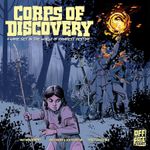
hi everyone my name is Monique and today I'm going to be showing you how to play a game that is currently on Kickstarter called core of Discovery designed by Jake Cormier and Sen Fung Lim and published by off thepage games who are helping sponsor this video based off of a graphic novel in this game players will take on the roles of explorers who need to work together to explore a map in order to complete daily challenges and meet chapter specific objectives this is a fully Cooperative exploration and deduction Style game for one to four players that is comprised of several chapters and so today I'm going to be showing you how to play the core game as well as explaining the specific objectives for chapter 1 which is titled fauna but please keep in mind that everything that you see here is considered a prototype copy of the game which means things are subject to change in the future for more information regarding the game I've included a link to their Kickstarter campaign in the description below last but not least if you enjoy content like this and would like to see more in the future please consider subscribing and with that we are ready to begin so if you'd please Che your attention to the center of the table we're all set up here for a two-player game of core Discovery welcome to chapter 1 called fauna now like I was mentioning earlier this game is based off of a graphic novel and players will be playing as different explorers who are actually very famous explorers we have Lewis and Clark but in addition to exploring the Western frontier and facing various challenges along the way you'll have to meet chapter specific objectives which in the case of chapter one is hunting and killing the minur three of them to be exact now the way that the core game is played is going to be the same for all chapters the only thing that's different
are the chapter specific objectives that you'll need to meet in order to win the chapter and I believe the base game will come with the first two chapters which includes this one and the next four chapters will be available as expansions and so the way that the game works is players will be taking turns exploring this map which is currently hidden underneath all of these path tokens players will be using deduction in order to try to find specific types of terrain so that you can collect resources to complete challenges build a shelter build fires and specifically in the case of this chapter players will need to find the monsters layers as well as the three forts in order to hunt and kill three minur and just as a note I was given a unique map in order to avoid potential spoilers which means my map will be different from any of the ones that will come in the final production copy of the game now turn structure is fairly simple starting with the first player on your turn you'll explore an unexplored space and you'll resolve its effect at the start of the game the mission briefing on your map tells you where you need to start and so in the case of my map it says you can start on any space in column 7 and when exploring a path you're going to place the path token on the leftmost challenge card because it's going to determine the timing as to when you'll need to resolve the challenge but more on these later now that I've explored this space on the next player's turn they'll be required to explore on a space that is orthogonally adjacent to one that's already been explored and now I'll resolve the terrain from the space that I just explored which in the case of a berry bush gains me one food token from the supply now anytime you gain
resources they'll go directly into your backpack which has space for up to six resources Max however if you have five or six resources when you need to go to resolve a challenge card then you'll be considered fatigued and you'll have to face a penalty but more on that later other types of resources include rocks that you gain from exploring mountains wood that you'll collect from trees you'll gain mud tokens from bogs as well as water from watering holes which is always stored on the supply board and water in this game is going to be very important because as you'll see some of the challenges will require you to pay water if you fail and if ever you need to pay water when you can't then that is one of the ways in which you can lose the game other types of terrain that you'll encounter include fields that allow you to build a shelter TPS that allow you to trade one resource as well as monsters layers that will gain you a bone resource and will require you to draw a card from the threat deck which in the case of chapter 1 is going to be how you find the minur and you'll also find other types of terrain that are specific to the chapter that you're playing and so in the case of chapter one there are three spaces on the map that contain forts which gives you information in order to kill the minur now in this game there is a strong deduction component because you are actually going to be using some logic in order to try to figure out where specific types of terrain are on the map as you can see here my reference sheet for this chapter is divided into two sections the top section here shows all of the rules that work in both ways and
the bottom section shows only one-sided rules and so as an example at the top here it says all watering holes are orthogonally adjacent to at least one tree and vice versa all trees are orthogonally adjacent to at least one Watering Hole the one below it says that all berry bushes are diagonally adjacent to at least one TP and vice versa which means because I've uncovered a berry bush I know that one of these two spaces here is going to be a TP because at least one of them is diagonally adjacent to berry bushes and some examples of one-sided rules include this top one here which says that there is exactly one tree in every column and every row on the map this one states that every field is orthogonally adjacent to at least one pair of berry bush and tree Mountain spaces are special because all of them are connected in a contiguous path and none of them will be along the edge of the board in addition they are highlighted in red because say you cannot pass them which means if you've unveiled a mountain space you cannot choose to explore a path adjacent to it at the start of the game we have this rock token here to indicate the mountain peak and so we know for sure that this is a mountain space now let's just say a few turns have passed and now the map looks like this we basically just explored North I can now safely assume that this space is going to be a tree because again every Watering Hole is orthogonally adjacent to at least one tree and this is the only other orthogonal space space left so you can actually use the resource tokens to Mark
where you think things are in addition we know that each bog is orthogonally adjacent to both a watering hole and a mountain which means this space is definitely a mountain space so we can mark that right there as well now mountains are all connected so there is a high probability that this is a mountain space but we don't know for sure so you can place a rock token face down to show that it's just a possibility so let's just say we choose to explore this space which is possibly a field because according to the rules all fields are orthogonally adjacent to both a berry bush as well as a tree which we have here and so we are correct we have a field and so in this game you'll really want to use the deduction component to your advantage in order to find specific types of terrain such as the monsters layer whenever you find a monster's layer you'll gain a bone resource and you'll have to draw the topmost card in the threat deck and this is going to be specific to the chapter that you're playing in chapter one the threat deck is comprised of minor cards as well as an injured card and a chased card and you'll place the corresponding token on the map if it is daytime when you discovered this minur then you'll place it on the layer that was just discovered and the reason why is because the minur has an effect in order for you to explore any path that is in the same row or column as the token you'll first need need to discard any one resource now in order to kill a minur in this
chapter you'll need to find the three different forts to find them you'll need to consult the mission briefing which shows that each Fort is adjacent to a pair of watering hole and monsters layer which means one of these three spaces will contain a fort another a watering hole and the third space will be a fourth different type of terrain because another rule that exists in this chapter is all of the four spaces that are thly adjacent to monsters layers will have all different types of terrain and in this chapter you'll also find Hill terrain spaces which will tell you how many forts are in its row or column so you can use that information to help you find forts as well now once you find a fort you'll get to draw the top card in the kill minur deck which gives you some information as to how you can kill a minur as long as you have one of these cards face up on your turn as a free action you can discard the resources that are on that card in order to kill a Minotaur that's in play once you're finished exploring a hex there are also eight different types of free actions that you can take and these mainly consist of using an ability on your character card or one of your starting gear cards fully exploring an entire column of the map will allow you to take a destiny card either one of the two that are face up or the top one from the deck and these you can discard as a free action in order to use its ability free actions also include killing a minor as long as you have the resources necessary building a shelter on a field space which costs any two of these resources which include wood mud and bones but they have to be different resources you
can also build a fire which costs two wood or two stones and as a free action you can discard two of these fire tokens in order to backtrack so if on your turn you've explored a space and you decide that you actually don't want to explore that spot you can discard the two fire tokens to put the path token back on top of that spot and it's like it never happened and lastly as a free action you can discard resources from your backpack and you may want to do this in order to avoid fatigue which we'll talk about in a second now in addition to chapter specific objectives each day you'll also be faced with three different challenges and each challenge shows a counter at the top right hand corner that indicates how many path tokens need to be on the card in order for it to resolve and as an example for the approach the arch challenge as soon as it has five path tokens on it you'll need to face the challenge which requires you to spend one wood if you're able to do so then you'll pass the Challenge and you'll gain everything in the left box which is one Berry however if you fail the challenge you'll still gain a berry but you'll be forced to pay a water and there's a wide variety of challenges that you'll see in the game including those that are chapter specific such as this which requires you to spend Vines which is a resource that is specific to chapter one and once you've resolved the challenge then you discard the card then you must face the consequence once this space is revealed if you are fatigued you're required to pay a water and again if you can't then you lose the game however that is the significance of shelters if you've built a shelter and you're fatigued when you have to face
this consequence then you don't actually have to pay the water and this will happen every time you resolve a challenge and once you've resolved the third challenge that marks the end of the day and players will need to pay one food in order to continue playing because if at the end of a day you cannot pay that one food then you starve and you lose the game at that point you'll also have a night phase which allows you to reveal a new threat card if there are no monsters in play so that is another way for you to find a minur instead of just finding the monsters layer you'll also be able to refresh all of your characters and gear and of course you'll reveal three new challenge cards and play continues this way until all three minur have been found and killed and that's essentially it that is generally how you play core of Discovery as well as the specific objectives for chapter 1 which is titled fauna now again this game is currently on Kickstarter so for more information regarding the game as well as the campaign I've included a link to their campaign in the description below otherwise if you have any questions about anything that you saw here today please feel free to leave me a comment down below and I'll try to get back to you as soon as possible thank you so much for watching the video I really hope it was helpful if you enjoy content like this and would like to see more in the future please consider subscribing thank you bye