Shallow Sea – Shallow Waters, Yet Deeply Immersive
Games in This Video
1 game is featured in this video — it unlocks as you watch.
Transcript
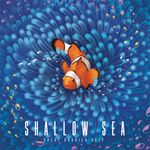
today we're talking about the one to four player game from Bad comic games shallow sea Great Barrier Reef now in my own assessment of bad comic games I think what they do very well is they take a core mechanic that gamers are already familiar with and love and they try to improve upon it just make it a little bit more interesting and a little lot more beautiful so in the case of Wonders creatures for example I think that game was very comparable to to everdo and with shallow C I think this game may be comparable to Cascadia but in this video we'll talk about what makes this game a little different and maybe is it a little bit more interesting a little bit better is it more beautiful we'll take a look and find out I'll tell you what I like about the game what you might not like about the game as we explore shallow sea in this game every player is going to be placing tiles on their own personal board and the tiles and the fish will be taken from a supply that is common to all players one thing that makes this game special is that when you do take a tile you'll be taking it with one fish and you can take one of two types of tiles either a coral tile or a sea life tile so named because of the artwork on the other side so as an example on my turn I could decide to take this fish and this tile
and when I do that I replace the fish and I replace the tile with a new selection from these very nice bags during the game there are a few ways that you can offset bad luck by spending seashells which you can collect during the game I'll show you how you get these in just a minute but one thing you can do by spending a seashell is refresh any row of tiles or fish just discard everything and replace it with more in the bag or also for the cost of one seashell you could take a fish with a different tile than the one that is adjacent to it so I could for example take this one and this one if I wanted to uh and then finally for a cost of two seashells you can move a fish on your player board we'll see how that works in just a minute the tiles have to go on any of these square or octagonal shaped spaces and the fish have to go on any bubble it doesn't have to be adjacent to a tile that's already on the board it doesn't have to be aligned with a color that matches the color of the fish although it is often beneficial to do it that way you just place the tile and the fish and that's your entire turn it's a very simple rule set but of course it doesn't mean anything unless you know what these tiles mean and what these fish are for so let's take a look at that by looking at a more complex board later in the game so here we are it's much later in the game and a lot has changed in fact
the positions of some of the fish have changed they're no longer on bubbles I'm going to show you how that happened using this example turn so I have just selected one fish and one of the sea life tiles and I'm going to put the sea life tile here and the fish right here and when I do that this tile is now complete it's complete because it has a matching fish at every corner of the tile so I'm going to turn it over it's worth nine points and I'm going to move one fish on the tile to show that that tile is now completed and this fish can no longer move for the rest of the game now not only that but this tile is also completed because the requirement on here is that I have two Coral of the same type there are two tiles that are yellow in the row that the arrows indicate so I can turn that over and I don't put a fish on it because sea life is already depicted in the artwork so chained effects like this can happen during the course of the entire game and in fact it's what makes the game so much fun I'll do one more with you so in this turn I'm going to pick up this tile and this fish I'll put the tile here and the fish here and now there's a very exciting chain that I can do so this tile is complete because it has the orange and the yellow so I flip it
and I'm going to mark it with the orange fish now this tile is complete so I'm going to flip that and Mark it with the yellow oh and every time I complete a coral or a sea life I get a seashell and now this tile is complete because I have three fish here here and here that are all different so I can flip that over for nine points and I get another seashell but that's not all this green fish is in the middle of four tiles that are all complete so it's not going to be used for scoring anymore however I can spend two sea shells to move the green fish anywhere I want so I'll move it over here and when I do that this tile is now complete so I can flip it over and I can put the purple fish on there and so in one turn I was able to complete four tiles oh and I get the seashells because I completed them again it is a very eventful game with a very simple core mechanic so like I mentioned in the intro of this video playing shallow SE the core mechanics here are not earth shattering uh which in its own way is sort of a good thing because it lends to E easy gameplay it's very easy to teach how to play this game but the idea of taking a title and taking a character and putting those
together on your player board is something that I've seen before in Cascadia I've seen it in farm club it's a nice mechanic it's a very thought inducing mechanic but that's not what this game offers to make it new what the game does the real Innovation here is in the stringing together of combos I have not played a game that has that drafting mechanic along with the ability to use fish to score multiple tiles and to do them in a sequence that can give you a really satisfying turn that is what sells this game for me and when we played it everyone in our family got excited because they could see that soon they would have a cool combo where if they could get a green fish it would trigger so many other things being completed all at the same time um a few other things though that I really really like about this game I really like the flow of this game because on your turn the only decision that you have to make that affects other players is which tile and fish to take so while people can wait for you as you choose which pair to take once you selected that pair there's really no reason to delay the game while you decide how to place them and how you want your combo to unfold you can start placing pieces other players can take their turn and that lends to a really nice flow flow of the game there's another element of the design that I really enjoy and haven't seen in other tile drafting games and that is the
option of picking a fish with either type of tile the coral tiles are all going to score with fish and then the sea life tiles are going to give you several different objectives not only do I like that that gives you more options but I enjoy that it allows you to scaffold the game to your level uh your preference of difficulty if you compare it to a game like Calico for instance Calico is preset with your objectives on the board and you have to work towards those objectives or you don't score them you don't get the points whereas in Shallow C you can kind of pace yourself if you want you can do one sea life tile at a time and once that's complete start a new one and and kind of take your time with it or you can tackle many all at once I see this as giving a lot of potential to grow with the game so initially you can do things very simply and then as you get better you can take on greater and greater challenges just by setting your pace at how many sea life tiles you take so that is to say that I like that is an understatement it is a brilliant addition to a tile drafting design I really really think it does a lot for this game I also really like the way that shells are used in this game I think it's a fantastic way to offset bad luck and yet it doesn't make things so easy that you're taking the shells for granted you can only store up to five shells on your board so
you are compelled to use them if you have them but at the same time because it's only five you want to make sure you use them wisely I love that so as you can tell I have a lot of reasons to like this game and I should because it is a great game however I do want to share some criticisms with you as well but before I do I want to point out that it is a prototype after all and uh bad comet does respond to uh criticism like this so we will see what they do anyway three things about the game so first of all uh I want to point out how this game feels compared to playing a game like Calico or sagata because the other two games are a lot more challenging and um they are very hard and some sometimes they can be a little bit frustrating both of those games that I mentioned Calico and sagata uh are games where you have to fill your entire board and sometimes the luck just doesn't work out and you can't fulfill your objectives and that can be frustrating but in Shallow C this by comparison is a much easier game that doesn't mean that the game is not doesn't have its challenges but by comparison it is a less frustrating game it is a game that is not so hard and more fun now if you are the kind of person who likes a game that really puts pressure on you well maybe this is going to be too easy for you I feel like I I don't want to make this
game sound easy it's not that it's easy it's that it's easier uh however they're putting an achievement mode into the rulebook so maybe the achievement mode will bring in some serious challenges and if you want to do that maybe it'll be there uh there are two modes to the game which I want to point out uh there is a family mode which is what I've been playing with my family and it's also what I play when I introduce the game to people because it keeps things a little simpler recommended for when you're learning the game uh family mode removes objectives and then once you become familiar uh you can add the objectives in for me personally I want the objectives because I like the added challenge so I guess for bad comment I would say make sure to make some challenging achievements because the game could use it all right next thing um even as IED this prototype I was informed that the game really plays best when you have six to seven sea life tiles okay so if you play with with less than six to7 sea life tiles it's too easy if you play with more it becomes too hard as the understanding the way that I played the game that we all played the game it also just seems right uh there's a certain balance with uh how many fish you get to satisfy the coral tokens and you can only satisfy so many Coral tokens eventually you need those sea life tokens other because you're not going to be able to do all the coral
like the the game the balance is built into the game already I feel like you don't need to be advised on how to play if you play the game well you will accomplish this balance I don't even know if this is a does that even sound like a criticism to you uh the point is the game plays best when you have a balance between sea life and coral tiles some people will pick this up intuitively other people need to be told so do the rules need to directly tell people how to play or should you just let people play the game I think I kind of lean towards just let people play the game all right last one and this is like the big one for me although this is something I rarely talk about when I review games theme because I live in okanawa and I have advanced open water diving certification so I go diving and I see Fish and I see Coral I see all of this stuff now these pictures aren't precise enough to really identify what it is now as artwork I don't care if it was just like a black and white symbol you can be as artistic as you want to be but you know what I want to know I want to know what the coral is called and it doesn't say that in here it says like purple and yellow and green it uses color now in my videos that I've made I keep referencing the clown fish
because the clown fish is the one and I know what that one is called but the other fish are called like green and purple and yellow I want to know what they're called I want like a page of the the this is where they live this is where their habitats are all that stuff so I I I hope that they include that because clearly they're not just like inventing these fish these aren't imaginary fish they did some research so tell me what they're called please I like that I like I like the page in the rule book that tells me about what the fish are um yes so those are my criticisms they're very light criticisms if if you like tile placing games I think you'll love this one it has such a great flow to it I wish it played more than four players that's not really a criticism if it if it needs to play for maybe expansion five six player expansion that would be cool anyway shall C do I recommend it yeah I do because bad comet is one of my favorite Publishers of family board games I've I've talked about this before I love the stuff they make so yes this is an awesome game thank you for watching I hope you found the review useful and I will see you next time bye-bye