The Druids of Edora is Feld & Alea's most ambitious collab yet - TCbH Review
Games in This Video
1 game is featured in this video — it unlocks as you watch.
Transcript
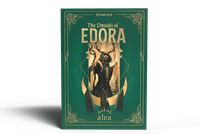
There are some designers that, when they release a game, you you lean in. And with a career spanning games like Bora Bora, Trajan, Civolution, and the undisputed all-timer Euro banger, 2011's Castles of Burgundy, Stefan Feld looms large in the hobby. Which brings us to The Druids of Dorna, the latest collab between Feld and publisher Alea. An ambitious and sprawling dance that is gorgeous on the table as it is, well, dense. If you were walking along, minding your own business, and happen to catch Druids of Adorna, your first thought might be like me, what an incredibly attractive game with its pastel colors, solemn pillars, and the murky maze winding through the woods. Then, your next thought might be, wait, WTF is this game? There's so many bits and bobs and systems, there's so much going on, it's pretty hard to find just one thing to hang your hat on. But, in broad strokes, this is an action selection and resource conversion game where you're moving your pawn through the woods to clearings that you have yet to take an action. Take one of those uncovered actions there by placing a dice and paying provisions based on your movement and pit value.
Which that action will be one of many many different systems that'll either lead to points or stuff to keep you going so that you can continue to get points. Which, all together, isn't too unfamiliar. But, what really makes Adorna shine is that each system tends to reward repeated investment. Take an obelisk action and you place that pillar from your player board in the clearing, getting the bonus on your board you just cleared. But, then you activate all vacated obelisk spots on your board, including the one that you just placed. So, initially a potent action, but eventually you're getting the whole shebang. Or, maybe you invest in sickles, which unlocks sets of randomly organized personal powers, where you have to permanently decide which to keep and which to forego. Or the large standing stones, from which you get big fat rewards by placing higher but more costly dice.
Or maybe it's a gemstone for your pendant, which is another mini-game for immediate rewards. Or stone tablets, that give you points at the end of the game for fulfilling their conditions and upon claiming you get the bonuses to the left and right of the claimed stone tablet. You get the point. There is a lot going on here. Each system with its own set of rules and nuances, but I get a vague sense of equivalency from it, where it feels like everything was perfectly tuned so that way it would be roughly as good as everything else, which does kind of shave off some of the personality for me. But I don't want to undersell that there are some really smart, exciting, and creative plays that you can make, especially because this game is incredibly grueling if you aren't constantly aware of, cognizant of just how important in dwindling your supply of provisions are, the fundamental resource that is necessary for virtually everything that you're going to do. That and your dice, which there are 13 rolled at the beginning of the game and unless granted a reroll from specific boons are fixed in that position with nine on the central board and four in hand to start. And you have to use rewards from the actions that you take with dice to acquire more provisions and more dice. So, you know, you can take more actions. There are a few more systems deriving from dice
placement. Since each clearing can only hold one dice per player, cleverly achieved through reversible board so layout can still be randomized, but will reveal two, three, or four action spaces per clearing based on player account.
If you place dice higher than other players in the clearing, you get some points. Also, if you place dice completely surrounding the in-between zones, you light the campfire and claim some rewards, which, hey, is most often points. And if you complete a connection from one set of arching dolmens to the matching one of the same color in a contiguous set of clearings, you claim those dolmens, and wouldn't you know it, for each connecting dice, you get points. And finally, at the end of the game, each clearing has all but the highest dice removed, then players, based on a multiplier set by the wisdom tracker, which also breaks ties for all points of contention, multiply that number by dice and standing stones and obelisks in their controlled clearings for, yeah, big old points. All things considered, for how heady and free-form it is, it's pretty much the board game equivalent of my dad's parental philosophy. Welcome to the world, kid. I ain't going to tell you what to do. Good luck, and try not to make a mess. Ador moves pretty speedily, assuming players are proactively procuring dice and provisions. A player can get all 13 of their dice out in 13 turns, thereby ending the game. Though, if a player ever can't or just doesn't want to take a turn, they can claim their druid is in distress, passing their turn, but scraping some free resources and a dice from the board. But, the rule book and the iconography itself goes to great lengths to say, that ain't a good idea to pass
on a turn. So, you know, don't do that. And speaking of the rule book, what is this rule book? I learn so many games for this channel, and each time I carefully read through, generally read through again, then, if needed, consult with the publisher or BGG rules forums to clarify. Maybe it's a translation issue, maybe it's something else, but holy crap, this rulebook is pure insanity. Not only does it use technical terms interchangeably, like calling a turn a move, but also a move is a thing you could do on your turn, and also calling it your turn or round. And how about the clarifiers for personal flower powers you can rock? That seemed like the most confounding wording could be chosen while still legally being able to say that it technically explains the action.
This was pervasive throughout the rules in a very complex game that deserves intuitive smooth reference and aid, which then also extended to the game itself. Not only are there some of the most laughably enigmatic iconography I've seen in a while, but everything from only numbering the tens on the scoreboard in a game where you're constantly going to be adjusting your score to really small details in the symbology, like this tiny three next to the point symbol. It's a beautiful game. It is maybe some of the best component production that I've ever seen out of Ravensburger and Alea, but like the deep woods, that beauty is accompanied by indifference bordering on outright hostility. The rules have words that made you take the longest road possible to explain the simplest part of the rule. But if you can't make it through, and you like games with a lot of room to explore and barely any hand-holding, then there's something rich here who people that love the sprawl are probably going to get a lot out of. For my preferences, it's a little too wide. So many systems that you can wholesale ignore from game to game, so many actions where in theory it's simple, but have cascading at times laborious outcomes. Just a general sense that while I'm doing something efficiently, I'm just doing it for brutal efficiency's sake. Which, don't get me wrong, essentially all board games could be boiled down to that. And
I do like really big, sprawling board games, but it feels like Adora is one where everything, including the kitchen sink, was crammed together, and it was up to me to find the fun. And some fun I've had, but not without a good amount of exhaustion, too. And that's our review. But let me know, what's your favorite Stefan Feld game, and what's your favorite big old sandbox of a game? Put it in the comments, and as always, thanks for watching, supporting. And with no money changes hands from publishers to us, so we rely on you for all those likes, comments, subscribe, shares, and of course, checking out our Patreon if you really want to go the distance to help this channel be what this channel is.
But above all else, thanks for being such a great community. You know that I've been Jack for The Cardboard Herald.