Concordia Review - Chairman of the Board
Games in This Video
1 game is featured in this video — it unlocks as you watch.
Transcript
Hey everybody and welcome to chairman of the board. Today I'm going to be taking a look at Concordia by Mac Gerdts. Now I'm not going to go into much detail about how the game works because I'm sure a lot of other people can kind of explain the rules better than I can but give my thoughts and opinion on the game. Now Concordia is like an economical hand management game with a bit of deck building in it set in ancient Rome or Italy and amongst the Mediterranean Sea if you're playing with more than two players. So let's get into the review and I'll give my thoughts. Okay so when I kind of think about Concordia the instant thing that pops into my head is just how smooth the game is just how mechanically sound it is.
It's unbelievably well designed in that regard. Basically every player is going to have seven cards. identical And all you do on your turn is you choose one of those cards and you play one of those cards and do what it says on the card. So you've got prefects which let you turn over a province tile and that will give you rewards in relation to how many trading posts you put down. You've got senator which lets you buy more cards to add to your little hand. You've got architect which lets you set up the trading post and also move your move your guys around the board. You've got a diplomat which is a really interesting mechanic which lets you copy the last played card of another player.
You've got the mercator which lets you kind of trade goods and take a bit of money. And you've also got the Tribune, which is really important because when you play a card, you actually discard it and put it on a pile and you can't use that card again until you use the Tribune to pick them up. But what's really cool about it is that you get more and more of a reward and incentive to play through your cards because the more cards you play, the bigger reward you get when you play your Tribune. Because every card in the excess of three you played, you get one sestertii, which is your currency in the game. And I just love how so many deep like a kind of deep mechanical game is just embedded into these seven cards or a few more cards than that if you include the cards you draft.
Now, again, the turns make turns go by really quickly and you can kind of resolve your turn as other players go on because you know, for example, if you play your what is it? Your Mercator, for example, you can start doing your trading and the next player can just carry on and take their turn. Again, it's just rules-wise, it's just so easy to digest. But another thing that really is just mind-blowing to me how this game works is the scoring system. Because not only do these cards give you your actions you take, they're also going going to determine your points at the end of the game. Because each of these cards is kind of uh well, they're kind of linked to a certain god. You've got Vesta, you've got Mars, you've got Mercurius, Jupiter, and Saturn.
And each of these different gods is linked to a different strategy you can take to get points at the end of the game. So, for example, Vesta will give you or each Vesta card you have will give you one point per every 10 money you have. Each Mars card will give you two points for every um, every boat or man you have on the board. So, the more people you have on the board, the more you're going to get in return by, uh, having by collecting Mars cards. You've got Jupiter, which is all your different trade houses. You've got, uh, Mercurius, which gives you two points for every different type of good you you currently have a trade house set up in. And you've also got Saturn, which is, um, linked to, um, getting into different regions on the board.
But what the really cool thing is that all of these different strategies are perfectly viable. And, um, you know, if if a lot of people are going to go for the same kind of strategy, you're going to really struggle, and those points are going to be really diluted. So, you've got to really not let somebody run away with a certain strategy and collect all the cards of a certain type and get those huge modifiers at the end of the game. So, it's kind of good to kind of think of a couple of different strategies, maybe two or maybe even three of these gods, and go down those paths, and then, um, hopefully get loads and loads of points at the game at the end of the game, sorry. Another thing that's really interesting about this is how, um, opaque the scoring is, because the points aren't tied up at all until the end of the game. So, you can kind of tally up in your head how well other players are doing by, you know, looking what they have on the board and looking what kind of cards they've been drafting. But, because of the way the scores, the end game scoring is always really tense, and you can never be entirely sure about who's going to win.
Um, basically, this game is all about, uh, efficiency. You really can kind of have kind of plan three or four turns ahead. And, um, I love that about games. That kind of really ramps up those meaningful decisions for me. Um, the strategy is so, so rich here. Um but not only have you got to kind of plan those things ahead, you've got to have contingency plans as well because if other players get into certain regions and play their architect card and end up putting trading houses on those um on those places or different different cities, then you have to pay double the amount of money to get into those cities. So, you kind of have to plan ahead for that because you can really be left high and dry if you don't consider that extra money you have to play if other players get there before you.
Really, really compelling. Super tense because not only do you want to get into those cities in order to, you know, spread you know, spread as much as you can, get a good presence on the board, but you also have to keep in the back of your head that there's cards to draft here. If I don't draft these cards before other players, they're going to get bigger multipliers than me at the end of the game. So, there's this real inner tension here. You have to play it cool and hope that nobody is going to draft the cards that you really want. It is absolutely fantastic in that regard and the meeting pool decisions are just absolutely phenomenal. Um one thing that I do really like, it's a very, very simple mechanism in the game, is this um which one is it? It's this prefects card. Um something I really like about games that's like this kind of push your luck element where um well, it's not really push your luck, it's more of this incentive building where the more you um activate these different regions, you not only do you get the regions the uh sorry, the the resources that's on those regions the way you have trading houses, but also they flip over and they become money. And the more of these regions you flip over, the money builds and builds and builds until somebody finally chooses to take the money and they're all flipped back to their resource sides. And I love that incentive building um mechanism in games. It's so, so clever.
Um again, the balance of this game. That is another thing that really, really impresses me because, as I said, all the strategies are really viable. I've seen loads of points be made just by collecting money. Um, having all the different colonists on the board is a very good strategy if you have the Mars cards, uh, the Saturn cards by spreading across all the regions. Again, all these strategies are perfectly viable. And having all these different routes to victory is so, so important for replayability and, um, just just to keep you wanting to go back and explore different things. And Concordia just does this wonderfully. Um, the game takes about two hours to play and I think that's just about the sweet spot for this game um, because you know, you you don't want it to go too long, but it's deep enough to, uh, to to warrant going on that long. So, I think the the time it takes is just about right. Uh, it plays two to five players, so and it works equally well at all those player counts because the game comes with two different boards, a a reversible board, sorry. You've got the Italy map and you've got the Mediterranean map. So, the Italy map's really good for like two or three players because it's a lot tighter and the, uh, the Europe so, the Mediterranean map is a lot better for like, uh, four or five players where you would need a bit more space so it's not so congested. But, there are also loads of other maps you can buy for this which suit all different player types if you
want a tighter game or a kind of more open game. Um, as I said, the turns go really quickly in this so the up time is pretty good. Um, the turns are going to fly around really quickly around the table so you're never waiting too long for your turn. Um, player interaction in this. Okay, this is a very, uh, this is what I call a quintessential Euro. There's no attacking here. There's no direct conflict. It's all about getting places faster than others, beating people to the punch. So, uh you want to be getting into those cities to make other people play more, to pay more so as to get into those regions. You want to beat people to drafting those cards, but the interaction goes a little bit further because um as I said, when you play that prefect card and activate those regions, the other players who have buildings in those regions get those rewards, too.
So, you have to be careful about what you're giving to other players. Um another you know, you can you can go into this as deep as you want, really, because players have these uh warehouse boards. And maybe if players have a full warehouse, it's a good time to activate a region so they don't get the goods because they've got nowhere to store them. You just got to think about little things like that. Um again, so many layers here. You can really go deep and kind of play this to the next level. So many nuances and little things to discover. And with more and more players, you're going to to discover more and more. More and more depth, that is. Um Visually, I can see why this game might look a bit boring and bland to a few players. It's got this very dry uh map. Uh the cards again, they're not you know, they're very nice, um but they've not got anything really like, you know, visually stunning art on them or anything, but very functional, very well written. Um the rule book is really well written and is only actually a couple of pages because the rules are that well streamlined.
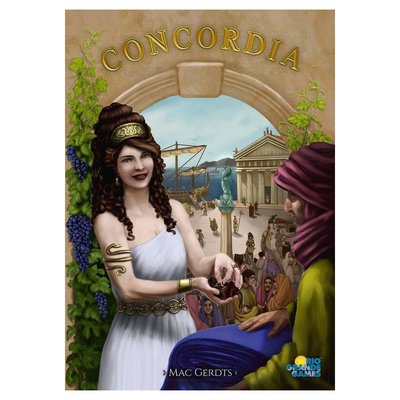
Um Yeah, I I Component-wise, it's really good. The the stuff is very good quality, good quality board, good quality wooden pieces, good thick cardboard, and nice cards. Um and I actually do like the look of the game. I think it looks really nice. It has this real kind of charming uh feel to it. But again, I I know a lot of players I play with think this looks boring, and I can completely understand why it does um because it's not, you know, it's not visually Well, that's nice. I mean, the box uh in particular is very ugly. Um I don't know why they chose that design. It looks hideous, but uh it's definitely not a reflection of the game itself. Okay, uh let's think about the theme here. The theme is pretty much uh very abstract. You're supposed to be these kind of um Roman nobles, I guess, trying to set up trade houses around the sit around the country um trying to get as much influence as possible. You know, the the kind of uh tried and tested euro theme, one that doesn't really uh have any tangible meaning. Um but, it doesn't matter. The gameplay completely overrides that. Um it just doesn't matter at all to me. It's all about the gameplay and mechanics here and how challenging and how um how compelling the game is to be efficient.
Set up and tear down time is pretty good. Um again, just give players seven cards, give them their wooden blocks. Um again, uh the board takes a little bit of doing because you have to randomize the different tiles that go with the cities, but nothing to worry about. Your standard your standard setup time, a good, you know, 10 minutes. Um so, overall, this game is phenomenal. It's one of the best games I've ever played. It's in my top four of all time at this point. Um I honestly I cannot fault this game mechanically at all. It's so much fun, but challenging, but not challenging to the point where it's brain burning. Um again, the strategy is there. You've got to think your turns ahead um in order to be as good as possible at this. It's so tight, so compelling, absolutely fantastic.
Uh it's, you know, it's one of the best games I've ever played, as I said. Um I cannot actually fault this. Um all the different individual mechanisms just come together so well. Um no nastiness here, but the interaction is meaningful. Honestly, this game is fantastic. If you like Eurogames, this is one of the best ones out there and I think probably one of the best games of all time. That's how strongly I feel about this game. It is wonderful. So, I urge you to go and try out try out this game. Just give it a play. If if the look of it and the theme of it don't really appeal to you, give it a chance because the gameplay is unreal. So, I hope you've enjoyed this review of Concordia. Um I've enjoyed talking about it because as I said, it is one of my favorite games. I do want people to experience how good this game is.
Uh if you have enjoyed the videos, please hit like and subscribe to my channel and check out my other reviews. Everyone else, I'll see you next time on Chairman of the Board. Bye.