Board to Death TV Presents: El Alamein
Games in This Video
2 games are featured in this video — they unlock as you watch.

Transcript
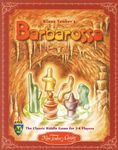
Hi, I'm Felicia. And I'm Giancarlo. This is our preview of El Alamein, which is the second installment to the popular World War II deck-building game Barbarossa. You can see some of the enemy 18 plus. You can see some of her underwear. 18 plus. Don't tell you I haven't been warned you haven't been warned as I'm holding up a picture. It's not that bad. It is Yeah, I know it's nice. It's nice. Are you kidding me? 18 plus. god. What? It's 18 plus. Oh my god, look at this one. This one's crazy. El Alamein is a standalone and expansion to Barbarossa, the fictional anime-styled World War II deck-builder.
The battle will now take you to Africa for supremacy over the British. You'll find the same great artwork in El Alamein with familiar game mechanics from Barbarossa with some new added twists. As in the base game, you'll set up the war zone according to cost and card type. The city cards will be placed in numerical order with the lowest on top and the highest at the bottom. Leave an empty space above the event deck. This will be the British reinforcement pile. You'll also shuffle and place the victory points, recognizable by the different backs, in a pile here. Each player will draw two Italian infantry regiment and six motorized transport, placing the remainder of the latter in the box. Players shuffle their deck and draw four cards and play will begin. The four phases still apply in order being starting phase, tactics, reinforcement, and cleanup. But the main difference in El Alamein will happen during combat against the city and between players' turn when the British will do a counterattack. When trying to conquer a city, these new rules will apply.
First, reveal a number of event cards equal to the city's garrison value. The red text will be resolved as the order of the event cards have been drawn. Next, send a number of cards from the top of the event deck to the British reinforcement pile face down equal to the city's reinforcement value. At this point, you can activate any deployed units' abilities or cards from your hand that can affect the reinforcements there. If some are destroyed, turn them sideways to indicate their status. Now, non-destroyed event card will add their value to the city's defense. Should you win by matching or exceeding its defense value, you've conquered the city. Do its text in red and add it to your deployed area. You'll also deploy a number of victory cards equal to the conquered city's VP value.
These range from one to four with the one value having a special ability to level up one of your deployed unit for intercepting purposes, which we'll get into a bit later. All remaining event cards will be placed under the event deck in any order. Now, whether you succeeded or failed at conquering a city, you must apply the battle damage. These usually make you forfeit discard specific amounts or type of units from your deployed troops. Let's talk about British counterattacks. Should you have revealed this card for a city garrison, that means that after the end of your turn and before the next player is taking his, the British troops will attack some players. First, reveal all the cards from the British reinforcement pile. These will now be known as the counterattacking forces. All the special text and battle modifiers on these cards are ignored.
All you need to really take note of is their type should your cards have any effect on them. What each player must do is intercept each card. Basically, any of their German units can intercept one card. If the German unit is attacked, they can intercept two cards. Lastly, Italian infantry work differently. They can all be assigned to intercept one card or can be used to make sets with box cards. Each set can block a card. All intercepted cards are destroyed and turned sideways. Should all cards be intercepted, you succeeded. Return them to the bottom of the event deck and forfeit all your units used for interception. If not all are intercepted and one goes through, you failed. That player must return the highest city they own to the top of the city pile and randomly return a number of victory cards equal to that city's penalty value to the bottom of the victory pile.
Then, counterattacking forces not destroyed will target the next player. Play continues until Alexandria has been conquered, at which point all players count all the cards they own that have victory points on them, and the player with the most wins. And there you have the new additional mechanics to El Alamein. You can play it as a standalone or mix it with Barbarossa in such a way described in the rulebook to give you a different experience. Now, this is not the final quality for the cardstock, but we've been told the artwork will remain pretty much the same. If you like Barbarossa, check this one out currently on Kickstarter. Remember, if you like it, back it.