Dark Heists: My Favorite Mechanism
Transcript
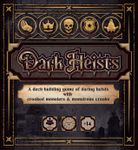
Hey, I'm Jamie from Stonemaier Games and today I'm going to talk about my favorite mechanism in the game Dark Heists. This was a pleasant surprise at Geekway, not only because I was not familiar with the game at all, but because I got to play with the designer or the designer taught the game to four of us. Um and it's a heist-themed game. I I recently filmed a a video about my favorite heist-themed games. It's one of my favorite fictional genres and I've been looking for a game that really fully scratches the same itch that I get when I watch a great heist movie. Here's what Dark Heists looks like. I would say this game mostly scratches that itch pretty darn well. Along with having a fun theme to it that goes a little bit above and beyond the typical heist genre because there is a little bit of a spooky slightly fantasy theme to Dark Heists in that you are um kind of monsters who are going on different heists committing larceny putting your crew together through a deck-building mechanism.
Um but there are ghosts in the game. There are there's a vampire. There's um there's heat that you can add to your deck. Uh there there's a number of different cards that that you can add to your deck that uh that hurt you by default but can actually get better based on other cards that you play and I think that is that is really clever in Dark Heists. What you're seeing here in this image are most of the heists in the game and this is uh probably that the highlight the standout feature of the game even though there are a few other things including what I just mentioned that bad cards can be conditionally good for you in this game if you'd like. Um but uh the way that heist work every now and then in the game you can decide to use your turn to go on a heist instead of using your turn to build your deck and build your engine.
And what I think is really clever about this and we talked about this during the game a little bit. In Dominion, classic deck-building game and in many deck-building games, there's kind of a tipping point when you decide to stop focusing on building that deck and you revert your focus on gaining points. And Dark Heist does this in a less abstract way. It's not about the points, it's about uh these heists that you're trying to accomplish, which are worth points, but uh it does this three times throughout the game. So, three times during the game, instead of taking a turn where you're making your engine better, you are choosing to go on heist. And I I really like this. There isn't like a single tipping point. There are three different tipping points throughout the game where you're saying, "Okay, right now I have a hand that's really good for this one heist. I'm going to I'm going to go on this heist instead of just working on building."
What you do when you when you go on a heist is you need from top to bottom you're trying to go through these steps. So, this is a You know, let's go through a pretty simple one. This is a basic heist. Steal Steal the scrolls. The first thing you're doing is spending sway, one of the two resources on cards, to bribe security. You need six sway to do that. You're using your hand of cards to do that. Then, for the next step in the heist on the same turn, you're discarding all those cards and drawing five new cards. And using those cards as normal, so they might have abilities on them that give you more than just the icons for sway and um I I wanted to say power, but it's not power, crime. And crime that are on those cards. Because the next part is is a crime uh step to the the heist. You need to crack the safe. It takes six crime to do so, and if you do it, you get to steal two.
You get to steal $2 from another player. And last, you again you discard your hand and do it again, you need to use disguises to escape. So, kind of these thematic nicely thematic and story driven steps to a heist. The designers said they this was partially inspired by uh Blades in the Dark in our role-playing game. Um and you need seven sway to do that. Now, along the way, if you fall short, if I tried to crack the safe and I didn't have enough crime in that hand that I drew, because there is you're kind of pushing your luck by trying to accomplish that. You don't know what hands two and three will have in them. If I fail on that, I get a little bit of heat. I get a heat card. And I just continue the heist on my next turn. I haven't wasted the turn at all. I just am going to continue it on the next turn. And in general like you wouldn't try a heist until unless you would complete the first step. So you're not wasting the turn. You're making progress on it even if you don't fully complete the heist.
I think that is really clever. This idea that you are having these you're building up to these three different payoffs throughout the game. It's not a single tipping point. It's three different tipping points and you're doing so by building your crew of cards and many of those crews of car that many of your crew members will negate or even use to your advantage some of the bad cards that might be in your deck. Really clever system here in Dark Heist. I'm so thankful to Mo for hanging out with us and teaching us the game and talking about it. Uh it was you know it's it's special that whenever you get the chance to actually play with the designer of the game. And uh I'd love to hear your thoughts. If you have had the the good fortune of playing Dark Heist or if you have played a game like it where it has multiple payoffs like that instead of a single tipping point. Let me know about that in the comments below. Thanks.