/pic7704592.jpg)



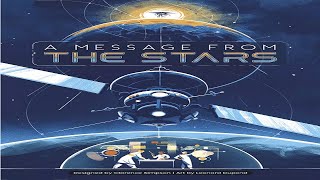























A Message From The Stars Deep Dive
What the Community Thinks About A Message From The Stars
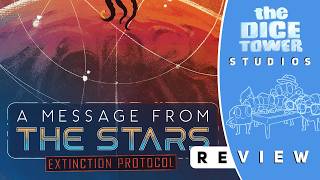
A Message From The Stars has emerged as a standout deduction game that captivates reviewers who appreciate intellectual challenges. Board game critics consistently highlight its uniqueness within the genre, praising its ability to deliver surprise moments even after repeated plays. Tom Bassel from the Dice Tower describes his appreciation for "the aspect of working together trying to figure out this alien language of sorts" and notes that while "it's esoteric, it's not going to be everyone's style, but I really enjoy this one." This game has secured positions on multiple best-of-2024 lists across different channels, reflecting broad recognition of its design quality and appeal to strategy-focused players.
What makes the community response particularly interesting is how reviewers initially underestimated the game's engagement. Before You Play noted it as "a surprise entry for us because we didn't expect to like it this much," reflecting a common pattern where players discover the game's depth rewards repeated plays. The title has proven its staying power not just in initial reactions but in ongoing appreciation, with Chris Y from the Dice Tower maintaining it as his number one game from 2024 even a full year later, calling it "such a great deduction game" that "just blows people's minds every time."
Core Mechanics That Define A Message From The Stars
The Mathematical Cipher System
At the heart of A Message From The Stars lies a mathematical cipher that forms the central puzzle players must solve. One player assumes the role of the alien and creates a six-letter cipher using a combination of common letters, unusual letters, and rare letters according to setup instructions. This cipher becomes the secret code that all other players must deduce through collaborative investigation. The mathematical element involves scoring words based on which cipher letters appear within them: certain amplify letters add to the total, trust letters multiply the score by two, and a suspicion letter makes the entire value negative. Reviewers emphasize that understanding this equation is crucial to successful play, though it presents a learning curve that steepens on first encounter. Fortunately, the game includes an app that handles calculations, removing arithmetic errors from the equation and allowing players to focus purely on deductive logic.
Transmission and Message Encoding
Beyond the cipher, players navigate a dual-layer communication system. Over four rounds, the alien and human scientists exchange transmissions in the form of carefully chosen words, each accompanied by a numerical value calculated from the secret cipher. The humans attempt to deduce the cipher letters through these exchanges, cross-referencing values to eliminate possibilities. Complicating this intellectual puzzle, each team holds a secret message similar to a Mad Libs format, consisting of three randomly selected words from specific lists. Players must encode information about their message words within the transmissions they send, adding a strategic constraint: you cannot simply provide the most useful word for cipher deduction; you must select words that serve double duty, offering both cipher information and hints toward your hidden message. This layer of obfuscation ensures the game remains challenging even after multiple plays, as players balance transparency with strategic ambiguity.
The A Message From The Stars Experience
A Game That Demands Deep Thinking
Playing A Message From The Stars requires sustained concentration and analytical thinking throughout each round. The experience unfolds as a puzzle where information accumulates gradually; players cannot expect to solve the cipher immediately or through shortcuts. Rolls in the Family captured this experience when noting that as "the human team you are trying to deduce what letters could be in these different spots of the code based on the scores of these words," creating a sense of genuine mystery. The game feels less like a party experience and more like sitting together to solve a complex riddle, with each transmission providing new clues. Reviewers note that the first game typically feels rough around the edges as players calibrate their understanding of the mechanics, but subsequent plays yield increasingly satisfying moments of breakthrough as the cipher gradually becomes transparent.
The Cooperative Bond and Communication Challenge
The fully cooperative nature of A Message From The Stars creates a shared intellectual mission rather than competition. Success requires teams to communicate effectively despite constraints, with the alien player simultaneously helping the scientists decode while protecting the secrecy of the hidden message. One reviewer describes this as "a fun exercise for people who like that kind of thing of sitting there and thinking of a word" that serves strategic purposes. The game shines at larger player counts where multiple humans can collaborate, discuss possibilities, and share deductive reasoning, though it remains playable at two players where the single human must carry the entire deductive burden. This design creates natural variation in experience based on group composition, making it adaptable to different gaming scenarios while maintaining its core appeal as a cerebral collective puzzle-solving experience.
What Makes A Message From The Stars Stand Out
A Unique Mathematical Integration
Few deduction games weave mathematics directly into the deduction process, making A Message From The Stars distinctly uncommon within the genre. Unlike Decrypto, which focuses purely on word association, or pure logic puzzles, this game demands that players understand mathematical relationships between letters and values. Reviewers consistently highlight this fusion as both the game's greatest strength and its highest barrier to entry. The mathematical element is not mere decoration but integral to the deductive logic: figuring out whether the letter E is amplifying, trusting, or suspicious becomes a precise exercise rather than a guessing game. This precision appeals to players who enjoy optimization puzzles and mathematical problem-solving, setting it apart from more narrative-driven or intuition-based deduction games. AllPlay's production quality amplifies this distinctiveness, presenting the game in a compact, beautifully designed box that belies the intellectual depth within.
Scalability and Surprising Depth
A Message From The Stars supports two to eight players, yet maintains meaningful engagement across this entire range. Unlike many party games that become unwieldy at larger counts, this title actually benefits from more participants, as multiple human players can bounce ideas off one another, accelerating deduction through collaborative brainstorming. The game's structure remains constant regardless of player count, but the dynamics shift noticeably. Small groups experience intense individual responsibility; larger groups develop shared deductive narrative. Additionally, the game contains measurable replayability through randomized elements in the cipher creation and the selection of message words, ensuring that no two games present identical puzzles. This combination of accessible rules with surprising strategic depth explains its appeal across different player types and experience levels.
Potential Drawbacks
The Mathematical Learning Curve
The equation governing word values presents a genuine barrier for some players. Before You Play noted that "if you don't know the math equation, even if you're familiar with the game, it's hard to describe," capturing the challenge reviewers face in teaching the game. The setup involves letter categorization, multiplication, and special cases, requiring players to internalize abstract rules before they can effectively play. While the companion app handles calculations, the initial learning phase can feel frustrating, particularly for players more accustomed to intuition-based deduction games. Some groups may find the first session more educational than enjoyable, though most reviewers suggest that switching roles between alien and scientist on a second play yields dramatically improved understanding and engagement.
Narrow Audience Appeal
This is unequivocally a game for specific types of players. Rolls in the Family's reviewer admitted, "I can't see myself playing this game with more than three," and acknowledged that it "is not going to be for everyone, especially because of the probably the math portion of it." Players who avoid numerical problem-solving, who prefer lighter social deduction experiences, or who find game teaching sessions tedious may struggle to appreciate the title. The game does not accommodate casual players seeking quick entertainment; it demands commitment to learning and patience with the puzzle-solving process. Additionally, while AllPlay games typically feature elegant production, the cognitive demand may overshadow component beauty for some audiences. Understanding this limitation helps potential purchasers make informed decisions about whether the game suits their group's preferences and gaming style.
If You Enjoy A Message From The Stars
Players who find themselves drawn to A Message From The Stars likely appreciate deduction games requiring logical deduction over intuitive guessing, enjoy mathematical problem-solving, and value cooperative experiences where success depends on team thinking. They may also enjoy titles like Decrypto for its word-based deduction, Touring Machine for its puzzle complexity, or pure logic deduction games that reward systematic elimination. The game appeals to players who view board games as intellectual exercises rather than social entertainments, who relish the "aha" moments when obscure information clicks into place, and who want games they can discuss strategically with teammates during and after play.
What Reviewers Are Saying
"I really like the aspect of working together trying to figure out this alien language of sorts and I think it and it's just done through math and I really like it. I know it's esoteric. It's not going to be everyone's style, but I really enjoy this one."
— The Dice Tower
"It's a deduction game at the end of the day that is word based but also has some math. So it's quite complicated to learn at first but once you get the hang of it I really really enjoyed it because it's different."
— Before You Play
"A Message from the Stars is such a great deduction game. Man, Message from the Stars is such a great deduction game. I got a chance to teach it again recently and it just blows people's minds every time as you're trying to give them clues about letters and people guess words at you."
— The Dice Tower