Let's Talk Board Games #39 – 2024 Board Games Reviewed!
Games in This Video
5 games are featured in this video — they unlock as you watch.




Transcript
Hi everyone, my name is Monique
and I'm Naveen from Before You Play
and welcome to another episode of Let's Talk Board Games where we talk about a few games that we've been playing recently.
Yes. Today we have five different games, a very different style of games um that we're going to be talking about.
Yes. And I believe I believe this is probably the last of the few episodes where we are going to be talking about mainly 2024 games. So, if you're not familiar, the last few Let's Talk Board Games episodes, we've been really trying hard to play all the games in our collection that were released last year so we can finally do like a a full top 10.
Yep.
And uh we are nearing the end of that. So, we do still have a few more games that we're probably just going to have to sprinkle in in the future. But, as for the truly dedicated uh 2024 games, this is probably the last one. But we also have one older title, older in board game terms, uh that we had recently played again and so we wanted to talk about it today.
But first, today's episode is kindly sponsored by Sordane Publishing for their game Aldara, which is now available in retail.
Aldara is a fast-paced 4X combat focused strategy game where two to four mighty factions war for control over the long-lost nation of Aldara. Each faction is different, and in order to win, players must utilize their fleets to exterminate their opponents. complete secondary objectives and explore new territories, expanding your control and gaining you victory points. Along the way, you'll also need to manage the resources needed to grow, maintain, and upgrade your forces. So, using your unique abilities to outmaneuver opponents will be important in helping you gain control of this land. Now, Aldara was successfully kickstarted last April and is now available for retail purchase, but with only a limited number of copies available. So, if this game sounds interesting to you, we actually have a discount code for 15% off. Just type in BYP15 at checkout. And just so you're aware, we do not gain anything from this code, this is purely for you.
So, please follow the link in the description below if you want to check out the game as well as it expansions and upgrades. And thank you so much to Sordane Publishing for helping sponsor this segment. All right, thank you so much. Now, let's talk about these five different games. Um, now four of these were sent to us by the respective publisher. That one extra game that we talked about earlier is our own copy. Yes.
So, uh, that one right there.
Sure.
Deduction game.
Let's start with a deduction game.
So, this is the first game in a series of games now called Chronologic. And this one in particular is Paris 1920. They're all designed by two different designers, Fabian Gredell and Yan Levit, who you may be familiar with from
Touring Machine, which I think was a 2023 release.
Yes, I think so. And uh I believe Yan Levit also designed Archio Logic,
another deduction game.
Yes. Which is one that Naveen in particular really really enjoyed.
So this is a deduction style game for one to four players. It says it plays in about 30 minutes, but it really depends on how many of the scenarios and stuff you decide to play in a session.
Yeah, I think like a scenario is probably 30 minutes and it really depends on how fast you can solve that particular scenario.
Yes. So it is a mystery. This is a mystery based game that actually has three different scenarios in the box and uh each scenario has five different investigations. So basically you can play five separate sessions of the same scenario before it's done.
Yeah. So total there's going to be 15 sessions that you can play.
Right. And uh in each scenario the sessions sort of increase in difficulty. And what you're basically trying to do is everybody has a sheet of paper that is supposed to be like the map of this opera house or or whatever this location is and it's split into different locations and there are also different characters as well as different time slots and depending on which of the three scenarios you're playing. As an example, the first one wants you to figure out who uh who murdered
who poisoned the detective
poisoned the detective
at what like at what time in in which room? Yeah. And to figure that out, you have to figure out basically at what time was the detective alone with just one single person because that is going to be the person who did it.
Yeah. So theming of that one is like the the detective was maybe poisoned at 400 p.m.
Yeah.
And he passed away later. It was like a long acting poison.
So he's still going to be moving around. It's not like he was killed right then and there.
So he's still going to be taking actions in time slot five and six. So you really have to figure out where was he alone specifically just with one person and at what time so you can solve the case
and in what room.
And so the way that the actual game works is players are going to be taking turns choosing a location and then pairing it with either one of the characters or one of the time slots and then when you sort of overlay it very similar to touring machine
similar to touring machine they'll get an answer you information. It's going to give you your own private information that you don't share with anybody else as well as shared information that you tell the entire group.
Yeah. And so in that way it's uh interactive. Sometimes deduction games is very head down. Archaeologic is is one of those games that was very head down. Touring machine it's like you're trying to answer the questions on your own.
This one it's just like I'm listening to Mon'nique Stern because she's going to give me valuable information unless I've seen this information cuz I've paired that combination. But typically people,
you're trying to gather as much information as possible. So you don't want to just repeat the same uh kind of diverse amount of information as well.
Yeah. So you're you're paying attention to other people's um kind of uh what they're feeding back to you. So that way you can make an informed decision when it's your turn what exactly you want to investigate. And it's going to be stuff like, for example, if you chose a location and a character, it's going to tell you how many times that character went to that location over the course of the entire evening.
Yes. Because one big rule in this game is nobody ever stays stagnant. So all the characters will be moving around. That is a foundational rule in the game. Um, and so based off that, you're like, well, if the detective has visited the staircase twice,
then that means he must have moved from here to there and then back. Maybe he double backed at some point.
It's all going to be dependent on how you're just receiving and and taking the notes of the information, but it's also crucial information.
And they always move to adjacent rooms. That's essentially the game. You just take turns until you've solved the puzzle and then you check the rule book to see if you're right. Now, it does increase in difficulty because maybe uh in certain uh investigations, some of the characters won't appear in the starting setup. So, you won't know actually which room they start in. uh the scenarios are going to be different in terms of what your goal is. So in that first scenario, as an example, uh you're trying to figure out who was alone with the with the detective. But as an example, for the second scenario, you're trying to figure out who the phantom is. So this is just going to be the person who was always alone.
Yeah. Like who's skulking in the corners, who's never alone with somebody else. So you really have to investigate like, okay, I know somebody was in the staircase three times.
Definitely the phantom moved through there. So, at what time did they vacate the staircase to allow the Phantom to move in? And you have to really track like for all six hours, how long or who was alone that entire time,
right? So, it's interesting because you always use the same sheets, like it's always going to be the same layout. You always use the same characters and all of the com the materials are used for all three different scenarios. It's just your goal, how you're using deduction is going to change.
So, I really really loved it. I thought I I mean we both really enjoy deduction games. It's probably not going to be for everyone and it is a game that is exhaustable,
right?
Technically, but like
if we were to like replay first scenario a month from now,
that's true. I
I wouldn't know that. Like, oh yeah, in scenario two it was him with the detective at 3:00. You know, you can put it on the shelf. It's one of those games. Bring it off six months later.
That's true. And then just
there are five five sessions per scenario. Technically replayable like Naveen said. Um, overall I really really liked it. I thought it was really hard in the beginning.
Uh, because you're really trying to figure out like how am I the race aspect I think plays a role. Yeah.
In a bit of that anxiety of like it gives kind of gives you a mental block of like
you win you win the scenario for the first person to figure it out basically. Yes.
That that's kind of like the game aspect of it. But it definitely has like a learning curve ramp up. But once you understand like how to do your investigations,
I feel like it kind of it it it like grows with you as you understand it. Uh and then as the scenarios get harder, uh especially like in in the very first the the not the opera, but the poisoning of the detective,
uh the first couple scenarios, they tell you where everybody starts. Yes.
And then all of a sudden they're like, you have no idea where everybody starts. And that really
changes the Yeah. the investigation just from that one change alone. Because if you know that people have to move and you have no idea where they start, you know, you have to start investigating that very first time slot. So, it kind of elongates the game, but also it kind of opens up how much more investigation you have to do.
Um, so yeah, I I also enjoyed it. We both really liked it. I've played it uh at four players before uh several months ago, maybe almost a year ago.
Um, and then also with just Mo'Nique at the two players. And
all all player counts is is great because you're getting constant flow of information. So, I didn't feel like in a fourplayer game it's locked down. We were all kind of solving it all roughly around the same time within about a turn or two from each other.
Um, but you there is an element of he is really investigating this person many times. Maybe they're on to something like game.
Maybe the multiplayer. It's like, oh, both of them are really thinking about this room and this like time. Okay, I should probably like see what the heck they're like from that information. What can I extrapolate? So, there's a little bit more of that versus in a two-player game, it's like I only get one person and then now it's back on me to try to solve it a little bit. So,
I've only played it at two and I think it's funny because I do think that the actual puzzle itself is more interesting than the competition.
Yeah.
So much so that sometimes Naveen is like, "Let's just do co-op."
What do you mean? You're just going to solve it? Like, we just want to figure it out.
Yeah, we can just solve it.
Um, but I do think it's really fun. I think people who enjoy the overlaying system of Touring Machine will probably enjoy this as well because I think it does it a little bit better. Like the car with Ting machine there's a bunch of cards and to manage and
a lot to manage and you're just kind of solving your own mathematical.
That's the head down aspect that I'm talking about of that game versus and like archaeologic versus this one is like
I'm like Mon'nique what'd you get?
Yeah, it's more interactive. It's more of like the clue style genre. Um, I enjoy I really enjoy games like that. There's another game that is sort of similar but a lot more complicated called Awkward Guests and it sort of had the same sort of feel to it because you're you're you're tracking where the guests are moving around the the map but less complicated and I think it kind of hits a sweet spot in that regard. Yep.
So there you go. That was chronologic Paris 1920. Now I know that there are at least two other ones.
I think one is like a Mayan or like a Aztec.
Yeah, different themes.
I don't remember the other one though. probably different locations and such. We have not
one per year is coming out. One is coming out this year and then one will be coming out next year according to BGG parenthesis 2025 parenthesis 2026.
Okay. Well, we are going to be checking those out. But for now, that was Paris 1920.
Okay. Moving on. We have another deduction game. This one is more a word and message deciphering deduction game. This was on a anticipated list for us a while back um at some point called A Message from the Stars. This one is coming to us from All Play and it's designed by Clarence Simpson.
Yes. Who also designed, I believe, Chomp.
Chomp,
which is also an All Play game that I really enjoyed. It was a dinosaur themed game. So, uh, in this game, players are working cooperatively to try to decipher each other's transmissions. So, it the game plays up to eight players. We've only played it at two.
Um, we thought that we needed to play it at higher player counts to really get the full uh experience.
Typically, when you see a game that is played two to eight, you're kind of like probably play at like five. You get to play like like what? So,
uh we had it on the shelf for a long time. We're trying to wait for that opportunity to play it at like one of those five or six and just wasn't happening. So, we said, "Okay, let's just finally play it at two." And once we discovered what you're actually doing in the game, we're like, "Okay, it's totally playable at two."
Yeah, totally playable at two. So, uh in this game, one player plays as an alien and the other players play as scientists. And this is fully cooperative game that is played over the course of four rounds. And basically, at the start of the game, the alien has a cipher. So, this is probably the most difficult part of the game, the most confusing part.
Yeah.
Uh, it's basically like a sixletter cipher, I believe, that you sort of set up. There's setup instructions as to how to do this. And this is the secret code that everybody else is trying to figure out.
And the cipher is going to be a combination of common letters. You have uh like unusual letters and one rare, something like that. There's like an equation
Y Z like you're not going to have too many of those.
Yes. And there is a key as to you know like which possibilities it could be. And then each player also has their own message that we are trying to convey to the other player.
Think of the message uh if you're familiar with like just one like there's a card with like six choices on it.
Uh you're going to have three different single word or single concept messages that you're trying to convey to your teammate.
Yes. And they they the words sort of complete a sentence kind of like uh like the mad libs. Yeah. Thank you.
Yeah. And so each round, players are just going to be sending transmissions to each other, which is basically just going to be a single word that hopefully relates to one of the words in your message that you can also try to use to deduce the cipher. So, as an example, when the alien sends their word, they're going to send a word at the bottom, they're going to also send a value that is based off of their cipher. Yeah. Because the cipher is sort of an equation of sorts.
It has a mathematical equation.
It does. Then that's the part that's probably the most difficult. And this is sort of difficult to describe, but when you figure out the value of a word, you're first going to add up all of the letters that are the three amplify letters.
And then you're going to multiply them by two for each of the trust letters, which are the two next letters, I guess, in the cipher.
And finally, there's only one letter that's considered to be the suspicion letter. And if that appears anywhere in the word, then the value becomes negative. So, with this number, you're supposed to try to figure out
uh what those letters possibly are that are in those three categories, the trust, amplify, and suspicion.
So, if Mon'nique's word that she's giving me as the alien is paper and the P appears twice,
you're going to try to figure out like, okay, so like if in earlier round you've established like P is is a value,
uh that that is in her cipher, then you're going to be like, okay, so she gave me that PP. Okay. So, that's there. Oh, I think the R is the negative letter. So, okay. So, then you're trying to deduce based off of that. Now, this I'm I'm kind of explaining as if you've already received a few words.
Um, but it's it's clever in that way that like you're you're trying to figure out what the letters are,
but also as you're giving clues,
yeah,
you have to be cognizant of the final Madlib message that you're giving. So you can't just right now aspect of it where you're trying to figure it all out.
And that's the thing that's interesting. Like when we first heard about the game, I thought it was all about just this message aspect.
But the message part is really just so you can so it's not that simple to just provide a word. Yes. like it needs you to make the word associated with these messages, but really the true core of the game is in figuring out the cipher,
the letters. The letters that the alien has.
Yes. Which is based off of math. And I think that is going to be the most difficult part for people. There is a bit of a learning curve when trying to figure out the deduction of that cipher.
I had the concept of the cipher.
I had a lot of trouble understanding the concept. I played as the human first.
Yeah. And I was just like, we we somewhat scored decent, but it took it was like to the last round where it was like
hed you a lot. So if it's your first time playing um and you're not playing with people who already know the game, then I do think the alien is easier to play as
because you see all the letters.
You see the letters, you know, the math.
You are the one who's making the cipher and you you are the one who has to calculate the values. So with that you already know you learn the deduction that way.
And by the way uh you know the values. So like Mon'nique if she's the alien she starts she gives me a word with the values. I jot it down. I take I get some ideas
and then when I give back my message or my word
Mon'nique will also tell me the value of the word I created. So the words that I'm giving back to her, you're trying to just like eliminate certain possibilities and say like, "Okay, this these are going to kind of just funnel down and it might take a couple rounds to actually get to uh your idea." So your first game will probably be a little bit rough and then it'll just get better and better from there.
Because it is truly a deduction game. Uh each player has their own like uh board where you can cross off like the possibilities of letters for each type of category of the cipher. So it is still deduction game and by the end of the game the scientists will have had like eight different tests right that they're trying to test against the cipher. Y
so and if you're a little bit concerned about what if I don't do the math correctly because if you don't give them the the proper values then you will ruin the round.
Um there's an app. So there is an app that even we were using just like I just want to be sure that that I'm giving
one off number you know because some of the math has to do with like multiplication. So if you mess up somewhere, then that can cause a problem. But the app is very simple. As the alien character, you're going to put in the six letters that are part of the cipher that's hidden from everyone. And then you just plug in the words as they come and then the math will just pop up for you.
Yes. But the game itself also gives you hints as to how you can sort of start internalizing or like figuring out the deduction. And that helped a lot I think for our first few games. But otherwise, like I said, it is difficult. There is a bit of a learning curve. But I really, really, really enjoyed it. I thought that it was very unique. Like the only other games that are I think are kind of similar are like Decrypto, but Decrypto has no math to it. Like that's just the the word associated.
That one is very like team like social game, party game. Yeah. Almost. Yeah.
I can't see myself playing this game with more than three. I think there's a team mode that maybe you can try like at higher player counts.
I think uh what it is is you could do it where like somebody's the alien. You're still it's all technically co-op, but it's like our team of two or our team of three is competing to be faster than that team of two or three.
So, it's like we're technically racing almost like all chronologic, but in in teams to try to decipher the code.
Okay, that would be kind of cool.
Yeah. Now, for me, I really struggled with this one the first play or two. I really did. Yeah.
Yeah. That I think uh there was a little bit of panic.
There was a little panic. I was like, man, I like I think we were like in the last round going into the last round before we were swapping um information and I was like,
I got nothing here. and then something clicked like at at the very end. Um, using that negative word, the negative letter is huge. Uh, because then it could really help you
uh kind of cut things out.
Um, and I believe the deck is designed when when you're building the cipher, you'll never have repeating letters.
Yeah, you won't. Yeah, that would be so hard.
Yeah. So, like like you'll never have like G be like in the positive, you know, uh, and also be Yeah. Yeah.
It's just one letter ever in the deck. So that that helps you really try to whittle things down. So
I think it was really interesting to see Naveen's curve with the game because in the beginning the first two games that we played it was almost like frustration, right?
I was I was definitely frustrated cuz I was like
I know this is deduction. I know that I understand what you're doing with the math. I get the equation
but this is
I'm not deducing. I'm not like
Yeah. Yeah. But then after seeing four or getting into the fourth round, it's like, okay, now with that information, I can go back and look at what I did and be like, "Oh, okay. Okay, okay."
And then we switched roles and Naveen discovered that he was actually a very good alien. So, I think that that helped a lot.
But I think part of it also is when you're playing a two-player game, which by the way, this plays very well at two.
It does. Yeah.
Um, if you're the scientist and this is your first time playing, you don't have a partner to sort of bounce ideas off of. So, this deduction is like falls solely on your lap. And if this is like your first time, you've never kind of seen the cipher, you've never played as the alien, it probably pretty difficult.
I would suggest if you're going to play this at two, um, and you like the idea of deduction, but you feel like you're not good at deduction games, play as the alien.
Um, and then and then at once you see the flow of the game, then reverse roles at that point because you'll be like, "Oh, okay. Okay. I I get kind of the way it is." That's the way we are. Mon'nique is way better at deduction games and I was playing as the human scientist.
It was so
it took me like that just kind of that the gears to turn before I really understood it. But it's one of those games that I see on the shelf now I'm like I'd like to play that again.
Yeah, he does get he does request it quite a lot. So anyway, like I said, this is not going to be for everyone, especially because of the probably the math portion of it. But I really loved it. If you're really interested in deduction, then try this one out. It's quite unique. And that is a message from the stars. There you go.
All right, moving on to the next game. This is another genre of gaming that we both love, which is trick taking. So, this is the smallest game of today's video.
We've been wanting to play this one for a while.
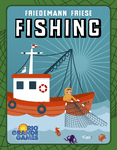
It's called fishing.
Look how cute. I am enamored by the box art here.
This is a trick- taking game by Freriedman Freeze. So, you may be familiar with Freedman Freeze. He has designed a ton of games. Power grid
and always with green.
Always with green. He also like wears a green suit if you see him at
see him at conventions. Yeah.
And he's an interesting designer I think because his he can like design on the mathier side but also on the more erratic like a more unique sort of
Yeah. If you're familiar with Fujifil that's one of his
Flush. Yeah. Facenery.
Facenery which game. Yeah.
So this is a trick taking game for three to five players. So it was one that we had to play with higher player counts. Uh and people before this is one of those games where the reputation sort of preceded itself for us like people really raved about it. So we really really wanted to try to play it uh because it was released last year. And basically in this game the game is played over the course of eight rounds and it's technically standard trick taking. It's a must follow game. There's a trump suit but the kicker with the game is each round the tricks that you win become your new draw pile to draw cards from for the next round. And it's kind of like skullking in that you're scoring every single round. So, you're keeping track. So, every card that you acquire by winning a trick uh is one point towards your final score.
But there is an ocean deck in the middle of the table.
That's the fishing aspect.
That's the fishing aspect that has increasingly uh stronger, I guess, types of cards that you will not start the game with. They're better cards of higher value that than their predecessors, which is like the standard deck when you when you shuffle everything up and the first round send everything out.
There is a deck of cards known as the ocean that just have better quality cards that'll eventually get kind of put into cycle into circulation.
So, as an example, the trump suit, none of them start in players hands. All the trump cards are in this ocean deck. Uh sometimes as I forgot what value the the first round of cards go up to.
I think they go up to 10.
10. Okay. But then some of them, some of the suits will go up to like 13, but those higher cards are in the ocean deck.
And so at at the end of the first round, you'll score one point per card that you were able to win. And then all of the tricks that you won now get shuffled into your own draw deck. And the So the thing is, if you win a lot of tricks in that first round, you're going to be drawing from those like standard cards for your next the next round's hand.
Yeah. So like, let's say round one, everybody was dealt nine cards. Round two, you're supposed to be dealt 10 cards. So,
I think it's still nine.
I'll just make it up. Let's just make up a number. Let's just say it was 10 cards. Okay. Uh and so, let's say Mo'Nique had a really strong uh first round, and she acquired more than 10 cards by winning several tricks. Let's say she won 12 cards. Okay?
Going into the next round, you're going to be playing 10 cards. So, she created a deck already that encompasses the amount of cards going into the next round. But um if I was a player who had weak cards and I didn't win too many tricks, let's say I only won one trick of three cards,
then I get to draw the rest uh up the next seven cards from that uh ocean deck. And so therefore, my hand going into the next round is going to be strong. But as we play the game and is it's a mustfollow game, these cards are now going to get distributed into different decks and then people will kind of have different asymmetric decks going into uh the next round and and it basically just kind of cascades from that point forward.
Yes. And the thing about it is not only does his deck get stronger, but it also becomes more unpredictable because you don't know the order in which players are going to be gaining those special cards. Sometimes maybe he'll gain a trump card, maybe he'll gain a buoy card. So in this game, there are also certain cards that give you certain effects that either come into play at the end of the trick or at the start of the next trick. And some of them are stuff like, well, I played this this zero, which is going to lose me the trick, but before the winner takes the all of the cards, I get to steal one. And maybe I stole someone's 13
or you stole a trump card.
Yes. And so there is a little bit of a a redistribution of those powerful cards as well. But I think that is the heart and soul of the game. It's played over the course of eight rounds, and every two rounds, you increase the number of cards that you're going to be playing that trick. So, it does get a little bit longer, right?
But the whole point of it is you're not only fishing through the ocean stack, but when you play the tricks, because the types of cards become more uh varied and more interesting in people's hands, you're also you also start fishing when you play the trick cards,
right? Whenever you play those zeros, I'm going to fish for another card that's going to get added to my deck and score me a point.
Yeah. And um so uh going back to kind of the way you draw from the ocean deck, it's really dependent on just what you won in the in the round preceding drawing from the deck. So even though Mon'nique might have had a really strong first round and she got a bunch of cards, yeah,
you don't assess all the cards in your deck. You just assess what you took in from round to round.
It's basically at the end of the round, if you have enough cards to draw from your regular deck for the next round, then you don't get to draw from the ocean stack. But if you don't have enough, you just make up the rest of it, the difference from the ocean stack. So that's basically it. Um, I think the game is really interesting. It's very unique. I've never played a game like this before.
It is. Yeah. Very different.
I will say I am not the type of player who likes to play like long trick taking games. So like
this one maybe runs a little bit long. Yeah. I I understand why it is that way because you want it builds, you know, the experience builds, but it is still like a like a standard trick taking game where it's like fall. So, you're you know, it becomes repetitive.
When the abilities come into play though, it does make it um better because once that ability comes into play, that ability is now in play for the whole game because it's going to go into somebody's deck, whoever won that trick. Yeah. Um, but I know what you mean that it did feel like definitely by the time we got to round seven and eight that it was like, "Okay, this is long.
This is kind of long."
And uh, we played it at three players and I think this game probably shines at the four or five.
Yeah. And I think mainly because at three you don't dig into the ocean stack uh, nearly as far.
There's a setup that goes into building all these different decks. The the initial deck that everybody gets and the ocean deck, there's like level two cards, three cards, four cards, five cards. And so you do this whole build thing in a three-player game and you only get so far down.
Yes.
And so it's like well I did that whole like sorting of these cards. Like that stinks.
So probably at higher player counts the game would be more more interesting but I did think that the mechanics itself were very solid. Um but I'm just not the type like even a game like Skull King which is a game that people really love. I enjoy Skull King. I still think it's kind of long.
I like Skull King but I just don't like rounds one through three.
It's like let's just jump into round four.
Yeah. I do like the the way that it sort of builds, but just any any trick- taking game that's going to be like eight rounds is going to fall into the same category for me. I kind of like my trick- taking games like
quick and easy.
Yeah, this is definitely one that I would I would keep around though. Um Yeah, cuz it I am intrigued by it and I do want to play it more.
Um but I do definitely want to figure out like what it's like at the higher player counts because three was like
I like what's going on here.
Yeah, I can see what it's getting at.
Yeah. But I I feel like four and five is probably where you want to be.
Mhm. But yeah, that's it. Nice small little trick taking card game called Fishing.
Okay, next game we want to talk about this is from Ryan Lockett and Red Raven Games. It's called Creature Caravan.
Yeah,
we were semi like over the shoulder demoed this, I believe, at Gen Con last year or maybe Packs Unplugged, one of the conventions. Gen, I think.
Just quick five minute like elevator pitch on this game. So, we finally got a chance to play it and we're going to talk about it today.
And this game also made one of our lists. I forgot which one.
Something
something. I think I think you are more intrigued by it because um you're more familiar. Yeah.
Oh my gosh.
I know. Yeah. Very well done.
I am a sucker for art of all sorts. Like I would put this on my wall. I think
Ryan Lockett is such a talented artist.
Very good use of color. Yeah.
Yes. So, uh Creature Caravan. Is this your first Ryan Locket?
I don't have much experience with Ryan Lockett games because I think they're mostly narrative.
Yeah. And I think that's part of because I have played quite a few. I played Above and Below, which is one of the earlier ones that really kind of put them on the map. Near and Far, Islebound, I've played
I haven't played any of those.
Um, and there was like a two-player only one that I played a long time ago. But Creature Caravan is probably one of the more different designs from the ones that I mentioned because like Naveen was saying, uh, a lot of his other games have some sort of narrative portion.
Now, I'm not familiar with every single one of the games that he's designed, but there is a little bit of reading from a book, and this one doesn't have that at all. So, in this game, you are trying to basically save these creatures from a disaster that's happening in the land. That's the theme of it. What's going on? But really, you're leading a caravan of like maximum 12 cards across this map
through zombieinfested through a zombie infested map. That's what you're ember zombies.
That's the That's the disaster. These ember zombies. So, you're doing this by rolling dice and assigning them to various actions that are on your player board as well as on the cards themselves as soon as you're able to get them played.
So, this is a game of card there's a little bit of card comboing, card digging through the deck. Uh because a lot of the cards, so first of all, the cards are expensive. In order for you to put them into play, you have to pay resources in the form of food. Yeah.
Bread food and bags.
Bread bags and coins. And I I found that to be probably the hardest part of the game, trying to
managing your resources, getting how to get resources to actually put cards into play,
right? Because some of your starting actions on your player board are going to be like assign this die. And when you assign the dice, all of the die values shown on your board are the minimum values that you that you need to play. But some of those starting actions are going to be like gain two bread. Well, my card costs 10 bread, so like how am I going to get enough?
I need to do something other than this just to get the bread. Yeah.
Right. But you do figure it out eventually. There's also a market where you're going to be selling your bags and coins for bread. It'll also score you points at the end of the game. And over the course of the I believe it's 12 rounds, you'll also be uh traversing across the map via your your your wagon,
your caravan.
Your caravan, but you also need to have an action available to you in order to actually move across the map.
Yeah, there's like four different types of terrain that are laid out on these uh double-sided uh boards. So, when you set up the game, there's several boards.
You can choose either at NSI just kind of randomly, and that is going to lay out the entire terrain of where you're trying to start and end up eventually. Yes.
Because you have these 12 little camp meles. And after you've moved and you stopped at the end of the round and allocated all your dice, taken all your actions, you're going to drop off one of your camps and that'll signify one of the 12 rounds.
Yes. And that's one of the things that you score for actually. So you are trying to get as far as you can across this map. But depending on where you actually uh end around is also what kind of benefit you gain. So there are there's there are features on the map. There are like treasure spaces. There are ember zombie spaces where you have to take an ember zombie token that'll that'll score you negative points at the end of the game. But by being in a space that has one of those, you'll also be able to attack them because there's this whole attack board. It's a little bit complicated to explain. And then there are spaces that gain you fruit. you know, there are some there's some features on the map and some of the features will also sort of pertain to the cards that you're putting into play. And so, besides the dice allocation aspect and the map part, I think the true heart and soul is the card play
because each card
max 12 cards,
yes,
maximum 12 cards in your caravan. And each card will either give you some sort of ongoing benefit or maybe something that happens at the start of the round or typically they'll give you additional action spaces. And the other thing is each card is going to be worth a certain number of points at the end of the game, but a lot of them are like plus four more points if you are able to find this specific type of character and place them in your caravan.
Yeah. It might be like uh when you put this card into play, it's worth two points at the end of the game.
But it says like plus an extra three points if you can find three.
Yeah. Three shy people also to go along with them.
Yes.
So like you're going to So when you're making your decisions, you're like, "Oh, this person's shy. That kind of coincides with that card wants me to score.
Oh, and it opens up a spot to be able to go onto mountains. I don't really have any ways to get onto mountains. So, but it costs seven bread.
I need to find a way to get some bread. Yes.
So, that's kind of like that's literally like your your thought your head space and your thought process the whole way. All while trying to get as far east as possible. You're trying to just really move your caravan because I believe you score one point at the end of the game for every column you've passed or ended up on. So,
at one point at the end of the game for each unique space that you were able to place a camp because if you don't move in a round, then you just place a second camp where you already are.
So, the goal of the game is to really keep moving, fight off the zombies, go to the market, sell things if you need to find cards that you want to put into play and have them match up and uh with other cards of like type or um desired kind of combos. and then keep moving, dropping off your map or not your map, your uh your camps along the way and just get as far as possible to the edge of the board.
And that's essentially the game. Now, without the card play aspect, I think everything would be just very standard, you know, straightforward mechanical that you've,
you know, nothing new kind of thing. You know, it's it would kind of be just like a very simple game. But because of the card comboing part where each type of card has their own sort of personality trait that it's like I had a I had a card one time we played that it was like you score 12 points for this card if you have one of each type
of personality at least
and you got that into play early and you're like all right that's going to be my goal for the game
for the rest of the game. And so that's your head space or at least for me my head space is like constantly focused on how I can actually make my cards score their full amount.
Yeah. It's kind of got that like now I know I've mentioned in the past I don't really enjoy this game like kind of like Fantasy Realms in that sense that like this card is looking for these cards and like if you can pair them up then you're really going to get some value at the end of the game but I think you're going to score a lot more points by fighting off these ember zombies by actually getting as far east as possible to the very very end because you're basically scoring one point for as far as you go plus if you get to the end tile you get an extra five points.
Um and then also what you do at the market. Uh, I do like the fact that the market has kind of like a timer on it.
Um, so if Mon'nique was to go and sell two coins at the market, she puts her cube out there and at the end of the round that cube is going to drop down. And so it puts the pressure on me to be like, well, I have two coins. I guess I'm going have to dedicate some time to going to the market cuz that's one of your action slots. I guess I have to dedicate one of my die there so that I can actually sell my two coins so I can get those points because if that coin drops into the scoring um little section,
the flag,
the flag, then nobody's allowed to sell at that market. That market is tapped.
It establishes a sort of a timer on it. So like Deina was mentioning, it's not just about the card play. You sort of have to do it all and that's how you can kind of score well. It's just the head space is sort of how do I make these combos? Yeah. The thing that's nice about the game is even though we've only played it at two, um I imagine at higher player counts, it's still not going to be that bad in terms of time commitment because everything is done simultaneously.
So the entire round is played simultaneously. You everybody and that's going to be for good or for bad. I don't know how people out there feel about simultaneous play whether like are you paying for stuff? Are you cheating? You know what I mean? So it really just depends on your group. It's interesting cuz like in Earth I didn't really like the semi- simultaneous play, but in this one because it's such like a light-hearted game.
Yeah.
It's it feels fineish. You know what I mean? But I still do appreciate like in games like watching you take your turn,
knowing what you're doing.
Knowing what you're doing and then me taking a turn. And so this one definitely feels like you're in your own little box. Like
that's the other thing. it besides the the competition for the market and the the ember zombie board where you know you have that established timer. It's pretty much multiplayer solitire because you can move into the same spaces. There's other players caravans like the map doesn't really have you fighting over anything. Um it's just just those two and the otherwise the entire game you're focused on your own caravan and your own and and everything is simultaneous play. So you still you don't even know what other players are really doing. There's no drafting element of the cards. It's just you just draw from a deck and you know play them as you may.
Now I will say I don't know uh you know for some people this might not be a great thing but there is some card digging because you're looking for these card combos. Some of the actions on your player board especially are like draw three cards and keep one draw one card. So a lot of times during a round I'm like spending two of my five dice on just drawing cards. So otherwise I think that's pretty much the game for me. The strength in the game is I do find it fun to look for the card combos. I am a fan of Fantasy Realms.
Um, everything else was like okay, you know, it was I felt like it was very supplementary to the card aspect of the game, but I am a sucker for the art. I love
love Ryan Lock's art style.
And I thought that it was really really uh endearing in this one. All the different cards are really fun to sort of discover, you know, the different characters that are part of this world. But uh gameplaywise it is it's on the lighter side. So I don't know how much staying power it would have in our collection in particular.
It's one of those games that like if somebody said like we're going to play this game. Would you like to play it? I said yeah sure I'll play it. No problem at all. Um is it one that I would say like
let's play this?
Let's play this today. Like maybe not. Yeah. Yeah. Not not at least from like where we are right now. But this definitely has like a a good like family feel,
family weight to it and uh very easy to teach. The biggest complication is probably just on matching up cards for people like you know for like little kids like sometimes just kids have trouble just holding eight cards up
like kids I don't know what is the age
I don't know what does it say
eight and up yeah I guess this is definitely a family friendly game it's not too complicated
and like the zombie fighting is just like a math equation it's nothing it's not like a terrorizing it's not too bad and when I say that it's light that doesn't necessarily mean it's a bad thing like sometimes you just want to play a lighter game
I I yeah like you know we we play a lot of games obviously. So like it was kind of nice to like lay this out. You taught it to me within like 10 minutes we're up and running.
Rules overhead is very very not too bad.
Sometimes that's all you want. You're like I just want to play a 45minute game.
Yeah. And the rule book's only a couple of pages. Like I thought that that was actually a very positive thing for the game. So anyway, that is Creature Caravan. If you have any recommendations for us as to other Red Raven games to play, uh please let us know.
Yep.
All right, moving on to the last game. This is the one game that was not sent to us as a review copy because this is a game that has been on our shelf for years,
maybe seven years.
We finally I don't know when did it when was it released? Really that long?
Came out in 2017. So I think we had it for like seven or eight years now.
Amazing. But we did get to play this recently and we just wanted to talk about it because I know a lot of people out there are interested in older games. Older games.
So this is a game called Heaven and Ale. Yep.
Um it's designed by Michael Keyling and Andreas Schmidt and this is published by Edgar Spiel. So
came out in 2017. Uh the same year uh Keysling did Azu as well as a game called Riverboat. So three three games in that same year. Uh that was our very first Essen that we ever went to
and uh this is one of the games that was there.
So in this game you are beer brewing. The theme is not
this is this is your classic you know 10 years ago Euro.
Yeah. Like even though we just we played this again recently I still had to like what is the theme? What is the theme of this game? You're brewing beers with monks.
This is a Euro style game where you are just trying to figure out how to score the most amount of points. Each player has their own player board and several different types of resources that you're trying to score in because they all start the game sort of scoring zero points.
Yes,
the game plays up to four players. By the way, in the middle of the table, there is a rondelle and that is where the actual game takes place. each round and the number of rounds you play is dependent on the number of players, but each round you're going to be moving around the rondelle purchasing these tiles to place onto your player board because it is technically a tile laying game.
But your board is is split into two areas, the light and the dark side.
Sunny side where you get a lot of sunshine and then like a shady side, a darker side.
Yes, the darker side I believe is cheaper when placing tiles. You just pay the cost of the tile of the whatever it says on the tile. If it's worth two, then you pay two coins. These tiles are going to be uh the different resources, the like four or five different types of resources that are in the game. And whatever the depicted amount is, it's either from one all the way up to five, you pay the cost that is depicted in the shady side. Or if you put it in the sunny side, you have to pay double the depicted cost. So if you're placing a three, you're actually going to have to place or pay six.
Yes. And the reason why is because the dark side of your board, when you go to actually score the tile, it just gives you money. Mhm.
The other side of the board actually gains you points in whatever that resource is. And when you gain points, you actually move up the track. But at the end of the game, you're going to score points equal to whatever your lowest scoring resource is. So, you're trying to figure out how to move all of your resource markers into the positive scoring area.
Uh so that you can actually score something. In addition to that, everybody has a brew master and that brew master, depending on where they end up, is also going to give you a multiplier on your points.
Yeah. So you basically at the very end of the game after you've moved all your tokens um and done all your conversions, you're going to multiply where your brew master is by where your lowest resources and that is going to be your score.
There's a little bit more to the end of game scoring that'll sort of help you with that. But that is the basic concept of the endgame score.
Now the problem is there are very limited number of times in the game where you can actually score your tiles because when you purchase your tiles and play them onto your player board, they do not score for you immediately.
Right. Right. So, you either have to take one of the few opportunities around the rondelle that actually allow you to score either all of the same type of tile or you call out a number and you just score all of the same value.
Yeah. So, if I have a bunch of fours that I've accumulated over the course of the game and I and I go to a spot, I I send my person on the rondelle to a scoring section, I could say, "All right, I'm calling all my fours. So, if I have like three fours in the shady section, then I'm going to get three * 4 12 coins." Yes,
if I have uh two fours in the sunny section, then whatever respective uh resource they are, they're going to move up the track into the scoring section four spaces.
But now you can never score that certain criteria ever again for the rest of the game,
right?
So maybe it's like, well, I really need my hops to move up and I have a lot and I'm collecting a lot of hops tiles. Then I'm trying to to wait for the opportune time to actually score the hops because you can only score the hops once during the entire game. Yeah.
And even those areas that allow you to score are in competition. You can't just take them whenever you want. It's a it's a spot on the
rondelle.
And each spot can only be visited by one player per round.
Yeah. There's also these monks that are uh al that you can also hire uh to kind of run your grounds if you want to say uh for theme, I guess. Yeah.
Whenever you score your monks, uh whatever tiles that they're surrounded, uh those are going to reactivate. Yes. So, if the monk is touching something that's in the sunny section, then it's you're going to move up the respective track on that particular um resource. Or if they're touching something that's in the shade section, then you're get the amount of money depending on what's depicted on the tile itself. Yes. So there like at first when I when we replayed this game, I'm like, wait, why would you ever put something in the shady section if you're just going to get the money back? Why would you pay two to get back two? But that can score multiple times throughout the game. So you make it a 3x multiplier on
and money is super tight. You don't gain income from round to round. You just need to you you start with a with a bunch of money and you just have to figure out how to manage your money wisely to purchase these tiles.
There's also an element of completely encircling like a I forgot what the term is like a village or something a field or something. Yeah.
And uh depending on what the actual values of all the different chits that surround it, you're going to the sum of it. You're going to place a certain type of um lodge or like cabin a field on it, whatever it is. And depending on the value, you're going to be able to reping and rescore some of the things that are touching it. So,
and that is also one of the main ways in which the brew master moves up. Yep.
Because the lower the value of the sum of the tiles around it, the more spaces you can your brew master can go up. and you really want your brew master to progress up your track.
It's your multiplier. So, you need him to to get as far as possible.
Yeah, it's tough. Those are the three really the three main ways of scoring and you're it's all about like timing. Like you're trying to figure out like oh what is the value? Which tile should I get? You're in competition on the rondelle over um I really want to hire that monk. Is Naveen going to take it first?
This is not a rondelle system where the person in the back goes next. This is everybody just takes a turn. So you can technically go as far as you want, but you're you're just only going to be able to take as u many actions as you have space in front of you that are available.
And fortunately in its euro style ways, I guess there are also these objectives and so I think that is how you score at most a majority of your points.
I think so. Yeah,
it's going to be like whoever uh is able to completely fill one entire side of their player board, then you are eligible for one of these objectives and will score you like four points. part of your decision making as you pick up different tiles. Where are you going to place them? Can you get them surrounded? Can they surround one of those fields?
Uh can you uh actually score the objectives that are out on the board? And you also have the opportunity to um place one of five cards that are in your hand.
Yes.
So when you go to score a criteria, there's like these little brackets and if you're able to score like a pairing, then you can play a card from your hand. That just kind of helps engine kind of move a little bit. It sounds probably more complicated than than it is. Like another reason why I really really like the game is because rules overhead is not too bad for a Euro game, but the game is hard. Like when you're playing it, you're really locked in and you're like, how am I going to score positively?
Yeah,
because I am this hops. It's not I don't have enough hops on my board to move my hops forward. Like it's a really hard puzzle
every round. Um, so there's like a face down set of chits or tokens and at the start of the round you that's where like you you place them out. So maybe you're like next round I really need some water.
Yes. Yes.
And you're going third and you see a really good water coming out and every like everybody else needs water.
Are they going to take this water before I can even go? Oh my gosh, how am I going to get water? Yeah, exactly. So there's a the the more players the better I think for this game. Yeah.
Um three or four player I I would not play this at two. um you truncate the amount of rounds because you have so much more opportunity to pick up stuff,
but I think the competition over the tiles creates some of that interaction in the drama.
Yeah, it's such a multi-layered game. It makes it very fascinating. Like the puzzle of trying to move up your resources while also competing for the tiles that you want and then you're also competing for these objectives. But it's really interesting and I just feel like it's so rare to play a game like this.
It was It was a lot of fun. That's why we're like, we we should probably bring like light on this game just in case if people got into the hobby, you know, 2020, 2021,
um, and they haven't like really reexplored some games from like the mid
201. Yes. The feel of games have sort of been shifting and it's really nice to find games like this again. Like this has been on our shelf for a while and we don't get to play it that often, but when we do it's like
it's like you remember why you love it so much. Yeah,
it's a different sort of design and uh I don't know. We just had a really really good time with it again. So, we wanted to share it with all of you and see how you feel. If you played this game before, let us know your thoughts because we were really like, "Wow, this is tough. It's a hard game."
Again, um if your group is really only two people, you and somebody else, I don't really recommend it. But if you can play if you can play regularly three and four, uh and you and you can find a copy of this game, I highly recommend it.
Yeah, give it a try. So, that is having a nail.
There you go.
And there you have it. Those were five different games that we wanted to talk about today. four of which came out in 2024 and one older title. So, like we were mentioning at the start of the video, this is probably the last of the 2024 only release Let's Talk Board Games episodes.
We'll try to play more. Uh we do have a few more, but
I think we have like four more games or something. Like we did a pretty good job getting through the list and when we do play them, we'll sprinkle them in. But next stop is going to be that top 10 of 2024. That's the goal. Yeah,
that is the goal. So, there are a couple of conventions coming up. You know, this is convention season. So, Gen Con is right around the corner and then Essen Spiel will be shortly after that. We will not be in attendance at either of those conventions this year. But if there are any games that you are looking forward to, please let us know what they are in the comments down below because we we like to get a lot of Yeah, we feel a lot of recommendations from from people who sort of share them.
Yeah, we are going to be doing a uh most anticipated uh of Gen Con uh video in the coming weeks cuz Gen Con's coming up soon.
Very soon.
So, we got to get that done soon.
Yeah. And if you plan on attending, we hope you have a wonderful time. Otherwise, thank you again so much to Sord Day in Publishing for sponsoring this video. Again, we have that 15% off code if you are interested in Aldara. And thank you all so much for watching the video. We really hope you enjoyed it. If you enjoy content like this and would like to see more in the future, please consider subscribing. Thank you. Bye.