





Animal Upon Animal Deep Dive
What the Community Thinks About Animal Upon Animal
Reviewers broadly agree that Animal Upon Animal is a warm, durable family game whose appeal depends heavily on who is at the table. Board Game Bollocks praised the component quality, calling the wooden pieces top notch, and said their own children have played it since they were about two or three years old. That channel still gave the game a much higher rating for families with young children than as a stand-alone dexterity game for adults without children, arguing that there is not much here for grown players beyond the stacking itself.
Brains On Games approached the game from an educational angle. In an interview with Jeremy Howard of Man vs Meeple, the discussion treated Animal Upon Animal as an early foundation for skills such as fitting shapes together and building tiers, the kind of simple play that prepares families for heavier titles. The Brothers Murf took a similar toy-focused view, describing it as a classic that blends the wooden toy craft of the publisher Haba with real stacking skill. Board Game Spotlight focused on crossover appeal and argued that adults will enjoy it as well, not only children.
The main disagreement concerns longevity. Board Game Bollocks argued that the game loses its grip as children grow older, while the retrospective treating Animal Upon Animal as part of a classic board game lineup from 2005 pointed to its influence on later stacking games as a reason to keep it in the conversation.
Core Mechanics That Define Animal Upon Animal
Dice-Driven Placement on the Crocodile
Every turn begins with a roll. According to Board Game Bollocks, one pip means placing one animal from your supply onto the stack, two pips means placing two, and the crocodile symbol means attaching an animal to the crocodile's mouth or tail. That attachment lengthens the base, giving every player more room to build. Reviewers see the dice as the source of the game's tension: the randomness is what children enjoy, and the physical placement of an awkwardly shaped animal is where the skill comes in.
Passing Animals and the Collapse Penalty
Two other roll results keep the whole table involved. A hand symbol forces the active player to give one of their animals to an opponent, who must place it on the stack. A question mark lets the other players collectively decide which of the active player's animals goes on the tower. Board Game Bollocks identified this as the element that keeps people engaged even when it is not their turn, while also noting the playful "stitch up" humour it creates. When the stack falls, the player responsible picks up extra animals rather than leaving the game, and play continues from the rebuilt tower.
The Animal Upon Animal Experience
Anticipation Among Players of Every Age
Reviewers describe the moment before each roll as one of the best parts of the game. Board Game Bollocks observed that children love the anticipation of rolling a die without knowing the outcome, and then have to turn that luck into a steady placement. Because a question-mark result can land on any player, even people waiting for their turn stay alert and invested. The reviewers' view is that this keeps a family session lively from start to finish.
Gentle Tension as the Stack Climbs
As the tower rises, the mood shifts from playful to careful. Each placement on the crocodile base or on a wobbling stack becomes a small, delicate decision, and the Board Game Bollocks playthrough captures the cheers and groans that follow a near miss. Reviewers stress that this tension stays low-stakes because a collapse is a setback rather than a defeat. That combination lets the atmosphere remain warm even as the stack sways, which is why the game often feels like shared laughter rather than a competitive contest.
What Makes Animal Upon Animal Stand Out
Chunky, Irregularly Shaped Wooden Animals
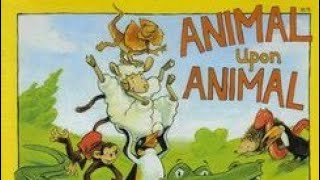
Component quality earns the most consistent praise. Board Game Bollocks credited Haba with knocking the design out of the park, citing the chunky animal pieces and their distinctive silhouettes, from pelicans with big beaks to snakes that wobble and fit together in different ways. The Brothers Murf added that the pieces are deliberately not standard squares, so each one has its own balance points and resting positions, which turns setup into a small puzzle. Reviewers also highlight the bright colours, which younger children notice immediately.
A Forgiving Rebuild-and-Continue Design
Board Game Bollocks argued that the game never punishes a player with elimination for toppling the tower. Instead, the stack is rebuilt and the game carries on, which the reviewers felt teaches children persistence and the idea that a setback is not the end. The Brothers Murf also treated the collapse as part of the fun rather than a failure state. This design keeps a young player fully in the game after a mistake, which is a major reason families return to it.
Potential Drawbacks
A Narrow Age Sweet Spot
The most prominent concern is shelf life. Board Game Bollocks found the game best suited to very young children, noting that a nine-year-old is unlikely to stay interested while a six-year-old still enjoys it. That split shaped the reviewer's rating, which was strong for families with young children and weaker for adults without them. Board Game Spotlight took a more positive view of adult enjoyment, but the criticism from Board Game Bollocks is a fair one: the game offers simple fun rather than depth that grows over time.
A Stack That Only Grows Up and Out
Board Game Bollocks also criticized the structure of the play area. The stack extends only horizontally and vertically, and the reviewer wished for a circular plinth or similar base that would let players build outward in more directions. Because the crocodile's mouth and tail are the only ways to widen the base, players looking for more strategic variety may find the choices limited over repeated sessions.
If You Enjoy Animal Upon Animal
Brains On Games suggested that children who enjoy dexterity games often gravitate toward Meeple Circus, which shares the same appeal of building something tall and hoping it stays up. A retrospective on classic stacking games grouped Meeple Circus and Rhino Hero Super Battle with Animal Upon Animal as games built on stacking things and hoping they do not fall. Board Game Spotlight also placed Rhino Hero Super Battle alongside Animal Upon Animal as a stacking game that adults enjoy as much as children, which makes it a natural next step for families who want a little more challenge.
What Reviewers Are Saying
"So, imagine if the game would end it would be oh my god, especially when you're playing with a three or four-year-old. It'd be oh my god, I've made the tower collapse and it's all my fault, but no, you start again, you can rebuild and it sort of teaches children to sort of not give up, you know."
— Board Game Bollocks
"This is from Haba who make kids games. They make wooden toys. And this kind of blends those things that they do perfectly where you have all of these cool wooden animal pieces which just on a pure toy level is great."
— The Brothers Murf
"I love dexterity games that can be played with kids but it's not just for kids like adults gonna have fun with it too."
— Board Game Spotlight