








Boomerang Deep Dive
What the Community Thinks About Boomerang
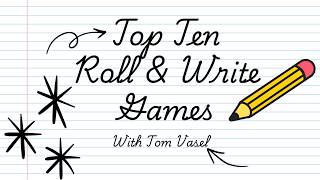
Reviewers tend to describe Boomerang as a small card game that packs in more than its size suggests. The central appeal is a draft that feels like a flip-and-fill game but keeps players engaged with one another. Tom Vassel of The Dice Tower placed it fifth on a personal top ten of roll-and-write games and called it a draft-and-write style game in which the card choices drive everything.
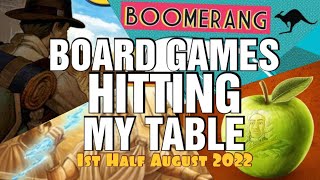
The enthusiasm carries through the rest of the discussion. The Tabletop Tokki channel calls it one of its go-to games and praises the art, the implementation, and a round structure that tightens late in the game. The follow-up Tabletop Tokki video ranks it first among its Board Game Arena filler picks. Board Game Dad highlights the scoring, while kovray praises how much fits into a small box. The shared view is that Boomerang is quick to teach and satisfying to replay.
Core Mechanics That Define Boomerang
Card Drafting and the Return Trip
Each turn, players select one card and pass the rest along, so the cards you hold come back around later in the round. Board Game Dad compares this to Sushi Go!, but points out a key difference. Players score on their first and last cards, which means they are betting on which picks will make it back to them. In Sushi Go! the final card is usually the least valuable, while in Boomerang it can carry real weight. The Dice Tower describes the core decision as choosing which card you want the most from the set in front of you.
Compound Scoring Across Categories
Reviewers describe Boomerang as a game of many small scoring goals. The Tabletop Tokki board game arena list mentions activity bonuses, pairs of animals, and gifts brought home, along with sightseeing that pays off across the four rounds. The USA edition asks players to build a railway from east to west, while the Europe edition rewards regional bonuses whose objectives shift based on what opponents are doing. Each category adds its own pressure, and the points accumulate in a way reviewers find rewarding.
The Boomerang Experience
A Quick Arc With Room to Plan
Several reviewers describe the rhythm as brisk but structured. Tabletop Tokki notes that the game gets tighter in the fourth round, which gives a short session a clear shape. Because every pick affects what can be scored later, the play feels deliberate even though a session is quick. The first and last card scoring keeps attention on the full round rather than only the opening move.
Drafting That Keeps Everyone Involved
The most consistent praise is that Boomerang keeps players interacting. Tabletop Tokki contrasts it with flip-and-fill games that can feel solitary, and notes that once a few plays are under the belt, drafting becomes a real social element. Reaching real mastery means watching what everyone else is collecting. Kovray describes it as one of the few drafting games in the roll-and-write or flip-and-write space, which helps it stand out from its neighbors.
What Makes Boomerang Stand Out
Theme Packed Into a Small Box
Kovray highlights how much happens in a compact package, and points to the racing component and the sense of exploration as strong draws. Board Game Dad values the travel theme built around a map of Australia, where each region visited opens up something new to pursue. The Dice Tower also praises the variety of things a player can chase, from sets of symbols to movement across the map.
Several Editions With a Shared Core
Boomerang has Australia, USA, and Europe editions, each with its own flavor. Tabletop Tokki says the Australia version is the one it plays most, and the Board Game Arena listing makes all three easy to try side by side. Reviewers find that the editions share a core design while differing in theme and in the scoring goals that shape each session.
Potential Drawbacks
Multiple Editions Can Feel Redundant
Not every reviewer is enthusiastic about the range of releases. Tom Vassel of The Dice Tower does not think the game needed three separate versions, even while recommending that players pick up any one of them. Anyone deciding where to start should know that the editions overlap a great deal, so the choice comes down mostly to the theme that appeals most.
Early Games Can Feel Solitary
Tabletop Tokki observes that the cards take a few plays to start working together, and that early games can feel more like a solo puzzle than a contest. Getting the most out of the game depends on tracking what the other players are collecting, which adds depth but asks for some patience. Players who are new to the drafting flow may need a couple of sessions before the interaction clicks.
If You Enjoy Boomerang
Players who like the pass-and-draft rhythm of Sushi Go! will find the card choices in Boomerang familiar, with extra weight placed on the first and last picks. Fans of flip-and-fill games will recognize the satisfying sense of marking off a growing collection, though Boomerang adds a stronger social edge through its drafting.
What Reviewers Are Saying
"It's it's almost a draft and write style game. And I think it works really well."
— The Dice Tower
"i think the art is great the implementation is great it's a quick teach the drafting is really cool and engaging and as you get into that fourth round it really tightens up so it creates a really nice game arc in a very short amount of time."
— Tabletop Tokki
"also it has a really neat scoring idea which is betting on the cards that are going to come back to you after the cards have gone around the circle so you score points on your first and your last card"
— Board Game Dad