



Burgle Bros 3: Future Flip Deep Dive
What the Community Thinks About Burgle Bros 3: Future Flip
Reviewers describe Burgle Bros 3: Future Flip as a cooperative heist game that tightens the formula of its predecessors while adding a cyberpunk theme and a new flipping system. The most enthusiastic voice is Dr. Brian McDonald of Brains On Games, who calls it the best cooperative experience they have played and says it surpasses Burgle Bros 2, which they found disappointing. That praise rests on the cinematic tension, the cooperation the game demands, and a cast of characters that keeps each session fresh.
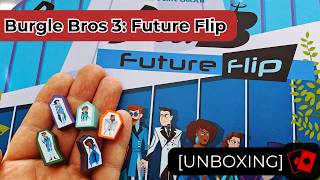
The unboxing from Tech, Sir Thecos focuses on production. Tech praises the linen-finish cards, the printed playmats, the large storage bag, and the unpainted wooden meeples, and singles out the art style. The solo session from Alex, BoardGameCo is the most candid about difficulty. Alex stays engaged throughout but openly frustrated by unlucky draws, and the playthrough ends in a narrow defeat.
Reviewers agree on the theme, the mounting tension, and the way the game rewards talking through plans. They diverge on how much randomness matters. Dr. McDonald treats the luck as an accepted part of cooperative play that can be shrugged off with an immediate reset, while Alex finds that a run of unlucky refresh cards can undo careful positioning in a single turn.
Core Mechanics That Define Burgle Bros 3: Future Flip
Disguised and Geared Flip Sides
Every character card has two sides. Characters begin in disguise, protected by a supply of cool, and they lose cool when a guard notices them or an alarm sounds. When the last cool is spent, the card flips to its geared side, which grants a larger hand size and an extra action each turn. Dr. McDonald notes that the character's ability also changes between the two sides, and that once a disguise is lost it can only be restored by a piece of equipment such as the makeup kit found in the deck. Tech observes that the geared side appears to carry stronger stats, a point the reviewer was still checking while unboxing. Alex's session shows the same flip logic applied to the building itself: room tiles are placed on one side or the other depending on the floor and the situation, and a camera room forces a die roll on entry unless a cool is spent.
Charming Workers and Assembling Program Cards
The path to victory runs through the office staff. Dr. McDonald describes the core idea as social engineering: players charm workers to draw program cards, then assemble those cards into colored sets that carry the symbols needed to hack the AI. Alex's solo game shows how this works in practice. A charm action can pull workers from adjacent tiles, a charmed worker becomes exhausted, and the team constantly tracks which color is still missing from the pattern. In one stretch of the session, a long run of draws delivered nearly every color except the one needed next, and the hand limit forced discards. The sysops guarding the building must be defeated in sequence through these kill codes before the main frame can be taken down.
The Burgle Bros 3: Future Flip Experience
A Cinematic Chase Under Rising Pressure
Dr. McDonald describes the central feeling as a pursuit. Sysops wander the floors along routes set by patrol cards, moving after each player's turn by the shortest path to a destination and drawing a new destination whenever they arrive. Suspicion cubes build up from alarms and close encounters, and each sysop grows more dangerous as its suspicion fills. The result is a pursuer that gradually gets faster and more suspicious as the team moves deeper into the building, which Dr. McDonald compares to a heist film. Alex's account reflects the same pressure, with the guards' movement regularly forcing the team to abandon a planned route.
Calculated Risk and Near Misses
BoardGameCo frames the game as a series of calculated risks. Alex explains that run-ins with guards are unavoidable, so the game provides cool and stealth to absorb them, and the skill lies in limiting the damage through good decisions. That framing turns each action into a judgment call. Stepping onto a guard's tile costs one cool, while a guard stepping onto yours costs two, so positioning matters as much as speed. Alex's loss is described with frustration and appreciation alike, because it came down to a final stealth token and a single movement. Dr. McDonald reports that the near misses make the game funny as well as tense, with the table laughing even as the stakes climb.
What Makes Burgle Bros 3: Future Flip Stand Out
Characters That Play Differently
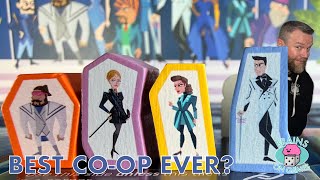
Dr. McDonald argues that replayability comes from the cast. Each character has a distinct piece of equipment and a distinct ability, and the group reports that no character ever felt useless. Dealing characters at random still produces interesting choices, and the combination on the table shifts the strategy. The Peterman is singled out as a favorite because the ability to lure sysops away without losing cool or breaking a disguise gives the team a different way to handle the guards. Dr. McDonald also highlights that the game includes separate meeples for the disguised and geared sides of every character, which adds to the sense of a cinematic cast.
Double-Sided Tiles, Playmats, and Presentation
Dr. McDonald praises the double-sided room tiles drawn from the bag, which keep each game's layout unpredictable and make setup quick. Nearly everything except the air duct goes into the bag at the start, so the game is easy to bring to the table. Tech's unboxing covers the physical product in detail: the playmats print both floors in distinct colors, the cards have a linen finish that feels good in hand, and the bag is large enough to hold the components. Tech also credits the art to Tim Fowers and Sky Larrison and calls the natural, unpainted wooden pieces a highlight.
Potential Drawbacks
Luck That Can End a Session Quickly
Dr. McDonald is the most explicit about the downside. A poor tile draw, an unfavorable combination of sysops, or a harder AI setting can compound into a loss before the team gets going. Dr. McDonald accepts this as typical of cooperative games and argues the game is fun enough to reset right away, while acknowledging that players who dislike randomness may find it frustrating. Alex's solo session shows the same effect, as a run of refresh cards early on reset the workers and undid planned positioning.
Rules Steps That Are Easy to Forget
Dr. McDonald says the rules are not hard to learn, but some steps are easy to overlook during play. The second half of the sysop's turn, where a new destination card is drawn to check the icon at the bottom, is one that groups sometimes skip, especially early on. Resetting workers is also essential for drawing more program cards, and it competes with other actions for limited turns. Alex experienced similar friction, forgetting a character's ability mid-game, misjudging when a tile should flip, and learning that a jump does not count as entering a tile, which changes whether an alarm or effect triggers.
If You Enjoy Burgle Bros 3: Future Flip
Players who enjoy the stealth and disguise tension of Burgle Bros 3: Future Flip will find a similar satisfaction in the original Burgle Bros. Dr. McDonald says the series has been underappreciated and that the first game remains a classic, so it is a natural starting point for anyone who wants to see where the formula began. Players who enjoy the moment of swapping a disguised figure for a geared one will find a similar sense of immersion in Tamashi, which Alex compares directly to this feature because a miniature can be exchanged when a character's appearance changes.
What Reviewers Are Saying
"We played it a lot. We played it as a family, played it with nieces and cousins and played it with friends who would come over. This is the one. I've played lots of cooperative games, but this is the one that has always stuck in my mind from the beginning."
— Dr. Brian McDonald, Brains On Games
"The cool thing is you can flip them. So this way they are disguised, and this way they are geared. And I think when they're geared, they are actually stronger."
— Tech, Sir Thecos
"Your job is to minimize how many bad things happen through good decisions. And once in a while, bad things happen."
— Alex, BoardGameCo