/pic4397932.png)


/pic4397932.png)



























Cartographers Deep Dive
What the Community Thinks About Cartographers
Cartographers has earned widespread acclaim as a standout flip-and-write game that offers surprising depth beneath its accessible surface. The game frequently appears on reviewers' top 100 filler and portable game lists, garnering nominations for major awards including the prestigious Kennespiel des Jahres. Community consensus centers on its elegant balance between simplicity and meaningful decision-making, though opinions divide sharply on its monster sabotage mechanic.
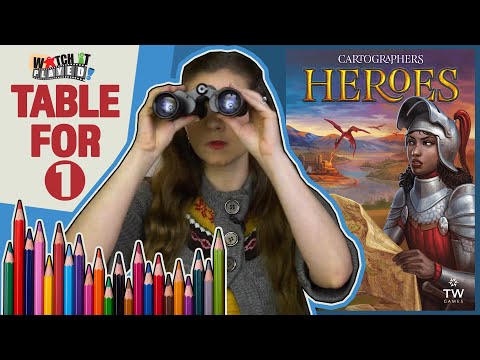
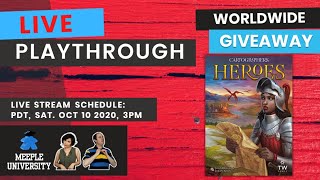
Praise focuses consistently on the game's variable scoring system, spatial puzzle satisfaction, and fresh thematic integration. Reviewers from channels like Watch It Played, Adam in Wales, Meeple University, and AzureDeath highlight the game's replayability and smooth pacing. Some criticism emerges regarding the monster interaction as an unwelcome disruption to an otherwise meditative experience, with a few players calling the sabotage element polarizing or even frustrating. Despite this, the game's accessibility, compact footprint, and ability to scale seamlessly across large player counts make it a community favorite for families, solo players, and experienced gamers alike.
Core Mechanics That Define Cartographers
Flip and Write with Polyomino Placement
The heart of Cartographers lies in its blend of flip-and-write mechanics with Tetris-like spatial puzzles. Each turn reveals a card displaying one or two irregular shapes (polyominoes) alongside terrain types. Players simultaneously select which shape and terrain combination to draw on their personal grid, rotating or flipping pieces to fit available space. Spaces occupied by mountains, wastelands, or ruins cannot be overwritten, forcing players to adapt placement strategy round by round. The puzzle tightens as sheets fill, creating mounting pressure to complete high-scoring configurations while managing scarce real estate, a dynamic tension that rewards both planning and flexibility.
Rotating Scoring Objectives Across Four Seasons
Cartographers distinguishes itself through a rotating objective structure unique among roll-and-write games. Four scoring cards appear at the start, labeled A through D, each defining criteria like forest clusters adjacent to map edges or villages filling contiguous regions. Rather than remaining static, these criteria score in rotating pairs: season one scores A and B, season two shifts to B and C, then C and D, and finally D and A. This forces players to continuously recalibrate their territorial ambitions and pivot strategies with each new season, preventing dominant single-strategy solutions. Coin rewards for surrounding mountain spaces add an additional scoring dimension that compounds across the game, encouraging long-term planning while creating decision branches that persist until the final round.
The Cartographers Experience
A Calm, Satisfying Puzzle with Serene Aesthetic
The experience of playing Cartographers evokes contemplative satisfaction, drawing terrain onto a sheet with colored pencils, watching a personal map emerge over four seasons, and gradually filling blank space with purpose. The game maintains a relaxed pace despite meaningful choice, avoiding both analysis paralysis and mindless execution. Players experience the meditative quality of spatial reasoning as they sketch and color regions, discovering in their own drawn maps a sense of ownership and creative expression. The artwork and scoring cards are cleanly illustrated without overwhelming detail, allowing focus to rest on the puzzle itself. Multiple reviewers describe the game as highly replayable yet never overstaying its welcome, completing most plays in approximately thirty to forty-five minutes with minimal downtime across any player count.
Interactive Yet Independent, Simultaneous Action with Monster Sabotage
Unlike many flip-and-write games that feel like isolated solitaire experiences, Cartographers introduces interaction through monster ambush cards. When triggered, the current player passes their sheet to a neighbor, who draws monster terrain onto the most disruptive location possible before returning it. This forces players to navigate around opponent-placed monsters while losing points for unfilled spaces adjacent to monster squares. Opinion on this mechanic splits the community: supporters appreciate the light player-versus-player texture and unpredictability it introduces, while detractors find it undermines the puzzle's meditative quality and introduces unwelcome randomness into personal optimization. The simultaneous action structure ensures all players remain engaged, with revealed cards dictating pacing so analysis paralysis never threatens momentum. Turn order within seasons is determined by card draw, not player sequence, maintaining consistent engagement across four, forty, or even one hundred players without significant downtime.
What Makes Cartographers Stand Out
Exceptional Replayability Through Variable Objectives and Asymmetric Board Sides
Each game of Cartographers feels distinct due to four different scoring card decks, each with multiple variations, ensuring no two scoring combinations repeat frequently across dozens of plays. Player sheets are double-sided, the basic side offers generous space, while the reverse presents a constricted landscape with terrain already claimed, dramatically altering spatial strategy. These dual approaches allow groups to calibrate difficulty or invite casual players without purchasing expansions. Reviewers across multiple channels report that after numerous plays, the game continues to offer novel puzzle scenarios and scoring paths, with strategic depth that rewards mastery without punishing newcomers. The rotating objective structure means even identical scoring cards create different decision calculus depending on seasonal order, further extending replayability beyond raw component variety.
Thematic Cohesion and Elegant Design Integration
Cartographers stands apart from abstract flip-and-write games by marrying theme and mechanics seamlessly. The fantasy setting of mapping Queen Gimnax's northern lands justifies polyomino placement as territorial claims, villages and forests as earned resources, and mountain adjacency bonuses as geographical advantage. Coin collection for surrounding mountain peaks aligns thematically with cartographic reward, while monster encounters represent literal threats from unexplored lands. This thematic integration elevates the experience beyond mechanical optimization, players report that the drawn maps feel like genuine artefacts of kingdom building rather than score-tracking artifacts. The game avoids unnecessary chrome: setup is minimal, teardown is instant, and rules explanation takes minutes, allowing the elegant mechanics and thematic frame to carry the full weight of engagement.
Potential Drawbacks
Monster Mechanics Divisive and Potentially Disruptive
While monster sabotage appeals to players seeking interactive take-that moments, it proves a significant friction point for those seeking meditative spatial puzzles. Multiple reviewers describe frustration when opponents' placements create unavoidable dead zones on their sheets, undermining planned strategies through no fault of their own. The mechanic lacks the direct negotiation of classic negotiation games, instead imposing unilateral optimization disruption. Some players avoid the mechanic entirely through house rules, while others argue the feature's unpredictability conflicts with the game's otherwise highly skill-based and deterministic nature. For groups prioritizing cerebral spatial optimization over confrontation, the monster element registers as a blemish on an otherwise clean design.
Limited Mechanical Novelty and Potential for Scoring Variability Fatigue
Cartographers introduces no revolutionary mechanic, its polyomino placement, simultaneous action, and scoring cards draw from established flip-and-write and tile-placement traditions. While the rotating objective system elevates execution meaningfully, the core loop remains straightforward: draw, choose, place, score. After extended play, some reviewers note a subtle sameness despite variable objectives, the puzzle-solving rhythm follows identical beats each season. Additionally, the compound scoring system involving clusters, coins, and terrain adjacency creates occasional complexity explaining scoring to new players, with card text requiring careful parsing. Reviewers note this contrasts with the game's otherwise straightforward learn-and-play flow, potentially creating a small friction point during teaching that otherwise streamlined setup and turn flow avoids.
If You Enjoy Cartographers
Players who love Cartographers should explore Isle of Skye, which shares the rotating objective scoring mechanism and subtle strategic depth, though applying it to tile-laying and auction mechanics. Welcome To... offers similar flip-and-write appeal with real estate themed number sequencing and multiple scoring tracks. For deeper polyomino satisfaction, Patchwork delivers two-player spatial puzzles without randomness, while Hadrian's Wall extends flip-and-write complexity with additional card interactions. Roll Player Universe and Scout appeal to those seeking portable, replayable games with variable setups. Fans of the solo experience will find One Deck Dungeon and Cascadia similarly meditative, while the filler audience gravitates toward Sushi Go and Cockroach Poker. For those enjoying Cartographers' theme, the broader Roll Player universe includes the original Roll Player and its companion game exploring dungeon-craft worldbuilding.
What Reviewers Are Saying
"There's a really nice balance of tactics and creativity, great balance of the game, and you're playing with the same cards and sheets but everybody's going to take their own approach on how to tackle the game, and the best player is always going to win every single time."
— Chairman of the Board
"This is such a clever game, the only downside in it is that the scoring takes a while because all the combos you've got to work them right, but even that's fun. The central game is just so simple I absolutely love it."
— Adam in Wales - Board Game Design
"One of the best games in the flip-and-write genre, and there are many more in that genre that you can check out, but this is the only flip-and-write game I've included in my list. My absolute favorite. It's very easy to learn, it's cheap, and it's one of the types of games that I could play any time. I love the puzzle every time I play this. It's just so good."
— AzureDeath | Solo Board Gaming