/pic6110612.jpg)
/pic6110612.jpg)


![OFPG - Episode 190 (Games We Played At PretzCon 2023!) [CATAN HAWAI'I GIVEAWAY!]](https://i.ytimg.com/vi/RX77OS-BrDU/hqdefault.jpg)




















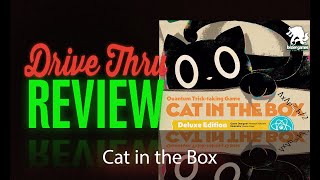



















Cat in the Box Deep Dive
What the Community Thinks About Cat in the Box
Cat in the Box has earned recognition as one of the most innovative takes on the trick-taking genre in recent years. Community reviewers consistently praise its quantum-inspired mechanical design and the way it refreshes a centuries-old game format. The game garners particular enthusiasm from players who crave intellectual challenges, though newcomers to trick-taking sometimes find its rule complexity intimidating. Most reviewers agree the game shines brightest with experienced players at higher player counts, where the paradox mechanic creates memorable swings and tension.
Core Mechanics That Define Cat in the Box
Trick-Taking Reimagined Through Quantum Mechanics
Traditional trick-taking games establish suit and trump before play begins. Cat in the Box inverts this paradigm: cards have no inherent color until the moment they are played. When a player places a card, they simultaneously declare its color (red, blue, yellow, or green) and place a token on the research board to mark that specific value-color combination. This single innovation cascades through the entire game. No two players can ever claim the same value-color combination in a single round, creating an ever-shifting landscape of available plays. The trump suit is always red, but players cannot lead with red until it has been broken by another player playing red as a follow suit. This mechanic forces players to make predictions about what will be playable later, transforming the decision tree from tactical to deeply strategic.
Predictive Bidding and the Paradox Penalty
Before the trick phase begins each round, players predict how many tricks they believe they will win and place a token on their prediction track (options vary by player count but are typically restricted to specific numbers like 1, 3, or 4). Accuracy is rewarded: players who match their prediction receive bonus points equal to the size of their largest connected group of tokens on the research board. Failure carries a sting—if a player cannot play a legal card, they create a paradox, forfeiting all trick points for the round and scoring negative points instead. This binary outcome (succeed and profit, fail and suffer) creates consistent tension because a player can be leading dramatically in tricks yet end the round with nothing if they miscalculate their hand's composition or the available color-value combinations.
The Cat in the Box Experience
Cerebral and Deeply Rewarding for Strategic Thinkers
Players consistently report that mastery opens up rich strategic territory. On first play, Cat in the Box feels chaotic and difficult to parse. Repeat plays reveal elegant systems at work: every player must monitor not just what cards are available, but which value-color slots remain empty on the research board. Smart players track which suits opponents have declared unavailable on their player boards, using this information to predict which colors are genuinely unavailable in opponents' hands versus simply chosen to avoid. The game rewards sequential play—thinking several tricks ahead about which colors to burn and which to preserve. This intellectual engagement is precisely what draws players to return repeatedly.
Tense and Swingy with High Stakes
The paradox mechanic creates emotional peaks and valleys rarely seen in trick-taking games. A player can bid three tricks, win three tricks cleanly, and still score negative points if a paradox forces them to lose those tricks from their score. Conversely, a trailing player can catch up dramatically in a single round if the leader causes a paradox or bids carelessly. This volatility appeals to players who enjoy games where the outcome remains uncertain until the final round, but it can frustrate those seeking a game that rewards incremental advantage-building.
What Makes Cat in the Box Stand Out
Brilliant Theme-Mechanics Integration
The quantum physics theme is not window dressing; it permeates every rule. Cards existing in superposition until observation (playing them) mirrors genuine quantum behavior. The research board filled with tokens tracking which value-color combinations have been "observed" evokes scientific notation. The paradox—where a player holds cards that should not exist—follows naturally from the quantum metaphor. Few games accomplish this level of thematic coherence without sacrificing accessibility, making Cat in the Box exceptional for players who value narrative meaning within mechanical structure.
Accessibility Within Complexity
The core loop is simple: lead a card in a color, others follow in that color (or declare they cannot), highest card wins. Yet the modifying rules (trump breaking, the research board constraints, the paradox conditions) add layers that reward learning. Players familiar with trick-taking generally pick up the core flow quickly, then spend subsequent plays absorbing subtle strategic depth. This scaffolded learning curve allows friends of different skill levels to enjoy the game together, with less experienced players still having a reasonable chance to win while stronger players access more options.
Potential Drawbacks
Rules Complexity Deters Casual Audiences
Cat in the Box demands significant cognitive load during the first 1–2 plays. The concept of cards having no fixed color until played contradicts years of trick-taking convention. The research board, with its orthogonal adjacency bonuses and value-color grids, adds another learning burden. Groups that bounce off the game rarely return, as the upfront effort required discourages a second attempt. This makes the game a poor choice for parties prioritizing quick, lighthearted fun.
Harsh Swing Potential and Player Targeting
The paradox penalty can feel brutal, especially when caused by unfortunate card distribution rather than poor play. A player who bids conservatively (three tricks) may be forced to lose points through no logical error if unplayable cards cluster in their hand. Additionally, players sometimes deliberately shade their cards to force opponents into paradoxes, creating a targeting dynamic that frustrates those seeking a purely strategic puzzle. While part of the intended tension, this aspect alienates players who prefer games without player-directed antagonism.
If You Enjoy Cat in the Box
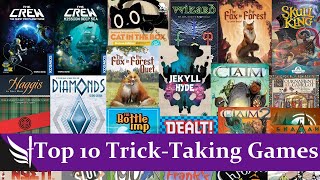
Players attracted to Cat in the Box typically relish The Crew, which shares the cooperative trick-taking format and predictive challenge (though The Crew eliminates direct competition). Skull King offers similar bidding tension and dramatic swings across more chaotic gameplay. Potato Man provides whimsical trick-taking with simpler rules but comparable color-restriction puzzles. Trick Takers delivers asymmetrical character powers that create decision trees comparable to Cat in the Box's asymmetry. Dixit appeals to the same crowd for its focus on reading opponents and predicting behavior through imperfect information.
What Reviewers Are Saying
"Cat in the Box is a quantum trick-taking game that sounds way more complicated than it actually is, but the theme really does translate brilliantly into the mechanics. You don't know what color a card is until it's played, so you never know until it's played what's possible—and that aspect is really cool. Once you understand how trick-taking works, they've kept it really simple, and they've added some flair using the theme really uniquely, so if you like trick-taking games, Cat in the Box is a great game for you to check out."
— kovray
"Cat in the Box is a new one to me, and the more I've played it, the more I've gotten in tune with how it works. There's an ever-changing dynamic of what's more powerful than whatever, and I know multiple groups that have set up to play that game, read the rules, and said 'No.' But I enjoy it. It's my number 10 trick-taking game, and it's just a really interesting twist on trick-taking where you have to break Trump in order to lead with Trump."
— Foster the Meeple
"Cat in the Box is the quintessential quantum trick-taking card game because you don't have to find colors—you have to define the color when you play it. This game has predictive bidding, trick-taking, and hand management. Everybody we've introduced it to absolutely loves it. It just takes trick-taking to a different level. If you say Starla, let's play Cat in the Box, I'm there."
— Our Family Plays Games