


City of Spies: Estoril 1942 Deep Dive
What the Community Thinks About City of Spies: Estoril 1942
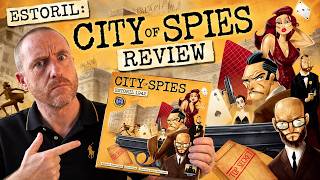
Reviewers who have spent time with City of Spies: Estoril 1942 tend to land in the same place: a quick, readable tile placement design whose best ideas are buried under clutter and swingy interaction. BoardGameBollocks praises how little rules text the game needs, but argues that the icon load and the lack of structured character power keep it from ever delivering a genuine wow factor. The reviewer's verdict is "maybe, maybe not," concluding that what could have been an excellent game ends up as an average tile placement Euro.
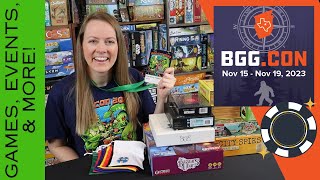
Tom Vassel, The Dice Tower, takes a more nostalgic view. In a look-back series Vassel rates the game 7.5 and recalls first giving it an eight or higher, because time has cooled that initial enthusiasm. Vassel points to the idea of placing spies and the area control at its core as the main appeal, while noting that the original 1942 theme may have scared some players away and that the later space-themed retheme, 2491 Planet Ship, was less convincing. Tabletop Tolson mentions the game in a BGG Con 2023 haul video as a prize won in a drawing, offering no verdict on how it plays.
Core Mechanics That Define City of Spies: Estoril 1942
Area Control Through Numbered Zone Activation
On a turn, a player either places one of their agent tiles into one of the zones of the location board or places a tile in the inner region, which requires an existing agent tile adjacent to the target space. Each location is split into numbered zones, and once every player has placed their tiles, the locations activate in number order, starting at zero when the expansion is in use and at one otherwise. Where a location carries a toxic marker, its tiles are turned over and the highest strength on that location wins the reward, a more powerful spy tile placed as a prize for the leader.
BoardGameBollocks describes the timing decision clearly. A player who places on the first zone usually activates first but gets no bonus action, while placing on the second or third zone offers a stronger action, such as peeking at the hidden cards on that tile or on adjacent tiles. Tom Vassel likewise treats the area control built on spy placement as the design's central idea.
Character Actions and Hidden Reward Tiles
Every agent tile carries an action that changes the board. BoardGameBollocks cites Marilyn Monroe's seduction action, which pulls another tile onto a location to bolster strength there or strip it from a rival, and an assassination action that removes a tile from the board and returns it to a hand. A flag-based ability adds strength for each other character bearing the same flag, regardless of whose character it is. Reward tiles are the more powerful pieces, placed face up or face down depending on whether they carry the top secret marking, so part of the board stays concealed until it is resolved.
The City of Spies: Estoril 1942 Experience
Spiteful Interference
BoardGameBollocks says the fun comes less from completing missions than from disruption. Players often drop a character onto the map without a clear plan, hoping it goes unchallenged or that it upsets an opponent's grip on a location. The reviewer describes the satisfaction as the sadistic pleasure of ruining somebody else's control of a space, and the review suggests that players who prefer a gentler evening should look elsewhere. Missions still award six points, but in this account the table's energy comes from spite rather than from the scoring goals.
Second-Guessing Under Hidden Information
The other side of the experience is reading an opponent. Because reward tiles can be face down and character abilities only matter once they resolve, the reviewer describes a constant effort to guess what others are planning from where they place their tiles. A placement might signal a seduction play, or an interest in locations that give a plus one to British or German characters. The reviewer notes that players can usually deduce the most important information, but the number of variables makes it hard to keep track of everything. Strategic blocking, where a player must anticipate which spaces an opponent will activate second, is what gives the game its texture.
What Makes City of Spies: Estoril 1942 Stand Out
Rules That Stay Out of the Way
BoardGameBollocks argues that the mechanics are simple: a player takes a tile and puts it on a space, and the complexity lies in the actions printed on each agent. The reviewer contrasts this with heavier designs that consume an evening in rules reading, and says that on paper the game barely seems to have rules at all. That accessibility lets the decisions come from positioning rather than from memorizing exceptions.
Positioning Pays Off Through Activation Order
Reviewers single out the fact that numbered zones resolve in order as the design's most thoughtful feature. Being first offers timing but little reward, while later zones offer stronger actions and information, so each placement becomes a choice between moving early and uncovering hidden details. BoardGameBollocks calls the resulting blocking and path planning through the inner and outer regions one of the things it quite likes most about the design. Tom Vassel also judges the game a solid one, even as that enthusiasm has cooled over the years.
Potential Drawbacks
Icon Overload Without Reference Material
BoardGameBollocks's most pointed complaint is the number of icons. The reviewer says the box has no icon summary, so players must find reference files online or rely on a cheat sheet that is still hard to read at a glance. Icons on the board can also be covered when location tiles slide around during play. The result is a learning curve that feels out of proportion to the rules, and a player who cannot recall a symbol mid-game is left guessing at what it does.
Flat Character Power and Random Reveals
The reviewer also objects that character power does not scale. Characters are shuffled into one deck and revealed at random, so strong figures with strong abilities are worth little in victory points, while weaker characters are worth more. The reviewer wished for tiers that would give a sense of structured growth. Without that, the reviewer describes play as hit-and-hope, where a player drops a character onto the map and hopes it survives challenge, which can feel more like luck than planning.
If You Enjoy City of Spies: Estoril 1942
Players who enjoy the readable placement and zone-based area control of City of Spies: Estoril 1942 but want less spite can look at Isle of Cats and Everdell. BoardGameBollocks names both as the cozier alternatives for players who do not want to ruin an opponent's position, and that contrast is useful for a group deciding what kind of evening it wants. Players drawn to the tile placement itself will find those titles a gentler route to similar satisfaction, while City of Spies rewards the sharper, more confrontational approach the reviewer describes.
What Reviewers Are Saying
"So, the first thing that we quite like about this is that the mechanics are simple. You're going to take a tile and you're going to put it on a space."
— BoardGameBollocks
"It's nothing to do with your personal fulfillment of the missions or trying to win the game. It's the sadistic nature of ruining somebody else's grip on a location."
— BoardGameBollocks
"I really liked it, but time has cooled a bit. But the idea of placing spies and there's a bunch of area control."
— Tom Vassel, The Dice Tower