



Claim It! Deep Dive
What the Community Thinks About Claim It!
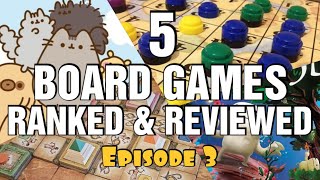
Claim It! is a dice game first published in 2006 by Wattsalpoag Games for two to five players, with a typical playtime of about 40 minutes. Chairman of the Board has come back to the game more than once: unboxing it fresh, ranking it against other recently played titles, and revisiting it in a longer look back. The verdict has stayed consistent each time.
That view is favorable on gameplay and more measured on presentation. The reviewer describes Claim It! as a tight push-your-luck game with real back-and-forth tension, while describing its visual design as dated. In the six-month recap, Chairman of the Board gave the game a rating of 7 out of 10 and said it would be worth a look for anyone who likes Can't Stop. In a ranked list of recently played games, it was placed second, described as a game of yesteryear that has faded into obscurity but remains very good in terms of its push-your-luck gameplay.
Core Mechanics That Define Claim It!
Wattsalpoag Games built Claim It! around two systems that the reviewer returns to when explaining why the game works: a dice-driven push-your-luck loop and a layered claiming system on the grid.
Push-Your-Luck Dice Rolling
On each turn, a player rolls three dice and assigns them to a row, a column, or one of the claim pieces on the grid. The player decides how far to continue, and can keep going for as long as they are willing to take the risk. If they can no longer place a die, they go bust and lose all of their efforts from that turn. The reviewer summarizes the decision as knowing how far to push and when to call it quits and secure a place on the board. The rolling is described as fairly similar to Can't Stop, where players are constantly trying to roll dice configurations that make them eligible to place pieces.
Two-Layer Claim Markers
Claims progress in two stages. The first time a player rolls a particular grid reference, they place a claim marker there, and they may even overlap another player's marker. The second time, they place a black claim marker, which is theirs for the rest of the game and cannot be stolen. The reviewer values this structure because it creates both presence on the board and permanence. A permanent claim also makes that reference ineligible for other players, which raises their chance of going bust in the future. The result is a steady exchange of spots between players while the game moves forward.
The Claim It! Experience
Two feelings stand out in the reviewer's account of the game: a tense, carefully weighed push-your-luck rhythm and a classic, understated character that belongs to an earlier era of game design.
Tense, Tight Push-Your-Luck
Because a bust erases the turn's progress, each additional roll becomes a judgment call that players must weigh against the board. The reviewer describes the experience as a good back and forth between stealing spots from other players, with permanent claims giving each move a lasting effect. The reviewer also calls the game a nice tight one, meaning that the rules and the flow of play leave little room for wasted turns.
Classic, Understated Character
The reviewer regards Claim It! as a game of yesteryear. The graphic design is described as a little drab and dated, and the reviewer suggests that a fresh coat of paint could help the game compete in today's market. The reviewer's focus, however, is on the play. The plain presentation is treated as secondary to a design that is still very good in terms of its push-your-luck gameplay.
What Makes Claim It! Stand Out
A Built-In Catch-Up Mechanism
The reviewer highlights that the game corrects itself when one player begins to pull ahead. If somebody is running away with the game, the other players naturally start targeting that player's spots and stealing them. This pressure also encourages the leading player to keep pushing their luck in order to bring the game to an end, which means the lead carries its own risk of a costly bust.
A Tight, Self-Triggering End Game
The end of Claim It! is not signaled by a separate tracking device or an arbitrary round limit. Instead, the game ends when a certain number of spots have been double-claimed. The reviewer explains that the permanent securing of spots naturally moves the game toward its conclusion, which is why the reviewer describes the design as tight and well put together.
Potential Drawbacks
Dated Visual Design
Claim It!'s look is a real weakness. The graphic design is drab and dated, and the core design deserves a refreshed presentation to compete with newer releases. Players who weigh a game's appearance heavily when choosing what to play will likely be put off by it, even though the underlying mechanics are well built.
A Familiar Push-Your-Luck Structure
Claim It! is a slight variation on Can't Stop, not a new direction for push-your-luck games. The core loop of rolling dice, deciding when to stop, and risking a bust is the same loop that title already established, and Claim It! only adds an area-control layer of claim markers and steals on top of it. Players looking for a structurally different push-your-luck game will find a refinement of a known formula here, not a fresh approach.
If You Enjoy Claim It!
The most direct recommendation is Can't Stop. Chairman of the Board frames Claim It! as worth a look for anyone who already likes that game and wants a slight variation on it. Can't Stop shares the dice-rolling push-your-luck core that defines Claim It!, including the constant decision of whether to keep rolling or to stop and secure progress. Claim It! adds the area control element of claim markers, steals, and permanent spots on top of that shared core.
What Reviewers Are Saying
"The first time you roll a particular grid reference, you'll just put your claim marker there, or you can even overlap another player. But the second time you do it, you can place this black claim marker there, meaning that it's yours for the remainder of the game, and nobody can steal it from you."
— Chairman of the Board
"I picked up a copy of claimit so this is an older push your luck style game as you are basically rolling dice and trying to claim these different markers on this grid."
— Chairman of the Board
"Claim it, another push your luck game mixed with some area control, has a lot of similarities to Can't Stop, but yeah this one's cool. I'd give it a seven out of 10."
— Chairman of the Board