
Code of Nine Deep Dive
What the Community Thinks About Code of Nine
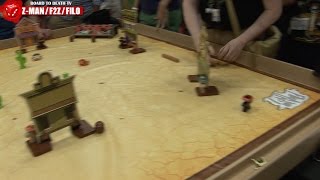
Code of Nine is a Z-Man Games card game for three to four players that reviewers present as a hidden-information deduction game built around memory and strategic scoring. The coverage so far is mostly enthusiastic but early. Jongetsgames, in a March 2022 vlog covering a batch of newly discovered titles, said they first heard about the game on the Hidden Gems podcast, which revisits older and under-appreciated releases, and that the podcast's enthusiasm was contagious. Jongetsgames said they were looking forward to trying it and would buy a copy if it were the only way to play it. Board to Death TV covered the game from the Z-Man Games booth at Gen Con, where a publisher representative called it one of the biggest surprises of the convention. The representative stressed that it was a mind-bending design that felt very different and original, in the same spirit as Tragedy Looper.
Jongetsgames later received a copy of the game as a gift in 2024. In that update vlog Jongetsgames admitted to no longer recalling many of the specifics, which suggests the game has not been widely replayed or discussed in depth by the reviewers covering it.
Core Mechanics That Define Code of Nine
Hidden Scoring Goals and Memory Cards
The central mechanic is that players do not start with a full picture of how to score. Jongetsgames described dealing out scoring cards so that everyone knows some of the scoring conditions but not all of them, which makes each player's hand a partial and private set of clues. Board to Death TV described the game's memory theme in similar terms: each player holds two memory cards that explain how to earn victory points at the end of the game. The representative also described goals that players must manage. In the version covered, a player holding more than three goals at game end could lose 10 points, which turns the goal count into a risk that other players can influence.
Worker Placement With Card Actions
Board to Death TV described the game as a worker placement design. Players place cards onto a shared board, and the action that resolves depends on where the card lands. This gives the card-based hidden information a physical arena, so the decision is both about what a player is trying to achieve and where that intention is shown to the table.
The Code of Nine Experience
Reading Opponents Through Inference
Jongetsgames focused on the social side of the design. Jongetsgames noted that because players can peek at some cards and watch what others do, the game becomes an exercise in inferring what each opponent knows. Jongetsgames compared this favorably to the logic-driven deduction enjoyed in other games, rather than to social deduction with bluffing and accusation. The result, in this account, is a game where every visible action carries information that the table must interpret.
Playful Interference
The Board to Death TV representative described an interference layer in which players deliberately disrupt rivals. Players can give an opponent resources to mess with that opponent's memories, and they can look into another player's memory to learn the plan. The representative summed up the decision space in one line: "So it's really strategic." Reviewers describe the feel as a tense contest of information and sabotage rather than a pure race to a score.
What Makes Code of Nine Stand Out
A Designer With Tragedy Looper Pedigree
Board to Death TV emphasized that Code of Nine comes from the same designer as Tragedy Looper, a title the representative praised as a major success the previous year. The representative framed Code of Nine as a successor with a similarly original premise, which gives the game credibility with fans of that designer's work.
A Blend of Deduction and Worker Placement
Reviewers highlight that the game combines two approaches that are rarely paired so tightly. Jongetsgames focused on the deduction layer, where partial knowledge of scoring drives play, while Board to Death TV focused on the worker placement board that turns those hidden cards into visible actions. Together they create the sense of a game that rewards both reading the table and committing to a plan.
Potential Drawbacks
Mostly Second-Hand Impressions
The coverage available here is not based on extended hands-on play. Jongetsgames, who discussed the game in a March 2022 vlog, described it largely from a podcast review and from rules that had been read, and said there was not yet certainty about buying it. Reviewers therefore offer more anticipation than a settled verdict on how the game holds up across many plays.
Promotional Context and Limited Independent Testing
The most enthusiastic praise comes from a Gen Con booth interview with a publisher representative, which is a promotional setting. Its descriptions of the game's surprise appeal and originality should be weighed with that context in mind. The later vlog from Jongetsgames also shows that a reviewer who owns the game may not retain its details well, which makes the rules and strategy harder to communicate to new players.
If You Enjoy Code of Nine
The game most directly connected to Code of Nine in the reviewers' accounts is Tragedy Looper. Board to Death TV named it as the work of the same designer and placed it alongside Code of Nine as a game that is "very different and original." Players drawn to Code of Nine's hidden-information memory puzzles and its strategic interference between opponents are the natural audience for Tragedy Looper, because both games reward reading other players and managing incomplete knowledge rather than building a simple engine.
What Reviewers Are Saying
"In that game you are trying to recover the memory that you lost because it's a like it's like if you woke up in the apocalyptical world and you don't know what happened and you're trying to regain your memories."
— Board to Death TV - Board Game Reviews
"This is a deduction style game not social deduction like logic deduction where at the beginning of the game no one actually knows how to score points."
— Jongetsgames
"I can also look into your memory just to get to know what are your plan. So it's really strategic."
— Board to Death TV - Board Game Reviews