




Company of Heroes Deep Dive
What the Community Thinks About Company of Heroes
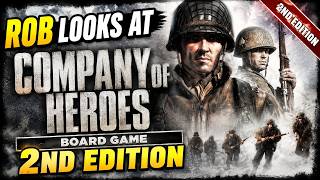
The board game adaptation of Company of Heroes has earned consistent praise from reviewers who appreciate both its mechanical depth and its accessibility. The consensus is clear: this is a tactical wargame that respects its source material while delivering engaging, approachable gameplay. Several reviewers highlight how the second edition successfully streamlined and improved upon the original, making it easier to teach without sacrificing strategic options. The game has resonated strongly with players who love miniatures games like Warhammer but want something less overwhelming, as well as with RTS enthusiasts seeking a tabletop equivalent. What stands out across discussions is genuine excitement about Bad Crow Games' commitment to the property, their attention to production detail, and their willingness to refine systems that needed tightening in the first edition.
Core Mechanics That Define Company of Heroes
Command Points and Action Economy
The Command Points (CP) system forms the heartbeat of Company of Heroes' turn structure. Each turn, players receive a limited pool of command points that govern how much they can accomplish. Want to move a unit across the board? Spend a CP. Activate a different unit? That costs a CP too. This elegant economy forces meaningful decisions: do you move aggressively, or hold back and prepare defenses? The genius of the system, refined in the second edition by Bad Crow Games, is that it scales naturally across player counts while maintaining tactical tension. Players aren't just activating everything they own each turn; they're constantly weighing priorities and choosing which battles matter most in that moment.
Deterministic Combat with Dice-Based Defense
Company of Heroes breaks from traditional wargame randomness in its combat flow. When a unit targets an enemy with line of sight, damage is assigned directly without an attack roll; what happens next is where the dice enter the equation. The defending player rolls defense dice to see if terrain, cover, or positioning allows their unit to mitigate the damage. This system creates a satisfying interplay between planning and uncertainty: attackers must position carefully to set up guaranteed hits, while defenders have real hope of surviving through smart positioning and defensive positioning. The combat system emphasizes tactics over luck, rewarding players who understand the board and think several moves ahead, much like the real-time strategy video game that inspired it.
The Company of Heroes Experience
Tactical Tension and Positioning Mastery
Playing Company of Heroes creates an atmosphere of constant tactical calculation. Every unit placement matters. Every CP spent has opportunity cost implications. Reviewers consistently describe the experience as deeply strategic with minimal random factors determining outcomes, which separates it from dice-heavy wargames. The satisfaction comes from executing a well-planned maneuver: positioning units to control objectives, setting up overlapping fields of fire, exploiting terrain advantages. There is a palpable tension between what you want to do and what your limited command points allow you to accomplish each turn, creating genuine moments of decision weight that players remember.
World War II Immersion and Thematic Authenticity
The game captures the feeling of small-unit WW2 tactics through its mechanics and theme working in harmony. Units feel authentic to their role: infantry and tanks behave differently, upgrades reflect historical capability increases, the map terrain creates tactical problems that echo real battlefield challenges. Reviewers note that the game still carries a slightly lighter, almost cartoonish tone inherited from the video game, which makes it approachable rather than heavy-simulation brutal. This balance between thematic authenticity and accessibility is deliberate; the game immerses you in the tactical moment without demanding the burden of simulationist complexity.
What Makes Company of Heroes Stand Out
Exceptional Production Quality and Miniatures
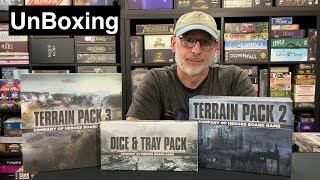
Multiple reviewers emphasize that the physical components are outstanding. The plastic miniatures are well-sculpted and painted to usable standards. The boards are double-sided with gorgeous artwork. The cardboard counters and markers are thick and durable. Terrain overlay packs are available for players who want to elevate the table presentation further. Bad Crow Games clearly invested in making this game feel premium and tactile. The production quality matters not just aesthetically but functionally: the smaller unit trays and condensed designs make setup and storage far more manageable than the original edition, which reviewers specifically praised as a major quality-of-life improvement.
Surprising Accessibility Despite Mechanical Weight
Company of Heroes presents a fascinating paradox: it is mechanically substantial, with a three-phase turn structure (maneuver, damage, supply), unit upgrades, resource management, and scenario-specific rules. Yet multiple reviewers report teaching it successfully to players across a wide age range, including younger family members who approached it with curiosity rather than intimidation. The core action loop is simple and repeatable, which builds confidence. The rulebooks and faction guides are excellently organized. The result is a game that welcomes players who want meatier tactical gameplay without requiring them to memorize dozens of subsystems. This accessibility-without-sacrifice is a critical achievement; it makes Company of Heroes a bridge game between gateway titles and heavy wargames.
Potential Drawbacks
Significant Complexity and Learning Curve
Despite its accessible design philosophy, Company of Heroes still requires genuine time investment to learn. There are buildings, pinning mechanics, line-of-sight rules, different damage types (anti-infantry, armor-piercing, high-explosive, flame), supply requirements, and scenario-specific victory conditions. Players coming from lighter games may find the ruleset daunting initially. The good news is that the learning curve feels manageable and rewarding; once core concepts click, systems reinforce each other logically. But anyone expecting a 30-minute game should be prepared for the actual 90-150 minute commitment and the knowledge overhead that entails.
Playtime Investment and Table Real Estate
A full game of Company of Heroes consumes significant time and table space. The double-sided boards are large, terrain packs stack components, and a two-player game rarely runs under 90 minutes, often stretching to 150 or beyond. This limits when and where the game can be played. Players who prefer quick play sessions or have limited table space may find the commitment challenging. Additionally, the game requires both players to engage seriously with tactical decisions throughout; one player can't mentally coast while the other thinks, as the pacing depends on simultaneous strategic engagement.
If You Enjoy Company of Heroes
Players who love Company of Heroes often gravitate toward Warhammer for its miniatures-heavy tactical gameplay and rich hobby elements. Warhammer shares the same DNA of position-based combat and army building, though it operates at a different scale and complexity tier. The original Company of Heroes video game remains an excellent digital complement to the board game; reviewers noted that experiencing the source material enhances appreciation for how the tabletop version captures the RTS's core feel. Fans of Commands and Colors wargames and other tactical miniatures skirmish systems will find Company of Heroes mechanically familiar and thematically satisfying. Any player seeking a WW2 tactical game that rewards careful positioning and planning over luck will find their ideal experience here.
What Reviewers Are Saying
Company Heroes is a war game unlike I've any played. There's a little bit of random, but a lot of tactical planning. You can build new units. It's just like the RTS that I used to play way back when. And you can play it one versus one, two versus two, which is actually very fun. So, I can't wait to get back to it.
— Board Game Hangover
When you have a company that puts their heart and soul in something and it shows and that's what this game does. It shows you an incredible amount of passion. It is so tight. The books are just beautiful. The quality, the theme everything. This is as perfect and I'm a big wargamer.
— Joe Powell Rob
Company of Heroes is based on the video game, but it is a great World War II kind of squad level game, but it's still kind of got that video game almost cartoony kind of feel to it. And I really really enjoy it. The production on this is just out of sight. You've got um three-dimensional terrain that you can get for it and you're engaging in combat. It's kind of a deterministic combat and except you get a role.
— The Discriminating Gamer