/pic428608.jpg)
/pic455214.jpg)
/pic455213.jpg)
/pic1521633.jpg)
/pic428608.jpg)
/pic4243113.jpg)
/pic6352686.jpg)






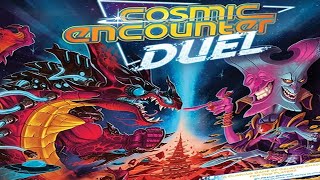
















Cosmic Encounter Deep Dive
What the Community Thinks About Cosmic Encounter
Cosmic Encounter occupies a singular place in the board gaming canon, and reviewers treat it with a reverence usually reserved for genre-defining masterworks. Having existed since 1977 and published in its current form by Fantasy Flight Games, the game has accumulated passionate advocates across decades of play. Channels like Rolls in the Family describe it as one of the most-played games in their gaming lives, with Ryan logging nearly 200 plays and recalling nights where his college group ran through three sessions back to back. The affection is deep and personal.
That reverence comes with a consistent caveat: Cosmic Encounter is profoundly group-dependent in ways that few other games are. Reviewers agree that the game provides a framework, but the players themselves must bring the energy, the negotiation, the table drama. Without the right group, the experience can feel flat or arbitrary. Actualol offers the clearest dissenting voice, describing it as a game that "sounds great in theory" but never quite delivered what he wanted, ultimately leading him to let it go. The Broken Meeple expresses similar ambivalence, noting the game sits on the shelf in an uncertain state while also acknowledging that expansion bloat has made the whole package feel unwieldy.
BoardGameBollocks captures the community's underlying consensus with characteristic bluntness: the game is unbalanced, it is unfair, and none of that matters because nothing else does what Cosmic Encounter does. For players who have found their group, this is not a game to replace. For those still searching for the right table, it remains a promise yet to be fulfilled.
Core Mechanics That Define Cosmic Encounter
The Alien Power System
The engine of Cosmic Encounter is its alien power system, designed by Bill Norton, Jack Kittredge, and Peter Olotka. Each player controls a unique alien species with a special rule that bends or breaks the normal laws of the game. These powers range from the subtle to the game-warping: the Sloth commits ships late in an encounter, the Pacifist wins confrontations by playing a negotiate card when opponents expect combat, the Filth cannot coexist on planets with other species and actively fumigates them out. As Ryan from Rolls in the Family describes it, specific alien combinations create emergent situations that feel genuinely unlike anything else at the table.
The powers interact with each other in ways the designers could not fully anticipate, and that unpredictability is the point. Each session begins with a fresh randomized draw of aliens, meaning no two games share the same power landscape. The Reincarnator changes alien identity after a loss. The Reborn draws cards whenever ships go to warp. The Philanthropist gives cards away. Individually these powers are interesting; in combination with three to five other players all running their own rule-breaking abilities, they create a cascading set of interactions that generate moments reviewers describe as genuinely unforgettable.
The Encounter and Alliance System
Every turn in Cosmic Encounter centers on an encounter: an attacking player selects a target colony, commits ships, and the defender responds. Both sides then recruit allies from the other players at the table, who commit ships of their own to either offense or defense. Combat cards are revealed simultaneously, ships are added, totals compared. What makes this system remarkable is what happens at the moment of victory: all allied ships on the winning side earn a colony on the target planet, advancing every supporter toward their own five-colony winning condition.
This structure creates a permanent tension between self-interest and collective action. A player might deliberately lose an encounter to deny an opponent a beneficial alliance. Another might ally with someone on the verge of winning, gambling that they can reach five colonies in the same moment. Caitlyn from Rolls in the Family describes this as the mechanic she finds most unique: "there's really not any other games I can think of that have that aspect of like any number of people could win depending on who teams up for the final thing." The game explicitly allows multiple simultaneous winners, meaning a coalition victory is a real strategic target, not a consolation prize.
The Cosmic Encounter Experience
Chaotic and Unpredictable
BoardGameBollocks calls it "chaos in a box," and that description resonates across every transcript. Cosmic Encounter produces situations that no designer planned and no player anticipated. The Filth alien disrupts an entire planet's occupancy structure. A well-timed flare card converts a simple two-colony win into a simultaneous four-and-five colony finish that ends the game in a single moment. Ryan from Rolls in the Family describes exactly this kind of finish from a memorable session, where one player read the diplomatic landscape perfectly and triggered their flare to claim victory in a move nobody saw coming.
This chaos is not random in the dice-rolling sense. It emerges from the collision of multiple asymmetric powers and negotiation decisions made under pressure. Players who lean into the unpredictability, who embrace being surprised and reversed and outwitted, consistently describe it as the game's greatest quality. Those who need predictability or who prefer strategic certainty will find the experience frustrating rather than exhilarating. Reviewers do not present this as a flaw so much as a personality test: Cosmic Encounter is for players who find chaos generative rather than annoying.
Social and Diplomatic
Cosmic Encounter is, at its core, a negotiation game dressed in science fiction clothing. Every encounter is a conversation: who should ally with whom, what concessions make sense, which player at the table most needs to be stopped from reaching five colonies before anyone else gets there. Ryan from Rolls in the Family describes it as "a gamer's party game in a lot of ways," and that framing captures something essential. The mechanics provide the structure, but the actual play happens in the table talk, the deal-making, the reading of social dynamics.
The alliance system means that players who would otherwise be passive observers become active participants in someone else's encounter. There is no downtime in the traditional sense because every encounter is a decision point for every player. The diplomatic texture of these decisions, weighing short-term colony gains against long-term position, identifying which alliances accelerate whose victory, constitutes the genuine strategic depth beneath the surface chaos. Daniel from Rolls in the Family emphasizes that the group itself must bring energy to this diplomatic layer: the game creates the opportunity, but the players have to engage with it fully for the experience to reach its potential.
What Makes Cosmic Encounter Stand Out
Alien Combinations Generate Infinite Replay Variation
The alien power system creates a game that is functionally different every session in ways that most other games cannot match. With hundreds of aliens across the base game and its expansions, the probability of encountering the same combination twice at the same table is negligible. More importantly, the interactions between powers are emergent rather than scripted, meaning players discover novel situations rather than executing known strategies. Ryan's 189-play count is not evidence of a game that wears thin; it is evidence of a game that consistently produces new situations worth returning for.
Reviewers who describe their fondest Cosmic Encounter memories invariably focus on specific alien power moments: the Pacifist winning through pacifism when an opponent committed combat resources, the Filth rendering an entire planet uninhabitable at a critical moment, an obscure flare card turning a routine encounter into a game-ending play. These are not just memorable outcomes but memorable stories, the kind that get retold across years because they feel genuinely singular. BoardGameBollocks notes that despite nearly 50 years and "loads of imitators," nothing has displaced the original because that emergent story-generation quality has not been replicated.
The Simultaneous Win Condition Rewrites Social Dynamics
Most competitive games have one winner. Cosmic Encounter allows any number of players to win simultaneously if they all achieve five colonies in the same moment, typically through a shared alliance victory. This single design decision reshapes every interaction at the table. It means cooperation and competition exist not in separate phases but simultaneously, in every encounter. A player might ally with the current leader not to help them win but to ride their coattails to a shared victory, denying everyone else the chance to finish first alone.
Caitlyn from Rolls in the Family identifies this as the feature that places Cosmic Encounter in a category of its own. The strategic question is never simply "how do I win?" but "can I construct a situation where my winning is compatible with someone else's winning at exactly this moment?" Managing that calculus across every encounter, reading which coalition makes tactical sense now versus which delays a runaway leader, produces a diplomatic complexity that few games in any genre approach.
Potential Drawbacks
Group Dependency Creates Volatile Experiences
Cosmic Encounter requires a specific type of player engagement to reach its potential, and reviewers are candid that this requirement creates real risk. Ryan from Rolls in the Family describes sessions that landed flat: "I've had games of cosmic that are amazing and I've had games where I go D like that just negotiated our way to a win, like it just did not give us what you want." The Broken Meeple raises similar concerns, noting the game's heavy dependence on the social chemistry of the group present. When players are not willing to engage dramatically with the negotiation, to lean into alliances and betrayals and table talk, the mechanical skeleton underneath feels thin.
Actualol's experience serves as the sharpest illustration of this risk: despite the game's reputation, it never clicked for him the way he expected. That gap between expectation and experience is real, and reviewers are honest that Cosmic Encounter does not self-generate the atmosphere it requires. Daniel from Rolls in the Family describes it directly: "the game sets it up, but then the group has to kind of take it and go from there with it to have a ton of fun with it." Players who bring the right energy find a classic; players who do not may feel they are missing something the game promised but did not deliver.
Expansion Bloat and Complexity Creep
The base game of Cosmic Encounter contains enough alien variety to sustain many sessions, but decades of expansion content have created a different problem. The Broken Meeple describes the accumulated catalog as "bloated," with individual alien powers becoming harder to parse as the design space has expanded to accommodate more exotic abilities. Managing which expansions to include, which aliens to permit in any given session, and how to introduce the game to new players without overwhelming them has become its own logistical challenge.
The Broken Meeple notes that this expansion accumulation has made the game feel "impractical" to bring to the table, citing difficulty in keeping track of which powers interact with which rules and which combinations create unfair or unplayable situations. For players committed to playing Cosmic Encounter as a curated experience with a stable group, these concerns are manageable. For players without dedicated groups who need to rebuild the table from scratch with new players, the overhead of navigating the full catalog has become a genuine barrier. Ryan from Rolls in the Family acknowledges that finding a "completely new group" to recapture early experiences with the game is difficult, partly because onboarding new players into its full complexity takes effort the game does not fully support.
If You Enjoy Cosmic Encounter
Diplomacy shares Cosmic Encounter's negotiation-first structure and willingness to let player relationships drive outcomes, though it operates through positional map control rather than alien powers and plays longer with more severe consequences for betrayal. Dune (the board game adaptation) occupies similar territory with asymmetric factions, overt dealmaking, and alliance systems that permit shared victory conditions, and reviewers frequently mention it alongside Cosmic Encounter as a game that prioritizes social dynamics over mechanical optimization. Twilight Imperium extends the space civilization framework into a full-day commitment with deeper strategic systems, but its faction asymmetry and negotiation layer will feel familiar to Cosmic Encounter players who want that experience at greater scale. Resistance/Avalon offers a purer social deduction and negotiation experience for groups who love the player-reading and alliance-management aspects of Cosmic Encounter but prefer a faster, tighter format without a board. All four titles reward players who find meaning in reading people at the table rather than optimizing mechanical systems.
What Reviewers Are Saying
"Yes, it's unbalanced. Yes, it's unfair. But it doesn't matter because Cosmic Encounter is truly one of a kind. There's been loads of imitators, but this one has been around for nearly 50 years."
— BoardGameBollocks
"There is nothing like this game, absolutely nothing like this game. And if you have the right group and you've got some fun aliens in play, like it is just a fun game of positioning and jockeying and negotiating and just like making the most of these situations you're in."
— Rolls in the Family
"You definitely need the right group. It's not a game that's just going to be a hit for everyone. You need people who are going to lean into like bringing that kind of energy. The game sets it up, but then the group has to kind of take it and go from there with it to have a ton of fun with it."
— Rolls in the Family