


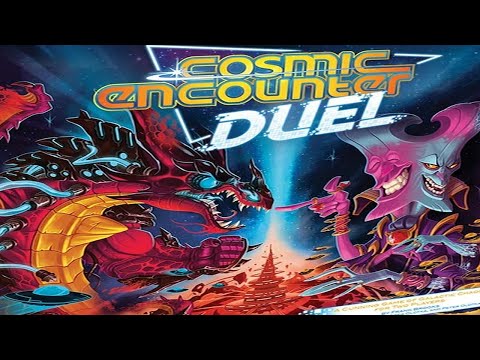

Cosmic Encounter Duel Deep Dive
What the Community Thinks About Cosmic Encounter Duel
Reviewers judge Cosmic Encounter Duel, Fantasy Flight Games' 2020 standalone two-player game, mostly against the original Cosmic Encounter. Most agree that the alien powers carry over, but the table-wide politics do not. Opinions range from enthusiasm to clear disappointment.
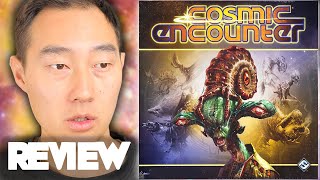
The warmest response comes from Rolling Dice & Taking Names, which places the game among its favorite two-player releases of 2020 and says it "felt like Cosmic Encounter" once the rules settled, even though the negotiation is missing. Board Games UnLocked is more measured. Its discussion calls the game "still a really good 1v1" for players willing to adopt a "beer and pretzels mindset," while preferring the original Cosmic Encounter between the two.
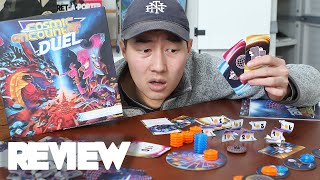
The cooler reviews come from Shelfside, which gave the game a 5 out of 10 as a group and a personal 3 out of 10, and from Board Gaming Ramblings, which found the duel did not scratch the itch of the original's wacky table interactions. Reviewers agree on the strong components, the memorable alien powers, and the deliberately silly tone. They disagree on whether the randomness of the destiny decks adds excitement or undercuts planning.
Core Mechanics That Define Cosmic Encounter Duel
Deck Building With Plan Cards
Each player begins with a personal deck of plan cards that supply the numbers used in combat. Shelfside explains that every player starts with 17 cards, so any plan card not yet drawn is still in the deck and will eventually come up. The deck is never fixed. Card effects let players steal cards from an opponent permanently, and reinforcement cards drawn during play join the deck for the rest of the game. Negative reinforcements can be played onto an opponent during a fight, then return to that opponent's deck later. In its discussion, Board Games UnLocked describes cycling cards back and forth to blunt steal effects, which shows how quickly the deck changes shape. Reviewers treat this as the strategic engine of the game, since players must track what the opponent has spent and what sits in the discard pile.
Simultaneous Combat With Tactics and Clout
Combat starts when the active player secretly commits one to four ships to a planet. Both players then choose a plan card and a tactic token, and the choices are revealed together. Shelfside describes tactics such as blasts, shields, and a recycle option that returns spent tokens to play. Each token is used up after one fight, so players must decide when to spend a strong one and when to hold it back. The side with the higher clout keeps the planet, which combines ships, plan card values, and the ship advantage printed on the discovery card. The loser retreats its ships and takes a loser bonus. Rolling Dice notes that clearing every enemy ship wins the planet without a card reveal at all, which turns ship management into a second layer of strategy.
The Cosmic Encounter Duel Experience
Playful, Irreverent Silliness
Reviewers consistently describe a goofy atmosphere. Shelfside points to flavor text about a duelist fighting over who takes out the trash, a healer envoy sprouting mushrooms, and an event that has players playing Go Fish with each other. Board Games UnLocked's playthrough leans into the same humor, with the players trading insults and puns as the cards fall. Board Games UnLocked also says the game is "definitely not a game that you can take super serious." Because the tone is so light, losing rarely feels cruel, and Shelfside says this is the game's best defense for casual players.
Swingy Bluffing and Mind Games
Beneath the humor, duels carry real tension. Players must decide whether to commit a strong plan card now or wait, and whether a loser bonus is worth losing a fight on purpose. Shelfside notes that tactic tokens and plan cards stack into a web of mind games, since a player who has already spent a shield may be bluffing about the next one. Rolling Dice adds that a single event card can overturn a carefully built position, so the excitement comes from knowing that the next card flip can change everything.
What Makes Cosmic Encounter Duel Stand Out
Asymmetric Alien Powers
Shelfside praises the alien roster for being newly written rather than recycled, with each power sorted into green, yellow, and red tiers so newer players can start with simpler abilities. The envoys echo the original game's cast, and befriending one unlocks a stronger effect that stays hidden until used. Board Games UnLocked says the powers are short enough to plan around, so surprises come from play rather than from fine print. Rolling Dice adds that the variety keeps every game feeling different, since the alien a player is dealt changes the whole approach.
Loser Bonuses That Keep Defeat Interesting
Every duel gives the loser something. Shelfside describes loser bonuses that can restore a hand or recover destroyed ships, and a cute straggler token that lets the player with fewer planets win ties. Rolling Dice calls this a "little ketchup mechanic," noting that "sometimes there is an advantage to losing." Board Games UnLocked says the design "rewards even the loser," which keeps the decision to fight or retreat interesting even when the planet is lost.
Potential Drawbacks
Randomness From the Destiny Decks
The three destiny decks drive the pacing, but reviewers disagree on how much randomness they should add. Shelfside argues that a player can be one turn from winning and then flip an event card that removes their win condition. Rolling Dice says the game "changes too quick" when events resolve, so a well-laid plan can collapse. Board Games UnLocked's playthrough includes a long run of bad draws that the players connect to the luck of the deck. The concern is not that luck exists, but that skilled play can be undone by a single card.
Reading Load, Component Quality, and Pace
Shelfside says that each duel asks players to track ship counts, tactics, plan cards, and ability text at once, which makes the game hard to teach casually. The reviewer also calls the tactic tokens flimsy and says they topple unless placed on a flat, firm surface. Shelfside lists the game at 30 minutes but says it usually runs closer to 45. Rolling Dice repeats the 30-minute figure, which suggests that group experience and rules familiarity matter more than the box estimate.
If You Enjoy Cosmic Encounter Duel
Players who enjoy Cosmic Encounter Duel's alien powers are well served by the original game, which Board Games UnLocked prefers for its open table politics. That discussion notes the original is best with more players, which makes the duel the practical choice at two. Players who want the same memorable powers in a larger group will find the original's negotiation and alliances to be the core experience that the duel leaves behind.
Players who enjoy the duel's card memory and drafting-style decisions will find Seven Wonders Duel a natural companion. Rolling Dice compares the two directly, valuing the way Seven Wonders Duel rewards watching which cards the opponent takes. Rolling Dice also lists Undaunted: North Africa among its strongest two-player games, which makes it a good next step for players who want a deeper head-to-head experience.
What Reviewers Are Saying
"Now for the nitpicks to begin, the designers kinda shot themselves in the foot by trying really hard to emulate the chaos of the original Cosmic Encounter. So instead of yelling with sabotaging your friends, this two-player game tries to capture that chaos with its three destiny decks, where after you fight, the two of you are led down this rabbit hole of non-combat things just happening."
— Shelfside
"I think it's still a really good 1v1, but you just have to have that beer and pretzels mindset."
— Board Games UnLocked
"I love it, I love it, I love this game. I swear, if you're looking for a fun to play a game, I can't recommend this enough, and I think this is gonna be around for a while for expansions."
— Rolling Dice & Taking Names