/pic4949194.jpg)






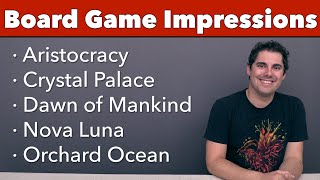
























Crystal Palace Deep Dive
What the Community Thinks About Crystal Palace
Crystal Palace occupies a unique spot in the board game landscape. It is a dice-placement game that strips away the randomness of rolling, instead putting player choice at the center of an economic puzzle. Channels like Meeple University and The Dice Tower find the 1851 Great Exhibition theme ties together naturally with the mechanics, creating a cohesive experience. It is not a game that generates the loudest discourse, but those who have played it consistently highlight how the tension between worker power and worker cost creates compelling decisions throughout.
Core Mechanics That Define Crystal Palace
Dice Placement Without Rolling
The defining feature of Crystal Palace is that you set your dice to whatever values you want before revealing them. Unlike Kingsburg and other dice-placement games where rolls determine your worker values, here you maintain complete control. You secretly choose the pip values you will use this round, then pay cash equal to those values. This creates an immediate economic tension: higher-value dice are more powerful, but they cost proportionally more money. The game, designed by Carsten Lauber for Feuerland and Capstone Games, forces you to balance short-term power with long-term solvency.
Turn Order as a Consequence of Your Workers
Because players reveal their dice simultaneously and pay based on pip values, the highest total pip value among your workers determines your turn order for the round. This creates a secondary decision layer: do you chase first position and its access to better action spaces, or hold back to preserve cash? Sometimes you need the first pick of actions; other times you can sneak in with low-value dice and grab decent rewards in spaces everyone overlooked. The cascading effects of this simple rule generate genuine strategic depth.
The Crystal Palace Experience
Managing Scarce Resources
Crystal Palace is fundamentally a game about money. Your income track can be increased, but you also spend cash every round just to activate your workers. This creates constant pressure: every coin spent on activation is a coin not spent on the board actions themselves. The delicate balance between growing your income engine and paying for immediate actions drives the entire game. Reviewers appreciate how this forces difficult choices that define your strategy, since you cannot afford to be reckless or too conservative.
Satisfying Engine Building and Chaining
Many of your player-board actions chain together or create bonuses that feed into future rounds. Securing blueprints and matching them with famous historical figures generates cascading benefits. There are newspaper resources you can convert, and various actions tie into other penalties or bonuses that create satisfying moments of combo execution. Reviewers describe the experience as deeply satisfying once you understand how the interlocking systems fit together.
What Makes Crystal Palace Stand Out
Thematic Inventions and Real History
The game's theme of showcasing technological innovation at the 1851 World's Fair is more than window dressing. The blueprints of strange contraptions, the famous people you can hire, and the exhibition spaces all reinforce the competitive showcase aspect. You are not just managing an economy; you are curating a portfolio of inventions and patronage designed to impress the judges. This thematic coherence elevates the experience beyond pure mechanical puzzle-solving.
Accessible Yet Crunchy
Crystal Palace manages to be medium-to-heavy in complexity while maintaining good table presence without becoming a physical hog. The game fits on a standard table, plays up to five, and does not require extensive downtime between turns. Yet the decisions matter significantly, and the interaction between players is real. Reviewers value this balance: the game is meaty enough to satisfy experienced players while remaining manageable for a wider audience.
Potential Drawbacks
Income Management Can Feel Punishing
The income system means you can hit cash-poor situations where your options are severely limited. While this creates tension, some players may find it frustrating when bad planning early on cascades into limited choices later. You receive debt tokens if you run out of money, and these are negative points at game's end. This penalty system is intentional, but it means early mistakes can be difficult to recover from.
The Dice Placement Mechanism Requires Buy-In
If you prefer the randomness and dramatic tension of actual dice rolling, the fixed-value system may feel less exciting. There is no chance moment where a high roll saves you or a low roll betrays you. Everything is deliberate and calculated, which some players love and others find less thrilling than games with inherent randomness.
If You Enjoy Crystal Palace
Players who appreciate the economic puzzle of Crystal Palace often gravitate toward other heavy euros like Anachrony, which shares similar resource scarcity and engine-building themes. Those drawn to the worker-placement-with-a-twist approach might also enjoy Airship City, which layers additional decision points onto the classic worker-placement formula, or Anno 1800 for a comparable economic build with shared progress tracks.
What Reviewers Are Saying
"You don't roll your dice, you get to set them to whatever numbers you want. All players do this secretly, then reveal. Then players have to pay for their dice. So now the higher values are stronger, but they cost you more coins."
— The Dice Tower
"You're paying valuable money to determine the number of workers, what the values are, and your turn order all at once, plus the actions you're spending those on. Some of them are very important. Sometimes you have to dip deep to pay for those, and sometimes it's quite obvious what you need to do."
— Meeple University
"The dice-placement piece is so enjoyable. No matter how I do, I always enjoy my plays, and that's why it ended up at number 41 on my list."
— The Dice Tower