Graeme's Top 100 Games of All Time: 50-41
Games in This Video
7 games are featured in this video — they unlock as you watch.




Transcript
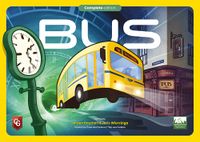
Welcome back. And now we get into the good stuff. You know, the top 50 games. So, let's jump right into number 50. 50 on my list is another splatter game. And this one is Bus. You take on the role of building and managing a public transportation system in an expanding city. Passengers will want to follow a predictable daily routine. Leave the house, go to work, then go to the pub after work, and then back home. All players are competing to pick up and drop off the same passengers. The basics of the game are pretty straightforward like all splatter games, but there's still a lot of thought that goes into every single decision that you make. If you want to dabble your toes into the splatter games, this is usually the one I would suggest to start with. But be warned, this is a nasty game. This is not a solitary game. Right from the get-go, you're trying to outwit your opponents to steal away their customers or to make it so passengers just won't get on their buses. Every point in this game is so hard fought, so you need to be able to watch and double think everything your opponents are doing. Oh, and of course, there's a way to stop time and hopefully mess up everyone's plans except yours. There is a penalty to do that, but sometimes it's necessary.
Bus is such a deliciously confrontational game with everything out in the open, no hidden information. You see the board and you know what people you have, and if you miss something or allow players to get away with something, it was there for you to see all along. Like all spotter games, every decision matters. And that's why I enjoy Bus so much that it's my number 50 game. Number 49 is Solarious Mission. Set in a pulp sci-fi universe, players lead space fairing civilizations to explore, colonize, and trade across the galaxy. It combines dice drafting and manipulation, resource management, techtory advancement, colonization of planets and missions along with space states and outposts. Now, this is a good example of a game with an extremely tight economy and something I realize I actually really enjoy in games. There's so much to do in this game. From exploring the planet, settling on them, gathering resources to fulfilling settlement requirements, building outposts, completing missions, building space stations. There's so much to do in this game, as you can tell. But the kicker, and the reason why this one's on my list, is you only have 16 actions for the entire game. You need to focus early on in the direction you want to go, but you can't be so rigid that you can't alter your plans midame. It's another game of every turn counts because you only have so few of them. And I love that. And you'll see that more in my list as it goes on. And that's why this is number 49 on my list. 49 on my list is actually a strange game. This is the Vulgari Eloquentia. And by strange, I mean the theme is one and this one is unique. Players try and do their part to the creation of a new language or the the evolution of Vulgari, the language of the common people in the Middle Ages of Italy. You'll be traveling across Italy translating manuscripts, collecting dialects, and gaining influence. The main mechanisms here are
action points. You can spend them how you want and each player uses the same five action discs. The main actions are all tied back to the theme. You'll spend action points to move across Italy, gain knowledge to move up the knowledge tracks. You can be hiring assistants. Although very thematic, it doesn't sound that different from other heroes. What sets this one apart for me is there are two ways you can go in the game. You can stay a merchant for the entire game, and there are definitely some advantages for that, like there's a lot of income, but you can also decide to become a monk and follow that track. You give up half of your money and are paid by the merchants each round. So, it makes doing things during the game slightly more difficult, but it does open up more end ofame scoring. You'll also progress on the month monk path from monk to frier to cardinal to hopefully becoming the next pope. A major endgame bonus. I love that decision. Each player is free to make it for themselves. And I haven't found which path is better. It all depends on the current situation, how the other players are doing. If someone has a merchant strategy going well, well, maybe it's time to switch to being a monk to get some of their income. The game is hugely thematic with an interesting theme and some really deep strategy and why it's my number 48 on my list. Number 47 is called Wendake. Each player takes on the role of a tribal chief in the Great Lakes region during the 7 Years War. Players manage the aspects of village life like farming, hunting, trading, rituals, and military presence. The theme is more about the daily life of the one dot people, not the war itself. What intrigues me most about this game is actually the action selection progress. Each player has a 3x3 grid of action tiles. You must choose three actions in a straight line, horizontal, vertical, or diagonal each round. But you don't have to go into a
fixed order. Your first action could be, let's say, the bottom right corner. Then the next one you determine will be determined which way you go, up, left, or diagonal. Once you've taken your actions and choose a player order, you flip all these tiles over, shift your grid down, and from the ones that fell off, you'll potentially upgrade one of them, shuffle the three, and place them back in the top row. So you have this kind of water flow effect. The actions you're going to be doing are pretty straightforward. placing canoe out, uh, moving your people around the map, gathering resources, and there is some warfare in this. I also like the endgame scoring. You score the two lowest scoring tracks from two randomly paired tracks. There are only two pairs, so you add up the lowest token from each pair. That means you need to be balancing what you're doing, as you cannot ignore kind of one aspect of the game. So, with an interesting action selection process with a variable endgame scoring lands this one as 47 on my list. When my number 46 was reprinted, I was very happy because I was actually unable to obtain the original game. This is I think it's called Jean Goalo, the first emperor. The game is set in ancient China at the time of the first emperor.
Players are emissaries competing to gain the emperor's favor by contributing to the unification and expansion of the empire. Now, the main mechanism in this one is card play. Each round, you'll be playing six cards and perform either a unification action, which is a regional development, or the court action, which are kind of imperial services. And it's this simple action which leads to a breadth of option and why I enjoy this game so much. As with a lot of these games on my list, it comes down to balance. And here you're balancing multiple systems at the same time. Resource management, area control, and timing, all the while adapting to what the other players are doing on their turns. And this all starts with deciding if you're going to play a card into your region on your player board or you're going to use that card to take a court action. This game does a great job of balancing a simple action, playing a card with a depth of consequences. Thinking about the impacts the one action can do is half the fun of this one and why I find it so enjoyable. You need to be watching what the other players are doing to slightly pivot your strategy, but building up your card engine to trigger combos across the region and activating multiple effects is why this game ended up as my number 46. 45 on my list is actually a re-implementation of a game that was on my list for many years. This one is dominant species marine. When this game came out, I like both versions of the game for different reasons. The premise of the game is each player is taking on the role of one of the major aquatic based animal classes. Reptiles, fish, sephalopods, or crustaceans. The game starts in balance, but during the game, each player will try and dominate the environment. What I love about this is the worker placement and resolution process. On your turn, you'll place one of your action pawns, and there are a number of actions you can do. You know, adaptation, migration, completion,
wonderlust, plus a bunch of others. When you place your pawn, that dictates where you place your next one, as you must always place a pawn on an action lower than your previous one. There will be points during the game when area majority uh happens and at other times when you maybe need to ensure your species can actually eat the spaces where they're located as food comes and goes on the ocean hex's. Now, I don't didn't want to leave both dominant species and marine on my list. So, I put marine. I find it a little more simplified and a little easier to teach, but still gives me the depth of strategy and lots of opportunity to eliminate my opponent species from the board. This one is probably the most player interactive game I have in my list, and it is mean, but so much fun and my number 45. Next is number 44 and goes from life under the sea to life out in the universe. And this is SEI: Search for Extraterrestrial Life. Players take on the role of scientists racing to discover alien life across the solar system. Players lead a research institute developing probes, analyzing data, advancing technology to be the first to make contact with the aliens.
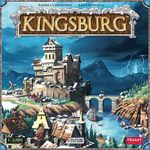
This game uses one of my favorite mechanisms, multi-use cards. Each of over the 200 unique cards in the game can be used for one of three things. Knowing when to use them most efficiently comes down to when in the game you are, and that eb and flow of that game. And the card use is so much fun. Beyond the fun theme and the rotating board, what I like most about this game are the aliens. At the beginning of the game, there are random aliens placed on the board face down. When the players have enough evidence, they're going to reveal and will change how the game progresses. Not dramatically up to, you know, usual extra scoring opportunities or abilities to acquire from them. I do find the reveal of the aliens probably the most enjoyable part of the game, but getting to that point requires you to balance exploration, data collection, and tech upgrades, but also make sure a single player doesn't get all the glory for discovering that alien. You got to make sure that everybody's contributing to that. And that is why it's my number 44 game. 43 on my list is another older game of dice rolling and character selection. This is Kingsburg. Players take on the role of governors in a medieval kingdom, developing their province over 5 years. The core mechanism of this one is dice rolling and I guess adviser influence. Each player will roll their dice. The player with the lowest role gets to place their dice first on an adviser and there are 18 advisers numbered 1 through 18. The higher the number, the more potentially powerful the adviser is, but only one player can be on each adviser in a round. The advisers are the primary way to get resources. Once the resource has been received, players can use the resources to construct buildings on their own provinces. These buildings will give you maybe ongoing benefits or defense or victory points. At the end of each year, the players will be attacked by a common foe, and you'll gain rewards
or penalties depending on your defense, whether you're able to defeat them or not. For me, the joy of this game comes down to that main mechanism of dice allocation. I love the balance of the die roll. You rolled low, but you get to pick first at the advisers. I would say this game makes my list only with the expansion, but luckily the new edition comes with that expansion kind of built in. So, it's my number 43. The next on my list is number 42, and it's another one that you may not have heard of or may have missed. This is Grand Trunk Journey. Players manage railway subsidiaries of the historical Grand Trunk Railway in the 19th century. Now, this is a pickup and deliver game, but combined with deck building for an interesting mix. Your train is a tableau of cards consisting of location, locomotive, and rail cars. These will determine the movement and the capacity. There will be demand in various cities. And the goal is to, of course, to pick up goods in one city and drop them off in another city that wants those goods.
And the map is going to open up as players build terminals to offer more opportunities. There are several reasons why this one's on my list. First, multi-use cards. Cards will have a city on them, which can be used to move to a destination, or you can use the card for its actionability. I always love games that force you to make that decision. To go along with that, you have the option of getting upgraded cards to make your progress hopefully smoother and quicker. Now, if you combine that deck management with multi-use cards with a time track, now this is a game for me. Almost every action you take in the game costs days, and whoever is furthest back on the time track goes next. But there's also special delivery worth a fair bit of points that are only available for certain times on that time track. You can only complete the special deliveries if your time marker is in that window. And it's this combination of all these pieces put together to a fun game. human whites by number 42. And the last one in this section is number 41 and it's Crystal Palace. Players represent nations competing to showcase technological innovation during the 1851 World's Fair. Now, the main mechanism this is again dice placement. Kind of like Kingsburg I talked about earlier, but this one comes with a twist. You don't roll your dice. You get to set them to whatever numbers you want. All player do this secretly, then reveal.
Then players have to pay for their dice. So now the higher values are stronger, but they cost you more coins. Players will then take turns placing their dice onto the eight different areas like the patent office, bank, museum, and things like that. Some dice spots require a certain value, but dice are always resolved from highest to lowest. But not overpaying to get the action you really want is critical. You can receive death tokens during the game if you run out of money, but they're negative points at the end of the game. High dice can be used to block other players from taking an action. Sometimes there are two rewards for a space, but three dice spots, and only the first two dice get something. But sometimes you can sneak in with a lowv value die and get a decent reward in an area players are really not focused on for this round. The theme in this one is fun. You'll be getting blueprints for some weird contraptions that you'll want to turn into inventions and maybe even hire some real life people to help you out like Levi Strauss and maybe Amelia Edwards.
There's a fair bit to keep track of during the game, but the dice placement piece is so enjoyable. No matter how I do, I always enjoy my plays and why it end up as my number 41. So that's it for this group of 10. And as I move closer to my number one, it becomes harder and harder to say, you know, this game should be above another one or, you know, this is better than that one. But that's it for the moment. Until next time, thanks for watching. Hey everybody, thanks for watching this video. If you like this review or whatever you just watched, wasn't it amazing? Uh, check out our channel, Dice Tower. We have all kinds of things. We review games, we do top 10s, we play games live. It's all about board games, but especially the people who play them. Check out Dice Tower YouTube channel.