/pic973934.jpg)
Description from the publisher:
Scofflaws are brawling in the streets of Deadwood. The railroad is being built, and to you and the other gangs in the badlands of South Dakota, this means one thing: cold, hard cash. As a cowboy on the wrong side of the law you know just how to take control of this shanty-town: threaten, fight, and kill off your rivals.
Deadwood is a wild-and-wooly board game with a quick and deadly twist on classic worker placement games. Your gang consists of three different classes of cowboys with different strengths: greenhorns, gunslingers, and trail bosses. Cowboys ride into town to gain control of (annex) buildings and fight other gangs' cowboys in shootouts.
At the beginning of the game, the town of Deadwood consists of the Town Hall, the Church, the Sheriff's Office, the Saloon, and four other randomly drawn buildings. Additional buildings are constructed whenever a cowboy annexes the Town Hall. Each building has at least one unique ability that is used immediately, with some buildings offering more long-term advantages.
A cowboy accesses these advantages by controlling the building. To gain control a player simply places one of his gang on a building tile, "annexing" it. Other gang leaders can try to gain control of your buildings through shootouts. The player that instigates the shootout receives a Wanted Poster token; the more cowboys you try to kill off, the more Wanted Poster tokens you collect, and the higher the fine you must pay at the end of the game.
Deadwood can end one of three ways: the Train Station is placed on the board once the railroad is built and completed, there are no more Wanted Poster tokens in the Crime Pool, or any player has no more cowboys alive. The player with the most cash at the end of the game is the winner!

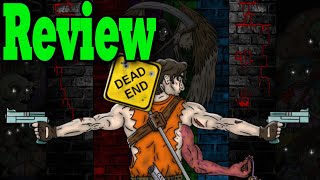
Dead End - a Solo Tower Defense Game (Review)
- Innovative action-card shooting system
- Compact, travel-friendly design with box-as-board
- Color-blind friendly symbols
- Strong thematic flavor with voices and boss mechanics
- Snappy, quick gameplay suitable for solo play
- Rule clarity and timing require tightening (precedence rules about drawing vs. completing actions)
- Difficulty can be punishing; potential for early defeat
- Some table space considerations for clear visibility during play
- Demonic arms, anti-hero protagonist fighting waves of enemies in a solo tower defense
- Urban alley setting with three lanes defending a nexus
- Array
Mechanics (from transcript analysis)
Video topics + discussion points
Quotes (from this video)
- Dead End is a solo thinking man's board game for ages 12 up that takes about 25 action-packed minutes to play and survive.
- this box is kind of a deluxe tuck box and it opens up and it becomes part of the board that you play on.
- the designer did actually think about people who are color blind.
- it's small. It's fast. I think it's a good travel game.
- Dead End is super cool.
References (from this video)

- natural-feeling balancing mechanic
- reduces runaway leaders in a fair way
- may feel punishing to leaders
- Dominion
- Flam Rouge
Mechanics (from transcript analysis)
- Headwind / front-runner drag — A catch-up mechanism where the leading player is slowed down; rivals can exploit this to catch up; commonly used in racing-themed or cycle games
Video topics + discussion points
Quotes (from this video)
- this is entertainment right this is not an academic study of board game mechanisms
- i've deliberately kind of not looked at that [Building Blocks of Tabletop Design] and used those categories because i wanted to keep this a fairly personal list
- the act of drawing is in itself fun
- i find this really really satisfying this constant attack and defend evolve adapt to the changing situation
- it's a really satisfying sort of tug of war balance to be found