



Dice Throne Outcasts Deep Dive
What the Community Thinks About Dice Throne Outcasts
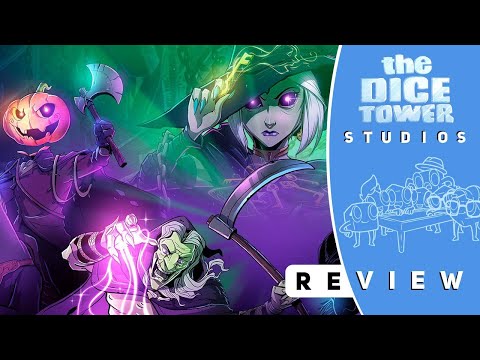
Dice Throne Outcasts is the latest expansion for the beloved combat dice game, introducing four new heroes with a distinct Halloween aesthetic that shifts the franchise in fresh directions. Reviewers consistently praise the expansion for delivering exactly what Dice Throne players crave: distinct hero identities, engaging mechanics, and eye-catching art. The Halloween theme permeates the design through the heroes' concepts (a werewolf transformation, a necromancer with undead minions, a headless horseman throwing his own head, and a raven-wielding dark mage), creating a cohesive and thematic product. However, reviewers are nearly unanimous in one warning: these heroes are significantly more complex than previous releases, and they are absolutely not intended for players new to Dice Throne. Veterans of the system, though, consider the expansion a worthy addition to an already robust line.
Core Mechanics That Define Dice Throne Outcasts
Damage-Based Combat Through Varied Health Pools
Like all Dice Throne games, Outcasts relies on rolling custom dice to trigger abilities and deal damage. Each hero attacks opponents by rolling their signature dice and comparing results to their card effects. Combat plays out over multiple exchanges as players chip away at opponent health pools. Unlike games that resolve attacks instantly, Dice Throne's damage-based system makes positioning, healing, and damage mitigation as meaningful as raw output. The four new heroes each introduce layered combat systems that sit atop this foundation, adding decision points about when and how to deploy limited resources.
Asymmetric Hero Abilities and Card Synergies
Each Outcasts hero operates on fundamentally different resource systems. The Pale Lady toggles between two forms (human and werewolf), burning moon shards to transform and weakening in her human state. The Ravenous deploys Nevermore, a crow companion that orbits the board, afflicting opponents with negative effects while healing when recalled. The Headless Horseman accumulates dreadful tokens and throws his haunted head, building terror on targeted foes. The Necromancer feeds a corpse dial, summoning skeletal minions that perform various bonuses while risking disintegration at turn's end. Each hero's card deck exclusively supports their unique mechanic, meaning learning one does not prepare you for the next.
The Dice Throne Outcasts Experience
A Thematic Halloween Fantasy Come to Life
Reviewers note that Outcasts leans fully into Halloween flavor through art direction, component design, and mechanical theming. The pale pink dice for the Pale Lady, the raven-eye dice for the Ravenous, and the pumpkin-adorned cards for the Headless Horseman make each character feel visually distinct across the table. The core gameplay fantasy of each hero is reinforced by mechanics rather than merely implied by art. Rolling the Headless Horseman's axe-branded dice while throwing his head at an opponent, or watching the Necromancer summon undead minions turn after turn, delivers the thematic payoff that card art alone cannot. Collectors and thematic players report genuine excitement unpacking the expansion.
The Joy of Playing Heroes That Feel Fundamentally Different
Reviewers emphasize that the four new heroes do not feel like minor variations on existing designs. Each requires learning a distinct turn sequence, resource management pattern, and strategic priority. The Pale Lady plays as a shape-shifter, balancing offensive werewolf form against defensive pale lady form. The Ravenous plays as a control character, spending actions to manipulate her companion's position and trigger punishing effects on whoever holds Nevermore. The Headless Horseman plays as an accumulation engine, building resources (dreadful, grim pursuit) to unleash bursts of damage and utility. The Necromancer plays as a population manager, weighing the value of summoned minions against the vulnerability of losing them each turn. Playing through all four reveals four distinct paths to victory, making the expansion feel genuinely generative rather than iterative.
What Makes Dice Throne Outcasts Stand Out
Complex Hero Mechanics That Reward System Mastery
Reviewers highlight the Necromancer as a showcase for this expansion's ambition. With a complexity rating of 6 (the highest in the set), the Necromancer does not just roll dice and play cards; the player must navigate an unearth passive that locks abilities each turn, track corpse accumulation, manage summoned minion types and their individual effects, roll dice for each minion at turn's end to determine their survival, and orchestrate corpse expenditure on summons or corpse explosion. This is not fiddly game design; it is a fully realized character archetype supported by smart card design and tokens. Players report that while the Necromancer's minion army sounds more powerful on paper than it plays (minions grant small bonuses rather than dominating), the fantasy of "bringing back armies of the undead" combined with the standout resurrect ability (which allows surviving with just five health when destroyed) creates a compelling character to master. Reviewers note that this level of depth indicates the designers are willing to challenge experienced players rather than chase mass appeal.
Polished Component Quality and Magnetic Box Clamshell
Unboxing reviewers report that the Outcasts expansion receives the same production polish as previous Dice Throne releases. Custom dice, double-sided hero boards (for the Pale Lady transformation), corpse dials, and dreadful/grim pursuit tokens all feel substantial. The magnetic clamshell box cover with comic-strip interior art adds a premium feel. Reviewers specifically mention the refreshed quick reference cards and the inclusion of a damage type chart in the component set. For a Kickstarter fulfillment, the production quality meets or exceeds backer expectations.
Potential Drawbacks
A Steep Learning Curve for Newer Players
Every reviewer emphasizes that Outcasts is not a gateway product. The Pale Lady, the "easiest" new hero at complexity 3, still requires understanding moon shards, form-flipping mechanics, and the tension between her weaker human abilities and stronger werewolf abilities. The Headless Horseman (complexity 4) introduces terror and grim pursuit tokens with multiple spend paths. The Ravenous (complexity 3) and especially the Necromancer (complexity 6) demand mental overhead that will overwhelm players learning Dice Throne for the first time. One reviewer explicitly recommends: "I would not buy these if you're just getting into Dice Throne." New players should first master the base game with simpler heroes before tackling Outcasts.
Commitment Required to Truly Master Each Hero
Because each hero operates on a fundamentally different resource system with different card synergies, players cannot simply "learn Dice Throne" once and apply it across Outcasts. Learning the Ravenous does not prepare you for the Necromancer. This is by design, and most reviewers celebrate it, but it means purchasing Outcasts is a commitment to invest learning time per hero rather than a collection expansion that plays like the base game with bonus characters. Players with limited table time or who prefer quick reacquaintance before a session may find themselves frustrated by the ramp-up required.
If You Enjoy Dice Throne Outcasts
Dice Throne Outcasts sits in a direct lineage with the base Dice Throne game and Dice Throne: Vanguard, the other major expansion in the current ecosystem. Players drawn to Outcasts' Halloween aesthetic and complex hero mechanics should absolutely explore Vanguard, which introduced earlier complex heroes with their own asymmetric mechanics. Both expansions share the philosophy that later releases should challenge veterans rather than repeat earlier designs. Additionally, players fascinated by the Necromancer's corpse summoning system or the Ravenous's companion control mechanic might explore other hero-driven combat games that emphasize distinct character identities and learning curves per character, though Dice Throne's dice-driven resolution remains distinctive.
What Reviewers Are Saying
"Dice Throne just keeps nailing it with new characters who feel different than everyone else. These look fantastic. The artwork, of course, is still one of the best parts of Dice Throne. I find this to be such an enjoyable, terrific game to play."
— The Dice Tower
"We have the pale lady over here who turns into a werewolf. We have the headless horseman who does not turn into a werewolf. Then we have over here the Ravenous as well as the necromancer. Those are going to be the four classes, the four classes you play with over here. But yeah, Dice Throne is a game that I didn't pick up Outcast because I'm in this weird place with Dice where I always enjoy it, but I have so much of it, I don't need more. So, I skipped on Outcast."
— BoardGameCo
"If there's new content for Dice Thorn, you know, I'm going to try it. You know, I said a while ago, oh, I don't, I have enough now. I don't need anymore. I was not truthful. I don't know. I don't think, no, I'd take that back. I was truthful at the time that I said it. It just didn't stick. Yeah, it didn't stick. It's hard. It's hard for me."
— Positively Board Gaming