/pic2606156.jpg)

/pic2606156.jpg)

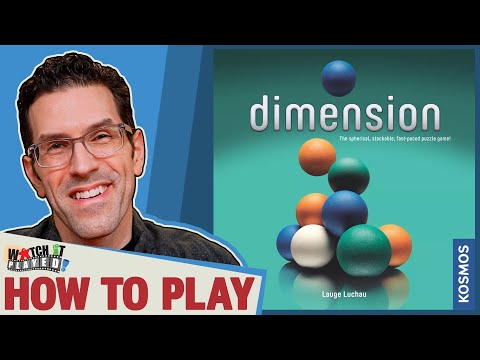















































Dimension Deep Dive
What the Community Thinks About Dimension
Dimension has earned respect from the board gaming community as a smart, accessible abstract puzzle game that challenges players without overwhelming them. Reviewers consistently praise its elegant design, particularly the tension between solving the puzzle perfectly and doing well enough to compete against others. The game stands out for delivering real cognitive satisfaction in bite-sized rounds, making it a favorite introduction to modern board gaming while remaining engaging for experienced players.
Core Mechanics That Define Dimension
Rule Card Navigation and Constraint Solving
The heart of Dimension lies in interpreting and satisfying a set of randomly drawn rule cards. Each round, six rules are revealed that dictate which colored spheres can be placed and how they may be arranged. Players must mentally parse rules that might state "blue and black cannot touch" or "you need more green than black" and work these constraints into their pyramid construction. Getting Games highlights how satisfying it is to identify anchor points in the rule set, like spotting a color that has no restrictions, and building from there. This logic puzzle quality gives Dimension a deeply cerebral feel despite its simple presentation.
Real-Time Simultaneous Building Under Time Pressure
The one-minute sand timer creates meaningful urgency without causing the stress many players associate with timed games. As Getting Games notes, the timer is long enough that skilled players can usually complete their pyramid before time expires, but it forces consistent, deliberate action. Players must balance the temptation to second-guess their work against the knowledge that most turns will have time remaining for verification. This creates what one reviewer describes as a "steady pressure" that keeps the table engaged and prevents analysis paralysis while remaining manageable for new players.
The Dimension Experience
Cerebral and Meditative
Despite the timer, Dimension feels more like solving a Sudoku puzzle than like a high-stress real-time game. The experience is cerebral, with players working through logical deduction in their own space. The abstract nature of the game means there is no thematic narrative to distract from the core puzzle, keeping focus on the pure satisfaction of problem-solving. Reviewers consistently describe a pleasant mental exercise rather than frantic scrambling, making the game appealing to those who typically avoid timed games.
Breezy and Sociable
Games move quickly, with six one-minute rounds and minimal downtime between them, creating a light, accessible experience. The complete lack of player interaction means no one is waiting nervously for others to take their turn, and the absence of direct competition eliminates negotiation or confrontation. Adam in Wales emphasizes that in Dimension, players are working on a puzzle where their scores are completely independent of what any other player is doing, with essentially no interaction in the gameplay itself. The result is a relaxed social atmosphere where players can chat, encourage each other, and enjoy the shared experience of puzzling together.
What Makes Dimension Stand Out
Unique Component Design and Table Presence
The colored plastic spheres and custom trays create immediate visual appeal that draws attention across the table. Unlike games that hide their mechanisms in cards or tokens, Dimension's stacking pyramids are visible from across the room, giving it remarkable table presence for such a small box. Adam in Wales ranks it highly for its visual impact, noting the colored spheres create an immediately eye-catching display. Each player builds their own three-dimensional structure throughout the round, making the abstract puzzle tangible and visually interesting.
Surprising Accessibility for a Logic Puzzle
While Dimension features genuine logical complexity, new players report feeling comfortable jumping in immediately. The rule cards are simple to read, the timer removes analysis paralysis, and the short play time means newcomers can grasp the mechanics and feel successful in a single game. Getting Games consistently recommends it as one of the best gateway games available, praising how it introduces constraint-based puzzle solving without overwhelming mechanics or lengthy rules explanations. The game takes only about fifteen minutes, with rounds lasting just one minute each.
Potential Drawbacks
Contradictory Rules Can Create Uneven Puzzle Difficulty
Occasionally the random card draw produces contradictions, such as conflicting placement rules appearing together. While the rulebook includes a variant to discard and redraw in such cases, Getting Games notes that even less obvious contradictions can emerge from the deck, creating rounds that feel less interesting or solvable. The puzzle's difficulty becomes heavily reliant on card draw luck rather than pure skill, which can frustrate those seeking consistency in their challenge level.
Limited Replayability and Pattern Recognition Curves
After two or three plays, players begin recognizing patterns in how rule cards interact. The card deck contains only about twelve unique rule types in different color combinations, meaning experienced players start to see the same puzzle logic repeating. While the game remains fun as a quick filler even after the initial novelty wears off, the real cognitive challenge and sense of discovery does not persist indefinitely. The experience becomes more about execution than discovery.
If You Enjoy Dimension
Players who love Dimension's cerebral puzzle-solving might also enjoy Ubongo, which offers a similar timed spatial puzzle with different complexity levels. The simultaneous, parallel-play aspect appeals to fans of Ricochet Robots and Galaxy Trucker, which also feature everyone solving problems at the same time. Those who appreciate Dimension's short playtime and accessibility should explore other gateway games like Codenames and Patchwork. For players drawn to the stacking mechanic, Rhino Hero Super Battle and Junk Art offer similar hands-on, physics-based gameplay with more player interaction.
What Reviewers Are Saying
"I just love the puzzle of figuring out how best to navigate those rule cards that get flopped up every turn. It almost feels like a Sudoku puzzle where you work from what you know for certainty and build from there."
— Getting Games
"I really like the fact that it has a timer because I think it does it very well. Many timed games want to keep you stressed, but dimension gives you a full minute which is usually enough time to complete your pyramid. It adds steady pressure without the stress."
— Getting Games
"In dimension, players are working on a puzzle, and yes they all have the same puzzle, and they're all trying to beat that puzzle, but their scores are completely independent of what any other player is doing. There is essentially no interaction in the gameplay itself."
— Adam in Wales