
Game Info
Year
2022
Players
3-5
Age
14+
Playtime
40 min
Publisher
Auburn Games
Collection
Ratings
Creator Score
Mechanic profile
Waiting on more creator content
Vibe profile
Waiting on more creator content
Description
Retro sci-fi repo crews secretly stash colored cargo cubes into shared containers while bluffing and remembering which crate holds what
Featured Videos

Ask a Rules Question
All mentions
Browse transcript mentions, sentiments, pros/cons, mechanics, topics, quotes, and references.
Total mentions: 1
This page: 1
Sentiment:
pos 1 ·
mix 0 ·
neu 0 ·
neg 0
Showing 1–1 of 1
Video 3R13h6H1N80
Brains On Games Review at 0:24 sentiment: positive
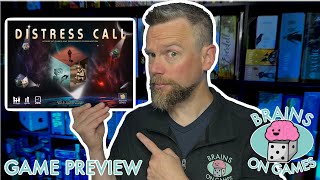
Click to watch at 0:24 · YouTube ↗
Overall sentiment (raw)
positive
Pros
- Accessible lighter-weight design with 20-40 minute play time.
- Engaging memory element that synergizes with drafting and sabotage mechanics.
- Strong take-that moments that can provoke laughter and strategic tension.
- Tactile, well-thought-out component design (prototype phase) with clever crates.
- Thematic humor and sci-fi flavor make it family-friendly yet interesting for adults.
Cons
- Limited to 3-5 players; no two-player or solo variant in the current draft.
- Prototype components and rules may change before final release.
- Memory-heavy scoring may be challenging for younger players or families sensitive to memory tasks.
- Take-that focus may wear on players who prefer engine-building or cooperative experiences.
Thematic elements
- Spaceflight, corporate intrigue, resource drafting, sabotage, and memory-driven scoring
- A futuristic corporate space setting where employees draft and manage cubes to earn points, with a humorous, Paranoia-inspired flavor
- Humorous, tongue-in-cheek sci-fi with light Paranoia-esque flavor text
Comparison games
Mechanics (from transcript analysis)
- color-based scoring — Different colored cubes yield different point values; players must balance high-value colors with the risk of trash affecting scores.
- Compound Scoring — Different colored cubes yield different point values; players must balance high-value colors with the risk of trash affecting scores.
- Cube Tower — Unpainted space-trash cubes neutralize points from the crates they appear in, adding a strategic memory and deduction layer.
- Drafting — Players draft color-coded pallets of cubes, influencing first-player status in subsequent rounds and shaping each player's options.
- Hidden information / memory — Contents of crates are hidden until scoring, requiring players to remember what they drafted and where they placed it.
- Memory — Contents of crates are hidden until scoring, requiring players to remember what they drafted and where they placed it.
- Multiple scoring rounds — Three rounds of scoring with distinct missions; the endgame winner is the first to reach two scoring rounds.
- Physical components / crate mechanism — Crates have a drop-hole and a locking-front design that hides contents and prevents peeking, enhancing tactile interaction.
- Set Collection — Drafted cubes are placed into crates, and each crate represents a collection that will score at the end of a round.
- Set collection / crate allocation — Drafted cubes are placed into crates, and each crate represents a collection that will score at the end of a round.
- Take That — Players can affect opponents by sending trash cubes to their crates, diminishing their potential scores.
- take-that / sabotage — Players can affect opponents by sending trash cubes to their crates, diminishing their potential scores.
- Trash-cube negation — Unpainted space-trash cubes neutralize points from the crates they appear in, adding a strategic memory and deduction layer.
Video topics + discussion points
No key topics recorded for this video.
Quotes (from this video)
- distress call is a light game in terms of its complexity and what you're trying to do is earn the most victory points
- the crate that has the most space trash these unpainted cubes gets dumped and doesn't count for scoring
- this game reminded me a lot of a game that we love at our house called Azul
- it's probably the most fun memory game that i've played in recent memory
- you are trying to mess with the other players plans
References (from this video)
No references stored for this video.
Transcript Navigation
Showing 1–1 of 1