







Dracula vs Van Helsing Deep Dive
What the Community Thinks About Dracula vs Van Helsing
Reviewers see Dracula vs Van Helsing as a quick, tactical two-player duel, and most of the discussion turns on whether that short card-driven contest offers enough depth to return to. Opinions differ mainly on how much staying power the game has. Before You Play found it enjoyable but not one they expect to reach for regularly, while Ryan and Bethany Board Game Reviews call it a keeper that fits easily in a bag for a coffee date. Tim Chuon describes it as a tense two-player game, and Board With Steve places it in a top-ten list because of its card abilities.
Core Mechanics That Define Dracula vs Van Helsing
Trick-Taking
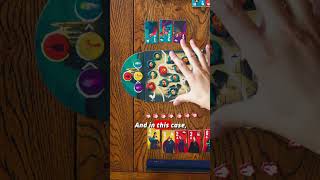
Reviewers describe Dracula vs Van Helsing as trick-taking in spirit, although Board Gaming Ramblings notes that it does not feel like a conventional trick-taker at first. Each player fills a five-slot card holder in number order, and each slot is a separate contest against the opposing card in the same position. Ryan and Bethany Board Game Reviews explain that the higher number usually wins, but a trump suit beats any non-trump card. A sideboard shows which suit is trump, and ties between non-trump cards are settled by the rank order printed there. Because a card ability can change the trump suit mid-round, players have to keep checking which color currently wins. Board With Steve frames the result as a trick-taking style game fought over five regions.
Compound Scoring
Dracula vs Van Helsing does not add up points at the end, so it is only a partial fit for compound scoring. What reviewers do describe is attention divided across several separate tracks. Each of the five districts is settled on its own, and each side also works toward its own endgame goal. Before You Play describes winning districts as a way to push toward the endgame goal, which means the regional battles and the overall win condition compete for the same attention. Dracula can win by converting all four villagers in one district, or by surviving to the end of the fifth round. Van Helsing has to remove all of Dracula's health. Reviewers say this split forces players to weigh a strong position in one district against the threat of the other track.
The Dracula vs Van Helsing Experience
Tense Hidden Information
Every card stays face down until it is revealed, so each turn feels like a bluff against an invisible hand. Reviewers often describe drawing a card they do not want to trigger, then rearranging the tableau to limit the damage. Before You Play recalls moments when a drawn card forced a reveal they wanted to avoid. Players also have to guess what the opponent is building, which adds pressure that Tim Chuon calls a tense two-player experience.
Clever Pressure
The second feeling is the satisfaction of out-thinking the other player in a short game. Board With Steve says the abilities can make players feel very smart, and reviewers who enjoy this kind of puzzle note that the same discard that looks wasteful can set up a winning round. The Dice Tower adds that the game's look puts them in a spooky mood while they work through the choices.
What Makes Dracula vs Van Helsing Stand Out
Number-Driven Card Abilities
Each card's discard effect depends on its number, which creates a constant trade-off. A high card is valuable for winning a district, but its ability is often the strongest, so discarding it can be the better choice. Board With Steve describes the abilities as the reason the game is so much fun, including swapping cards with the opponent and ending the round early. Before You Play notes that low-value discards usually force a reveal or a tableau change, so each swap has to be justified against its cost.
Asymmetric Win Conditions in a Small Package
Ryan and Bethany Board Game Reviews single out the asynchronous win conditions. Both players work with the same mechanics, but their goals differ, so the same board state pushes each side in a different direction. Reviewers also praise the production, including premium card holders, tile-like cards with a vampire theme, and a coffin-shaped insert. The box is small enough to take to a coffee date, which makes it easy to bring along.
Potential Drawbacks
Luck of the Draw
Some reviewers find the draw too decisive. Before You Play describes a late strong draw that can lock out the opponent's options, and says the game sometimes feels drawn out by the fifth round. The visibility rule was also hard to remember at first. Board Gaming Ramblings says the game is more random than they usually enjoy, though they still had fun playing it.
Uneven Roles
Board Gaming Ramblings argues that the two roles do not feel truly asymmetrical. They describe the difference as two different ways of scoring rather than distinct powers, and they found Dracula harder to win with. Their suggested fix is to play best-of-two so each player takes both roles.
If You Enjoy Dracula vs Van Helsing
Players who enjoy the discard-for-effect decisions in Dracula vs Van Helsing will find a similar rhythm in Cabo and its Silver series. Before You Play says the game feels like a two-player Cabo, with the same goal of keeping your hand's total low, though the regional battles add another layer. Golf, the card game that the Cabo series is based on, is the closest root of that style. For players who like that the card discarded determines the effect, Board Gaming Ramblings describes the game as a twist on Love Letter, which uses the same discard-for-effect structure.
What Reviewers Are Saying
"The way this game works is so much fun. On your turn, you're going to be playing cards and discarding them for their special abilities. And the special abilities in this game are what make it so much fun."
— Board With Steve
"I just really liked how that interacted that you didn't want to keep these but you also didn't want to play them and you wanted to keep these the higher numbers but you also needed to play them at the same time. There was a lot of thinking going on in this little simple quick game."
— Ryan and Bethany Board Game Reviews
"Yeah. Sometimes you'll find yourself you draw a card and you're like, I don't want this to trigger. This is really bad for me. This does not help with the other five cards that I have on my side."
— Before You Play