


























Dungeons and Dragons Deep Dive
What the Community Thinks About Dungeons and Dragons
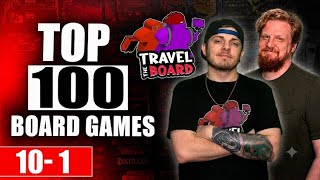
Across the channels that cover it, Dungeons and Dragons gets treated less like a single board game and more like the root system the whole tabletop hobby grew out of. The Dungeon Dive ranks it as the single most life-changing tabletop release its host has ever played, arguing it would be impossible to imagine the channel, or the hobby around it, without the game. Travel The Board goes even further, naming a Dungeons and Dragons starter set the single best board game of all time, though that claim sparks pushback on the show itself: a co-host argues the pick barely counts as a board game since it comes with a rulebook and character sheets rather than the usual board-and-pieces setup.
UndeadVikingVideos, reflecting on decades of play stretching back to the late 1970s, lands on the same overall verdict, calling the game an amazing thing that has changed a great deal and, on balance, changed for the better. Beyond Solitaire complicates that picture. In a conversation built around a new book examining the game's design history, the channel frames Dungeons and Dragons as one of the most impactful games ever made while also holding it responsible for pushing quantified, numbers-first thinking about bodies and identity into decades of games that followed it, alongside specific material from its early editions that the same conversation calls out as genuinely harmful rather than merely dated.
Core Mechanics That Define Dungeons and Dragons
Ability Scores and the Dice Roll
Beyond Solitaire's guest, walking through the game for listeners who may never have played it, breaks a character down into six core statistics: strength, dexterity, constitution, intelligence, wisdom, and charisma. Every one of those numbers modifies a roll of the dice, so climbing a wall or landing an attack comes down to a die roll adjusted by the matching ability score. The game can technically be run without dice, resolving actions through description alone, but that approach is described as more of a house rule than the way the rulebook expects the game to be played.
The Dungeon Master and Improvised Play
Running the game means handing narrative control to a dungeon master who describes what happens after every roll, a structure Beyond Solitaire's guest points to directly when explaining how a player can simply say they want to fight a monster and ask the dungeon master what happens next. UndeadVikingVideos recalls running games this way for their own children decades later, echoing an earlier memory of trading hand-drawn dungeons on graph paper with a childhood friend: one player sets the scene, another improvises through it, and the dice settle what happens along the way.
The Dungeons and Dragons Experience
Growing Up With the Game
For UndeadVikingVideos, learning Dungeons and Dragons in the late 1970s meant secrecy: keeping books hidden from a friend's father who believed the game opened a door to the devil, and asking a junior high principal for permission to start an after-school club that never got approved. The Dungeon Dive tells a similar story of trading hand-drawn dungeons with a neighborhood friend in fourth grade, an introduction it credits with opening up an entire world of fantasy fiction, art, and music well beyond the game itself.
A Different Table Today
Both channels describe a hobby that looks nothing like it did decades ago. UndeadVikingVideos points to local game stores now running several tables of the game on a single RPG night, a level of casual access that did not exist when even dice were hard to find and often had to be ordered by mail. The Dungeon Dive no longer plays the game on a regular basis, but still credits it as the game that made every later hobby purchase possible.
What Makes Dungeons and Dragons Stand Out
A Foundational Influence on Modern Game Design
Beyond Solitaire's guest traces a direct line from Dungeons and Dragons to Rogue, one of the first games built for a personal computer, whose character design and stat block were modeled directly on the tabletop original. That same quantified approach to character building, translating a body into strength, dexterity, and the rest, is credited with shaping how digital role-playing games handled character stats for decades afterward, including modern series that still use ability scores and racial bonuses drawn from the same template.
A Complete Adventure in One Box
Travel The Board praises the packaged starter-set version of the game for containing everything needed to sit down and play: maps, miniatures, and pre-built characters, all in a single box. That completeness is central to the argument that a boxed adventure earns a spot on a best-of list built mostly from traditional board games, even over other Dungeons and Dragons starter products that a co-host would have found easier to accept.
Potential Drawbacks
Troubling Content in Early Editions
Beyond Solitaire's guest points to specific material from the game's first decade as genuinely harmful rather than simply dated, including a fan-made table that assigned different attraction odds between fantasy races along explicitly racial lines, and an official harlot table in the original Dungeon Masters Guide that reduced the women a party might meet in town to a list of stereotyped titles. The same conversation raises the Oriental Adventures supplement as an example of white game designers claiming authority over cultures that were not their own.
Stigma, Secrecy, and Gatekeeping
Multiple channels describe a real social cost tied to playing the game, from the satanic panic that made Dungeons and Dragons synonymous with devil worship in the eyes of worried parents to a lingering sense, raised by UndeadVikingVideos, that experienced players can come across as overbearing or as gatekeepers toward anyone new to the table. The Dungeon Dive notes it no longer plays the game regularly despite ranking it as the single most influential title in its history, a gap between admiration and current play that echoes across these creators' own accounts.
If You Enjoy Dungeons and Dragons
Dungeons and Dragons rarely gets set side by side with other tabletop games directly, since most of these channels treat it as a category unto itself, but a few direct comparisons come up. Beyond Solitaire traces its influence forward into Rogue, the early computer game that copied its character stats wholesale, and into modern digital series like Elder Scrolls, which carried the same numbers-first approach to character race and ability into a very different medium. UndeadVikingVideos names Car Wars and Battletech as the other games that filled out marathon gaming weekends alongside Dungeons and Dragons growing up. For players weighing which starter box to pick up, Travel The Board sets Curse of Strahd and Lost Mine of Phandelver against the Stranger Things-branded Hellfire Club set as the more traditional entry points into the game.
What Reviewers Are Saying
"It's clearly very racially coded, and I mean explicitly racially coded, within the fantasy races of Dungeons and Dragons. Arguably racially coded within the ways that we understand race today, with elves being fair and and orcs being darker skinned."
— Beyond Solitaire
"It would be impossible to imagine this hobby. It would be impossible to imagine the Dungeon Dive without Dungeons and Dragons. That's how inspirational, that's how influential that game was on my life, on many of your lives, on the entire industry."
— The Dungeon Dive
"But it is a complete Dungeons and Dragons experience pre-packaged. And yes, I changed it just so it'd be different from last year just to poke more and new buttons. But it has everything you need to qualify as a board game contained within it. There's maps and minis and characters."
— Travel The Board