/pic8403261.png)
Game Info
Year
2026
Players
1-4
Age
10+
Playtime
90 min
Complexity
2.8/5
Collection
Ratings
Creator Score
Mechanic profile
Not enough video data yet
Vibe profile
Not enough video data yet
Description
Cooperative dungeon crawler adaptation of the classic Fighting Fantasy gamebook where players explore fifteen dungeon levels with 200 illustrated story cards to uncover the warlock's treasure
Featured Videos

Ask a Rules Question
All mentions
Browse transcript mentions, sentiments, pros/cons, mechanics, topics, quotes, and references.
Total mentions: 4
This page: 4
Sentiment:
pos 4 ·
mix 0 ·
neu 0 ·
neg 0
Showing 1–4 of 4
Video KSzEw8i0kFs
Hungry Gamer Review at 0:12 sentiment: positive
video_pk 82822 · mention_pk 208070
Click to watch at 0:12 · YouTube ↗
Overall sentiment (raw)
positive
Pros
- Easy to play and understand
- Plays quite quick
- Story really comes through with choices
- Fun to make decisions
- Characters feel unique with simple abilities
- Combat works well and is enjoyable
- Gear and weapon effects are fun
- Luck stat can be used for abilities and rerolls
- Mitigates randomness of dice
- Fast, easy, and clever
- Player is responsible for defense rolls
- Does not overstay its welcome, short adventure
- Fun story beats from flipping tiles
- Clever design that works well
Cons
- Replayability might not be very high if you know the story
- Misprints in prototype
- Random event cards/tokens can be devastating or frustrating
- Requires playing all four characters every time
- Decently sprawling, takes up table space
Thematic elements
- Dungeon crawl
- Firetop Mountain
- Story cards with choices and tests
Comparison games
- Nanolith
Mechanics (from transcript analysis)
- attribute checks — Tests are performed using character stats like strength and awareness.
- Card Drafting — Players draw event cards that present story choices, challenges, or random effects.
- Character Activation — Each hero activates on their turn to perform actions like moving and interacting with the map.
- Dice Rolling — Used for combat attacks and defense, with modifiers from weapons, stats, and special abilities.
- Modular Board — The board is made of tiles or cards with art that indicates potential encounters.
- Push Your Luck — Players can gain bonuses by taking fatigue, which can hurt themselves.
- Resource Management — Players manage stats like luck and armor, and can spend them for benefits.
- Set Collection — Players can acquire gear and treasure that can be used in combat or for other effects.
- Variable player powers — Each of the four characters has unique abilities and stat bonuses that affect their actions.
Video topics + discussion points
No key topics recorded for this video.
Quotes (from this video)
- It absolutely gives you the vibe of the game, what's happening, what's going on.
- The story really comes through. You're choosing where you're going to go. You're seeing things and all these cards have different options that you can take. And it's fun to make the decision of what you're going to do.
- All the characters feel very unique.
- I actually really do enjoy the way combat works.
- All of that, I think, really works well to mitigate some of the randomness of dice. And it makes it feel less bad when things go wrong. And it's again fast, easy, and clever.
- It has really fun story beats, flipping over these tiles and learning what the story is.
- It can just be completely brutal and that might not be something that you're interested in.
- It was fun. It's quick. It's simple to play. You get to make some interesting choices and overall I quite enjoyed it.
- It's not deep. It's not crunchy.
- But man, I really, really had a good time with this.
References (from this video)
No references stored for this video.
Video a7JIo78TSkU
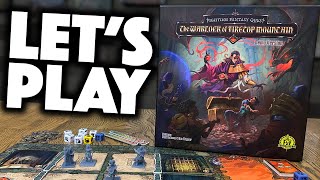
Review at 0:31 sentiment: positive
video_pk 78652 · mention_pk 191541
Click to watch at 0:31 · YouTube ↗
Overall sentiment (raw)
positive
Pros
- Engaging scenario design that presents mini-puzzles.
- Cooperative nature fosters teamwork.
- Collecting items and companions adds depth.
- Interesting mechanics like stamina/fatigue management and the danger track.
- Replayability due to different scenarios and choices.
- Heroic sacrifice of Lyra to save the party.
Cons
- Can be difficult to manage resources effectively.
- Wasting time can be detrimental to scenario completion.
- The danger track can quickly escalate.
- Forgetting to use combat tokens in initial playthroughs.
- Lyra's sacrifice to escape the scenario.
Thematic elements
- questing through a dungeon
- Firetop Mountain caverns
- scenario-based book adaptation
Comparison games
none
Mechanics (from transcript analysis)
- Action Point Allowance — Players have a set number of actions per turn to move, attack, or use abilities.
- Card Drafting — Encounter cards are drawn based on choices and locations, dictating events and challenges.
- Character progression — Characters can acquire items and companions that enhance their abilities and provide strategic advantages.
- cooperative play — Players work together to achieve scenario objectives and overcome challenges.
- Danger track — A track that increases over time or due to player actions, potentially leading to negative consequences or game loss.
- Dice Rolling — Dice are rolled for skill checks (stealth, charm) and combat attacks, with different symbols on the dice representing successes, misses, or special effects like expertise.
- Item Management — Players collect and use various items that provide bonuses or special effects.
- Modular board/tiles — The game uses a map with different locations represented by tiles and tokens, which are revealed as players explore.
- Skill checks — Players perform skill checks (e.g., stealth, charm) by rolling dice against a difficulty level to determine success or failure.
- Stamina/Fatigue System — Players manage stamina and fatigue, which can be spent to perform extra actions or recover, with fatigue potentially leading to being knocked out.
Video topics + discussion points
No key topics recorded for this video.
Quotes (from this video)
- It basically takes those books or that book in particular and turns it into a tabletop experience.
- The danger track. If that gets up to the top, we lose.
- You attack the goblins. You can stab the dwarf that they've got hung up.
- Gain the items L7 and L9.
- The orcs stare at you. Then one flips the dining table sending bowls and meal scraps flying.
- You are free, old man.
- Lyra sacrificed herself using that befuddle power to keep pushing him back so that everyone else could get out.
References (from this video)
No references stored for this video.
Video 3ExmLTPiJ1s
BoardGameCo Playthrough at 0:00 sentiment: positive
video_pk 37475 · mention_pk 112601
Click to watch at 0:00 · YouTube ↗
Overall sentiment (raw)
positive
Pros
- Strong cooperative play with a focus on narrative and player choice
- Varied scenarios and branching paths increase replayability
- Rich loot system and item progression that shape future encounters
- Integrated lore and flavor text enhances immersion
- Tactically engaging combat with dice manipulation and armor considerations
Cons
- Prototype copy; rules and components are subject to change
- High complexity with many tokens, tracks, and setup steps
- Potentially long play sessions, especially across multiple scenarios
- Learning curve for new players unfamiliar with dice-pool mechanics
Thematic elements
- Cooperative dungeon-crawl with branching storylines
- Epic fantasy quest through Firetop Mountain to confront the Warlock
- Branching scenarios with lore and encounter cards
Comparison games
none
Mechanics (from transcript analysis)
- Action vs dungeon phases — Rounds alternate between player actions and a dungeon response phase
- cooperative dungeon crawl — Players cooperate to explore a deck-driven dungeon with branching paths
- Dice Rolling — Character skills and stats drive dice pools used for checks, with luck providing rerolls
- dice-based skill checks — Character skills and stats drive dice pools used for checks, with luck providing rerolls
- Dungeon Crawl — Players cooperate to explore a deck-driven dungeon with branching paths
- Encounter and treasure cards — Cards placed on a board with tokens determine events, rewards, and danger
- Market and equipment progression — Between scenarios, players acquire items and upgrades to improve capabilities
- Monster activation and combat — Spawned monsters have HP, movement, range, and special abilities; players attack with dice and armor/shields mitigate damage
- Resource Management — Each character tracks stamina; fatigue and armor influence actions and damage
- Resource management: stamina, fatigue, armor, luck — Each character tracks stamina; fatigue and armor influence actions and damage
- Turn-based action economy with hero abilities — One main action per turn, with class-specific abilities offering alternatives and occasional extra turns
Video topics + discussion points
No key topics recorded for this video.
Quotes (from this video)
- This is a sponsored preview and this is also a prototype copy in front of me.
- Cooperatively moving along different scenarios trying to accomplish the objectives.
- In Fighting Fantasy Quest: The Warlock of Firetop Mountain, you are on an epic quest.
- You are going to have four heroes and multiple scenarios with branching paths.
References (from this video)
No references stored for this video.
Video J_VjCMq31WI
Good Time Society Discussion at 8:18 sentiment: positive
video_pk 32085 · mention_pk 94724

Click to watch at 8:18 · YouTube ↗
Overall sentiment (raw)
positive
Pros
- Faithful adaptation of a beloved choose-your-own-adventure property
- Cooperative mechanics suit both new and veteran players
- Solo mode adds value for solo gamers
Cons
- Narrative density may require careful reading and patience
- As a book-to-board adaptation, some players may prefer more innovative mechanics
Thematic elements
- narrative-driven exploration with twists
- fantasy dungeon-crawl; adaptation of a classic choose-your-own-adventure
- cooperative dungeon crawling with branching paths
Comparison games
none
Mechanics (from transcript analysis)
- Cooperative dungeon crawling — Players collaborate to follow the narrative, meet monsters, solve puzzles, and overcome twists.
- Dungeon Crawl — Players collaborate to follow the narrative, meet monsters, solve puzzles, and overcome twists.
- Narrative Choice — The game follows the source material while weaving new twists and puzzles for replayability.
- Narrative following with twists — The game follows the source material while weaving new twists and puzzles for replayability.
- solo play option — Playable by oneself, catering to players without a group.
Video topics + discussion points
No key topics recorded for this video.
Quotes (from this video)
- I love this logic and lore.
- This is a board game based on the book. So, it's going to be a narrative style game.
- Love, you know, choose your own adventure or these like D and D style RPG style books. And to see it in the board game form, I think that they are cool.
- Small talk the [laughter] game.
- Zen Quest month started.
- standwithMinnesota.com — there’s charities involved. Anything over that stretch goal is going to Minnesota.
References (from this video)
No references stored for this video.
Transcript Navigation
Showing 1–4 of 4