/pic722524.jpg)
User Summary:
Final Fantasy VIII places the player in control of Squall, a fledgling new member of an elite military team. Through a series of shocking events (and mysterious dreams), Squall is thrust into a conflict beyond imagination. Along the way, you will be joined by 5 others who share your mission as the stakes become increasingly high.
In this game, you are given a large amount of freedom on how you want to customize your characters by using the new "draw" system. In this system, you "draw" magic power either from monsters or from "draw points" scattered around the world and then bind the magic to yourself which increases your skills in different ways. Also, the summon creatures that you capture along the way are highly customizable and you will using their experience points to augment their abilities as you see fit.
Final Fantasy VIII was released for the PS in 1999 and for the PC later that year.
Microbadges:

- iconic story and memorable characters
- significant replay value and nostalgia
- not everyone connects with turn-based JRPG systems today
- character-driven narrative and world-building
- Mid- to late-90s RPG with sprawling world and story
- episodic but cohesive in its own right
- Loomhaven
Mechanics (from transcript analysis)
Video topics + discussion points
Quotes (from this video)
- this is one of those ones that I think of fondly and nostalgia has a big impact
- it's hard for me not to separate nostalgia from video games
- I think this is a phenomenal game and I would recommend it to anyone
References (from this video)
- Iconic card designs and the iconic Triple Triad mechanic
- Nostalgic focus on FFVIII and its characters
- Strong integration of card game into the narrative
- Transcript includes promotional content that can disrupt flow
- Potential name misspellings in the host's narration (Laguna/Lagona, Zell)
- coming-of-age, memory, fate, and the bonds between friends and lovers.
- FFVIII universe, Balamb Garden, Dollet, and key locations from the late 1990s fantasy world.
- character-driven, cinematic, memory-focused narration
Mechanics (from transcript analysis)
- Card collection and trading — Collecting unique cards, foil variants, and trading with NPCs or via in-game mechanics.
- Card Crafting — Collecting unique cards, foil variants, and trading with NPCs or via in-game mechanics.
- Triple Triad (in-game card game) — Players place cards on a 3x3 grid; each card has values on its four sides. If a card's value on the side facing an adjacent card is higher, it captures that card; ownership can flip.
Video topics + discussion points
Quotes (from this video)
- If you want your own cards, go to cardtrader.com. Use my codegeeek deals to get 5% off your first order.
- Squall, the seed mercenary and the love of his life, Renoa Hartellian.
- Lovely art of Squall here with his special Lionhe Heart limit break.
- That famous game triple triad the best.
References (from this video)
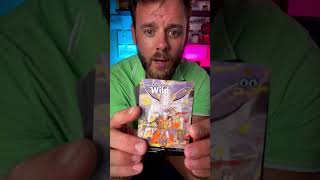
- Iconic FF II character cards (Emperor of Palamian, Furion, Wild Rose Warrior)
- Strong visual appeal in borderless artwork
- Diverse creature roster with recurring FF beasts (Leviathan, Behemoth, beavers, coral cat)
- Some players disliked FF II combat changes affecting balance
- Potential confusion over card names and rarity among fans
- Limited number of cards referenced in the clip
- nostalgia, heroism, adaptation of FF II combat into a card format
- FF II universe cross-pollinated with a trading card game
- spotlight on iconic FF II characters and event cards; descriptive card art
- Magic: The Gathering
Mechanics (from transcript analysis)
- Borderless art — Borderless art variants are highlighted to emphasize card aesthetics
- Character and creature cards — Cards depict FF II characters and creatures used in battles on the board, with combat resolved similar to a traditional TCG
- Encounter flavor text — Entries like 'random encounter' contribute to atmosphere and thematic flavor
- Event and land cards — Event cards (e.g., Leviathan event) and basic lands (swamp) provide flavor and resources
- Events — Event cards (e.g., Leviathan event) and basic lands (swamp) provide flavor and resources
Video topics + discussion points
Quotes (from this video)
- Final Fantasy 2, of course, known for really changing up the combat system.
- A lot of people didn't really like it.
- Some people thought it was cool, but Final Fantasy has always been aiming to change the game.
- All right. In this beautiful borderless art, Wild Rose Rebellion. Just look at how lovely that piece is.
- Hey, random encounter. Plenty of those.
- Your basic swamp. Your basic hero with a little bird on the back.
References (from this video)
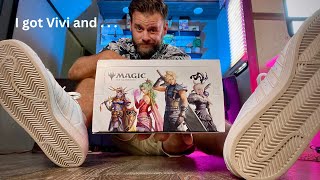
- Iconic characters and moments
- Influential soundtrack and world-building
- Pioneering cross-media impact (influence on later games and media)
- Dated UI and combat pacing by modern standards
- Corporate power, ecological collapse, identity
- Midgar and the wider Gaia world
- Epic, cinematic, dystopian
- Final Fantasy VI
- Final Fantasy IX
Mechanics (from transcript analysis)
- Active Time Battle (ATB) — Hybrid turn-based system with time-dependent action windows
- Character progression and equipment (materia customization) — Customization through materia slots and gear
Video topics + discussion points
Quotes (from this video)
- Six is like an opera. Six was an absolute work of art.
- Final Fantasy is a landmark in my life.
- Regalia I love. So, this is 15.
- I would highly recommend that game.
- Spirits Within and Advent Children.