



Fossilium Deep Dive
What the Community Thinks About Fossilium
Fossilium is a 2025 board game for one to four players in which you direct a natural history museum by collecting fossils and placing exhibit tiles across five rounds. The reviewers covering it generally agree that the core design is sharp. Their disagreements center on the physical product of the first edition rather than on how the game plays.
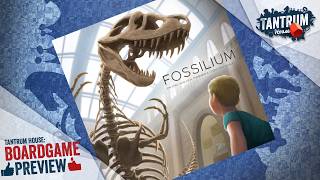
Tantrum House gives the most complete overview. The channel describes a game where workers excavate fossils, bring them back to the museum, and assemble specimens into exhibits that attract visitors. Its take is favorable, and it suggests the game will appeal to fans of Lost Ruins of Arnak. The copy reviewed was supplied by Sinister Fish Games, which the video notes is bringing an enhanced edition to Kickstarter.
Rahdo Runs Through offers the most detailed critique. The reviewer found the game excellent in its gameplay and ranked it in the middle of a monthly countdown, with production quality as the main thing holding it back. That reviewer had played and filmed a first edition, and the components were not up to the standard the design deserved.
Board Gaymes James is the most preliminary voice. In a preview of Spiel games built around diverse designers and illustrators, the channel names Fossilium as a title it is excited to see, describing it as tile placement and museum building with dinosaurs. That perspective comes before any play report, so it reflects anticipation rather than an assessment of the finished game.
Core Mechanics That Define Fossilium
Published by Giant Roc, Fossilium blends three systems that reviewers describe as working together: tile placement, worker placement and set collection. The theme is paleontology, but the mechanics are where most of the discussion focuses.
Tile Placement in the Museum Gallery
Your gallery is a grid of spaces where fossil tiles are arranged. Some fossils can be displayed with a few pieces, while larger specimens take more planning, and you need to collect enough of a fossil before you can begin exhibiting it. Tantrum House stresses that where a fossil goes matters as much as which fossil goes there. Shops and entrances in the gallery help generate income and draw guests, and special pedestal spaces reward a complete large specimen at game end. Double-sided information panels add another layer to the layout puzzle, so the reviewer's core question is whether to exhibit a fossil for income now or hold a space for a bigger end-game payoff.
Worker Placement Linked to Excavation
The action phase offers several ways to advance the museum. Players can exhibit fossils, build information panels, donate a fossil tile to help finish another player's exhibit, buy tiles through the market, take a tour action, or use flexible actions. Tantrum House points out that the worker's location also determines which excavation site that worker is associated with, so each placement is a decision about the current turn and the next dig. Rahdo Runs Through praises the dynamic market as more interesting than most markets and highlights the way players can help each other complete exhibits. Set collection runs underneath all of this, since fossils come in terrestrial, aquatic and botanical types and the final scoring rewards the collection a player has assembled.
The Fossilium Experience
A Crunchy Euro Balancing Act
Reviewers describe Fossilium as a game of competing timelines. Tantrum House frames the central tension as immediate progress versus long-term planning: a player may have the pieces to display a new fossil but lack the money to acquire another tile, or may prefer to hold space for a large specimen that fits a pedestal. Rahdo Runs Through calls it a crunchy Euro, a label that points to tight, deliberate planning in which each turn asks you to weigh cost against benefit rather than simply grabbing what is available.
The Pleasure of Assembling a Museum
The other feeling reviewers mention is the satisfaction of building something visible. Completing a fossil brings an immediate reward in the form of guests along with a bonus based on the fossil's type, so the gallery grows into a real attraction over the five rounds. Rahdo Runs Through adds a social element: one player can start an exhibit and another can help finish it, to the benefit of both. The result feels less like a solitary scoring exercise and more like a shared project in which the museum gradually fills with visitors.
What Makes Fossilium Stand Out
A Theme That Gives the Mechanics a Purpose
Reviewers consistently tie the mechanics to the dinosaur and museum theme. Tantrum House opens by asking viewers to imagine building a natural history museum with fascinating fossils and impressive dinosaur skeletons, and then explains how the guests, income and exhibits in the rules serve that goal. Rahdo Runs Through likewise describes the game as building a museum full of dinosaur fossils to bring people in and score points. Because the theme and the scoring share the same logic of attracting visitors, the museum framing does more than decorate the board.
Positive Interaction Between Players
Fossilium is a competitive game, but its ability to donate a fossil tile to another player's unfinished exhibit gives it a cooperative edge. Rahdo Runs Through singles this out as a strong feature, noting that the interaction benefits both players. Board Gaymes James highlights the game as designed by Julia Thiemann, a Berlin designer, in a preview of games from diverse voices in the hobby, which places it among the new titles the channel is most excited to explore.
Potential Drawbacks
First Edition Production Quality
The clearest criticism concerns the physical product. Rahdo Runs Through says the first edition it played and filmed had production quality that was a bit so-so, and that some choices made in production hampered the overall experience somewhat. The reviewer does not describe the gameplay itself as flawed. Instead, the production issues are what kept the game lower in the countdown than its mechanics alone would suggest. The upgraded edition is described as addressing these concerns. Tantrum House says the enhanced version focuses on upgraded physical components, including improved museum boards, thicker round and scoring tracks, and better excavation bags and storage, which lines up with the concerns raised.
Limited Hands-On Feedback So Far
The available commentary is still thin. The Rahdo Runs Through assessment rests on a sponsored run-through of the first edition, the Tantrum House review is based on a sponsored review copy, and the Board Gaymes James segment is a preview without a play report. Readers looking for detailed opinions on replay value, balance or how the game plays across different player counts will find little of that depth in these perspectives yet.
If You Enjoy Fossilium
Tantrum House makes the recommendation directly, suggesting that fans of Lost Ruins of Arnak may enjoy Fossilium. The reasoning is grounded in the shared appeal the review describes: a worker placement layer where each action carries a secondary consequence, a set collection that accumulates over several rounds, and a constant trade-off between immediate gains and planning ahead. Players who like using their turns to set up future options, and who enjoy watching a collection turn into a scoring engine, are the audience this review points toward.
What Reviewers Are Saying
"I really like this, crunchy Euro worker placement game about building up a museum full of dinosaur fossils to the best of our ability to bring people in and score lots of points. I found it to be the bee's knees."
— Rahdo Runs Through
"Where you place your worker also determines which excavation site that worker is associated with. So, as you plan your actions, you're thinking about both what you want to accomplish now and what fossils you might be able to bring back from your next dig."
— Tantrum House
"And this game is tile placement, museum building with dinosaurs. Very excited for it."
— Board Gaymes James