
Ghosts Love Candy Deep Dive
What the Community Thinks About Ghosts Love Candy
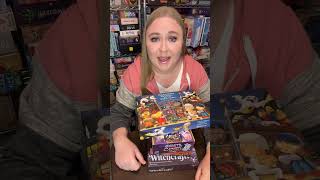
Reviewers approach Ghosts Love Candy mainly as a Halloween game, and most of them enjoy it for that reason. Kovray included it in a list of ten games to get into the spooky season, and the couple described the premise as trying to spook children while collecting the candy you actually want. Tabletoptiktok took a similar angle, placing it among Halloween games that are cutesy and fun rather than creepy, gory, or scary.
The reviewers agree that the costumes and theme carry much of the appeal. Kovray pointed to the costumed children and the many abilities on the cards as the reason the game feels so Halloweeny. Where opinions differ is mostly about how much thinking the game asks for. Pair Of Dice Paradise presented it as a light, nostalgic pick, remembering that a host's niece and nephew once owned it, while admitting it is an obscure title that needed some prompting to identify.
Core Mechanics That Define Ghosts Love Candy
Hidden Candy Preferences
Kovray explains that each ghost has its own treat preferences, just as people do, and that the candy a player collects is scored at the end using a hidden set of values. Because nobody can see which candy another player is gathering, the table has to read each other's moves and decide when to pick up a treat that others are chasing. Kovray singled out this hidden information as the part of the game they enjoy most, since the scoring rewards players who can guess what their opponents are building toward. The result is a light layer of bluffing and reading the room that sits inside an otherwise quick card game.
Spooking Children With Numbered Cards and Turn Order
Ghosts Love Candy is designed by Danny Devine and published by 25th Century Games, according to kovray. Players use cards numbered one through nine to spook the children in costume. Each successful haunt puts a child into the ghost's pool, which kovray described as usually not great, because the goal is to collect candy rather than children. Points from the children gained or lost are added to the candy score at the end. The number on the ghost card you play also sets turn order, so a higher card can let you reach a child that everyone else wanted. The game lasts only nine turns, which keeps the tension of the race for each child moving along at a steady pace.
The Ghosts Love Candy Experience
Playful Halloween Mischief
The dominant feeling is lighthearted seasonal fun. Kovray described the game as a "very Halloweeny" experience full of costumes and abilities, and Tabletoptiktok framed it as a glittery, cute take on the holiday. Players do not come away with a sense of dread. The mood is closer to a friendly prank, with each ghost sneaking up on a child in costume and walking away with a bit of candy and a bit of mischief.
Quick Rivalry Between Turns
Because the game ends after nine turns, the pace stays brisk. Kovray said the game delivers spooky joy in a short time, and the turn order rule creates small moments of competition when two ghosts want the same child. Winning a contested child tends to produce a burst of playful bragging, and losing one leaves little time to recover. The tension is brief rather than heavy, which suits a table that wants a few laughs before moving on to the next game.
What Makes Ghosts Love Candy Stand Out
Hidden Information That Rewards Reading the Table
Reviewers consistently point to the hidden candy values as the element that keeps the game interesting. Kovray noted that players cannot know what others are collecting, which allows a clever player to play on that uncertainty. The reward is not only a higher score but also the satisfaction of picking the right moment to go after a candy that the table has overlooked. That combination of hidden information and simple cards gives the game more depth than its short run time suggests.
A Short, Themed Game With Nostalgic Appeal
The nine-turn structure makes Ghosts Love Candy easy to fit into a Halloween evening, and reviewers treat its brevity as a strength rather than a shortcoming. Pair Of Dice Paradise connected the game to childhood memories, which shows how strongly the theme and the simple candy idea land with players who recall it from family game shelves. The combination makes it a natural pick for a themed night.
Potential Drawbacks
Obscurity and the Need for Explanation
Pair Of Dice Paradise openly acknowledged that Ghosts Love Candy is a less familiar title, and the host expected to need a clue before a viewer could name it. Players who are new to the game may need a short rules explanation before the table can start guessing at candy preferences, and a group that expects a well-known title may find the first few turns slow to start.
Scoring That Pulls Against the Candy Goal
Kovray pointed out that haunting a child is usually a poor outcome, since the child counts against the score while the candy is what players want. Balancing the two sources of points and guessing which candy an opponent is collecting can make the game feel more demanding than its theme suggests. Players who prefer straightforward scoring may find the hidden values frustrating, while those who enjoy reading the table will see the same mechanic as a reason to return.
If You Enjoy Ghosts Love Candy
Players who enjoy Ghosts Love Candy's hidden information will find a similar kind of guessing in Dixit, which kovray brought up when discussing the imagery cards in Mysterium. Both games reward players who think about what others will understand from a clue, even though the mechanics are different.
For players who like the goal-based feel of the game's Halloween shelf, Calico is another point of comparison. Kovray placed Dead and Breakfast beside Calico for its overlapping goals, and the same appeal of working toward several targets at once applies to the way Ghosts Love Candy spreads points across candy types and children.
What Reviewers Are Saying
"I really like the hidden cards because you never know what people are collecting and you can kind of play on that and maybe collect the wrong ones at certain times because there are certain interactions that make it a lot of fun."
— kovray
"Then we have Ghost Love Candy 2, where you will have a specific type of candy that is going to be worth the most points to you and everyone is collecting candy and you're trying to do it in the way that yields you the most points. Plus, who doesn't love candy?"
— Tabletoptiktok
"Oh, isn't this a game like Ghost Love Candy game, right? That's like kids. I think my niece and nephew had this game."
— Pair Of Dice Paradise