/pic7340742.jpg)
/pic1311902.jpg)
/pic1608871.jpg)
/pic5283232.jpg)
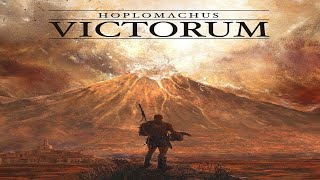
The year is AD 79. Seers have learned of the imminent eruption of Mount Vesuvius, and those versed in the mystic arts have made invocations to stop the calamity from claiming thousands of lives. However, these actions have angered Pluto, god of the underworld, who vows to usher in even greater destruction unless the earth’s strongest champions accomplish a series of tasks in a realm of grueling combat.
Hoplomachus: Victorum is a standalone title from Chip Theory Games. It uses CTG's acclaimed combat system from the Hoplomachus games, adding new twists with a focus on heroes and campaign play. Victorum is a solo-only experience, offering an in-depth, rewarding adventure with deep strategic decisions and exciting combat. Set in the more epic and mythical world of Hoplomachus: Victorum, this edition will pair the combat mechanisms fans know and love with beautiful updated lore, art and design.
This page includes videos and mentions from the whole Hoplomachus family. Drill into a specific game below.
/pic7340742.jpg)


Hoplomachus: Remastered - How To Play

Hoplomachus: Victorum {Act 4}
- Most variety in Scions and characters
- Engaging dice manipulation mechanics
- Good balance of difficulty
- Replaces the need to play the full Hoplomachus: Victorum campaign for a similar feel
- Primus abilities can be very mean
- The full campaign of the original game is very time-consuming
- Hoplomachus: Victorum
Mechanics (from transcript analysis)
- boss fight — Culminates in a boss fight against a chosen Scion.
- Dice management — Dice can be strengthened, weakened, retrieved, or dismissed, impacting player strategy.
- Modular encounter deck — A large deck of encounter cards is arranged in a pyramid structure.
- Variable player powers — A large selection of Scions (enemies) and playable characters.
Video topics + discussion points
Quotes (from this video)
- I hate the storage I hate it I hate it so much
- This one absolutely replaces hop mokus Victor because I didn't like it but I like this one the most out of these three which is surprising
- so 20 strong is so surprising to me of of a game
References (from this video)
- Engaging combat system with tactical depth.
- Rewarding character progression and improvement over time.
- Narrative elements are integrated through Scion epilogues.
- Variety of events and mechanics keep gameplay dynamic.
- Some mechanics ('Pluto's Domain') are perceived as frustrating and punishing.
- Boss encounters (like the Hydra) can be very challenging and potentially lengthy.
- Difficulty scaling can be steep, requiring adjustments.
Mechanics (from transcript analysis)
- Area Movement — Units move across a map or board, with hexes and specific movement rules described.
- Blessings/Banes — Blessings provide benefits to the player, while Banes act as negative modifiers or challenges.
- Combat — The core of the gameplay involves tactical combat with units, dice rolls, and strategic positioning.
- Dice Rolling — Dice rolls are used extensively for attacks, defense, and other actions within the game.
- Event system — The game features various events like 'Sports', 'Bloodshed', and 'Scion Events' that introduce specific challenges and objectives.
- Health management — Players need to manage unit health, with mechanics for healing, bolstering health, and taking damage.
- Hero Prowess — Completing certain objectives or events grants Hero Prowess, enhancing hero abilities.
- Set Collection/Synergy — The host discusses needing specific unit classes or factions for certain events ('Golden Children').
- unit deployment — Players deploy various units, each with different stats and abilities, to participate in combat.
Video topics + discussion points
Quotes (from this video)
- I know up until this point I'm sure people are like you didn't do tactics right you didn't do this right it's like yeah I get it I get it maybe I shouldn't be here maybe I'd be a little worse off maybe a few Banes would be a few more Banes would be in here but I think overall the the uh the mistakes I made weren't that gamebreaking
- Pluto's domain is like h no actually we're just going to make that hard for the sake of being hard
- Boom that is three and the Hydra has been defeated all of its heads and not it's it's like really trying to ramp up and it's slowly coming towards me they're not growing back as much and then just reel back and right between the eyes
- The Hydra fell an arrow in every head wordlessly the parthan signaled and at his command a dozen men rushed to hack off the necks and cariz the wounds just to be safe
References (from this video)
- Strategic combat with interesting unit abilities.
- Engaging campaign narrative with high stakes.
- Tactical arena combat with unique mechanics like the moving chariot.
- Character progression and dice upgrading offer meaningful choices.
- Some mechanics, like the monoliths in the arena, can be complex or frustrating.
- The game can be punishingly difficult.
- The host notes the challenge of keeping track of unit health at a glance.
- Warrior champions must defeat Pluto's Scions to prevent a global cataclysm
- AD 79, near Mount Vesuvius
- Elder Scrolls
- Burn Cycle
- Too Many Bones
- Cloud Spire
- 20 Strong
Mechanics (from transcript analysis)
- arena combat — A significant portion of the gameplay involves combat within a specific arena, featuring a moving chariot and blocking monoliths.
- Campaign — The game features a 4-week campaign where the player progresses through acts.
- Character progression — Players can upgrade their character's abilities, dice, and health.
- Combat — The game involves tactical combat between units with various abilities like First Strike, Retaliate, and Fury Aura.
- Dice Rolling — Dice are used for attacks and other actions, with the ability to upgrade dice (e.g., from yellow to blue).
- Movement — Units have movement values that dictate how far they can travel on the board.
- Resource Management — Players manage tactics, health, leadership, and dice.
- special abilities — Units and characters have unique abilities such as First Strike, Quick Draw, Dodge, Taunt, and Hamstring.
Video topics + discussion points
Quotes (from this video)
- My movement is two so unfortunately no matter where I go unless I just don't even if I don't move he'll be able to to come after me so might as well might as well hope for the best.
- Oh my God he he definitely just obliterates him.
- This is amazing.
- I think I can do it.
References (from this video)
- The 'Condemned' mode offers a nice change of pace.
- The solo mode is quick to set up.
- The game's streamlined keywords make it easy to learn.
- Perfect Strike mechanic can lead to very satisfying turns.
- The solo mode's AI can be gamed to overcome challenges.
- Dice rolls can be frustrating and make the game swingy.
- The AI can be a bit too predictable ('dumb') in solo mode.
- The alert/not alert mechanic could be more engaging if the champion was always active.
- The solo mode has an alternative win condition (killing all enemies) that can overshadow the primary objective.
- The game can feel less strategically deep in solo mode compared to its potential.
- Onama
- Checkers
- God of War 3 (Poseidon)
- Mythic Battles Pantheon
- Mythic Battles Ragnarok
- Summoner Wars
Mechanics (from transcript analysis)
- Absorb — A mechanic that potentially mitigates incoming damage.
- Alert/Not Alert — A state that affects how AI units target.
- Combat lock — A mechanic that prevents units from moving.
- Crowd favor — Gained through dealing damage, it allows units to level up, gain health, and unlock new abilities.
- Dice Rolling — Core to the game's action resolution and combat.
- Dodge — Allows a unit to avoid some or all incoming attacks.
- Hurl — Allows a unit to pick up and throw another unit to a different hex.
- Long Shot — Allows units to attack from a distance.
- Perfect Strike — A mechanic that allows for double damage if all dice hit, described as 'disgusting' and 'busted'.
- Regen — Allows a unit to recover health over time.
- retaliate — Deals damage back to an attacker when the unit is attacked.
- tactical — Allows a unit to move and perform another action in the same turn.
- Taunt — Forces enemies to attack the unit with taunt.
- unit deployment — Units are deployed onto the board based on specific rules and turn order.
- Whirlwind — A special ability that can affect multiple units.
Video topics + discussion points
Quotes (from this video)
- This is busted this is a promo character.
- Perfect strike is disgusting.
- I don't really like the alert not alert thing because it it it would ramp up the stakes a little bit more if the champion was like already available and already trying hunting you down.
- The fact that it's always interesting like this where I understand why there's two modes like technically the goal says I need to get my wret to the other side but the fact that nothing keeps their units from dying means that a potentially easier option is to just kill them all.
References (from this video)
- The game is described as having interesting mechanics and a challenging encounter with the Monkey King.
- The ability to adapt tactics and make audibles adds strategic depth.
- The crowd favor system provides rewarding benefits.
- The potential for units to gain agile and increased movement from shards is exciting.
- The Monkey King's mechanics make him difficult to defeat directly.
- Adding health to shards and the Monkey King can be frustrating.
- Some rules interactions and interpretations caused confusion during play.
- The fatigue mechanic significantly hinders unit effectiveness.
- coliseum
- Hoplomachus Victorum
- Blacksmith Vulcan
Mechanics (from transcript analysis)
- Agile — A mechanic that allows a unit to roll damage equal to their attack and deal damage equal to hits. Shard holders gain agile and plus one movement for each shard they have.
- Charge — A movement mechanic where the Monkey King moves a certain number of hexes towards the closest active shard.
- Crowd's Favor — A track-based system where players gain favor by dealing damage, unlocking benefits.
- Deployment zones — The coliseum map has outer ring, inner ring, and center deployments, each affecting unit abilities and damage intake.
- Dodge — Allows a unit to modify dice rolls when attacked.
- Fatigue — A status effect that makes a unit unable to act until the end of their next turn.
- First strike — Allows a unit to attack first in combat.
- Footholds — A type of unit or marker that can be placed on any hex and blocks that spot or deployment hex.
- Long Shot — A ranged attack ability.
- Reposition — An ability that allows a unit to immediately move a number of hexes up to its movement.
- Roaming — A movement ability that allows a unit to move a certain number of hexes.
- Sentinels — Units with stats of three health, four range, cannot move, and have first strike. They act as an extra ally.
- Shards — The Monkey King is protected by shards that must be active or equipped before he can be defeated. Damaging shards flips them to active, and defeating them equips them to the unit.
- Solo/Cooperative Mode — Ascension mode is described as solo or cooperative, allowing players to either play alone or with others.
- Supply Chips/Support Chips — Benefits gained from the Crowd's Favor track, including placing footholds, sentinels, adding HP, or activating heroes.
- tactics — Special abilities or modifiers that can be applied to units, such as altering attack power or bolstering health.
- Taunt — Forces an adjacent opponent to attack the unit with taunt.
- Titan Encounter — The game features fighting against a powerful 'titan' called the Monkey King, who has unique defeat conditions.
- Unit Abilities — Units have various abilities such as taunt, reposition, first strike, roaming, whirlwind, tactical dodge, and fury aura.
- Wallop — An attack action where the Monkey King attacks adjacent targets.
- Whirlwind — An attack that hits adjacent opponents.
Video topics + discussion points
Quotes (from this video)
- He ignores all damage dealt by attacks. He can only be defeated while at least three shards are active or equipped.
- All HP removed from shards is added to the Monkey King.
- I can't believe I forgot.
- My camel kicks his staff out from underneath him and while he's falling I impale him, slam him into the ground, and the Monkey King is dead.
- I'm s- stupid.
References (from this video)
- Strategic depth and puzzle-like gameplay
- High component quality and clean setup
- Varied replayability with many options
- Excellent for solo play with informed choices
- Appealing theme of gladiatorial combat
- Unique hero prowess decks add variety
- Tactile and engaging gameplay experience
- Campaign length can be fatiguing if binged
- Boss/Scion fights can be swingy and anticlimactic
- Some arena effects (like Vesuvian) feel arbitrarily difficult or pointless
- Map size could be larger for more movement options
- Thematic disconnect with heroes fighting each other when facing a common threat
- Gladiatorial combat
- Ancient Greece/Rome
- Elder Scrolls
- Too Many Bones
- Cloudspire
- 20 Strong
- Oathsworn
- Aeon Trespass
- Kingdom Death
- Fate Forge
- Primal
Mechanics (from transcript analysis)
- Campaign — The game features a multi-act campaign structure that can be played over several sessions.
- Dice Rolling — Dice are used for combat and other actions, but the outcome is influenced by strategy and unit abilities.
- Hand Management — Players manage a deck of prowess cards for their heroes, which grant unique abilities and actions.
- Modular Board — The game uses different maps or arenas that can affect gameplay and strategy.
- Set Collection — Players build their squad by selecting units and heroes, aiming for synergistic combinations.
- Variable player powers — Each hero has a unique prowess deck that defines their playstyle and abilities.
Video topics + discussion points
Quotes (from this video)
- And I was one of the few that was like, 'Um all their other games are better.'
- This is a top 10 game for me.
- No, it is not. It is consistently 2 hours per act.
- I hate this map.
- It's like, 'Oh, you have deflect. Okay, how do I get around deflect?'
- This is my least favorite Chip Theory game.
- The journey was fun.
- It's not about the destination, it's the journey.
- This game would be utter trash if it was all random.
References (from this video)
- Streamlined compared to the original.
- Ascension mode is fun for solo/co-op play.
- Thematic immersion can be good with role-playing.
- The Flood Coliseum mode feels like all elements are used.
- The new art is original.
- Heavy reliance on dice can be frustrating.
- The defender meta can make games drag and feel uncreative.
- Fiddly component design, especially the ships where visibility is poor.
- Some rules are not clearly explained, leading to edge cases.
- The solo modes are not as strong as in other games from the same publisher.
- The Nmakia mode's defender meta is a significant issue.
- Units can be stationary or predictable in some modes.
- Gladiator combat
- Ancient Greece/Rome
- Summoner Wars
- Undaunted
- Mythic Battles Pantheon
- Arena Rex
- Victoriium
- Too Many Bones
Mechanics (from transcript analysis)
- Area Control — Positioning units on specific map locations (like platforms or ships) can grant bonuses or be crucial for objectives.
- asymmetric factions — Different factions have unique units and abilities.
- catch-up mechanism — In the original rules for Crowd Favor, opponents gained health when damage was taken or events occurred, acting as a catch-up mechanism.
- Dice Rolling — Core mechanic for combat and other actions, with different colored dice having different effects.
- Set Collection — Collecting shards in Ascension mode is required to defeat the boss.
- unit deployment — Players select and deploy units from a bag, with the order of deployment being strategic.
Video topics + discussion points
Quotes (from this video)
- It still heavily relies on dice to go a person's way.
- You need to have theater of the mind kind of stuff that will help a lot because if you don't do that, if you don't try and judge it up with some creativity or some role playing, if you're just sitting there going, you're going to get pissed off.
- The fiddliness is this though. I that is I don't know why you can't see anything.
- Everything in this game is centered around the specificity specificity specificity spec specification of what is an attack and what is not.
- This is definitely as as updated as this is from their deal after playing cuz you never played the original stuff. It was very tedious, very um but knowing where it came from. I mean it's their this is their oldest game, you know. Okay. So they have refreshed it, but you can still see little elements of it being it feels dated.
- It's dice at at the end of the day.
- There's no world where this is ever an eight or a nine.
References (from this video)
Mechanics (from transcript analysis)
Video topics + discussion points
Quotes (from this video)
- This is busted this is a promo character.
- Perfect strike is disgusting.
- I don't really like the alert not alert thing because it it it would ramp up the stakes a little bit more if the champion was like already available and already trying hunting you down.
- The fact that it's always interesting like this where I understand why there's two modes like technically the goal says I need to get my wret to the other side but the fact that nothing keeps their units from dying means that a potentially easier option is to just kill them all.
References (from this video)

- strong solo campaigns
- high production values
- great replayability
- heavy rules & setup
- expensive
- heroic campaigns with modular maps
- campaign-driven tactical combat in a fantasy/sci-fi world through remasterable factions
- story-driven campaign progression
- Isis Vanguard
- Oathsworn
Mechanics (from transcript analysis)
- campaign-based scenarios — sequences of battles with persistent upgrades
- faction remastering — swap between Hoplomacus and Victorum factions
Video topics + discussion points
Quotes (from this video)
- this was truly scientific
- the reasoning that people were giving for why they picked what they picked was just crazy
- Beatrice the board game dog eating blueberries basically yeah
- it's a satire capitalism
- a euro game about monks and little tiny puppies
- the donkey cart
References (from this video)

- Excellent components
- Feels so good to play
- Brilliant journey
- Rewarding adventure
- Luck of the dice
- Appease Pluto, god of the underworld, to prevent world destruction
Mechanics (from transcript analysis)
- Campaign play — Focuses on Heroes and campaign play.
- Combat System — Uses the combat system from Hoplomacus games with new twists.
- Dice Rolling — There is luck of the dice.
Video topics + discussion points
Quotes (from this video)
- This fantastic game is becoming my go-to for game nights easy to understand fun to play in cool art
- The push your luck card play that is meant to stimulate maintaining balance while performing tricks is so well done I can literally almost feel every time I bail
- This is an all-time favorite There are so many maps to play it always stays Fresh Plus the game is always tense and competitive
- It's a solo only fully resettable non-linear campaign game which you step into the role of the legendary hero of the Shah Dynasty build the canals ahead of the impending flood while also Defending Your growing Village against neighboring Barbarian tribes
- Another excellent gang from Sean Phillips and Garfield games a perfect solo experience you are walking a tightrope between managing resources and townsfolk to try and hold back the flood and The Barbarians even when you lose the game and you will often you still make progress in the story
References (from this video)

- Ambitious
- Immersive story
- Interesting puzzle
- Large table presence
- Large size for travel
- Gladiatorial Combat
- Story-driven
Mechanics (from transcript analysis)
- Campaign — The host wants to play through the full arc, the full story.
- Solo only — This is the solo only version of Hoplomachus: Victorum.
Video topics + discussion points
Quotes (from this video)
- so solo gaming is something that I want to start looking at and focusing on
- The way that I'm going to approach this is what I'm going to refer to is sort of a review Vlog
- I'm committing to playing and covering these 10 games so you can keep an eye here on the Channel and you can see my thoughts and see as I develop my repertoire for solo gaming
- I like games that are unapologetically Solo it's one of the things that brings me into the solo side of the hobby space and I'm even more compelled by them when they're less mechanics driven and More Story driven
- This is the stuff we're going to be working on but I would love to hear from you if this solo review Vlog series takes off and people enjoy it here on the channel and I'm enjoying making it then I'll have to have another wave of solo games coming into the studio in about 2 months
References (from this video)

- straightforward, action-forward play
- cool event/battle system and chip-based combat flavor
- complex systems require good teaching
- boss combat; recruitment of defeated enemies; action-oriented
- mythic world with gods and warriors
- episodic-like battles with evolving events
- Oorn
Mechanics (from transcript analysis)
- Boss Battler — engage primal god battles with unique event cards and stats
- boss_battling — engage primal god battles with unique event cards and stats
- Resource Management — recruit defeated foes to strengthen your army
- resource_management_and_recruitment — recruit defeated foes to strengthen your army
Video topics + discussion points
Quotes (from this video)
- objectively the greatest game of all time
References (from this video)

- Puzzly and tactical combat
- Strategic weekly decisions
- Unique arenas add variety
- Original campaign length was very long (48 sessions)
- Gladiator fighting a scion of Pluto
- Campaign
Mechanics (from transcript analysis)
- Arena Abilities — Fights occur in unique arenas with special abilities and items.
- Campaign — An epic campaign originally lasting 48 sessions, with expansions adding modules like Mercury Boots that shorten the acts.
- Combat — Features puzzly and tactical combat.
- Weekly Decisions — Each week players choose between three encounter types: Bloodshed (risk hero death for upgrades), Sport events (non-lethal battles to recruit units), and Opportunities (draw cards for unique units, prowess, or tactic tokens).
Video topics + discussion points
Quotes (from this video)
- I find that when I play games solo, I really enjoy having a reason to come back to them over and over again. And those campaigns are one of the best ways to get me to come back and play a game.
- Almost every single concern I had with the original Sleeping Gods was fixed in Distant Skies.
- As of this recording, I've yet to find a game that provides a better sandbox adventure.
- I just love how this game makes you feel clever as you find ways to defeat multiple threats in one turn.
- Although the game may look cute, the puzzles in the scenarios are no joke.
- Each scenario takes less than 20 minutes, so it's easy to get to the table as a solo player.
- Arkham Horror, the card game, is by far the best narrative driven campaign on this list.
- So many scenarios, I chuckle to myself on how clever a mechanic they used or a thematic tying that worked so well.
- With the revised boxes coming out now, it is easier than ever to pick this one up and give it a try.
- All of a sudden, Awaken Realms designed Dragon Eclipse, and now my dreams have come true.
- I cannot get enough of the puzzly and tactical combat, which is the backbone of this game.
- When you have the embers of a forsaken star expansion for Zia Legends of a drift system, this game becomes an epitome of a campaign sandbox game.
- The joy of leveling up your ship, running away from the scoundrel and racing the merchant for fame never gets old in a universe that's always changing in an unexpected ways.
- With the theme Lord of the Rings, the first thing that comes to mind is working together to defeat a common goal. That is exactly what Lord of the Rings the card game is about.
- I will never tire with finding synergies between different heroes or different cards and continuously appreciating the scenario design and how it challenges the players.
References (from this video)

- The game itself was enjoyed.
- The playthrough was not enjoyable due to a migraine.
- gladiatorial combat
- Ancient Rome
- campaign
Mechanics (from transcript analysis)
- Campaign play — The host planned to play an entire solo campaign in one day.
Video topics + discussion points
Quotes (from this video)
- Endeavor Deep Sea is very, very high to the top of the list.
- I am 90% sure they would say yes.
- My current three favorite games that don't have any kind of space or science fantasy whatever uh element to them is through the ages feast roadin and Maraca.
- So, yeah, it's very much a multiplayer solitaire game, but it's very good.
- I believe it's a much improve a much better version of Hrien's Wall and I love the way that the combat works against the actual the the puzzle of trying to defend yourself against the different forces that are attacking you. I really like it. So yeah, Anarchy gets a big thumbs up for me.
- Flam Rouge, fantastic game. Definitely Flam Rouge.
- I personally don't feel it's right for me to do them at the end of the year because most of the games I will have only played once and some of them I won't have even played.
- I personally prefer Flam Rouge to heat.
- Anything that wins Spiel Dejars will go on to sell way more copies, especially in the family category if it gets that Spiel Dejars award on it, which they have to pay for. They have to pay to have that award put on there, which is how Spiel Dejares makes its money. But it will sell many, many copies of the game.
References (from this video)

- New art is much cleaner
- Condensed components
- Expansions are good
- Solid 1v1 play
- Relies heavily on dice rolls ('roll to resolve')
- Original art was rough
- gladiatorial combat
- Victorum
- Rise of Rome
Mechanics (from transcript analysis)
- Dice combat — Combat resolution relies heavily on dice rolls.
- expansion integration — Expansions add new mechanics like naval battles and crocodiles.
- Set Collection — Collecting items and upgrades.
- Skirmish — Focuses on tactical combat between individual units.
Video topics + discussion points
Quotes (from this video)
- Sky Team is absolutely phenomenal.
- This game is just awesome.
- the gameplay itself is is super fun.
- this was a super big surprise for me because I mean I never played Whistle Stop.
- Second edition because it's just improved in literally every way.
- This one is just absolutely fantastic.
- This one is the simplest of the three games.
- this one does a really cool system of like you actually lose.
- It just they knew they knew the assignment with their writing.
- this was I mean I know you like S. Corey if it wasn't so long. I think we both kind of settle on this one in current state being the best of the three.
- it's a 7.3. I could have sworn this was at like a four at one point, which is fair cuz I think uh Portal Games kind of shat the bed on the game.
- the actual gameplay of this one is one of the best uh cooperative survival games out there.
- Awesome thing of like a good example is oh hey you actually when you're exploring you come across a shack that has some preserved food
- this one remastered, they they condensed it down
- The expansions for it um, Well, because now it's all cross compatible.
- it literally is role to resolve. like you can be as strategic and tactile as you want. If dice if you roll blanks, you roll blanks and [censored] off.
- This one's absolutely fantastic.
- It's actually a digestible campaign game. Like you can finish it and feel satisfied
- My only hiccup with this is its expansion. while as good as an expansion is a continuation of the main campaign story except you don't play with the characters that you were playing with.
- The Cloud Spire one, I think you'll like though.
- This game is literally luck the game
- the Tangle Woods ones, I'm like, do I hate this game?
References (from this video)

- Pandora's Ruin expansion significantly improved the experience by shortening campaign acts.
- Campaign mode is now more swallowable and less of a commitment.
- High replayability due to expansions and the ability to swap game modes.
- High-quality components (chips, neoprene, plastic).
- Original campaign was too long (4 hours per act).
- The included storage solution (grandstand thing) doesn't fit everything.
- Ancient Greek combat/gladiatorial arenas
- Hoplamachus Remastered
Mechanics (from transcript analysis)
- Campaign play — The Pandora's Ruin expansion introduced a campaign mode with a reduced act length and starting level ups for heroes.
- Dice Rolling — Mentioned as a core activity that could take four hours per act in the original setup, making it brutal.
- Solo Play — This game is specifically noted as being a solo-only experience.
- Worker Placement — Implied through the mention of similar rondelle mechanics in other Chip Theory games.
Video topics + discussion points
Quotes (from this video)
- this one is, Hoplam is solo.
- the Pandora's Ruin uh brought in several different little things like more scions and stuff like that. But the biggest thing was the Mercury Boots campaign mode, that new campaign mode, because it switch it switched from where instead of each act lasting 12 weeks, it made each act last six weeks.
- this is my my second uh chip theory game in this segment, but you get that same deal. Chips, neoprene, plastic.
- But now each act probably takes about two or so with the Mercury deal. And that was like one of the smartest things. They listened to their their their, fans or whatever and they added that and it was the perfect addition cuz it made it a nice swallowable uh deal at that point.
- that expansion saved this game because if I had to go through it again with uh, you know, four hours per act, I it's it's miserable, dude.
- four hours of die rolling.
- I just try not to think about how much I spent.
- It's so much fun, dude.
- The amount of content definitely helps with how many heroes and villains there are.
- And the plug-and-play nature of just being like, here's who we're going to throw in.
- The system of you know this timeline element of like playing cards after other players to trigger different effects is such a cool thing.
- It's just that plugandplay nature makes this one just so much fun to play.
- I've had a blast with it.
- the games still super fun.
References (from this video)
- Shorter playtime compared to the original game.
- Captures the feeling of the original game in a more accessible format.
- High variation with many heroes and bosses to choose from.
- Streamlined rules compared to the original.
- The original game was too long and its dice combat was too luck-based.
- Gladiatorial Combat / Blood Sports
- Ancient Rome / Gladiator Arena
- Too Many Bones
- Cloudspire
Mechanics (from transcript analysis)
- Card Drafting — Players pick heroes and then their 'primate' side, and fight nine scions.
- Dice Rolling — Involves strengthening and weakening dice, and a pool of dice to train.
- Push Your Luck — The 20 Strong version is a push-your-luck element.
- Set Collection — Defeating primuses allows players to fight the adversary or final boss.
Video topics + discussion points
Quotes (from this video)
- Hofflamus Vtorum. This one gets a lot of credit because at the time I played this, I did not like Hoffamachus Vtorum as a game.
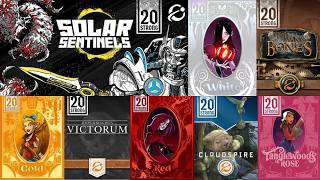
- All that being said, the 20 strong version I did enjoy because I already knew that the system was a push your luck element and this kind of it's also not 8 hours long.
- So, if you like the idea of Hoplamakus Victorium, but don't have a couple hundred bucks to shell out um or you don't have the time, let's say you do own it, but you don't have the time to actually sit down and commit to a, you know, eight hour campaign. Well, then play this.
- Cloudspire came around and I was like, oh no, this system is good when you take it back to its roots and you don't add a bunch of [ __ ] that makes it way too long and way too random and you streamline it.
- my favorite one of 20 Strong is the original Solar Sentinels
- This I feel like is obviously it's it's just the OG. And I think it does it best. It it fits this 20 strong system the best.
- And in and of itself just makes this one my favorite to play.
References (from this video)
Mechanics (from transcript analysis)
Video topics + discussion points
Quotes (from this video)
- If you're not in the mood to lose, don't even try and pick this one up.
- This is a no-brainer for any solo player looking for a deduction style game or logic style game.
- The core system of the game remains the same but the variety of different decks you can buy for the game is what makes this game tick.
References (from this video)

- Hoplomachus
- Too Many Bones
Mechanics (from transcript analysis)
Video topics + discussion points
Quotes (from this video)
- I know it has its own little like um uh you know sub cult of people who enjoy it.
- I don't particularly like it because I think it has a very strong rich get richer.
- If you start winning an Outpost you were going to continue winning because if your engine gets going faster than mine there's not much I can do about it.
- But yeah this one does not This one is one I wanted to like a lot more than I did.
- it's a good back and forth two-player game.
- I like the theme of it a lot. Seems like most music games I play aren't very good.
- I I find this one amusing.
- It almost feels like you could play it randomly and have the same amount of fun, but it's a nice way to pass some time.
- It's a great little filler.
- I don't think a lot of people have played this one.
- It was replaced by Nobody is Perfect, too, because they didn't get it right the first time.
- This is what a lot of people were talking about.
- It was one of those games that I saw a little bit of buzz and I was like, "Ooh, I'll have to play that sometime." and then never heard anything else about it.
- I think that's just a really solid two-player game from Catalia.
References (from this video)

- Huge
- One of the bigger solitary games
- Really love Hoplomachus as a system
- A lot of fun
- Great game
- Great solitary game
- Gave the game away and already regrets it
- Gladiators
- Gladiatorial arenas on different continents
- Hoplomachus
Mechanics (from transcript analysis)
- map movement — Players move on a small map of continents and then to specific arena maps.
- Poker Chip Combat — Players use poker chips to battle enemies.
Video topics + discussion points
Quotes (from this video)
- My number 10 from Renegade Game Studios is Unstoppable. This is a science fiction solitaire game.
- This is 20 Strong. 20 Strong is not just a simple game. It's a game system because essentially, you have different decks, and you the way these decks play are very, very different.
- Great artwork here. I love the artwork, but it's just a very tense game. I'll be honest, this is one I have never won.
- Final Girl is a great solitaire game based on kind of B movie horror films.
- Hoplomachus Victorum is huge. This is This is one of the bigger solitary games I played.
- Mr. President is probably the biggest solitary game I've ever played.
- This is The Pursuit of John Wilkes Booth.
- I, Napoleon is essentially a Napoleon Bonaparte simulator.
- And this is Batman: The Dark Knight Returns. [...] it is freaking awesome.
- It's a horror game. It is chilling. And it is just so good.
- Plague of Dracula is a great game where you take on the roles of the characters from the book Dracula.
References (from this video)

- Put Chip Theory Games on the map with their poker chips.
- It's just kind of fine for me.
- Too Many Bones
Mechanics (from transcript analysis)
- Poker chips as life — You had these units here and they would have a stack of poker chips underneath them as their life.
Video topics + discussion points
Quotes (from this video)
- So, we're going to jump right into these here. I'm going to take a look at them and tell you what I think about them.
- This game is now 20 years old.
- It's not nearly as good as made by the people who made War of the Ring.
- This is my favorite because all the pieces move like rooks sort of and you're trying to take over other people's pieces and each one has a special power and I like the theming of it.
- Layers expansions bring it up to a nine. Layers is amazing.
- I think the base game is fine, but when you I mean it's it's very it's enjoyable, but when you add the expansion it's fantastic.
- Nothing here I think is amazing.
References (from this video)
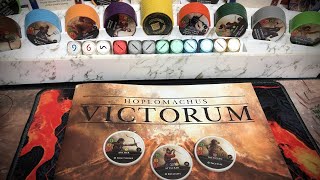
- Highly anticipated
- Re-implementation of Hoplomachus Origins with improvements
- Improved map-based campaign structure instead of linear trials
- Evolving team composition and narrative storytelling
- New original artwork and cleaned-up graphic design
- New metal alloy dice
- Cleared up ambiguities and rule questions from Origins
- Variable challenges with different battle types
- Upgrades for hero and team throughout the campaign
- Rewards for bloodshed events like hero upgrades
- Bloodshed events are lethal if units are defeated
- Hero health is carried over, making them weaker if damaged
- Gladiatorial combat and conquest
- Ancient Greece, mythical locations like Atlantis and Eldorado
- Campaign-driven with evolving team and story
- Hoplomachus Origins
Mechanics (from transcript analysis)
- Area Control — The game involves moving to and engaging in battles within different regions on a map.
- Campaign play — A series of linked battles forming a narrative campaign with evolving hero stats and team composition.
- Card Drafting — Players draft prowess cards for their hero.
- Dice Rolling — Combat and other actions are resolved by rolling custom dice.
- Event resolution — Moving to a location triggers an event, which can be a battle, sporting event, or opportunity quest.
- map movement — Players travel across a map, choosing which region/arena to face next.
- Team building — Players start with a base team that is modified and grows throughout the campaign.
- Turn-based combat — Battles are resolved in turns, with movement and attacking phases.
Video topics + discussion points
Quotes (from this video)
- The game has been highly anticipated.
- This is kind of a re-implementation of Hoplomachus Origins.
- The way that things have changed in Hoplomacus Victorum is instead of having this series of trials, you have a map and on this map you'll draft travel from point to point.
- The same kind of concept but the series of battles is not linear it's a little bit more free form and kind of constructed in this campaign method.
- Unlike Origins where you got to freely choose your team before each battle in Victorium you have a starting team that evolves from battle to battle.
- The graphic design has been really cleaned up and we have new dice.
- All those ambiguities and rule questions that came from original Hoplomacus have now been cleared up.
- On the easiest mode which is called Chosen and Chosen we get three hero prowess cards instead of one.
- These battles are now kind of tied together in a wonderfully thematic way.
- The mats are double-sided, they were single-sided in Origins.
- Our adventure is going to consist of four acts.
- The heroes that we're not which can be known as Primus are going to be challenging us to battle at the end of each of these other acts.
- Bloodshed events are always a little bit dodgy because they're lethal if any of our units were defeated they'd be gone they'd be gone from our troop.
References (from this video)
Mechanics (from transcript analysis)
Video topics + discussion points
Quotes (from this video)
- the Skirmish mode of the game is played in turns starting with the first player
- you may choose to either have a unit attack or instead use what is known as its special skill
- the game comes with all kinds of chips stored in these included containers
- this newly remastered Edition returns you to the arena with updated rules and components
References (from this video)

- Enjoyed the original Hoplamachus, and this solo-only version is a great experience.
- An expansion significantly reduced the game's playtime (from ~12 hours to ~6).
- Features Chip Theory quality components.
- Brings in the mythological theme, fighting arenas, and challenges.
- Great solo game.
- Originally the game was extremely long.
- Expansion components don't fit the original storage solution (grandstands for chips).
- Arena combat, mythology
- Mythological world
- Campaign-driven
- Hoplamachus
- Too Many Bones
Mechanics (from transcript analysis)
- action selection — Players select actions for characters staying at the campfire and those going into battle.
- arena combat — Players take on challenges and arenas.
- Campaign — The game features a campaign structure, progressing through acts.
- Character progression — Players level up characters.
- Dice Rolling — Players roll dice based on their characters.
Video topics + discussion points
Quotes (from this video)
- It turns into one big puzzle because there's just a line of enemies that you have to defeat.
- So much stuff.
- And Vantage is just a masterpiece. It's so [ __ ] cool.
- Just the scenario ingenuity of these games is so cool because of different stuff just popping up and happening.
- Um this one [clears throat] is a a super and and this is the reason this is the sole reason why this game beat out Elder Scrolls when we were doing that comparison.
- It's just a masterful achievement.
References (from this video)
- Adds varied content through arenas, Tyrant/Scion encounters, and Dark Days events
- Arena mechanics introduce variety and new tactical considerations
- Rivals and event decks increase replayability and spice
- Quick-play / reduced act length shortens time to table
- Print-and-play rules and trackers lower barriers to trying the mode
- Increases complexity and potential length if players don’t adopt quick-play rules
- Expansion price ($50) and shipping considerations may deter some
- Not all content may be essential for every group; perceived optionality
- Remastered content limitations may affect compatibility for some players (not blocking base play)
- Power progression, risk-reward, and brutal encounters in a gladiatorial setting
- Arena-based fantasy/sci-fi combat against tyrants in a modular campaign world
- Too Many Bones
Mechanics (from transcript analysis)
- Arena cards — New arena-specific modifiers and goals with dual-sided cards
- Dark Days event deck — Adds tyrant/scion-related events to standard encounters for added spice and difficulty
- Mercury boots / quick play variant — Halves act length to speed up campaigns and reduce overall playtime
- Navigation stat — Map movement is accelerated as navigation skills improve
- Opportunities and blessings — New economy to boost hero stats and recruit units; blessings are spent permanently
- Primus encounters and rivals deck — Rival-focused encounters with fresh variability and challenges
- Rule print-and-play resources — Printable rules and tracking sheets to facilitate quick setup and play
- Tyrant encounters and Scion encounters — New encounter types that affect progression and difficulty across the campaign
Video topics + discussion points
Quotes (from this video)
- Chip Theory has built up for me a ton of trust I absolutely love their games and I can't help myself
- I'm definitely going to get it
- Chip Theory is freaking awesome
- I do now have an understanding of what I will be buying and I like it
- print out the rules right this second
- free shipping
- I love the arena mechanics
References (from this video)

- distinct playstyle among solo-friendly games
- availability and complexity may deter casual players
- victory conditions and tactical control
- gladiator arena / arena-brawler with strategic overlay
- mythic arena combat
Mechanics (from transcript analysis)
- area control / engine build — control zones and optimize actions to score victory points
Video topics + discussion points
Quotes (from this video)
- huge shout out to all my patrons
- the patreon link down below
- this video is sponsored by wsbg
- it's so comforting to me
References (from this video)
- Solid first game for a publisher; good core ideas
- Solid solo/duo play potential
- Learning curve and rule clarity can be improved
- Heroic combat and gladiators in mythic settings
- Ancient Roman-inspired gladiatorial arena
- Single-session or short-form campaign with arena challenges
- Too Many Bones
- Cloudspire
Mechanics (from transcript analysis)
- arena combat — Skirmish battles with multiple options and modifiers
Video topics + discussion points
Quotes (from this video)
- "Loving it, absolutely loving it"
- "I think Jaws of the Lion is a better all-round put together package"
- "it's one of the most complicated games out there; the learning curve is huge"
- "I rate the game I think like a 9.5 out of 10"
- "we played Star Wars Imperial Assault all day"
References (from this video)
- Great solo puzzle with deep strategic choices
- Significant variety in arenas, events, and opponents
- Effective progression with upgrades and new units
- Rich flavor and thematic consistency with Haplomachus lineage
- Spectate/recover mechanic adds tension and risk management
- Rule complexity and learning curve can be intimidating
- On-tabletop simulator, setup and shuffling can be fiddly
- Some rule interactions (e.g., tactics, bane) may be unclear without reference
- Campaign length for a full act is substantial
- Power, conquest, and survival through combat and upgrades
- Gladiatorial arenas across a mythic world; Pluto's refugees and local gladiator communities
- Four-act campaign with escalating primus battles and random arena configurations
- Hoplomachus Origins
- Lost Cities
- Rise of Rome
Mechanics (from transcript analysis)
- Act/week/time tracking — Acts comprised of 12 weeks; time management to reach next confrontation; travel and events consume time.
- Arena and beast mechanics — Beasts on beast cages; different arenas have unique rules; local vs non-local units affected by beasts.
- Bane tokens and scion influence — Bane chips added based on scion influence track; certain events impose permanent penalties.
- Character and leaderboard stats — Health, movement, range, and special abilities for champions and units.
- Combat: Dice — Different dice (green, yellow, black, red) with varying hit chances and outcomes determine damage and hits.
- Dice-based combat — Different dice (green, yellow, black, red) with varying hit chances and outcomes determine damage and hits.
- Harbors and long-distance travel — Harbors allow teleportation to other harbors at the cost of a week.
- Leaders/Leadership and troops — Leadership points or shields enabling deployment of more units.
- Opportunities, tactics, and recruitment — Opportunity cards provide quests and rewards; tactics are finite-use bonuses; can recruit enemy lineup units.
- Spectate vs participate at events — Option to spectate an event to heal or recruit, with consequences; or participate and potentially risk HP.
- Time Track — Acts comprised of 12 weeks; time management to reach next confrontation; travel and events consume time.
Video topics + discussion points
Quotes (from this video)
- this is my second favorite game after mage night
- this new version is so so so good
- it's been a rough year for me and this is bringing me joy at a time when i really really needed it
- the variety in the gameplay is going to be great
- i personally am extremely excited about this
- there's a lot of variety in the sporting events
- i'm actually going to call this video however i hope it gives you just a sense of flavor of play
References (from this video)
- Thematic and flavorful setting with gladiator lore
- Solid solitaire experience with a different flavor within 20 Strong
- Engaging mix of tactics and risk management
- Steeper learning curve than Solar Sentinels
- Some balance quirks compared to other decks in the system
- Historical fantasy with gladiators and combat arenas
- Ancient world / gladiatorial arena
- mythic-historical blend
- Too Many Bones
- Tangle Woods Red
Mechanics (from transcript analysis)
- Card activation with arena effects — Cards trigger ongoing effects and arena-type challenges as play progresses.
- Dice allocation — Allocate dice to gladiator actions in a tactical arena-style setup.
- Path and arena progression — Navigate a sequence of gladiatorial matches with escalating difficulty.
Video topics + discussion points
Quotes (from this video)
- This game is actually pretty big. And what I mean by that is there are a lot of choices in this game.
- I think Tangle Woods Red has the most meat to it.
- On the Cody scale, I'm going to give it an eight out of 10.
- This is a fantastic, fantastic game system, and each of the games are a lot of fun.
- I would love to see a version of this like in World War II.
- Tangle Woods Red and indeed all of 20 Strong. This is a fantastic, fantastic game system.
References (from this video)
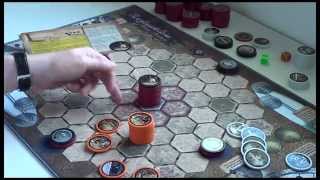
- Engaging solitaire format with a strong thematic link to arena combat
- Innovative titan-pit/die mechanic and AI-driven boss behavior
- Crowd-favor mechanic adds strategic pacing and reward structure
- Versatile setup with modular choices and upgrade options
- Setup and rules can be dense and time-consuming for new players
- Some components and expansions feel optional or PvP-oriented rather than strictly solo
- The complexity may be intimidating without a dedicated reference
- Gladiatorial combat against titans with shard-based power and crowd-favor mechanics
- Ancient Rome arena with Colosseum center, Titan hex, pits
- Procedural AI-driven boss battle with round-based turns
Mechanics (from transcript analysis)
- Crowd favor — Gaining crowd favor provides benefits such as unlocking footholds and upgrading capabilities; health damage to chips or boxes also increases crowd favor.
- Deployment from titan hex — Units can deploy from the titan hex and from the central pit, providing dynamic entry points and strategic options.
- Elevation/elevator deployment — Gladiators can emerge from pits via an elevator to enter the center arena, enabling tactical repositioning.
- Equipment boxes — Equipment boxes require health chips to be broken open; they grant equipment upgrades that enhance gladiator strength.
- Gladiator bag drafting — At setup, a pool of gladiators is drafted into a bag and drawn to form starting units, with some expansion elements adding variety.
- Pillars and health chips — Pillars with health chips act as destructible threats; they are targetable like enemies and influence control of the arena.
- Shard mechanics — Shards grant blue dice to basic attacks; Oceanus cannot be damaged until at least one shard is possessed, and Oceanus cannot be killed until all four shards are collected.
- Titan AI and ramping — Titan Oceanus moves around the pit area, summons units from the pit, and has location-based rules that affect when and how it can be attacked.
Video topics + discussion points
Quotes (from this video)
- This is the Rise of Rome expansion. It's a standalone.
- The arena here is the Colosseum in the center is the Titan hex.
- We're playing solitaire.
- We cannot damage Oceanus until we have at least one shard.
- We can't destroy him that's remove his very last health chip.
References (from this video)
- Upcoming game
- Premium promotional items
- Damascus steel sword with custom branding
- gladiator
- roman
- combat