




King of Tokyo: Dark Edition Deep Dive
What the Community Thinks About King of Tokyo: Dark Edition
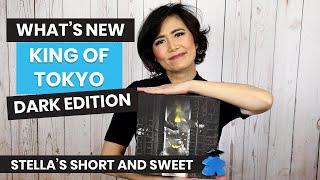
Reviewers describe King of Tokyo: Dark Edition as a light, fast dice battle that keeps the core rules of the original King of Tokyo while adding a darker theme, deluxe components, and a new progression system. Meeple University's Stella describes the set as a limited edition with "nice dark color artwork" and different mechanics from the classic. The community largely agrees that the game is simple to teach and easy to bring to a table of new players, and that its appeal rests on unpredictability rather than on deep strategy. The Dice Tower ranks it among the games every gamer should own, placing it at number six on its list and calling it "just better" than alternatives for groups with more players. Dice Tower also notes that two-player games are better served elsewhere. 3 Minute Board Games goes further, calling this version the best looking entry in the series and recommending it to both casual and veteran players.
Core Mechanics That Define King of Tokyo: Dark Edition
Dice Rolling
Dice rolling drives nearly every decision in King of Tokyo: Dark Edition. Each player rolls six dice up to three times per turn, keeping some results and rerolling the rest. Three of a kind sets the value of an action and grants influence equal to that value, plus one for each matching die. Triple ones and triple twos advance the wickedness marker, while the remaining faces control healing, energy, and attacks. 3 Minute Board Games explains that the dice decide which actions a monster can take on any given turn, and the Dice Tower describes the rolling as a Yahtzee-style system that gains a "cheeky" thematic character in this edition. The result is a game where a single roll can swing the outcome, which reviewers view as part of the charm for groups that enjoy a bit of chaos.
Triggered Power Cards
The second defining system is the set of power cards purchased with energy tokens. Many cards are kept in front of a player and fire automatically when a condition is met, which gives the game a light engine-building feel. Meeple University highlights cards that reward a player for taking damage, noting that "each time you lose at least two hearts you gain one energy." Players who plan their purchases can chain these effects so that one roll produces health, energy, and points in the same turn. The game was designed by Richard Garfield, and its card-buying rules leave room for this kind of planning.
The King of Tokyo: Dark Edition Experience
Chaotic Momentum
Reviewers describe the table as loud, unpredictable, and fun to watch unfold. Meeple University's hosts describe the game as having its own "lovely chaotic way" of play. Players often find themselves reacting to a sudden swing rather than executing a long plan, and that reactivity is what keeps the game feeling fresh for groups that already know the rules.
Direct Confrontation
The game also feels openly hostile. Each monster can attack others, and the board places monsters in Tokyo where they absorb damage from every opponent. 3 Minute Board Games describes the experience as "in your face," a setting where attacks come quickly and players rarely get a quiet turn. Some players enjoy that tension and the satisfaction of striking back at the leader, while others find it less comfortable. The social side of the game is therefore central to the feeling: the fun comes from the back-and-forth as much as from the dice.
What Makes King of Tokyo: Dark Edition Stand Out
The Wickedness Track
The most frequently praised addition is the wickedness track. Rolling three ones or three twos advances a marker, and reaching certain points lets a player choose from a pool of permanent or one-time upgrades. Meeple University's Stella singles out this track as a reason to prefer the Dark Edition, explaining that "these powers are pretty good" and that the strongest of them can reshape a long game. Reviewers note that the upgrades reward players who invest in the track, which gives the game a secondary goal beyond attacking and healing.
Presentation and Components
Reviewers consistently highlight the physical quality of the game. Meeple University praises the chunky dice and transparent components, and 3 Minute Board Games argues that this version "has the best art and presentation of the series to date." The darker artwork gives the set a different look from the original, and the deluxe pieces make the game satisfying to handle. For many reviewers, the tactile experience is the first thing that makes the edition worth buying.
Potential Drawbacks
Player Elimination and Brutal Combat
The most common criticism concerns how aggressive the game can be. 3 Minute Board Games warns that player elimination and brutal combat mean the game "is not a game for people who want to avoid confrontation." A player whose monster reaches zero health leaves the game, which can leave eliminated players waiting while others continue. Reviewers who prefer lower-conflict games are likely to find this design frustrating, even though the experience is brief.
Limited Monster Variety
Some reviewers feel the monsters play too similarly. 3 Minute Board Games suggests that giving each monster its own variable player power would add an extra level to the game. Dice Tower also acknowledges that the two-player experience is better served by Dice Throne, which signals that the design is tuned more for larger groups. Players who want deeper asymmetry may look for more variety in other titles.
If You Enjoy King of Tokyo: Dark Edition
Players who enjoy King of Tokyo: Dark Edition's dice rolling and quick back-and-forth interaction will find a similar satisfaction in Dice Throne, which Dice Tower recommends as the better choice for two players who want a head-to-head dice fighter. Players who enjoy the game's shared tension and want something with a cooperative twist can look to Pandemic: The Cure, which 3 Minute Board Games recommends for players who want dice-driven play without direct conflict. Both titles keep the energy of the monster battle while changing how players interact with one another.
What Reviewers Are Saying
"It takes that yatsi mechanism of rolling and then re-rolling twice in order to get the combination that you want and it really puts a cheeky thematic flare on that activity of rolling dice. And I think it's really really fun."
— Dice Tower
"However, player elimination and brutal combat means this is not a game for people who want to avoid confrontation. It's very in your face, and while I love the monsters, I think variable player powers for each of them would add an extra level to the game."
— 3 Minute Board Games
"I really like this wickedness track because these powers are pretty good."
— Meeple University