


Krosmaster: Arena Deep Dive
What the Community Thinks About Krosmaster: Arena
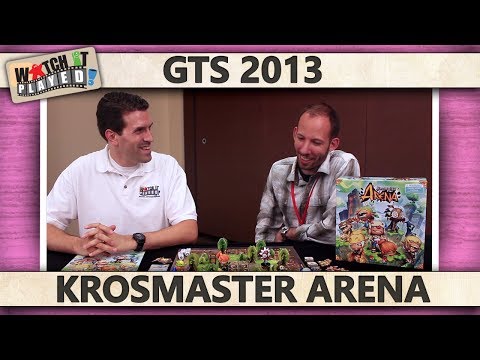
Krosmaster: Arena is a tactical skirmish game played with prepainted, anime-style miniatures, and the conversation around it divides along a familiar line. Reviewers almost always start with the figures and the terrain, then split on whether the game underneath lives up to them. The most enthusiastic voice in the transcripts is Eric Price of Japanime Games, though Price's session is a publisher demo filmed at Gen Con, so the praise should be read as a sales pitch. Rodney Smith of Watch It Played is more of a fan who came to the table through a demo day in Seattle. Smith was taken with the sculpted terrain and asked pointed questions about how it changes movement and line of sight, coming away feeling the game had been explained thoroughly.
The BoardGameBollocks channel is far less charitable. In a shelf-by-shelf collection tour, the reviewers called the game "not too bad, not too great," mostly because they learned it from the walkthrough booklet rather than from the table. In a purge video that dismisses titles they are getting rid of, the same channel was blunt about the components and the rules, and that harsher take is the one most worth weighing against the publisher's enthusiasm. Taken together, the community reads as agreeing that the game looks excellent and that its tactical brawling is engaging in short bursts, while disagreeing about whether the physical product and the rulebook are good enough to make it a keeper.
Core Mechanics That Define Krosmaster: Arena
Team Building by Level and Gallons of Glory Scoring
Every figure carries a level printed in its upper corner, and the game uses those levels as its point system. Eric Price explained that everyone in the base game is level three, while expansion figures range from one to six, and players assemble a team whose total level matches an agreed budget. A typical two-player game starts each side with six Gallons of Glory, which act as victory points. Knocking out an enemy figure steals Gallons equal to that figure's level, so a tough opponent is a valuable target. Coins scattered across the board can also be collected and traded for Gallons or spent on boosts and equipment, which gives the scoring a second track that runs alongside the fighting. Both reviewers' descriptions make clear that the army is built before the first move, so the drafting choices matter as much as the dice.
Dice-Driven Spell Combat on a Grid
Combat is resolved through spells rather than conventional attacks, and the most surprising detail for many players is that a spell attack always connects. Eric Price described how the attacker rolls a die that can add extra damage, while the defending figure rolls to reduce incoming damage. Some figures are built for this exchange: a heavy hitter rolls two dice when attacking, while a beefy defender rolls two when being attacked. Movement and range are counted in orthogonal steps on the grid, with trees and shrubs blocking movement and line of sight, figures standing in the way turning a shot into a blocked one, and crates giving a range bonus to a figure standing on top of them. Rodney Smith noted that most of the abilities are printed on the tokens themselves, so players rarely need to check the rulebook once the game is underway.
The Krosmaster: Arena Experience
A Good Old-Fashioned Brawl
The clearest description of how the game feels comes from Eric Price, who summed up the core play as "just a good old-fashioned brawl." Each figure gives its owner movement, hit points, and action points, and the fight is a running tug-of-war over Gallons of Glory as figures knock each other down. The pace is brisk. Eric described a two-player game as taking about half an hour, pointing to built-in controls that keep a match from dragging on. The feel is closer to a skirmish than a slow simulation, and that suits the reviewers who want something they can finish before the evening ends.
Pre-Painted Spectacle and Team Play
The second feeling is one of spectacle. Rodney Smith admitted the figures look fantastic, and Eric noted that most people who see a demo are thrilled to learn the figures come pre-painted, because few players have the time or skill to paint two hundred minis. The table itself becomes part of the show, with the figures standing against three-dimensional terrain that makes the board feel textured. The game shines most in its preferred format. Eric said the sweet spot is an even number of players, and specifically a 2v2 game, where teammates can set up one-two punches with their figures. Eric was candid that three-player games suffer from the familiar problem of two players ganging up on the third, which is worth knowing before picking a player count.
What Makes Krosmaster: Arena Stand Out
Pre-Painted Figures and Resin Terrain
The product's most praised feature is its physical presence. Rodney Smith was drawn to the three-dimensional trees, crates, and shrubs, which Smith felt gave the board a lot of texture while still doing real work in the rules. Eric Price explained that the publisher also offers alternate cardboard and resin versions of the terrain, and that the resin pieces would be sold only at conventions, a detail that gives the collecting side of the hobby extra appeal. For reviewers who care about how a table looks, the combination of finished figures and sculpted scenery is the main reason to pick the game up in the first place.
Readable Tokens That Keep Play Moving
Reviewers consistently praise how much of the game is visible at a glance. Eric Price said that most of the abilities are written directly on the figure cards and tokens, and expected players to understand what almost every one does without ever opening the rulebook. Rodney Smith echoed that point while playing, observing that the abilities seemed to be written on the tokens, so there was no need to flip through the book to see what a figure could do. For a game with this many stats, spells, and item effects, that clarity is a meaningful advantage, and it is why the game feels accessible once a group has run through the basics.
Potential Drawbacks
Fragile Components and Fiddly Assembly
The harshest physical criticism comes from BoardGameBollocks, who described having to fill the terrain blocks with decorators' cork because the pieces would not stay together on the table. For a game whose main draw is its miniatures and scenery, that is a serious complaint, and it undercuts the sense of quality that the figures themselves deliver. Reviewers who buy the game expecting a polished set should be prepared to spend time sorting out the terrain before the first match.
Dense Rules and Style Over Substance
The second concern is that the rules are demanding and the game may not reward the effort. BoardGameBollocks found the rulebook dense and noted that the game walks players through the rules as they go, which becomes a problem when a session is paused for a long time and must be relearned. Their bottom line was that the game is a case of style over substance, with striking figures that carry more weight than the mechanics beneath them. Players who enjoy tactical depth will find the rules rewarding, but players who want a light, easily resumed game may find the learning curve tiring.
If You Enjoy Krosmaster: Arena
Reviewers place Krosmaster: Arena within the tactical skirmish niche, and Eric Price described its basics as similar to many miniatures games, with line of sight, cover, movement limits, and figures that cannot pass through each other. Players drawn to the dice-rolled spell combat and the budgeted team drafting should look at Guild Ball, another skirmish game built around assembling a roster within a point limit and fighting for position-based scoring rather than simple elimination. Fans of the sculpted trees, crates, and shrubs that Rodney Smith praised for giving the board texture and real tactical weight should look at Heroscape, which likewise turns three-dimensional terrain into the main driver of movement and line-of-sight decisions. Players who like the look of the game but want a gentler rulebook should keep in mind the warnings from BoardGameBollocks before committing.
What Reviewers Are Saying
"I know that the, the miniatures are the highlight, obviously, here in terms of the, the component. I think it's one of the highlights for sure, but I was drawn to the, the 3D elements here. I know they simple token pieces, but it does make everything pop a little bit."
— Rodney Smith, Watch It Played
"We had to fill the blocks with decorators cork because they just didn't stay together. The game walks you through the rules, they're really dense."
— BoardGameBollocks
"When you knock out their their characters, you get these victory points, and the object of the game is to win all the victory points."
— Eric Price, Japanime Games