/pic8861246.jpg)

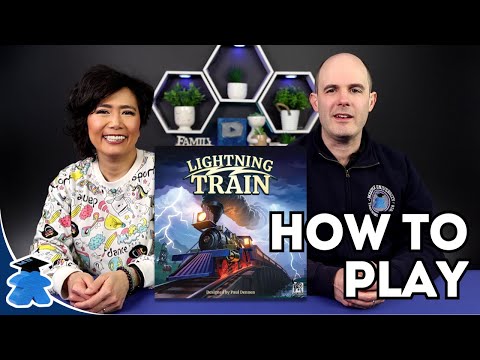
























Lightning Train Deep Dive
What the Community Thinks About Lightning Train
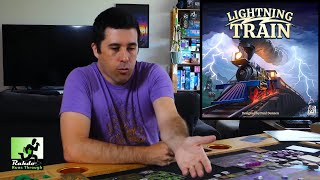
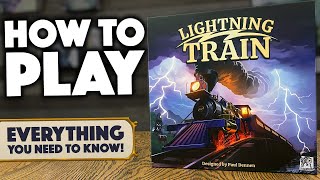
Lightning Train comes from Direwolf and designer Paul Dennen, the same pairing behind Clank! and Dune Imperium, and much of the community reaction measures the new game against that reputation. The Dice Tower calls it "a good solid one down the middle," awarding an 8 out of 10 and finding new options to chase in every play. Rahdo Runs Through reaches a similar conclusion, placing the game in a middle ground between the light familiarity of Ticket to Ride and the density of 18XX titles, and recommending it to anyone who likes deck or bag building and is at least neutral about train games. The Discriminating Gamer was won over too, landing on a seven out of ten and calling the bag building "really a lot of fun."
Not every channel is as enthusiastic. BigPasti gives Lightning Train a 5 out of 10, arguing that the bag-building engine "doesn't really reward efficiency" and pointing to several rules that read like band-aid fixes rather than a cohesive design. TheGameBoyGeek - Hi Quality Hi Energy Board Game Reviews lands in between, praising the interaction built into deliveries as the best part of the game while flagging token storage and bag-draw randomness as real frustrations. Our Family Plays Games previewed the game in a video sponsored by publisher Direwolf, playing a prototype shown at the World Series of Board Gaming ahead of a release at Gen Con 2025, and came away enjoying the theme and bag-building depth while noting it is not a lightweight gateway title.
Core Mechanics That Define Lightning Train
A Bag That Doubles as a Currency
At its core, Lightning Train is a bag builder: each player draws five chips from a personal bag every round, spending money pulled from the bag to buy better chips from a shared market as the game continues. The Dice Tower frames the twist plainly, explaining that the tokens in the bag function as both playing pieces on the board and the currency used to activate actions, calling this the element that "differentiates itself over other train games." Chips marked with a plus symbol let a player keep drawing past the base five, up to nine in a single turn with the right upgrades purchased, and BigPasti describes pulling nine powerful chips at once as "a joyous moment." Every chip drawn eventually moves to a warehouse once used, and once the bag runs dry those chips get shuffled back in, so the mix available to draw keeps shifting across the game.
Building Rail Lines and Making Deliveries
Beyond the bag, the game runs on route building and deliveries. Players spend train chips to lay rail lines between cities and to build stations, and a line generally needs a matching colored contract chip to unlock construction in that region, with a pair of trains available as a workaround when the right contract has not turned up. Once a network exists, delivering a good from a producer city to the station that wants it pays out points, and the route used does not have to belong entirely to the player making the delivery. The Discriminating Gamer walks through how a delivery can run across a rival's rail lines, awarding the mover a point for completing the delivery while every rail line it passes through earns its owner a point too, which is why trains end up working as "kind of a currency" of their own. The game ends once the transcontinental railroad connecting New York City to San Francisco is completed and the required regional cities are linked, or once the production deck runs out.
The Lightning Train Experience
Tense Competition Over Shared Track
Because rail lines and stations are shared resources, Lightning Train produces frequent friction between players even when no one is trying to be antagonistic. Rahdo Runs Through describes watching another player build on a spot they wanted as a "fun angry," the kind of frustration that turns straight into planning a comeback rather than lingering resentment. TheGameBoyGeek - Hi Quality Hi Energy Board Game Reviews frames that same friction as the best part of the game, pointing to moments where delivering a good through an opponent's line hands them points in the process of scoring your own, and to using a shorter delivery to claim a good before a rival with a longer route can cash it in. The Dice Tower adds that downtime runs lower with three players than four, since everyone is still watching the board for the same limited set of opportunities.
A Slow Build Toward a Working Engine
Several reviewers describe a rocky start that gives way to a clearer sense of strategy. The Dice Tower admits the rules did not click on a first read, and that new players commonly spend an early game unsure why they are not scoring before the value of upgrade chips and the point track becomes obvious on a second play. TheGameBoyGeek - Hi Quality Hi Energy Board Game Reviews found that the engine built from bag upgrades tends to come online only in the final turns, leaving little time to make use of it before the game wraps. Once the pieces click, Rahdo Runs Through calls the result "a satisfying efficiency puzzle," built from securing contracts, managing a limited number of trains, and reading a route through the market's shifting tiles.
What Makes Lightning Train Stand Out
Bag Building With Real Bite
Reviewers who have played other bag builders single this one out for doing something different with the format. The Discriminating Gamer, who names War Chest as a favorite implementation of the mechanic, still called Lightning Train "really a fun bag building game" and said it might be the best implementation of bag building they had seen. The Dice Tower highlights the same double duty the chips perform, arguing that using a single token as both a board piece and an in-game currency is what separates Lightning Train from other train games rather than the theme alone.
Interaction Woven Into Every Delivery
TheGameBoyGeek - Hi Quality Hi Energy Board Game Reviews singles out player interaction as the game's strongest feature, ahead of the bag building itself, describing how sending a delivery through someone else's rail line often means deliberately handing them points in order to score your own. That same channel points to more advanced plays that surface only after repeated games, such as using a short delivery to claim a good before a rival with a longer, more lucrative route can collect it. Our Family Plays Games highlights the presentation feeding that same energy, contrasting Lightning Train's colorful board with other train games they consider "a little bland" and "kind of gray" by comparison.
Potential Drawbacks
Restrictive Storage and Heavy Randomness
TheGameBoyGeek - Hi Quality Hi Energy Board Game Reviews names token storage as the single biggest frustration, since a player can typically bank only one leftover train chip for a future turn, and every other unused pull must be committed somewhere on the board immediately, sometimes locking trains into a secured contract before the matching route ever turns up. BigPasti goes further, arguing that a player has "no real control of what comes out" of the bag, so the safest strategy across games becomes drawing and stockpiling more trains rather than pursuing a varied plan, which flattens what should be a chaotic, creative system into a single dominant line of play.
A Steep First Game and a Muted Look
Multiple reviewers describe Lightning Train as unwelcoming on a first play. The Dice Tower calls the learning curve real enough that a first game can feel underwhelming until the systems click on a second attempt, and adds that the components are "functional more than anything else" rather than a visual highlight. BigPasti is harsher about the board itself, describing the colored regions as blob-like shapes crowding one another and arguing that building across them never produces the sense of a growing empire the way it does in Brass Birmingham or Ticket to Ride. TheGameBoyGeek - Hi Quality Hi Energy Board Game Reviews adds that the two-player game leans on a dummy player, making Lightning Train "really a three or four player" experience for groups without a full table.
If You Enjoy Lightning Train
Reviewers placed Lightning Train alongside a specific set of other route-building and bag-building games. The Dice Tower described it as a blend of Age of Steam, Ticket to Ride, and the bag-building lineage of games like New Orleans. Rahdo Runs Through positioned it between the accessibility of Ticket to Ride and the density of the 18XX family of train games. BigPasti pointed to Brass Birmingham as an example of a board that reflects a player's growing network in a way Lightning Train's map does not. The Discriminating Gamer, a fan of War Chest as a bag-building design, called Lightning Train's own take on the mechanic one of the best they had played.
What Reviewers Are Saying
"That's where this differentiates itself over other train games. The fact that the token I use is both a playing piece for the board and a currency to operate the actions I need."
— The Dice Tower
"The bag you build doesn't really reward efficiency. Or maybe more accurately, it doesn't allow for efficiency. It instead allows for variety."
— BigPasti
"It's at the very least a route building game. You have your delivery of goods and it is a satisfying efficiency puzzle in that way."
— Rahdo Runs Through