

Magic Number Eleven Deep Dive
What the Community Thinks About Magic Number Eleven
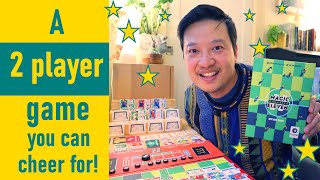
Reviewers approach Magic Number Eleven as a small two-player card game with a football (soccer) theme, and most of them come away impressed by how much strategy fits into a compact box. Board Game Sanctuary gives the game its most detailed walkthrough, presenting it as a Euro-style design from South Korea that wraps a team-management puzzle in a sports skin. The same channel's second video, a list of two-player games, describes the game as "super fun, super thinky," with enough tension to make players forget they are playing soccer at all.
The consensus is not unanimous. Board Gaming Ramblings liked the concept but decided the game was not for them. Their main complaint is that outcomes feel too heavily decided by the luck of the draw, which left them without much desire to play again. They add that sports fans who do not mind a luck-based element may find it a solid game. The disagreement comes down to tolerance for randomness: reviewers who value planning and puzzle solving respond warmly, while those who want more control over results come away frustrated.
Core Mechanics That Define Magic Number Eleven
Icon Matching and Team Building
Each player builds a team of ten players on a board that works like a coach's tactics diagram. Players are placed in lines by role: strikers must touch the red line, midfielders the green line, and defenders the blue line. Every card carries icons on its perimeter, with blue representing defense, green representing synergy, and red representing attacking push. Board Game Sanctuary explains that completing a symbol grants its bonus on your turn. A completed soccer ball icon allows a shot on goal, a completed green synergy icon lets you draw synergy cards up to a hand limit of five, and a completed blue shield determines how much of an incoming attack your team can stop. Reviewers describe the result as a small engine that rewards careful layout, with each shot covering an icon and gradually tiring out the striker.
The Tug-of-War Marker and Synergy Track
A red tug-of-war marker sits between the two players and slides back and forth along an accuracy track. Its position controls how many synergy cards a player can use on a turn. When the marker sits on your home side, you can use the full range of three synergy cards, but when you are attacking into the opponent's half, you may only use a single space on the track. Board Game Sanctuary points out that synergy cards carry one to five stars that represent a team's accuracy, strength, and skill, and that the synergy track adds a random element because a card must be flipped from the top of the deck. Reviewers praise this design because a top-decked card can disrupt a carefully planned turn, forcing players to hold back options or simply adapt. Reaching exactly eleven stars produces a Wonder Goal, which Board Game Sanctuary compares to a spectacular goal at the Olympics or a World Cup final.
The Magic Number Eleven Experience
Quiet Tension Around Every Shot
Reviewers describe a steady undercurrent of anxiety that builds around each action. Board Game Sanctuary notes that the card play "creates a little mini engine" where players connect icons, use abilities, and stack shields against an opponent's attack, and that every decision feels loaded. The 2SpQeoZ18Ro video calls the experience "super thinky" and describes a level of tension that builds as the layout comes together. Penalty kicks add a sharper spike of excitement: the kicker has roughly a one-in-five chance to score, while a defender who matches the glove position saves the shot, and Board Game Sanctuary describes this moment as creating "a huge level of tension and excitement."
A Planning Game Dressed as Sport
The second feeling reviewers highlight is that the game feels more like a tactics session than a live match. Board Game Sanctuary describes the early stage as the coach's plan before kickoff, where players position their team and try to predict how the match will unfold. Danny of Board Game Sanctuary observes that the theme could have been swapped for something like two armies in Middle Earth without changing the mechanics. For players who do not normally enjoy sports games, this abstraction is the appeal: the experience is about arranging pieces, reading the opponent, and watching the plan evolve turn by turn rather than simulating a match.
What Makes Magic Number Eleven Stand Out
Star Players and Card Battler Depth
Board Game Sanctuary praises the star players, three of whom each player drafts at the start of the game. These cards break some of the usual icon rules and grant special actions, such as stealing a synergy card from the opponent to disrupt their plans. Board Game Sanctuary says this simulates tackling for the ball. The 2SpQeoZ18Ro video describes the combination as a card battler effect, in which drafting star players changes how a team plays. Reviewers say that nuances in this system only emerge after several games, which gives the game replay value.
Thematic Integration With Euro Mechanics
Reviewers consistently note that the mechanics support the soccer theme rather than merely decorating it. Board Game Sanctuary highlights the way shots, shields, and penalty kicks correspond to moments from real football, including the Wonder Goal that the reviewer compares to a memorable headed goal at the Olympics or a World Cup final. The same channel argues that the Euro-style mechanics match the aim of the game, which is to capture the feeling of building a team and shooting goals. Board Game Sanctuary also notes that the game's theme sits comfortably alongside its strategy, even for a reviewer who does not normally enjoy sports.
Potential Drawbacks
Randomness That Can Decide Outcomes
The most serious criticism comes from Board Gaming Ramblings, who wanted to like the game and found its concept appealing but felt that random draws had too much influence. They described the pattern-building as interesting, yet said that results often hinged on the points printed on randomly drawn cards rather than on the decisions they made. Their verdict is that the luck element removes the desire to replay, even though the theme and icon matching impressed them.
A Tug-of-War Track That Demands Management
Board Game Sanctuary acknowledges a different kind of challenge. Neglecting the tug-of-war marker limits how many synergy cards a player can use, and a hand of high-star cards becomes hard to use if the marker is in the wrong place. The top-deck mechanic that adds tension can also undermine a plan, which some players will find frustrating rather than exciting. Reviewers who enjoy managing several competing priorities will likely find this rewarding, while players who prefer straightforward turns may find the system demanding.
If You Enjoy Magic Number Eleven
None of the available reviewers name a direct comparison title for Magic Number Eleven, so the clearest signal comes from how they describe its appeal instead. Board Game Sanctuary frames it as a Euro-style puzzle wrapped in a sports theme, and Danny notes that the underlying mechanics would hold up even if the theme were swapped out entirely. Players who enjoy compact two-player card games built around icon matching and a tight engine, regardless of the theme painted on top, are the audience most likely to find the appeal that draws Board Game Sanctuary back to the table.
What Reviewers Are Saying
"Something about the mechanics in this game infused that feeling of running a soccer team, engaging in a soccer match, but actually felt very Euro-esque in terms of its mechanics and how things are played out."
— Danny, Board Game Sanctuary
"Most of the time it came down to how many points were on our cards that are randomly drawn."
— Board Gaming Ramblings
"It just has this great level of underlying tension in the game that sometimes you forget you're playing a soccer game."
— Danny, Board Game Sanctuary