



Masque of the Red Death Deep Dive
What the Community Thinks About Masque of the Red Death
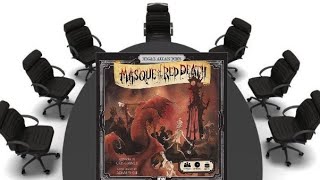
Masque of the Red Death is a 2018 deduction game from IDW Games for four to seven players, with a typical playtime of about an hour. It is based on Edgar Allan Poe's short story, and players are guests at a masquerade ball trying to gain popularity while avoiding the Red Death at midnight. The Chairman of the Board channel describes it as a mix of mechanics it likes, and it returns to the game across several videos with a consistently positive view.
The channel's first impressions were strongly favorable. After receiving its backed copy, the host said the game was "much better than I even anticipated," and rated it as a solid, very good title. The channel later placed it eighth on a list of hidden gems, where it expressed surprise that the game is not more popular, and then ranked it in a top 50 countdown as a brand new entry. The channel's praise centers on how the mechanics fit together and on the atmosphere of the game, while its criticisms focus on board readability, luck, and the need for larger groups.
Core Mechanics That Define Masque of the Red Death
Simultaneous Programming for Midnight Movement
Much of the game's structure comes from how players plan their movement. Each player has a personal programming board, described in the videos as a rondelle, and during the night they choose their route for each 10-minute increment, moving clockwise, moving anticlockwise, or staying where they are. The channel explains that once the players have finished collecting their information and gaining popularity, the game shifts into a different style of play. At midnight, the Red Death deck is revealed, and the Red Death moves from area to area eliminating anyone who has not positioned themselves correctly. The host said, "I've never seen programming used in that way before and it just works really nice," which captures the channel's surprise at how the programming element works within the design of Masque of the Red Death.
Deduction, Memory, and Simultaneous Card Play
The earlier stages of each night rely on simultaneous card play and deduction. Every player starts with the same shared deck, plus one unique personality card with a power that can significantly change the state of the game. The channel notes that these powers can disrupt a player's plans, for example by letting a player look at the Red Death location stored in another player's area, or by stealing popularity through actions such as mocking. Because players only glimpse where the Red Death will strike, they must remember those locations until midnight. The channel admits it is not usually a fan of memory in games, but says it works here because "it does amp up the tension." It presents this combination of deduction, memory, and simultaneous play as an unusual mix that the channel had not seen in one game before.
The Masque of the Red Death Experience
The Tension at Midnight
The channel's clearest description of the feel of the game centers on the moment the clock strikes midnight. The reviewer describes the tension as "really really tense" and "very exciting," because one wrong move can eliminate a player and erase all of the work completed earlier in the night. Because the information gathering is so central, that moment becomes a payoff for the planning and memory that came before it. The channel emphasizes that players are hoping their plans have worked, and that the drama of the final reveal is what makes the game memorable.
A Relaxed Social Pace Built on Theme
Between those tense moments, the channel describes the game as relaxed and chilled out. It says there is not too much heavy thinking, and that the pleasure grows as players invest in the theme. The reviewer also describes the game as a feast for the senses, noting that the visual presentation keeps attention on the table. The card interactions, such as peeking at another player's stored card or mocking someone to lose their popularity, add a social layer that the channel enjoys. The host notes that the game is not really a party game, but it still encourages players to watch and interact with one another.
What Makes Masque of the Red Death Stand Out
Art Direction and Miniatures
The channel is especially enthusiastic about the visual design. The host calls the box gorgeous and says the artwork by Grizz Grimly is "absolutely brilliant" and one of the host's favorite styles in board games. The miniatures are described as caricatures with a charismatic, characterful look, and the reviewer notes that backers of the Kickstarter edition receive good miniatures. The channel's view is that the presentation supports the Gothic theme and makes the game enjoyable to look at even between turns.
Scaling Up to Seven Players
The channel repeatedly highlights the game's support for higher player counts. It notes that Masque of the Red Death accommodates up to seven players and does not become bogged down as the table grows, which is uncommon for games that depend on social interaction. The host explains that their group often has five or six players and struggles to find games that suit that size, and that this title filled that gap while offering a different feel from other games in the group's collection. The channel also says that the game peaks at higher player counts, which becomes relevant to its later criticisms.
Potential Drawbacks
Board Color Clarity
The channel raises a specific accessibility concern about the board. The rooms use many different colors, and the host, who is colorblind, found some of them hard to tell apart. The host notes that small symbols on the board help address the issue, and the reviewer describes the result as working "okay." The channel's conclusion is that the board could have been clearer, but it treats the issue as a minor point rather than a serious flaw.
Luck and the Need for Larger Groups
The channel acknowledges that the game is heavily dependent on the luck of the draw, especially in the final round, where players must ride their luck. The host says this fits the theme and adds tension, but it is a notable element for players who prefer more control. A later video is more critical of the game's logistics. The channel says it removed Masque of the Red Death from its collection because the game peaks at higher player counts, and that the host rarely gets those numbers now. The same video also says the memory aspect can be frustrating while players try to remember all the different times, though the host considers that frustration part of the tension.
If You Enjoy Masque of the Red Death
The channel draws its most direct comparison to Everdell and The Big Score, both of which the host had reviewed shortly before Masque of the Red Death. The host observes that these games take tried and tested mechanics and use them in a simple way, and that Masque of the Red Death does the same by combining simultaneous card play, deduction, memory, and programming in a fresh way. Players who appreciate that approach may find the same appeal there. The Big Score, which the channel describes as a push your luck and drafting game with two distinct phases, is a particularly close match for players who enjoy the tension of a risky final round. The channel also placed Masque of the Red Death alongside Deception: Murder in Hong Kong in its top 50 list, which suggests it is a good next step for players who enjoy social deduction with a strong theme.
What Reviewers Are Saying
"I've never seen programming used in that way before and it just works really nice."
— Chairman of the Board
"Some really cool ideas here, a good meshing of quite unique mechanisms in terms of the deduction and the programming. I think that worked really well."
— Chairman of the Board
"I do not understand why this game is not more popular than it is, but if you do have a gaming group where you're consistently playing with five or six players and you like your deduction, then this one is certainly one check out, because it's a lot of fun."
— Chairman of the Board