



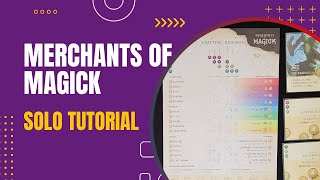







Merchants of Magick: A Set a Watch Tale Deep Dive
What the Community Thinks About Merchants of Magick: A Set a Watch Tale
Merchants of Magick stands out as a surprising delight in the roll and write landscape. Reviewers consistently praise the game for delivering a puzzle-like experience that balances randomness and strategic agency in unexpected ways. The game's connection to the Set a Watch universe resonates with fans of that cooperative adventure classic, but Merchants of Magick transforms the setting entirely: instead of playing as the adventurers fighting monsters, you become the shopkeepers equipping them for battle. Board Game Brody described it as "totally a surprise to me in a very good way," noting that the game surprised them with its crunchy decision space and layered strategy. Reviewers value how the game gives players meaningful tools to mitigate luck through potions, creating a satisfying tension between dice randomness and player control. The overall picture is of a compact, puzzle-rich game that rewards planning and tactical thinking.
Core Mechanics That Define Merchants of Magick: A Set a Watch Tale
Dice Rolling and Potion-Based Manipulation
At its heart, Merchants of Magick is a roll and write game centered on polyhedral dice (d4, d6, d8, d10, d12, d20). Each round, four dice are rolled and players simultaneously select two results to spend on crafting items or researching spells. The randomness of the dice would normally be oppressive, but the game includes a powerful counterbalance: potions. Earned by completing crafting and enchantment rows, potions can be spent to modify die values up or down by one, or to purchase additional dice rolls. This mechanic transforms the game from pure luck into what Board Game Brody called "a pretty awesome puzzle" that "uses dice to randomize things yet provides you with the potions to further manipulate the values on those dice." The interplay between random rolls and deliberate potion use creates the game's core tension: do you have the potions you need at the right moment?
Recipe Fulfillment and Order Management
Merchants of Magick employs a recipe system where players must assemble exact combinations of items and enchantments to complete orders. Throughout the game, order cards circulate around the table like a conveyor belt, moving from player to player. Players can only complete orders that are currently in front of them, forcing difficult decisions about which recipes to pursue. The game includes simple orders (items with single enchantments), high-value orders (items with paired enchantments), and a sponsored adventurer card that offers bonus rewards for completing specific combinations. This mechanic creates a push-and-pull dynamic where timing matters: do you rush to complete a card before it rotates away, or do you delay, hoping it comes back around? The moving card system also ensures that player roles shift throughout the game rather than locking one player into permanent disadvantage.
The Merchants of Magick: A Set a Watch Tale Experience
Puzzle-Like Planning and Decision Tension
Reviewers repeatedly characterized Merchants of Magick as a "puzzle" game that demands engagement and careful thought. The simultaneous nature of decisions means all players are working from the same dice rolls, creating perfect information puzzle solving. Board Game Brody noted that even on solo play, "the first time that I played it solo it really surprised me how much time I took trying to make some decisions." This is not a game for quick turns; each round invites players to study their sheet, consider available potions, evaluate which items are close to completion, and strategically allocate their dice selections. The crunchy decision space grows natural from the layering of systems: you must balance immediate item completion against spell research, manage potion spending, track which orders are about to leave your shop, and pursue mastery objectives that shift each game.
Cozy Shopkeeping Theme and Thematic Satisfaction
The fantasy shopkeeper setting runs deep through Merchants of Magick's design. Rather than fighting monsters yourself, you equip the adventurers who do the fighting. You run a curated magical item shop, deciding which wares to stock and which enchantments to research. Jenna from The Board Game Garden loved "the theme of it and the look of it," describing the character sheet's visual design as having "all these different colors" and being "absolutely beautiful." This thematic grounding transforms the abstract task of filling circles on a sheet into something emotionally resonant: you are genuinely running a business, watching adventurers come to your storefront with specific needs, and earning coin by meeting them. The shopkeeping loop feels satisfying in a way many roll and writes do not, partly because the theme is not window dressing but integral to how the game actually plays.
What Makes Merchants of Magick: A Set a Watch Tale Stand Out
Potions as a Lever for Player Agency
The potion system is the mechanical heart that separates Merchants of Magick from standard roll and write games. Because potions flow from your own accomplishments (completing crafting and research rows), they feel earned rather than abundant. Reviewers loved this economy: potions are precious but not so rare that the game becomes purely determined by luck. Ryan and Bethany noted that potions make "the game work," and Bethany went further: "I really like getting a potion you kind of like everybody's going to do that... on your very first turn you're just going to get those potions cuz you use those Potions all the time you need those potions." This creates a dynamic where new players quickly learn that potion generation is essential to forward momentum. The satisfaction of spending a hard-earned potion at the perfect moment to unlock a crucial item or spell completion is one of the game's signature moments.
Layered Strategy Across Multiple Systems
Merchants of Magick resists reduction to a single dominant strategy. The game simultaneously rewards players who focus on completing crafted items quickly, those who invest in enchantments for later payoff, those pursuing mastery card bonuses, and those chasing their sponsored adventurer's specific needs. Board Game Brody described this as "layered strategy from planning ahead to fulfill cards when they first enter your area to fulfilling cards so that you can get new cards in front of you and see what they are to see if you can complete more of them." The game also scales elegantly across player counts (two to eight), with the same order deck subdivided differently so that higher player counts do not extend downtime. Each decision ripples through multiple systems: choosing to complete an item might trigger a potion, which enables a different potion purchase, which allows crafting progress elsewhere on your sheet, which might complete a mastery card or unlock a spell. The interconnection rewards forward planning and creates satisfying chains of accomplishment.
Potential Drawbacks
High Decision Complexity and Lengthy First Playthroughs
Merchants of Magick's puzzle-like nature comes with a cost: decision time. Board Game Brody acknowledged that while the crunchiness is deliberate and enjoyable, the game "is a pretty crunchy game and the first time that I played it solo it really surprised me how much time i took trying to make some decisions." Even experienced board gamers will spend time evaluating their options each turn. The rules themselves are not exceptionally complex, but the decision tree of how to spend your two dice selections, whether to use potions, and which orders to pursue creates cognitive load. New players and groups that prefer snappy turns should understand they are signing up for a thoughtful, deliberate experience. Subsequent plays improve dramatically once players internalize the rhythm and options, but initial teaching and play may run longer than expected.
Randomness Can Overshadow Strategy in Early Rounds
Tom Vasel from The Dice Tower appreciated Merchants of Magick's ambitions but docked it points for something reviewers otherwise loved: "I just think the luck of when the items come out you can get them made it so I did not enjoy it as much. I would have liked it more with the less luck." Their concern centers on card order randomness in the orders deck. Because order cards are shuffled and distributed, you may face an early-game situation where the specific items you need are not available for several rounds, or where you complete items that no one needs for several turns. While potions and strategic foresight can mitigate this, the luck element of which orders appear and when can feel oppressive to players who prefer tightly deterministic puzzles. This is less a flaw than a design choice: the game embraces randomness as a source of varied puzzle states, not as an unwelcome intrusion. Players who dislike dice luck should be cautious.
If You Enjoy Merchants of Magick: A Set a Watch Tale
If Merchants of Magick resonates with you, your next stop should be Set a Watch, the game that inspired this shopkeeper spinoff. Set a Watch is a cooperative deck building game where players are adventurers fighting off waves of monsters threatening the realm. The two games share a thematic universe: the adventurers you equip in Merchants of Magick are the same heroes mounting defenses in Set a Watch. While Merchants of Magick abandons cooperation for solo or competitive play, it preserves the polyhedral dice system and fantasy adventure setting. Set a Watch offers a different flavor of engagement: instead of the puzzle-like planning of shopkeeping, you face the real-time tension of monster waves. Both games reward careful thought and offer solo modes. Together, they form a rich fictional world where you can flip perspective from merchant to hero and back again.
What Reviewers Are Saying
"The game is a pretty awesome puzzle and uses dice to randomize things yet provides you with the potions to further manipulate the values on those dice. The game has a little different strategy depending on player count as there are only so many orders in play for all players at a time. The game includes some layered strategy from planning ahead to fulfill cards when they first enter your area to fulfilling cards so that you can get new cards in front of you and see what they are to see if you can complete more of them."
— Meeple Mountain
"I like reserving those potions. I really like getting a potion, you kind of like, everybody's going to do that. Not everybody, but lots of people, on your very first turn you're just going to get those potions cuz you use those potions all the time. You need those potions. Those potions is what makes the game work. That's not true, the game works by itself, but I need those potions. So I'd like that I can get them regardless of if I've filled a row or anything. I can just build up on my potions really early on."
— Ryan and Bethany Board Game Reviews
"This is a set of watch tales, so I've heard of how to watch. I think it's like a really good solo game, but I believe this is in the same universe, and it is a rolling right, and I believe in this one you are a merchant, and you are selling and crafting different magical items. The rolling right sheet looks absolutely beautiful with all these different colors, and I just love the theme of it and the look of it, and just thinking about crafting magical items in order to sell them just sounds a lot of fun to me."
— The Board Game Garden