


Of Dreams & Shadows Deep Dive
What the Community Thinks About Of Dreams & Shadows
Of Dreams & Shadows, the cooperative fantasy adventure from Greenbrier Games, gets a split reaction from the reviewers who have covered it on Board Games UnLocked. The praise and the complaints tend to come from the same features. The art, the lore, and the scenario writing earn real enthusiasm, while the difficulty, the combat, and the way the game handles different player counts draw sharp criticism.
In the full group session, the reviewers landed around a middling score. They described the game as slightly above average, with the scenarios and art doing most of the work. The same group found their first play brutal, and they were not convinced the difficulty was fair. Other commentary on the channel is lighter. One reviewer in an unboxing video noticed that hardly anyone was talking about the game, and said they had heard it was very good and that it looked cool. A later top ten list offered a more guarded view from a reviewer who had not played it, praising the writing and the rulebook while doubting the math.
The overall picture is a game with strong presentation and a memorable setting that many players find harder and less rewarding than its theme suggests.
Core Mechanics That Define Of Dreams & Shadows
Cooperative Scenario Play
Of Dreams & Shadows is organized around scenarios and quests, and the reviewers treated these as the heart of the experience. Champions move between areas, take on quests, buy skills, and gather experience and gear, while the story unfolds against a chosen villain. Each scenario carries both a defeat and a victory outcome, which one reviewer found satisfying because it finally showed what happens when the heroes lose. The scenario text is also the element the reviewers praised most consistently. The main complaint is that the game offers limited variety. Once a group has worked through the scenarios, the reviewers felt that the only real source of replay is the villain, and they were not convinced that the villains provide enough difference from one game to the next.
Dice-Based Combat With Willpower
Combat is resolved by rolling dice and adding a Champion's attribute, and willpower can be spent to modify a roll. The reviewers found this part of the game the least engaging. One described combat as totally boring because the core action is to roll a die and hope it comes up high. Willpower is hard to recover, and a reviewer who had played once said the first bad roll drained their pool and made them scramble. Another reviewer thought the willpower cost forced a degree of tactical thinking, but the consensus was that the system offers little real choice beyond the roll itself. Foes are drawn from a deck tied to each player rather than from a shared pool, which led to moments where a monster felt thematically out of place in the fight.
The Of Dreams & Shadows Experience
Mounting Pressure From the Shadows
Reviewers describe a game that quickly puts the heroes on the back foot. Shadow tokens spawn across the board, and the group discussion made clear that neglecting them is costly. One reviewer said the game bogged the party down so fast that it was obvious the scenario was built to beat them. The spawn rate also scales with the number of Champions, so a small group can feel outnumbered almost immediately, while a larger table has a better chance to purge shadows and keep up. Several reviewers felt the difficulty was deliberate, and they described their defeats as an uphill fight rather than a tense close finish.
A Storybook Atmosphere With Cryptic Lore
The second feeling is a fantasy storybook. Reviewers responded well to the cryptic tone of the lore, the villain's backstory that unfolds behind the scenes, and the sense that each scenario is a chapter in a larger tale. The spells and magical effects also drew praise, with one reviewer calling the summoned lightning and similar effects awesome and thematic. The reviewers appreciated that a scenario pulls the group into a narrative rather than just handing them a list of tasks, and that the story keeps going even when the heroes fall short.
What Makes Of Dreams & Shadows Stand Out
Art That Carries the Game
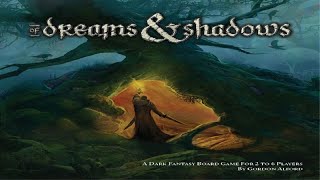
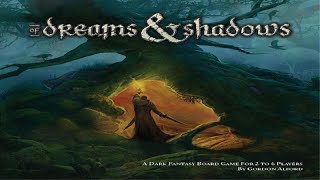
The art is the most frequently praised element. One reviewer called it phenomenal and said it was the best part of the game, while another said the art was amazing and that the visual details were what made the game worth looking at. The character portraits and card illustrations give the cast a strong identity, even though a few reviewers noticed inconsistencies between a champion's name and the picture on their card. The art is a big reason the game stays on the reviewers' minds, and it is often the first thing they mention when describing why the game appeals to them.
Lore and Descriptive Scenario Writing
The world's book and the scenario text were singled out for praise. Reviewers described the lore as a rare case of a designer putting real thought into a fantasy setting that could otherwise feel generic. The scenarios are written with a lot of description, and one reviewer said that even though the cards themselves were sparse, the written quests filled in the choices, successes, and failures well. A reviewer who had only read the rulebook found it clearly laid out and well written, which suggests that the writing is one of the game's more consistent strengths.
Potential Drawbacks
Punishing Difficulty That Scales Poorly
The difficulty is the most common complaint. Reviewers called the game brutal and, in one case, impossible to beat, and they were not persuaded that the challenge comes from good design. Several felt the game is printed for six players but plays poorly with three or four, and one reviewer thought the rules leave the player count question unexplained, forcing groups to invent house rules. Players who were not well prepared, or who had not studied the scenarios in advance, found themselves swarmed before they could recover. The reviewers did not all agree on whether the challenge was intended, but the group in the full session felt it was set up to be against the players.
Shallow Combat, Generic Setting, and Limited Replay
Reviewers also found the combat and the setting underwhelming. The dice-roll resolution gives players little strategy to work with, and the fantasy elements feel familiar. One reviewer observed that the game reminds them of other fantasy titles they had already played, and another said it does not do enough to stand out on mechanics alone. The foe decks compound the problem, since a monster appearing from another player's deck can feel like a non-sequitur in the story. Replay is another issue. Reviewers felt there were few scenarios, and that the three villains were the only meaningful source of variety, so the experience can start to feel repetitive after a few sessions.
If You Enjoy Of Dreams & Shadows
Reviewers repeatedly compared Of Dreams & Shadows to other fantasy board games, and two titles came up in the discussion. The first is Legend of Fangor. A member of the group said a friend considered Of Dreams & Shadows a better version of it, and the reviewer pushed back on that claim, but the comparison reflects a shared approach to fantasy questing and cooperative storytelling. The second is Talisman, which the reviewers named when talking about the fantasy feel and the shadow-driven threat. Players who enjoy Of Dreams & Shadows for its story and atmosphere will probably find both worth exploring, while those who want deeper mechanics may find the other titles more satisfying.
What Reviewers Are Saying
"Combat is totally boring because it's to roll a dice and that's what you don't do. There's no strategy to it. Even roll a die and hope you roll high to add your attribute."
— Board Games UnLocked
"I really like to go to design elements, just like the whole lore that they put into it. Oh yeah, the world's book is really cool."
— Board Games UnLocked
"The rulebook was laid out, the math doesn't look too great, but it's written very well. The scenarios and stuff."
— Board Games UnLocked