/pic7532921.png)
Game Info
Year
2024
Players
1-4
Age
10+
Playtime
30 min
Complexity
2.8/5
Collection
Your Tier
Loading…
Mechanic profile
Not enough video data yet
Vibe profile
Not enough video data yet
Description
A flip-and-write game where players design island landscapes by drawing icons representing villages, tunnels, forests, and other features, with the constraint of only drawing on adjacent hexes to their architect token
Featured Videos
Review

Peninsula Preview
Ask a Rules Question
All mentions
Browse transcript mentions, sentiments, pros/cons, mechanics, topics, quotes, and references.
Total mentions: 4
This page: 4
Sentiment:
pos 4 ·
mix 0 ·
neu 0 ·
neg 0
Showing 1–4 of 4
Video AGtiflo7a3E
slickerdrips Review at 0:01 sentiment: positive
video_pk 86311 · mention_pk 222903

Click to watch at 0:01 · YouTube ↗
Overall sentiment (raw)
positive
Pros
- Satisfying to fill in objectives early.
- Fills in nice things on the board.
- Unlocking landmarks provides useful abilities or points.
- Appeals to players who enjoy planning and spatial puzzles.
Cons
- Potential for rule confusion (e.g., with Lifesaver usage in solo).
- Some placements might not score as intended if objectives aren't met or connections aren't made.
- The reviewer made a placement error that required backtracking or re-evaluation.
Thematic elements
- A competition to design the best island for the Monarch
- An island
Comparison games
none
Mechanics (from transcript analysis)
- Flip and Fill — Players draw cards that determine the icons they can draw and place onto their personal player board or island grid.
- Movement — Players can move their architect token on the board using various tickets, which affects where they can place new icons.
- Objective Fulfillment — Players aim to complete specific in-game objectives (e.g., having two adjacent tunnels) to score points.
- Route Building — Players build paths or connections with elements like streets for houses and canals for boats, which can facilitate movement or scoring.
- Set Collection — Points are awarded for creating specific patterns or collections of icons, such as adjacent forests or multiple houses.
- Tile Placement — Icons are drawn and placed onto a grid, similar to tile-laying games.
Video topics + discussion points
No key topics recorded for this video.
Quotes (from this video)
- The Monarch has decreed that the Architects should have a competition to see you can design the best island and the most perfect one will fetch his Royal eye.
- The game does come with pencils for visibility I'm going to be using a pen hopefully I don't make any mistakes.
- The multiplayer game works the same for how you fill in all of your stuff but you will have this deck and you'll have two different cards side by side and the the active player will take one of the cards to be the active card this time point the side they want at themselves so you'll only fill one thing in per turn so the active player fills this one in everybody else fills this one in and LIF Savers allow you to choose the one that the active player had and then they keep that in front of them next turn they get a new card out.
References (from this video)
No references stored for this video.
Video VZg0yRWS_X8
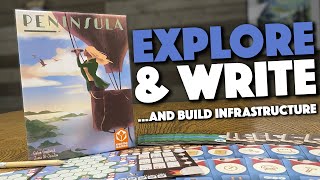
Man vs Meeple Preview at 0:02 sentiment: positive
video_pk 86313 · mention_pk 222914
Click to watch at 0:02 · YouTube ↗
Overall sentiment (raw)
positive
Pros
- Interesting game with strategic movement requirements.
- Good infrastructure building that provides movement options.
- Variable setup offers replayability.
- Close scoring leads to a competitive experience.
Cons
- Movement can be challenging to manage early on.
- Balancing infrastructure and scoring objectives requires careful planning.
- Tunnels are not shaded in during play, only scored at the end if not adjacent to other tunnels.
Thematic elements
- Architects trying to form the landscape on their sheet
Comparison games
- clans of calonia
Mechanics (from transcript analysis)
- action selection — On their turn, the active player chooses a card, and other players can choose to also take that card or use a 'life preserver' to take the same icon.
- Card Drafting — Players choose one card from a selection each round, which dictates the symbol they can write on their sheet.
- Flip and Write — Players are presented with cards and then write symbols onto their personal sheets.
- Movement — Players have limited movement options (boots, harbors) that must be strategically used to reach specific locations or symbols on their sheet. Movement can be enhanced through unlocked abilities and infrastructure.
- Set Collection — Players collect sets of symbols (e.g., tunnels, villages) to complete missions and unlock bonuses.
Video topics + discussion points
No key topics recorded for this video.
Quotes (from this video)
- Until next time make sure everyone has fun at the table and we'll see you then
References (from this video)
No references stored for this video.
Video HM2dTEoW7sY
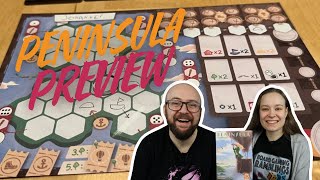
Board Gaming Ramblings Review at 0:06 sentiment: positive
video_pk 86314 · mention_pk 222915
Click to watch at 0:06 · YouTube ↗
Overall sentiment (raw)
positive
Pros
- Interesting drafting mechanism with player interaction.
- Adds interaction because the player chooses what the opponent gets to do.
- Variability due to different abilities and missions.
- Good price point at €9.
- Unique movement system.
Cons
- Can be overwhelming the first time it's played.
- Requires taking opportunities when they come due to imperfect information.
Thematic elements
- a peninsula
Comparison games
- Thief
- Millennia
- Clans of Caledonia
- Roll and Write games
- Blank
Mechanics (from transcript analysis)
- Card Drafting — Players draft cards, choosing between drawing a tree or flipping a card to draw a boat. The choice dictates what other players get to do. There is an element of trying to deny opponents what they want.
- draft and write — Players draft cards and then choose to draw a tree or flip a card to draw a boat. What one player chooses, the others do the opposite. Players must draw adjacent to themselves and use arrows for free movement.
- Movement — Players can use movement instead of drawing, and arrows can be used for free movement across the map. Harbors allow movement between locations.
- Set Collection — Players try to fulfill patterns with symbols to complete missions and score points. For example, houses can be filled in when surrounded by four or more different symbols.
Video topics + discussion points
No key topics recorded for this video.
Quotes (from this video)
- And you're going to be drafting cards, so let's say I want to draft this card. It's my turn to draft. I will draft this card. I will then choose to either draw the tree or I will flip this and draw the boat. And depending on which thing I choose the other players get to do the other thing.
- There's like layers of things you want to do. You want to place your thing so that they get filled. You want to place place your thing so they work with this. You want to try to deny your opponents do the best they can and you want to try to unlock these special abilities.
- So who do you think is going to like this game? I think if you like rights or like blank and rights especially, I like games with this draft instead of like the role of the D.
- It's a really good price point and I would say like the most unique things thing about this game is that you have this that's you you can't even though you have a symbol up here already you don't automatically get to draw there and also if you move from for example you have Harbors that you can move between then you suddenly can draw some word that you don't have anything from before so that this movement part feels pretty unique to me.
References (from this video)
No references stored for this video.
Video OFiFqFdnXxg
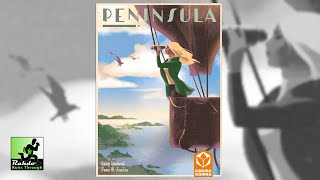
Rahdo Runs Through Review at 0:00 sentiment: positive
video_pk 42187 · mention_pk 128005
Click to watch at 0:00 · YouTube ↗
Overall sentiment (raw)
positive
Pros
- Rich, deep puzzle that rewards planning and adaptation
- Tight two-player drafting interplay
- Strong encouragement of network building via roads and tunnels
Cons
- Can be frustrating when card draws misalign with board state
- Steep learning curve for new players
Thematic elements
- City-building and transport network construction on a modular island
- A small island that players build and develop with hex-map terrain options including mountains, forests, cliffs, boats, and tunnels.
- Abstract, tactical puzzle with evolving board state
Comparison games
- Hrien's Wall
Mechanics (from transcript analysis)
- Card Drafting — Lead player draws a terrain card showing two types; chooses one for themselves and assigns the other to opponents.
- Compound Scoring — Six setup objectives and landmark bonuses influence placement and scoring.
- Movement economy — Spending turns to move along the network creates strategic trade-offs and pacing.
- movement networks via tunnels — Tunnels provide teleport-like traversal between distant areas.
- Network/Route Building — Tunnels provide teleport-like traversal between distant areas.
- objective-driven scoring — Six setup objectives and landmark bonuses influence placement and scoring.
- Once-Per-Game Abilities — Landmarks grant single-use abilities when a space is occupied.
- one-time power activations — Landmarks grant single-use abilities when a space is occupied.
- path-building — Houses and boats create roads/connections that enable movement across the island.
- placement constraints — New tiles must be placed adjacent to your current position, shaping your expansion.
- Resource Management — Limited resources can be spent to take unwanted cards or break some rules to grab needed tiles.
- resource management and rule-breaking — Limited resources can be spent to take unwanted cards or break some rules to grab needed tiles.
- terrain card drafting — Lead player draws a terrain card showing two types; chooses one for themselves and assigns the other to opponents.
Video topics + discussion points
No key topics recorded for this video.
Quotes (from this video)
- This game makes you work and makes you sweat.
- It is one of the most challenging rolling-right puzzles I've encountered.
- The crunch comes from balancing ever-shifting card draws with board constraints.
References (from this video)
No references stored for this video.
Transcript Navigation
Showing 1–4 of 4