/pic7295151.jpg)

The great Pharaoh Mino has passed, and rule passes to his eldest son: Pharoah Mido. Displeased with the plain appearance of the pyramid in which his father was buried, Mido turns his attention to his own legacy. He wishes for his own resting place to better reflect his majesty and has decreed that 2-4 architects build pyramids encrusted with jewels: a pyramido. The architect who builds the most impressive pyramido will be appointed Vizier and enjoy wealth and power beyond imagination.
Pyramido is a tile-placement game in which each stage of the pyramid creates connections between them. Players take turns choosing from the available dominoes to create their pyramid. To maximize their points, players must match the jewel icons on the dominoes and place their markers of the same colors to activate the scoring areas. Each choice of domino and its positioning has a significant impact since the previous stages influence the score throughout the game.
-description from publisher
This page includes videos and mentions from the whole Pyramido family. Drill into a specific game below.
/pic7295151.jpg)

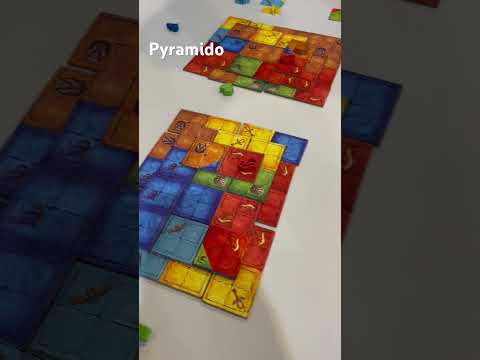
Pyramido in 60 Seconds

- Step up from King Domino
- Unique way of tickling the brain
- Crunchy decision making
- High scoring opportunities
- Difficult to visualize during play
- building a three-dimensional pyramid
- King Domino
Mechanics (from transcript analysis)
- 3D building — You're building a three-dimensional pyramid.
- Drafting — Crunchy decision making and drafting as well.
- scoring — Your scoring points every time you've completed a base of the pyramid.
- Tile Placement — You're placing all of these tiles in a yes anyways you start at like one base and then it shrinks and shrinks and shrinks until you get to the very top.
Video topics + discussion points
Quotes (from this video)
- next up is that Cosmo octopus
- it's such a unique theme yes and the gameplay is really fun it is it's great it's a great game
- If you liked like King Domino this is like almost a step up in my opinion in terms of like uh you're building a three-dimensional pyramid.
- it tickles your brain in such a unique way.
- Six player fit to print is some of the best experience that you can possibly have.
- The art in this game is absolutely gorgeous. There's a capybara that's a unicorn.
- it's a very nice introductory uh well delving game.
- It's also super clever how they did the dice and you have to combine them in their grade in the grade and it creates the space that you have to play.
- This is a fantastic kind of filler gamer conversationalist game.
- you get to make waffles
References (from this video)

- Clever drafting mechanism
- Interesting multi-level tile placement
- Drafting feels flatter at higher player counts
- Building pyramids
- Ancient Egypt
Mechanics (from transcript analysis)
- Drafting — Players draft one of three available tiles on their turn and influence the options for the next player.
- Set Collection — Players collect jewels from placed tiles and score points based on contiguous areas of matching jewel icons.
- Tile Placement — Players place tiles to build up their pyramids over multiple rounds with decreasing grid sizes.
Video topics + discussion points
Quotes (from this video)
- everyone we've been busy playing games
- we have these games that we've been playing in between heavy games
- I'm Stella and this is Teran from Maple University
- that's it that's is everything ever which is Teran is unbeatable
- Great Well Done Taran
- it'll get you in the Christmas spirit
- we will be doing our top games of 2023 but we want to wait until the very last minute until we make the video
References (from this video)
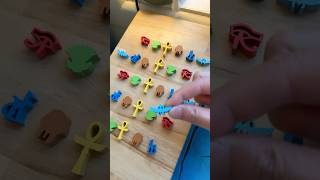
- Layered puzzle design that reuses planned elements, lending a sense of growing momentum
- Domino-inspired drafting fits a tactile pyramidal theme and is easy to grasp
- Color-based region building offers deep strategic trade-offs and planning opportunities
- Scarab tile mechanic provides a satisfying way to extend scoring across rounds
- Clear thematic flavor without becoming gimmicky; visually appealing pyramid concept
- Not explicitly discussed in the transcript; inferred potential complexity for new players
- The layered reuse mechanic may increase setup/learn time for some players
- Pyramid construction meets tile-based area control and layered scoring
- Ancient Egypt, pyramid-building motif with color regions
- Abstract puzzle framing with light thematic flavor
Mechanics (from transcript analysis)
- color-based scoring — Utilizes the colors printed on earlier layers to expand regions and maximize points in downstream rounds.
- Compound Scoring — Utilizes the colors printed on earlier layers to expand regions and maximize points in downstream rounds.
- endgame layering interaction — End-game scoring is influenced by how well layers interlock and preserve color opportunities for final scoring.
- grid placement — Places tiles on a grid to form connected colored regions, driving area control and pattern formation.
- Layer Building — Builds across multiple layers; decisions on earlier layers influence options and scoring on later layers.
- layered puzzle — Builds across multiple layers; decisions on earlier layers influence options and scoring on later layers.
- pattern formation — Encourages forming coherent color zones that align across layers to maximize synergy between tiles and regions.
- Resource reuse — Ties together planning and execution by letting previous placements unlock future scoring paths.
- scarab scoring — Allows reuse of a Scarab tile to score again in future rounds, introducing a looping scoring opportunity.
- tempo and pacing — Turns progress with a rhythm that rewards early foresight and careful sequencing of tile placement.
- tile drafting — Drafts domino-style tiles from a pyramid-like structure, creating the core decision point for each round.
- Tile Placement — Places tiles on a grid to form connected colored regions, driving area control and pattern formation.
- visual planning aids — The pyramid/stacked structure provides a tangible visual guide to anticipate future moves and scoring.
Video topics + discussion points
Quotes (from this video)
- it's a layered puzzle that reuses things that you've planned before
- think of it as building your very own Domino pyramid
- it's a beautiful game called pyramido and I love it
References (from this video)

- improved sequel feel
- new gem mechanic
- strong drafting
- gem placement and drafting
Mechanics (from transcript analysis)
- Drafting — draft gems rather than colors for scoring
- gem placement — place gems to maximize scoring opportunities
Video topics + discussion points
Quotes (from this video)
- Galactic Cruise is my number one game this month again.
- it's a bag builder where you're going to be putting a bunch of ingredients into a bag and then drawing them and mixing a potion
- the theme in this game is you are shoveling poop basically across London
- it's genuinely so much fun
- I think it's Sashi game
References (from this video)

- Appeals to the host
- Seems to hit the sweet spot
- Appeals to the host
- Might be too basic
- Pyramid building
- King Domino
Mechanics (from transcript analysis)
- multiplier scoring — There will be multipliers based on the scores at the end of the game.
- Set Collection — Trying to get certain symbols in different locations matching the colors.
- Tile Placement — A simple family weight tile placement game where you are building a pyramid.
Video topics + discussion points
Quotes (from this video)
- So, I don't know why this one really um kind of grabbed my attention since I saw this one. It does sound like a complete random luckfest, but it does seem to have a certain charm and appeal to me.
- You know, I tend to like deduction games, although I do think it's an oversaturated genre of games, but this one sounds different enough to stand out and stand away from the pack.
- So, I'm quite proud of myself that I didn't jump straight into getting that one when I first played Concordia because I played the the base game alone quite a few times now. So, I think I'm ready for an expansion.
- And I always thought it was quite or these lists are quite funny because I go in with a plan, but I'll come back with a a random arrangement of completely different games, no doubt.
References (from this video)

- Engaging thinky puzzle feel with meaningful planning and risk-reward decisions
- Gem mechanism adds depth and variability to scoring
- Visually appealing components and shinies add tactile fun
- Supports 1-4 players and scales well
- Pyramid construction, resource management, gem-based scoring
- Ancient pyramid-building competition; round-based, with gem-based scoring
- thinky, puzzle-driven scoring with hidden information about upcoming tiles
- Pyramid
Mechanics (from transcript analysis)
- Color matching and area control — Colors don't have to match to place tiles, but matching colors helps create contiguous color areas that score.
- end-of-round scoring and multipliers — At the end of each round, gem placements on the pyramid act as multipliers on the points from colored tiles; placed gems disappear and some gems can be carried forward.
- Gem management and wilds — Gems are placed on tiles and colored gems score points; clear gems act as wilds and can substitute for any color.
- Pyramid-building constraint — Tiles must completely touch existing tiles; no half-C shapes or diagonal placements.
- Round-based progression and carryover — Players progress through multiple rounds (four layers pyramid); a few gems can be carried forward to future rounds.
- tile drafting and placement — Choose one face-up tile to add to your pyramid, ensuring it fully touches an existing tile and does not extend diagonally.
- Tile Placement — Choose one face-up tile to add to your pyramid, ensuring it fully touches an existing tile and does not extend diagonally.
- Variable player count and components — Supports 1-4 players; optional play mat to organize tile stacks and add tactile components.
- Variable Set-Up: Player — Supports 1-4 players; optional play mat to organize tile stacks and add tactile components.
Video topics + discussion points
Quotes (from this video)
- I love this game.
- I love a thinky puzzly game that makes your brain work.
- Pyramido Forgotten Treasures is a fabulous game.
- This game plays one to four players.
References (from this video)
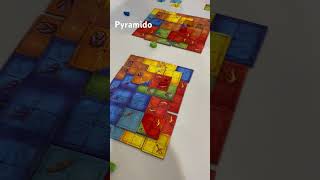
- Layered pyramid structure creates a dynamic scoring surface across rounds.
- Cross-layer scoring rewards long-term planning and visibility of lower layers.
- Clear turn structure with a tangible sense of progression as the pyramid grows.
- Complex scoring can be hard to track in real time, especially across multiple layers.
- Early placements may overly constrain later options, increasing analysis paralysis for new players.
- Domino-based placement may feel restrictive to players who prefer more flexible tile mechanics.
- Abstract strategy centered on color and icon matching to maximize scoring as the pyramid grows.
- A conceptual ancient temple site where players construct a four-level pyramid by placing domino-like tiles to form the structure layer by layer.
- Analytical/Instructional
Mechanics (from transcript analysis)
- color_and_symbol_matching — Scoring occurs when a player’s symbols match colors; points are awarded for every matching icon within contiguous regions on the current layer and, in later rounds, on visible regions from previous layers as well.
- Compound Scoring — In subsequent rounds, scoring accounts for matching icons not only on the current layer but also any matching icons visible on lower layers, creating a cascading scoring engine.
- cross_layer_scoring — In subsequent rounds, scoring accounts for matching icons not only on the current layer but also any matching icons visible on lower layers, creating a cascading scoring engine.
- Layer Building — The pyramid is constructed in four rounds, with each round adding a new layer on top of the previous one.
- Layering — The pyramid is constructed in four rounds, with each round adding a new layer on top of the previous one.
- opponent_influence — Tile choices affect the options and scoring opportunities available to opponents, requiring strategic foresight about how placements shape others’ possibilities.
- Tile Placement — Players select a domino and place it on the pyramid, adjacent to existing dominoes, building out the structure layer by layer.
- tile_placement — Players select a domino and place it on the pyramid, adjacent to existing dominoes, building out the structure layer by layer.
Video topics + discussion points
Quotes (from this video)
- pyramido is a tile placing game with
- four rounds corresponding to four levels
- first layer is 4x5
- on player's turn they choose a domino and add it to the pyramid adjacent to previous dominoes
- the symbols will score for every matching icon in the contiguous region in each of the following rounds
- symbols will score for every matching icon on the current layer as well as any visible on the previous layer
- matching colors and symbols can create such a high point scoring engine
- players must plan their own moves carefully as well as how their tile choice will influence the selection for their opponents
References (from this video)
- Clever drafting, elegant scoring
- Beautiful jewel components
- Short playtime
- Brain-burning puzzles
- Color alignment can be tricky
- Pyramid-building and jewel-based scoring
- Ancient pyramids and jewel scoring
- Abstract drafting with spatial layering
- Gizmos
- Sushi Go
Mechanics (from transcript analysis)
- color-based scoring — Score jewels based on outer edge colors visible
- Compound Scoring — Score jewels based on outer edge colors visible
- Drafting with color constraints — Draft tiles with color limitations to trigger scoring
- Tile Placement — Place domino-shaped tiles to build pyramid layers
Video topics + discussion points
Quotes (from this video)
- the biggest change in this line is ... you only have one action per turn
- I would pull out Terra Mystica or Age of Innovation this replaces Terra Mystica
- it's a brain burner
- this is a total brain burner for me
- the goal is to get the timeline as close as possible
- you can only have two lines of cards on the table
- the Advocates are where the fun is