/pic4118864.png)
/pic8296003.png)
/pic5350593.jpg)
/pic5350626.jpg)
/pic4118864.png)


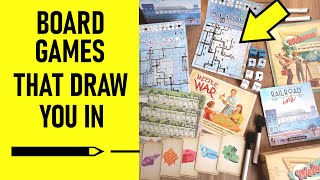




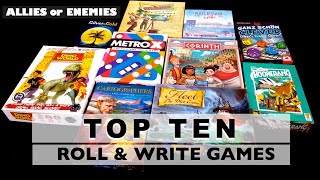



























Railroad Ink: Blazing Red Edition Deep Dive
What the Community Thinks About Railroad Ink: Blazing Red Edition
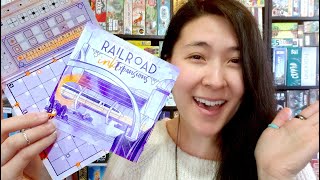
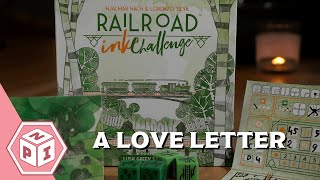
Reviewers across several channels land in the same place on Railroad Ink: Blazing Red Edition: it is a fast, relaxing roll and write that hides real decision-making behind a simple dice-drawing routine. Getting Games calls it their favorite roll and write, pointing to the tight puzzle of fitting four (or six, with an expansion) dice results onto a shrinking board every round. Board Of It frames the same game as soothing rather than tense, a quick filler that works as a warm-up before a bigger game or a way to include family members who do not usually play hobby board games. The Board Game Garden leans into the collection itself: after being sent the Blazing Red edition alongside other versions and a stack of expansion dice, they describe falling further in love with the line and expect it to keep climbing their yearly rankings.
Where the channels differ is in how much tension they want from their dice. Getting Games savors the moments where the piece a player needs will not come up for several rounds, treating that pressure as part of the appeal. Board Of It draws a sharper contrast: comparing it against Welcome to New Las Vegas, they describe Railroad Ink as the more soothing and chill of the two, and reach for the louder, more combative game when the group wants extra friction instead.
Core Mechanics That Define Railroad Ink: Blazing Red Edition
Rolling Dice, Drawing Routes
Every round starts the same way: a shared set of dice is rolled in the middle of the table, and each player copies the results onto their own erasable board by drawing rail lines and roads. Getting Games explains that the base game rolls four dice each round, rising to six when an expansion is added, and every one of those results has to be placed somewhere on the player's grid before the next roll. Board Of It highlights the same shared-input idea from another angle: because everyone works from the identical roll but draws it onto a private board, the reveal at the end of a game shows wildly different networks built from the same dice, which they describe as a bit of psychology in seeing how people's minds work.
Multiplayer Solitaire Scoring
Points come from connecting the exits printed along the edges of the player board into a single network of roads and rail lines, with bonus points for the length of those routes and penalties for anything left unfinished. Getting Games describes Railroad Ink as a multiplayer solitaire game: nothing a player draws affects anyone else's board, so the competition is entirely about who optimizes the shared dice roll better than their opponents, round after round.
The Railroad Ink: Blazing Red Edition Experience
A Soothing, Puzzly Sit
Board Of It repeatedly returns to how calm the game feels at the table, calling it soothing and noting that it does not take up much table space, which makes it easy to pull out at the end of a night or before a bigger game. They also point out that a game runs around thirty minutes, short enough to work as a filler even when a group already has other plans for the evening.
Getting Games experiences a different flavor of the same game: dense, puzzly turns where every one of the rolled results has to be woven into an existing network, deciding whether to extend a route toward the next exit or play it safer and start something new. They describe every turn as meaty despite the game wrapping up after seven rounds, which is part of why it is their favorite roll and write.
Easy to Teach, Even to Non-Gamers
Board Of It brought the game to family members who do not usually play modern board games and to friends at a holiday gathering, and both groups took to it right away. They describe it as a small, charming filler game, simple enough that someone unfamiliar with hobby games can jump in without much explanation, while still holding up as one of the games they reach for regularly.
What Makes Railroad Ink: Blazing Red Edition Stand Out
The Lava and Meteor Expansions
The Blazing Red box ships with two expansion dice sets that Getting Games walks through in detail. The volcano expansion adds pools of lava that can spread across the board and destroy existing roads, though deliberately building new volcanoes can still work in a player's favor. The meteor expansion is more disruptive still: certain rolls cause a meteor to crash onto a specific space, wiping out anything already drawn there, but connections that route into the crater earn bonus points for the materials mined from it. Getting Games rates all four available expansions across the red and blue boxes as adding meaningful variety on top of the base game, and estimated each edition costs around twenty dollars, with enough boards to seat six players, or twelve if a group combines both boxes.
A Franchise Worth Collecting
The Board Game Garden's enthusiasm extends past a single box. After being sent the Blazing Red edition and other versions along with several expansion dice sets, they describe wanting to complete the full collection and expect Railroad Ink to keep rising in their personal rankings simply because there is more of it to play. Board Of It echoes that same staying power from a different angle, describing it as a game their group keeps returning to and playing many times in a row without losing interest.
Potential Drawbacks
When the Dice Won't Cooperate
The same randomness that makes every round a puzzle can also stall a plan for several turns in a row. Getting Games describes the frustration of needing one specific piece, a straight railroad line, and watching several rounds pass without it appearing, leaving a player boxed into a corner of their own making.
A Multiplayer Solitaire Format
Because every player draws from the same dice roll onto a private board, nothing one player does changes what another player can build. Getting Games frames this as a defining trait rather than a flaw, but it also means the game offers no direct confrontation between players. Anyone hoping their decisions will interact directly with an opponent's board will not find that here.
If You Enjoy Railroad Ink: Blazing Red Edition
Board Of It reviewed Welcome to New Las Vegas in the same session and named it the game they would reach for when the group wants more friction than Railroad Ink offers. They rated Welcome to New Las Vegas as the game they prefer overall, while noting the two play very differently: Railroad Ink stays soothing and chill, while Welcome to New Las Vegas leans hectic, with players able to take resources away from each other in a way Railroad Ink never allows.
What Reviewers Are Saying
"There are lots of roll and write games out there where you might flip or roll some dice and it might be a number or two and you kind of write those down onto your pad. But in Railroad Ink you always roll four dice in the base game, and if you're playing with an expansion you roll six dice."
— Getting Games
"So they have a bunch of different dice that you can add in to the game of railroad Inc, and I've just fallen in love with this game, and having all of this new stuff for it, I just have a feeling that it's going to go up even further in my top 100."
— The Board Game Garden
"It's actually got a surprising amount of depth, because you do have to decide: okay, I have this piece of train line, should I put it over here or over there, and think about what's going to get you the most points in the end. It's very cute, I really like it."
— Board Of It