




Scream Park Deep Dive
What the Community Thinks About Scream Park
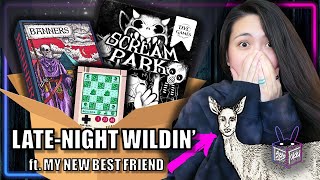
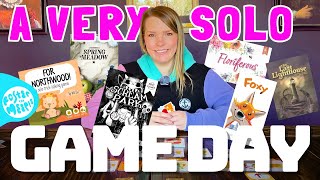
Scream Park from DVC Games has earned genuine enthusiasm from reviewers across multiple platforms. Consensus centers on the game's execution of its horror theme and the quality of its presentation. Tabletop Tokki describes the art and presentation as "done so well," regardless of whether a player identifies as a horror enthusiast. Foster the Meeple reviewers consistently praise it as an ideal fit for spooky season moods, with one reviewer noting they loved the game immediately after their first play. The Board Game Garden's reviewer, having picked it up at Gen Con, was excited enough to feature it in their haul. Reviewers agree on one core strength: the game successfully delivers on its premise of building a horror-themed attraction without sacrificing playability for thematic flavor.
Core Mechanics That Define Scream Park
Card Drafting
Players draft scene cards from their hand in rounds, choosing which elements to add to their haunted house attraction. This is not simple deck-building; instead, players must weigh competing priorities each turn. They can place a new scene, enhance an existing scene with additional details, gather resources (staff tokens), or acquire genre cards to add flexibility to their scenes. The drafting creates meaningful decisions because the cards in hand are finite, and players cannot recover discarded options. Reviewers from Tabletop Tokki emphasize that this multi-use nature of the cards, where each can serve different purposes, is what elevates Scream Park beyond a simple icon-collection exercise. The designer collective Jasper and Beatrix built this tension intentionally: every choice forecloses another possibility.
Scene Building and Placement
Scenes must be arranged from left to right in ascending point value, creating a natural progression through the attraction. Players build horror scenes by placing scene cards (such as a Deathly Bedroom or Interrogation Room) and adding icons that match their chosen theme for that playthrough. The requirement to place cards in order, with the exception of spending a staff token to insert a card anywhere, creates spatial constraints that force hard choices. A reviewer from Foster the Meeple noted how this mechanic rewards planning: deciding whether to grab an early, low-value scene or hold out for a more powerful card later. The scenes themselves carry narrative weight, with art and names that support the horror theme. Reviewers consistently mentioned how the icons on cards (candles, lab equipment, knives) feel thematically integrated rather than abstract, making set collection feel like building an actual experience for visitors to the haunted house.
The Scream Park Experience
Dark, Spooky Atmosphere
The presentation pulls players into a genuinely unsettling mood. The game features a black and white aesthetic with strategic color accents that create visual impact without overwhelming. Tabletop Tokki noted they were already excited about the game before opening the box because the cover art itself sparked a Tim Burton aesthetic they love. Once in play, the component quality reinforces this mood: the cloth mat, the card sizes that allow for legible but compact gameplay, and the art direction all work together. Reviewers who specifically sought out horror-themed board games at conventions found Scream Park to be a standout that respects the genre rather than leaning into it superficially.
Thematic Narrative Building
Playing Scream Park feels less like solving a puzzle and more like curating an experience. Each game, players select a theme for their haunted house (such as "The Infinite Nightmare" or "Camp Raven Lake"), and this choice frames every decision that follows. VIPs visit the attraction on opening weekend, and the game tracks whether each visitor moves forward through completed scenes or gets stuck. A Foster the Meeple reviewer described this as immersive: "You're building out a story. It might be like you're in a dungeon with a creepy old lady and a clown holding a balloon." The combination of theme selection, scene placement, and VIP progression creates a mini-narrative arc in each game. This narrative quality is what makes Scream Park memorable beyond its mechanics.
What Makes Scream Park Stand Out
Successfully Executed Horror Theme
Horror games often stumble by adding theme superficially over generic mechanics. Scream Park avoids this trap. Every element serves the theme: the icons represent specific scary or theatrical elements (creepy dolls, candles, knives, special effects), the scenes are named and illustrated with care, and the goal of managing a haunted house attraction feels coherent from start to finish. Tabletop Tokki emphasized that the art and presentation are strong enough to engage players regardless of their starting position on horror games. For players who do love spooky content, the game delivers authentic appeal. Multiple reviewers specifically called out the aesthetic pairing with darker color palettes and the small splashes of color that make individual elements pop.
High-Quality Components and Production
DVC Games brought considerable attention to physical production. The cloth game mat, the sized scene cards that pack efficiently without sacrificing readability, and the quality of the card stock all drew praise. A Board Game Garden reviewer specifically noted they picked up a solo-playable copy, highlighting that even the packaging accommodates the game's flexibility. Tabletop Tokki mentioned using Scream Park's reference cards on the inside of the box lid as an example of thoughtful design that makes teaching easier. When reviewers discuss Scream Park's portability and component quality together, they are describing a game that respects its players' time and attention: setup is quick, the table footprint is manageable, and the materials feel substantial enough to justify the retail price.
Potential Drawbacks
Solo Mode Planning Constraint
In solo play, the deck draws hands of cards for the player to allocate, but there is limited visibility into what future cards might appear. Tabletop Tokki mentioned experimenting with variants where cards drawn early could reappear later in the game, giving solo players more opportunities to plan ahead. The current solo mode handles this by making each hand self-contained, which keeps the flow brisk but can make forward planning feel constrained. This is not a flaw so much as a design trade-off; reviewers who prefer deterministic puzzle-solving might wish for more information, even though the game's tempo benefits from the uncertainty.
Set Collection Can Feel Oppressive
While reviewers loved the thematic icons, the need to acquire specific symbols to complete scenes and qualify for VIP scoring creates a high bar for scene completion. A Foster the Meeple reviewer noted playing the game and falling just short of completing scenes by one icon, missing out on points. For players accustomed to more forgiving set-collection games, the precision required can feel restrictive. However, reviewers noted that this tightness is intentional and contributes to the game's replayability; different theme cards and different scene combinations create varied puzzle states across plays.
If You Enjoy Scream Park
Scream Park sits at a unique intersection of drafting, set collection, and thematic immersion. Players who love Love Letter's press-your-luck card selection and compact play will recognize a distant design cousin, though Scream Park is more elaborate. Reviewers who came away impressed tend to also enjoy games like Above and Below, where narrative elements enhance mechanics rather than replacing them. If the horror theme appeals, games like Horrified share that commitment to genre atmosphere. For players drawn to quick-playing card games that reward both tactical decisions and strategic planning, Scream Park delivers satisfaction across solo, two-player, and full five-player tables. The fact that reviewers mentioned it was an anticipated title at Gen Con and then a must-buy at Pax Unplugged suggests it is finding players who specifically seek games with authentic themes and high production values.
What Reviewers Are Saying
"I really love the aesthetic and the idea of Scream Park. Theme park games just really tickled my fancy, and I do like a lot of horror themed things. Whether you're a fan or not of that theme, the art and presentation are done so well. I love the cloth mats, I love the card sizes, it allows you to not take up so much table space but still be very functional and legible."
— Tabletop Tokki
"I played this a few weeks ago and I loved it. Basically, what you're doing is you're building out a horror-themed park by going over different rounds or days and playing out different themes which are going to then require certain icons. It's very dark, it's all in like black and white with just like slight splashes of color, and if you're feeling kind of moody, I think this could be a great game."
— Foster the Meeple
"Both of these can be played solo, which was the main reason why I wanted to pick them up. I've played them both multiplayer before and I really enjoyed both of them."
— The Board Game Garden