/pic2075830.jpg)
/pic5169196.jpg)
/pic2075830.jpg)





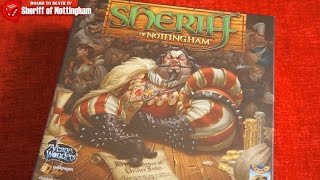

















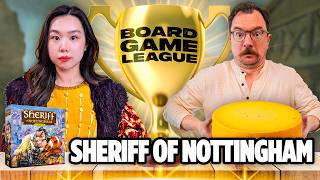



















Sheriff of Nottingham Deep Dive
What the Community Thinks About Sheriff of Nottingham
Sheriff of Nottingham has built a devoted following as one of the hobby's most reliable social experiences. Reviewers consistently praise how little rules overhead stands between players and the joy of the core experience. Grant Lyon calls it plainly "one of the best social games of all time," and that enthusiasm echoes across channels covering party game roundups, game design analysis, and rules tutorials alike.
What makes that consensus notable is how the game welcomes players who might shy away from lying-heavy titles. Chairman of the Board notes that "if you don't like lying it's still a good game to play because the lies are very light" and the experience is "extremely welcoming." Ryan and Bethany Board Game Reviews call it something "anybody can play," pointing out that all the steps are printed on the player board. The game invites players in gently and lets the tension build naturally.
Reviewers are honest about the game's group dependency. Multiple voices flag that the experience is "so deterministic" on player chemistry and mood. When the right people show up willing to banter and commit to the theater of it, the game is described as "hilarious." When the energy is flat, the experience suffers.
Core Mechanics That Define Sheriff of Nottingham
Bluffing and the Merchant Bag
The central mechanism is elegantly simple. Each merchant loads goods into a cloth bag, snaps it shut, and declares to the Sheriff what they claim to be carrying. The rules are firm on two points: be honest about the number of items, and name a single legal good. Everything else is theater. BoardGameBollocks notes that "you can make any declaration you like" as long as those conditions are met, which creates wide space for creative deception. The bag's physical snap is itself a beloved detail across multiple reviews. Watch It Played's Rodney Smith describes how the sheriff can tug the flap to pressure merchants before deciding whether to inspect, adding a layer of physical tension to the moment.
Adam in Wales, analyzing the "lying in games" mechanism, singles out Sheriff of Nottingham as one of the best examples of outright lying in a board game, one where "you can get those double bluffs where you're bribing them and they do open your pouch but it turns out you were telling the truth all along and so then they take a penalty." The possibility of telling the truth and getting paid for it is as strategically interesting as smuggling contraband.
Negotiation and Non-Binding Deals
The negotiation layer elevates the game above a simple guessing exercise. During the inspection phase, merchants can offer bribes, counter-bribes, and future favors with enormous creative latitude. Grant Lyon describes the full scope: paying the sheriff to let your bag through, paying the sheriff to check someone else's bag, promising future leniency when your turn comes, even making deals completely outside the game. Watch It Played formalizes this in the rules, noting that future favors are explicitly non-binding, meaning any promise made across the table is subject to the honor of the player who made it.
Ryan and Bethany celebrate this non-binding quality as a feature: "all these favors and promises and no one has to really honor any of them." BoardGameBollocks agrees, praising how "deals are not binding in this game" and recounting a session where guilt over breaking a deal led to getting taken advantage of. The possibility of betrayal is built into the social contract, which makes every agreement both tempting and precarious.
The Sheriff of Nottingham Experience
Social Depth Over Mechanical Complexity
Reviewers return again and again to the idea that Sheriff of Nottingham succeeds not through mechanical complexity but through what Board Game Replay calls "social depth." When the group is debating whether someone could realistically have drawn five apples, that conversation becomes the game. The rules create the parameters; the players create the drama. One player in the Board Game Replay post-game discussion marvels: "I Get So Satisfied by games with such a simple concept that have that depth, and it's not even mechanical depth, it's just like the social depth."
Adam in Wales frames the appeal precisely: "many of the behaviors involved in these games wouldn't be acceptable in regular society, so a huge part of the appeal is the chance to practice these behaviors in a safe space where nobody is hurt or offended." It is not just fun to win. It is fun to lie convincingly, to read faces, and to be read in return.
Both Roles Are Worth Playing
Both the sheriff and merchant roles are designed to be enjoyable, which is not a given in asymmetric designs. Chairman of the Board notes that "being the sheriff is fun but also sneaking them past the sheriff is fun." Grant Lyon describes loving the moment when you pay the sheriff to check someone else's bag. Watch It Played captures the theatrical potential with an over-the-top example declaration: the merchant flattering the sheriff, invoking friendship, blaming "human forgetfulness" for the contraband, and offering a coin as a gesture of goodwill. The game accommodates and rewards that kind of performance. The rotating sheriff role ensures everyone gets to experience both sides, which keeps energy fresh across rounds.
What Makes Sheriff of Nottingham Stand Out
A Physical Component That Creates Theater
Few games leverage physical components as effectively as Sheriff of Nottingham does with its merchant bag. The snap of the bag closing is celebrated across multiple reviews as a moment of satisfying finality, marking the point of no return for whatever gamble a merchant just made. Board Game Replay praises the component design: "I want to look back to the designer that came up with the snap idea. That's a satisfying snap. Perfect sound." BoardGameBollocks admits to a near-ASMR response: "I just love hearing that bag go click." The moment the snap fires, intention becomes commitment. That physical object does storytelling work no cardboard token can replicate.
Gateway-Friendly Without Being Shallow
Sheriff of Nottingham occupies a rare position: accessible enough for total newcomers, yet interesting enough to hold up across many plays. Ryan and Bethany describe a game where anyone can participate regardless of gaming experience, with the player board walking through every step. The strategic layer, however, is deeper than the setup suggests. Tracking what others have smuggled in, competing for majority bonuses, deciding when to bribe versus bluff, and reading the sheriff's behavioral patterns all develop over the course of a session. The light medieval theming gives just enough context for imagination to fill the rest. As Board Game Replay observes: "it's that light theme that just gives it a touch that makes your imagination go wild."
Potential Drawbacks
Group Dependency and Pacing Issues
Sheriff of Nottingham is, more than most games, a social mirror. Ryan and Bethany are direct: "You really have to have the right group of people and you have to be in the right frame of mind for it to shine." A table of cautious players who avoid confrontation will not unlock the game's potential. BoardGameBollocks flags that "this game can go on for a little bit too long if you're playing with players that drag games out," describing the problem as a sheriff who cannot commit to opening or passing a bag, deliberating while the table's energy drains. The negotiation-phase equivalent of analysis paralysis is a real issue with the wrong group.
Base Game Balance and the Expansion Question
Ryan and Bethany raise a specific structural criticism: "if you play this game as is, you can potentially win without sneaking any contraband through, without lying at all, and I view that as a flaw." This matters because it undermines the core tension. Their recommendation is the Merry Men expansion, which they say fixes this directly. BoardGameBollocks echoes the base game thinness concern from a different angle, noting the core game "feels a little bit lightweight" and suggesting expansion modules may have been separated from it artificially. The sweet spot lies between the stripped base game and the fully loaded expansion, and finding that balance requires some experimentation.
If You Enjoy Sheriff of Nottingham
If the bluffing and negotiation are what you love most, these games are worth exploring:
- Cockroach Poker is the leanest possible expression of the lying mechanism: pure card passing, direct accusations, no board needed. Adam in Wales calls it one of his favorite games.
- Avalon pushes hidden information and team-based deception much further, with longer arcs of accusation and counter-accusation across a full session.
- Spyfall applies location-based hidden information to a question-and-answer format, creating the same kind of performance pressure where one player must feign confidence while everyone watches for cracks.
- The Mind channels the social reading that makes Sheriff of Nottingham work into a completely non-verbal cooperative format.
- Code Names rewards the same social intelligence through clever wordplay and team-based clue-giving, with a competitive structure that plays well with larger groups.
What Reviewers Are Saying
"I think one of the best social games of all time is Sheriff of Nottingham. You can make deals with the sheriff. You can make promises of future deals. Anything goes. You can just wheel and deal as much as you want. I love that aspect of the game."
— Grant Lyon
"There's nothing more fun, the reason those games are all doing so well is because there's nothing more fun than calling something out on a lie and being right about it. It's so good. And so when you snap that and you just see their face, it's such a tactile element. So good."
— Board Game Replay
"I find these games hilarious. Games where you get to outright tell a lie, I find that enjoyable. I do not in life, in life I try and avoid it, but in games it's fun to do something that's a bit naughty, something that you wouldn't normally do in everyday life. I find that really really engaging."
— Adam in Wales - Board Game Design