


Shuffle Dungeons Deep Dive
What the Community Thinks About Shuffle Dungeons
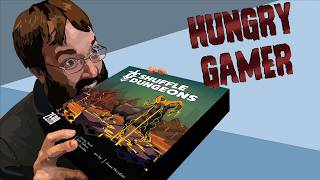
Reviewers describe Shuffle Dungeons as a distinctive, approachable take on the dungeon crawl. Rob's Tabletop World calls it a very unique game that is not too heavy and does not take forever to set up, and sums up the design as a dungeon crawl that is simple and yet fantastic. Hungry Gamer frames it as a cozy crawl that gives players dungeon crawl vibes without the commitment of a long campaign, and Game Night Picks - Pair Of Dice Paradise named it among its best bets for the month, praising the sheer amount of loot and powerful items on offer.
Much of the appeal lies in who the game can reach. Rob played it with Rob's granddaughter, who is seven, and reports that the granddaughter had a good time and laughed throughout. Neon Gorilla's interview with the Zero Strategy Games team makes the same point from the designers' side, as the goal was a dungeon crawler that people of pretty much all ages could enjoy without it taking a lifetime to play. Consensus across the four channels is that the game works for families and adults alike, while still offering a satisfying tactical decision or two.
Core Mechanics That Define Shuffle Dungeons
Double-Sided Cards That Build the Dungeon
The defining feature of Shuffle Dungeons is that every card is double-sided. In the Neon Gorilla interview, Zero Strategy Games describes a card with a shrine on one side and a spell on the other, and explains that players build the dungeon as they play. Hungry Gamer summarizes the choice on each turn: a card can be placed loot side up as a weapon, armor, spell, or potion, or it can be played onto the board to become part of the dungeon itself. Rob adds that this gives players a decision every time, such as whether a card should carry them further toward the boss or be kept as a snack, a teleport, or armor.
Placement is as important as the choice. Neon Gorilla notes that some room effects only apply to the card they sit on, while others affect an area, so where each room goes can decide a match. Open paths drive card draws. Each open path adjacent to a player's position lets them draw a card representing rooms they have explored, but every extra draw raises the chance of pulling a monster, which spawns immediately beside the player and often hides loot beneath it. Players must balance drawing for resources against running their deck down, since emptying the deck loses the game.
Loot Collection and Dice-Based Combat
Combat is resolved with dice and simple comparisons. Hungry Gamer explains that players roll dice based on their powers and add bonuses from their items, while monster cards state what the enemy rolls. Rob walks through an example in which a player's roll plus their attack value is compared against a monster's base number plus its dice, and an attack that succeeds deals damage and may trigger additional effects from other cards. Monsters carry loot cards underneath them, so defeating one rewards players with items that strengthen their characters for the boss fight. Rob also notes that a character can carry one armor and one additional weapon, and that armor can absorb part of an enemy's attack before it is discarded. Because the game has a limited hand size, every loot card gained involves a trade-off with what the player is already holding.
The Shuffle Dungeons Experience
A Cozy, Accessible Crawl
Hungry Gamer's phrase "cozy crawl" captures the emotional register that reviewers keep returning to. The game is light, gentle, and forgiving. Hungry Gamer describes the experience as a nice, gentle little tile laying and dice game, and says it is easy enough that players will want to turn on variants to add challenge. Rob notes that the game is fine for those who want to get it on the table quickly and play it through in under an hour. Neon Gorilla explains that the team was intentionally aiming for a game that players could play with adults and children alike, and reports that players of all ages come up with their own ideas for their turns.
Loot Discovery and the Push of Exploration
The second feeling reviewers highlight is the tension of exploring for loot. Hungry Gamer praises the balance between exploring for more loot, attacking, and retreating, noting that even though attacking ends a turn, the rhythm keeps play interesting. Game Night Picks - Pair Of Dice Paradise points out that the cards are used to build the dungeon itself, so the pace of exploration matters. Neon Gorilla describes the push and pull of drawing cards: players want more cards and more loot, but each draw can also bring a monster and bring the deck closer to running out. The interview also describes turns where a player sits for twenty minutes searching for a clever combination of moves, which shows how the simple rules can still produce satisfying puzzles.
What Makes Shuffle Dungeons Stand Out
Accessibility and Fast Setup
Reviewers consistently praise how quickly the game reaches the table. Rob describes it as not something that takes forever to set up, and Hungry Gamer goes further, saying it can be put on the table fast, played fast, and put away fast. The rules are short and clearly written, and the game's turn structure is built around a small number of actions. Neon Gorilla notes that the designers intentionally kept the game accessible enough for children to join in, which helps explain why it works equally well as a family game or a quick evening filler.
A Compact Box for a Full Game
Multiple channels single out the compact footprint as a key strength. Rob calls the game one of the little itty ones that do so much in a little box, and Hungry Gamer highlights a small box with a tower that holds the cards neatly. Neon Gorilla adds that Zero Strategy Games chose to include all of its cards in the base game rather than holding content back for a later expansion, a decision the interviewer praised. Taken together, these points present Shuffle Dungeons as a complete, polished game that is easy to store and easy to bring to a table.
Potential Drawbacks
Cardboard Quality of the Dungeon Insert
The most specific complaint comes from Rob's Tabletop World, which says the cardboard is not the greatest and singles out one component. When the insert is pushed through its hole, the cardboard begins to splinter, so it cannot be taken apart freely and does not fit back into the box. Rob stores the game with that piece left out because repeated assembly would ruin it, which is a frustrating compromise for a game otherwise praised for its design. Rob is careful to note that the problem is not the fault of Zero Strategy Games, but it is the main reason Rob would like the component to be sturdier.
Limited Challenge and Monster Presence
Hungry Gamer raises the most significant critique of the game's depth. The game is easy, and players who want a challenge must turn on variants. Luck also plays a large role, since the game relies on dice and the cards drawn, and there is little mitigation for an unlucky run. Hungry Gamer also wishes monsters appeared more often, noting that they make up a relatively small portion of the deck and that some games feature long stretches without a monster to fight, slowing character growth. Because the boss roster is limited by player count, groups may not see every boss in a single session. Neon Gorilla's designers acknowledge similar feedback and say they listened to players when they considered future expansions.
If You Enjoy Shuffle Dungeons
Hungry Gamer draws the most direct comparison, placing Shuffle Dungeons in contrast with Gloomhaven. The reviewer says the game is not deep and is not for the uber Gloomhaven fan who wants something more complicated, and instead presents it as a gentle tile laying and dice game that delivers a dungeon crawl in a much smaller package. Gloomhaven is known for its long campaign, detailed character progression, and tactical combat, while Shuffle Dungeons offers the same general appeal of exploring a dungeon, collecting loot, and fighting a boss, condensed into a session that fits within an hour. Players who enjoy the atmosphere of a dungeon crawl but do not have time for a multi-session campaign will find Shuffle Dungeons to be a welcome alternative, and those who enjoy tile placement will find its double-sided cards an especially fresh way to make decisions.
What Reviewers Are Saying
"This is not deep. This is not something for the uber Gloomhaven fan that doesn't want anything less complicated than that. No, no, no. This is just a nice, gentle little tile laying, chuck some dice, do some exploring."
— Hungry Gamer
"Another neat quirk is that the cards are multi-use. They're also used to create the pathways and rooms of the very dungeon itself. As a result, if the players move too quickly, well, the boss will most likely smash them into mush."
— Game Night Picks - Pair Of Dice Paradise
"So where everything goes matters. And so positioning your cards in a specific way could mean the difference between winning and losing."
— Neon Gorilla