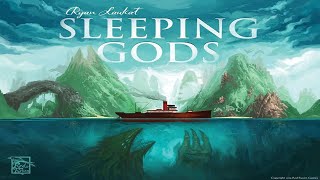
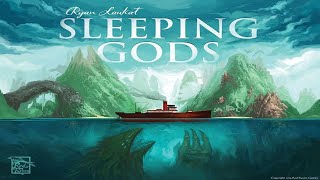
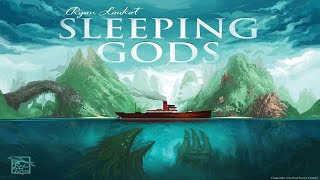
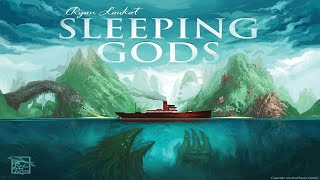
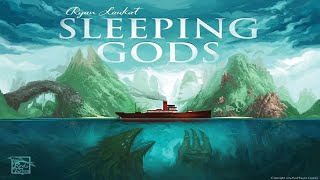
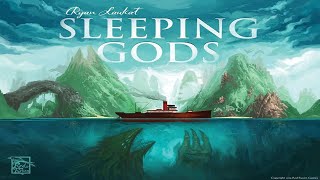
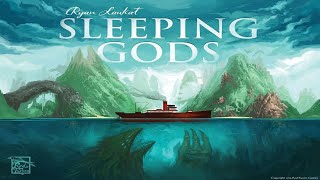
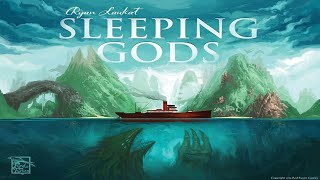
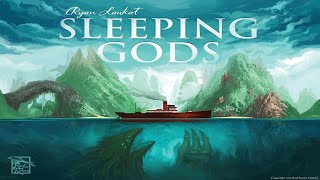
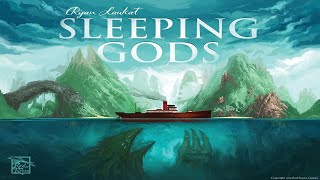
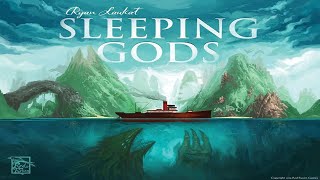
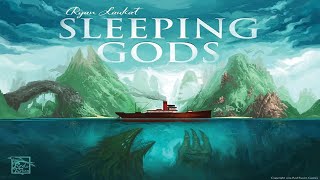
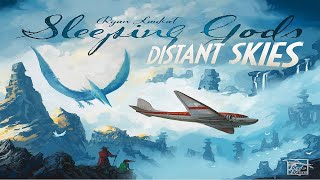
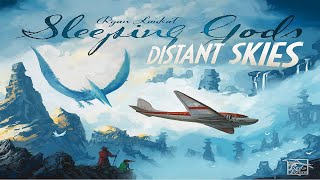
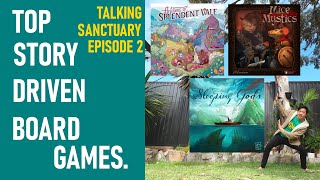
"Are the stars unfamiliar here?" she asked, and the sky grew suddenly dark, the star's patterns alien and exotic. "This is the Wandering Sea. The gods have brought you here, and you must wake them if you wish to return home."
In Sleeping Gods, you and up to 3 friends become Captain Sofi Odessa and her crew, lost in a strange world in 1929 on your steamship, the Manticore. You must work together to survive, exploring exotic islands, meeting new characters, and seeking out the totems of the gods so that you can return home.
Sleeping Gods is a campaign game. Each session can last as long as you want. When you are ready to take a break, you mark your progress on a journey log sheet, making it easy to return to the same place in the game the next time you play. You can play solo or with friends throughout your campaign. It's easy to swap players in and out at will. Your goal is to find at least fourteen totems hidden throughout the world. Like reading a book, you'll complete this journey one or two hours at a time, discovering new lands, stories, and challenges along the way.
Sleeping Gods is an atlas game. Each page of the atlas represents only a small portion of the world you can explore. When you reach the edge of a page and you want to continue in the same direction, you simply turn to a new page and sail onward.
Sleeping Gods is a storybook game. Each new location holds wild adventure, hidden treasures, and vivid characters. Your choices affect the characters and the plot of the game, and may help or hinder your chances of getting home!
Welcome to a vast world. Your journey starts now.
—description from the publisher
Images
- Engaging narrative and story progression
- Challenging exploration and resource management
- Satisfying combat encounters, including difficult boss fights
- Sense of discovery and rewarding exploration
- Can be unforgiving if resources are mismanaged
- Riddle solutions can be difficult to find
- Some mechanics can feel punishing (e.g., losing health, negative status effects)
Mechanics (from transcript analysis)
- Card Play — Players use cards for actions, combat, and special abilities, often requiring strategic decisions about when and how to play them.
- Combat — Players engage in combat against enemies and bosses, using a combination of cards, dice rolls, and special abilities.
- exploration — Players move across a map, exploring different locations, encountering events, and uncovering narrative elements.
- questing — Players undertake quests, which often involve specific objectives, keywords, and narrative progression.
- Resource management — Players manage various resources like health, stamina, meat, and specific items to perform actions and overcome challenges.
- Riddle solving — The game includes riddles that players must solve, with incorrect answers having consequences.
- set collection — Players collect totems and other items, which are often required to progress or achieve certain goals.
- Skill checks — Players often need to pass skill checks (e.g., perception, savvy) by rolling dice or playing cards to succeed at certain actions or challenges.
Video topics + discussion points
Quotes (from this video)
- art doesn't belong to the artist it belongs to everyone
- The answer to the riddle is the number 33
- Restore all characters Health to full and remove one status effect
- This game is trolling we suck we suck we suck
References (from this video)
Mechanics (from transcript analysis)
Video topics + discussion points
Quotes (from this video)
- I see Ian Mark uh Aak. Let me know your name so I can say your name.
- I'm Jamie from Stillmire Games. I'm here to play round two of game 87 of Rolling Realms.
- And I agree this is an interesting perhaps difficult combination of realms.
- For every resource you're about to gain, you may gain another resource type instead. Flexibility. That's good.
- I'm pretty sure I've activated all the realms every turn.
- I'm essentially just going for completion and for using all three realms.
- This was a lot of fun to see a bigger group of people hanging out and playing along.
References (from this video)
- Threes and fours are good for marking adjacent squares.
- Can get hearts by using the number 4.
- Copying a 6 can fill in many squares.
- Completing the board is a goal.
- A 1 doesn't get very close in Sleeping Gods.
- Completing the entire board can be difficult.
Mechanics (from transcript analysis)
- area control/influence — Placing numbers can fill in squares on the board.
- cooperative play — Implied by the way the host is playing and filling in spaces, suggesting a shared goal or experience.
- dice placement — The number 4 and 3 are good for marking adjacent squares, and 4s are great for getting hearts. The number 6 can be copied to fill in squares. The number 3 is good for getting a heart. A 6 can be copied to fill in squares for a fully marked monster.
Video topics + discussion points
Quotes (from this video)
- So, we're going to use a 6 in one realm and a 3 in the other hopefully to gather some resources to gain some bonuses and get as many stars as possible from these three realms.
- The story book pack that came out today has um updates from the first two printings of Vantage.
- And so unless you have the third printing of Vantage, you don't have the story book packs that that released today.
- But I have found that it is really nice to play with the Rulepop app. Um I haven't found that it had the impact that I've seen screens have on a game at times.
- Feels like a a whole world in your hands when you have those storybooks.
- And Chess says, 'Part of it is supporting the best game publisher around.'
- Oh, I just found a whole city that I've never seen. That's cool. There's a lot There's a lot in this world in the vantage world.
- Spaceship, tough one to finish off.
- Well, while Justin's out finding new cities, we're getting pretty good scores in Rolling Realms here.
References (from this video)
- Immersive world-building and exploration
- Flexible pacing and play length
- Strong emergent narrative.
- Setup and takedown can be lengthy
- Requires commitment for long sessions
- Narrative-driven exploration with keyword-based decisions
- Open-world, sandbox exploration on a mysterious oceanic world
- Open-world storytelling with meaningful consequences
Mechanics (from transcript analysis)
- Engine Building: Triggered/Cascading — Keywords trigger effects and create emergent loops
- keyword/trigger card system — Keywords trigger effects and create emergent loops
- Open-world exploration — Players explore a vast world with freedom to pursue clues and routes
Video topics + discussion points
Quotes (from this video)
- spoilers-free guarantee
- the Conor McDavid of campaign games
- it's a deck building game
- this is the obvious choice because not only is like the first pandemic
References (from this video)
- loved solo.
- wouldn't want to play with a group, potentially due to language barriers (English not being a native language for some players).
Mechanics (from transcript analysis)
Video topics + discussion points
Quotes (from this video)
- mechanisms over theme for the win
- Stories can be great the first time around but I think atmosphere is way more important
- I like feeling immersed in the aesthetic and setting of a game
- if you can get someone invested in the story of what they're doing I have seen time and time again how that can increase their capacity to learn the rules because now they have a sense of motivation
- for me if a board game tries too hard to tell me a specific story it takes away from my experience
- I like ludo-narrative Harmony when mechanics match story and it's great when the story Jump Start strategy
- Ludo stands for play and narrative so it's where those two things meet
- if the story is poorly written poorly read or it was just more story than what the players were looking for it's not going to work
- English isn't my native language and others around me aren't very fluent in English and reading well
- one thing I expected with Rodney standing next to those shelves of coin games was for him to take one out and talk about how games can retell stories
- if some players really want to embrace the story of a game while others aren't in the mood for elaborate theatrics or dramatic readings those story elements they just they won't land
- I'm glad there's a wide spectrum of games to choose from so that everyone can find something that provides enjoyment for them and the other players that they game with
References (from this video)
- quest for totems across a strange world
- 1929
- rich narrative with story passages and branching choices
Mechanics (from transcript analysis)
- Action Following — the active player moves the ship's meeple to a new location on the ship and resolves a location's effect
- combat_and_weapons — combat uses a deck of cards, weapons, hits, wounds, and possible counter-attacks across rounds
- Combat: Deck/Hand — combat uses a deck of cards, weapons, hits, wounds, and possible counter-attacks across rounds
- encounters_challenges_and_combats — exploration yields challenges (skill checks) and combats with defined mechanics
- event_deck_and_layers — an event deck of 18 cards is layered by severities and drawn during turns
- exploration_storybook — explore actions lead to reading numbered story entries and making choices that affect the game
- hand management — players manage a personal hand of ability cards and command tokens, with a maximum hand size of three
- hand_and_tokens_management — players manage a personal hand of ability cards and command tokens, with a maximum hand size of three
- level_up_and_recipes — players can spend experience to level up crew and use recipes to heal or remove effects
- market_and_port_actions — market and port actions allow drawing/purchasing cards and healing or upgrading crew
- Narrative choice — explore actions lead to reading numbered story entries and making choices that affect the game
- quest_totems_and_journey_log — quests and totems drive progression; journey log tracks experience and outcomes
- ship_action — the active player moves the ship's meeple to a new location on the ship and resolves a location's effect
Video topics + discussion points
Quotes (from this video)
- sleeping gods is a free-form game you can explore as far and wide as you wish ultimately in search of totems
- it's 1929 and you and your fellow players are playing the role of captain Sophie Odessa and her crew of nine as they pilot the manticore ship around a strange world going on search for adventure
- the world of sleeping gods is yours to explore at your own pace
References (from this video)
- Introductory scenario starts the campaign and provides the start of the campaign story
- Campaign structure allows play over multiple sessions with save/load capabilities
- Solo play is supported and players can join/leave mid-campaign
- Storybook and quest cards create a narrative-driven experience
- awakening ancient gods by finding long-lost totems to wake them from slumber
- a ship lost in an unknown world and unknown sea
- campaign/storybook-based with an introductory scenario
Mechanics (from transcript analysis)
- Card/Chit Market — market action combines drawing seven market cards and purchasing based on coin costs; purchased items affect play and can be shared
- combat and crew skills — combat involves selecting crew to participate, spending command tokens, drawing fate, using skills, and resolving damage with a defined combat sequence
- Event deck resolution — draw top card of the event deck, read it aloud, and choose among provided options or resolve a challenge
- Events — draw top card of the event deck, read it aloud, and choose among provided options or resolve a challenge
- experience points and leveling — xp is earned and spent to buy level cards for crew members; levels stay with a crew member for the campaign
- explore and storybook resolution — explore actions prompt reading and choosing story paragraphs in the storybook to determine outcomes
- market and market cards — market action combines drawing seven market cards and purchasing based on coin costs; purchased items affect play and can be shared
- Narrative choice — explore actions prompt reading and choosing story paragraphs in the storybook to determine outcomes
- resource and token management — players manage command tokens, fatigue tokens, and various resource tokens; actions depend on available supply
- Resource management — players manage command tokens, fatigue tokens, and various resource tokens; actions depend on available supply
- ship movement and room actions — on a turn the active player moves the ship action figure to a room and performs its action; must move to a different room; hull space cannot be used
Video topics + discussion points
Quotes (from this video)
- you are the crew of the manticore a ship lost in an unknown world an unknown sea
- this is a campaign game
- you and the other players will be working together to find the totems so you can complete your quest
- Sleeping Gods is played over a series of turns
References (from this video)
Mechanics (from transcript analysis)
Video topics + discussion points
Quotes (from this video)
- investing in the game it's why we like sports you know you get to know the people the characters the history the comebacks the underdogs and you invest in the game
- the sillier the game the more invested you get in it
References (from this video)
- Campaign storytelling game
- exploration-based cooperative play
Mechanics (from transcript analysis)
Video topics + discussion points
Quotes (from this video)
- this is the game out of every single on the list i recommend the highest
- it's a tableau builder where you're sort of building up the strip on santa monica
References (from this video)
Mechanics (from transcript analysis)
Video topics + discussion points
Quotes (from this video)
- I am a huge dice throne fan and I am absolutely estatic about the dice Throne realm
- Sleeping Gods is one of my absolute favorite
- Vantage is going to be a 2025 game
- 7-year Journey seems like forever
References (from this video)
- epic scope and production quality
- storytelling depth and aesthetic payoff
- large setup and management requirements
- solo play demands considerable time and space
- adventure, exploration, narrative-driven choices
- mythic, open-world maritime exploration
- campaign-like storytelling with branching outcomes
- Dune: Imperium
- Gloomhaven: Jaws of the Lion
Mechanics (from transcript analysis)
- Campaign-style progression — long-form narrative with evolving chapters and decisions
- dice-based action selection — dice pools influence actions and resource gathering
Video topics + discussion points
Quotes (from this video)
- Calico I love Calico it's the game I've played the most ever in my life
- this top 10 focuses mainly on games that are either solo only or games that I've played that I think are better solo than they are multiplayer
- I could talk on and on about board games
References (from this video)
- Rich narrative and world-building
- High-quality components and art
- Strong solo play experience
- Setup can be challenging and time-consuming
- Story length may be daunting for some players
- narrative-driven exploration and discovery across a vast map
- open-world fantasy island exploration with mythic elements
- Array
Mechanics (from transcript analysis)
Video topics + discussion points
Quotes (from this video)
- it's the midyear board game tag
- Obsession it's a beautiful game
- it's so quick to set up
- it's a new era of board games that's how it feels like to me
- I can't pick one game that's impossible
- Cascadia rolling... I love Cascadia
References (from this video)
- Immersive, narrative-driven experience
- Strong cooperative feel and thematic coherence
- Encourages long, immersive sessions
- Complex rules can be daunting for new players
- Requires substantial time commitment
- Exploration, collaboration, survival, and narrative discovery
- A mythic open-world nautical adventure with exploration and destiny-driven storytelling across a sprawling map.
- Campaign-style, story-driven open-world exploration
Mechanics (from transcript analysis)
- Campaign — The game features a campaign-like progression where choices and outcomes influence future scenarios.
- Campaign progression — The game features a campaign-like progression where choices and outcomes influence future scenarios.
- cooperative exploration — Players cooperate to explore a vast world by drawing connections between locations, encounters, and narrative prompts.
Video topics + discussion points
Quotes (from this video)
- sleeping God set up right here because I was I wanted to really play this again but it's been a while
- it looks so amazing I think it's so cool and yeah so I'm going to be playing that in a little bit
- I'm planning on doing a solo playthrough on my channel of the Ursula fight so I'm excited about that
- illuminer quest I am so excited about about this it's I'm going to play it today and as I've said I'll make a video of the solo mode I am so excited about this
References (from this video)
- Rich narrative potential
- Expansive world to explore
- Rules-heavy and lengthy sessions
- Open-world exploratory fantasy
Mechanics (from transcript analysis)
- Narrative choice — Campaign-like storytelling with interactive choices and outcomes.
- Story-driven exploration — Campaign-like storytelling with interactive choices and outcomes.
Video topics + discussion points
Quotes (from this video)
- It's not personal, it's business, okay?
- We need to remedy that and quickly.
- I am going to be cutthroat with some of these games.
- I feel better prepared already for Spiel.
- This shelf is absolutely beautiful, but we have to make space.
References (from this video)
- beautiful, heavy, immersive
- great for long-form sessions
- very heavy and long
- Array
- Opening in an epic, open-world exploration
Mechanics (from transcript analysis)
Video topics + discussion points
Quotes (from this video)
- I love Chronicles of Crime: 1400
- I love Splendor it's an amazing game it's a great introductory game to people who don't play as much board games
- Treasure Island I'm definitely keeping Treasure Island
- Sushi go we're keeping Sushi go Love Sushi go great game
- Point salad I love Point salad so fun so quick I love that everything keeps changing you can set your own goals for the game it's just very fun very cute love the artwork
- Smash Up this game also doesn't get played at all I've played it maybe two times a long long time ago
- Sleeping Gods I mean never getting rid of this what a beautiful beautiful game and just so exciting and yeah very heavy
References (from this video)
- Open-world exploration feels expansive and liberating
- Compelling storytelling and player agency
- Accessible solo mode with strong thematic flow
- Open-world scale can feel overwhelming for some
- Campaign length may be lengthy for casual sessions
- Adventure, exploration, and narrative discovery
- An unfamiliar open world where you sail in any direction to discover quests and secrets.
- Open-world sandbox with evolving encounters and choices
Mechanics (from transcript analysis)
- crew management and combat — Manage a diverse crew with evolving abilities and engage in combat encounters.
- Open-world exploration — Explore a vast map with encounters and quests that unfold based on player decisions.
- puzzle-solving and decisions — Puzzles and tough choices drive progression and consequences.
Video topics + discussion points
Quotes (from this video)
- this is the fourth in a series of videos where I'm separating my favorite solo games into five different complexity levels
- it's my favorite as well
- no Universal scale exists so a mediumweight game to you might be a heavy game to me and vice versa
- I particularly like its clever bag building system
- this war of mine is the most profound board game I've ever played
- the solo opponent is super quick and easy to manage
References (from this video)
Mechanics (from transcript analysis)
Video topics + discussion points
Quotes (from this video)
- Stop demonizing tryards.
- Card games are not board games.
- The more people in the same game group that own a game, the less likely any of those people will play it.
- There is no such thing as an omniamer.
- Washes make the gray better, too.
- Stop making the community pay for publisher errors.
- If you ripple shuffle my cards, you can leave immediately.
- The biggest influencers for party games are outside the hobby.
- Monopoly is fine for making family memories.
- If you are the person responsible for teaching games in your play group, you should be the person choosing which game you're playing each game.
References (from this video)
- Innovative open-world structure that blends exploration with storytelling
- Strong crew dynamics and shared narrative across all players
- Clever integration of mechanics with narrative (event deck, ship actions, survival)
- Rich content and expansion potential with a sense of a living world
- Tension and escalation grow from meaningful narrative choices
- Long setup and teardown times can be cumbersome
- Rulebook ambiguities and occasional balance issues with ship actions
- High complexity and cost may deter casual players
- Some early dungeon-like segments can feel punishing or opaque
- cooperation, survival, discovery, and narrative-driven adventure
- An open-world nautical fantasy exploration aboard the Manticore, set in an alternate dimension where a crew searches for a way home
- campaign-driven, open-world pursuit with branching outcomes and integrated mechanics
- Tomb of Horrors
- Dark Souls
- Seven Continent
- Tainted Grail
- Fighting Fantasy
- Warlock of Firetop Mountain
Mechanics (from transcript analysis)
- challenges integrated into narrative — Skill checks and challenges affect outcomes and drive story consequences
- combat and health systems aligned with narrative — Damage, health, and combat resolution tied into survival and progression
- Combat: Damage Based — Damage, health, and combat resolution tied into survival and progression
- command tokens and ability cards — Tokens enable actions, upgrades, or special abilities; ability cards supplement crew skills
- event deck with a three-act structure — A deck of events drives story beats across acts, tying exploration to narrative milestones
- Events — A deck of events drives story beats across acts, tying exploration to narrative milestones
- exploration map with zones — Exploration unfolds via a visual map; zones reveal locations, quests, and new narrative threads
- multi-character crew and active participation — All nine crew members are involved; players can contribute regardless of turn order, enhancing crew cohesion
- player agency and moral consequences — Choices have tangible effects on crew fate and story direction, not merely random outcomes
- ship actions — Each turn begins with ship-based decisions that move the Manticore and enable various actions to manage the crew and voyage
- survival system and fatigue tokens — Crew fatigue tracked via tokens; fatigue influences performance and requires careful resource management
Video topics + discussion points
Quotes (from this video)
- Sleeping Gods isn't a game about individuals on adventure; it's a crew-centered experience
- it's a thinking person's module
- sleeping gods might be one of the best games that i've ever played
- the challenges integrate into the narrative in a way that doesn't trivialize the story
- open world games survive the curtain drop
- i wanted the manticore crew to succeed in a way that would leave it emotionally intact
- it's warm and welcoming, it's challenging without being obtuse
References (from this video)
- Rich world and storytelling framework
- Cohesive narrative arc across locations
- Rule complexity requires careful study before full mastery
- Adventure and exploration with narrative-driven encounters.
- Original game setting of Sleeping Gods' open-world voyage; the broader Sleeping Gods universe.
- Encounters revealed through a narrative book and story cards, with cooperative play across crew.
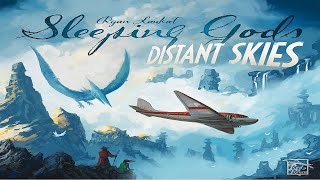
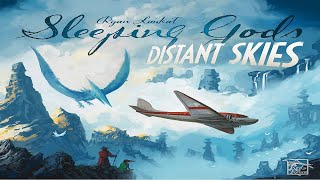
- Sleeping Gods: Distant Skies
Mechanics (from transcript analysis)
- Campaign exploration — Players explore the map and seek out encounters; narrative-driven progression.
- cooperative storytelling — Players collaborate to advance the story with shared goals.
Video topics + discussion points
Quotes (from this video)
- "Distant Skies. It's giving a very old Final Fantasy Tomb Raider feel."
- "you have this overworld, right? You go around on an airplane."
- "In the battle, what is it? It's turnbased."
- "I appreciated the open and play tutorial. It worked for me."
- "12 to 15 hours"
- "as someone who has not played the original Sleeping Gods I have played Primeval Peril really had no interest in going into Sleeping Gods Distant Skies"
References (from this video)
- narrative exploration
- fantasy open-world
Mechanics (from transcript analysis)
Video topics + discussion points
Quotes (from this video)
- The board game equivalent of No.
- War of the Ring
- Sleeping gods
- The answer is Monopoly
- The answer is Arkham Horror
- Magic the Gathering
References (from this video)
- Strong narrative feel and open-world sense
- Accessible compared to some heavy co-ops
- Campaign pacing can be uneven
- Subject to narrative kingmaking if players diverge too much
- Narrative-driven cooperative exploration
- Open-world nautical-adventure universe
- Open-world with modular story arcs
- Gloomhaven
- Oathsworn
Mechanics (from transcript analysis)
- cooperative narrative — Players collaborate to progress through story-driven chapters
- Modular board — Players explore a modular map with branching outcomes
- Open-world exploration — Players explore a modular map with branching outcomes
Video topics + discussion points
Quotes (from this video)
- "Bonanza does a great job of putting that negotiation forward and creating more of a social interactive experience that I feel like Katan offers as a Euro game that is somewhat unique amongst Euro games today"
- "Katan by creating that social interaction the fluidity and the kind of non-scripted approach to that"
- "Sleeping Gods is an amazing experience very reminiscent of an open world game"
- "This is definitely a step up in complexity"
References (from this video)
- Explicitly connected to narrative storytelling in board games
- Discussed in the context of exploring unconsidered perspectives
- narrative-driven exploration with mythic elements
- space-themed exploration and narrative storytelling in board games
- story-driven, epistolary-inspired
Mechanics (from transcript analysis)
Video topics + discussion points
Quotes (from this video)
- hello my name is efka this is bessie and i'm elaine
- we have a little board game channel called nope included
- reviewing board games is the best thing i have ever done in my life
- our channel is supported by our patrons
- we've decided to simply ask you to support us at whatever level you feel is right
- narrative storytelling in board games through the lens of ryan lockett's sleeping gods
- sharp criticism like our videos for horizon zero dawn
- feel-good reviews like sprolopolis
References (from this video)
- Rich, immersive world and art by Ryan Laukat
- Exploration and encounters provide a strong sense of discovery
- Open-world freedom and player-driven growth make repeated play rewarding
- Can be long and complex, requiring significant time investment
- Open-ended nature may overwhelm players seeking a tight, compact experience
- adventure sandbox with story-driven encounters and growth
- open-world nautical fantasy exploration with a diverse crew
- story-rich, player-driven decision making with consequences
- Ark Nova
- Hadrian's Wall
Mechanics (from transcript analysis)
- character growth — characters gain items, upgrades, and skills that shape future play.
- Combat System — a unique, puzzle-like combat system that integrates with the exploration.
- Open world exploration — explore a large, interconnected world with encounters and quests.
- story encounters — decisions and dice sometimes influence outcomes, creating cinematic moments.
Video topics + discussion points
Quotes (from this video)
- There’s an entire campaign built in here with I think eight different maps that are very different.
- Cascadia is a very approachable, family-friendly tile-laying game that I really like.
- This is a game that just keeps popping up on my list.
- The Loop is one of my favorite cooperative games; it plays best solo and is incredibly underrated.
- Final Girl is a solo-only game that nails the atmosphere and does so with cinematic storytelling.
References (from this video)
- rich, immersive narrative
- large, atmospheric world with meaningful choices
- strong co-op teamwork and replayability
- heavy to learn and lengthy play sessions
- varied components can be overwhelming for new players
- adventure, exploration, fate
- open-world nautical fantasy with a quest to return home
- campaign-driven, story-heavy cooperative exploration
- Galactic Cruise
Mechanics (from transcript analysis)
- Campaign-based progression — the game unfolds over a series of scenarios with evolving challenges.
- Cooperative Game — players work together to resolve actions and progress through a shared narrative.
- cooperative play — players work together to resolve actions and progress through a shared narrative.
- Modular board — players explore a modular map and encounter story-driven events.
- Open-world exploration — players explore a modular map and encounter story-driven events.
Video topics + discussion points
Quotes (from this video)
- Sleeping Gods.
- Not a game.
- I believe he got nine out of 10.
- Paladins.
References (from this video)
- epic scale and art
- very long plays
Mechanics (from transcript analysis)
- story-driven, open-world exploration — campaign-like narrative with exploration and combat
Video topics + discussion points
Quotes (from this video)
- it's happening it is no longer going to be in my collection
- Katan it is happening
- I am going to call Katan
- I need to pair down this collection
References (from this video)
- Ambitious narrative scope (as inferred from discussion)
- Not explicitly critiqued in transcript
- cooperative exploration campaign
- Mythic maritime exploration world
- campaign-driven narrative with branching outcomes
- Gloomhaven
Mechanics (from transcript analysis)
- Cooperative Game — Players work together to explore a map and complete quests.
- cooperative play — Players work together to explore a map and complete quests.
- Narrative choice — Narrative unfolds based on exploration and choices.
- Story-driven exploration — Narrative unfolds based on exploration and choices.
Video topics + discussion points
Quotes (from this video)
- this table has now become my favorite piece of furniture that i've ever owned
- an invaluable tool in reviewing board games
- it's cozy and comfortable
References (from this video)
- Ambitious, rich narrative
- Beautiful artwork and production
- High replayability and content depth
- Heavy rules burden for new players
- Long play sessions can be demanding
- Exploration, narrative-driven adventure
- Oceanic voyage in a mythic world
- story-driven, open-world quest structure
- Near and Far
- Earth
- Mysterium
Mechanics (from transcript analysis)
- card-driven exploration — Event/quest cards guide exploration and encounters
- Cooperative Game — Players work together to explore and resolve quests
- cooperative play — Players work together to explore and resolve quests
- Story-driven campaign — Modular quest cards drive the ongoing narrative
Video topics + discussion points
Quotes (from this video)
- I'm going to Gen Con, it is happening
- I'm going to Gen Con
- I cried when it showed up at my house not gonna lie
- I am so freaking excited you have no idea
- I'm brand new to the Hobby
References (from this video)
- beautiful map and components
- deep, satisfying exploration
- story length can be long
- setup time is non-trivial
- Narrative exploration with puzzle-like quests
- Mythic voyage across a vast open world
- Ambient, story-driven exploration
- Ark Nova
- Canvas
Mechanics (from transcript analysis)
- cooperative play — players work together to complete quests
- Story-driven exploration — players follow narrative threads with choices
Video topics + discussion points
Quotes (from this video)
- these shelves are too cool to suggest anything
- i'm drooling and looking at games
- i really like the looks of it
- best looking arrangement shelf
- i want this collection as well
References (from this video)
- Rich story-driven campaign with atlas-based exploration and branching passages
- Deep crew management and ship combat mechanics that scale with player count
- Engaging themes of myth, exploration, and survival with meaningful progression
- Campaign save mechanism enables long, epic play sessions across days
- Long play sessions and significant initial setup complexity
- Steep learning curve for new players due to many interlocking rules
- High potential time commitment for a single campaign (15–30 hours)
- Story-driven exploration, awakening ancient gods, survival, crew management, and mythic questing.
- A perilous sea-world and wandering atlas-driven voyage aboard the Manticore The Manor, spanning a mythic archipelago as ships sail the Seas of the Wandering Sea trapped within the Deep Sleep of ancient gods.
- Campaign-based, atlas-guided storytelling with branching passages and evolving storybooks.
Mechanics (from transcript analysis)
- Atlas/Storybook Exploration — Players open pages in an atlas to reveal regions, quests, and story prompts, guiding the campaign through procedurally revealed content.
- Challenge System — Challenges test one of five skills; crew contributions generate points, with outcomes affecting health, fatigue, and rewards.
- Crew Management and Fatigue — Crew boards track health, fatigue, status effects, and unique abilities; players manage fatigue and health across crew and captain.
- deck-based actions — A deck of ability and event cards drives actions; players draw, attach, and activate cards while keeping some information hidden.
- Event and Quest Encounters — Event cards trigger challenges and outcomes; fate cards influence the narrative and combat consequences.
- Progression and Campaign Log — Campaign progress is tracked in a journey log; outcomes influence future events and allow campaign persistence across sessions.
- Resource and token economy — Coins, goods, materials, and various tokens (fatigue, status, combat, command) regulate actions, healing, and progression.
- Ship Management and Combat — The Manticore ship board uses damage markers and ship-specific actions; combat uses combat tokens, synergy tokens, and weapon effects.
- Travel, Port, and Healer Actions — Travel moves the ship across atlas regions; ports heal, remove fatigue/damage, and allow leveling up crew; healers restore health.
Video topics + discussion points
Quotes (from this video)
- Sleeping Gods is another story-driven game designed by Ryan Laukat
- this is believed to be his Masterpiece
- the game has a saving mechanism so you can store it and continue playing it another day
- open the atlas of the game on page two
- The campaign is now ready to start
References (from this video)
- adventure
- narrative
Mechanics (from transcript analysis)
Video topics + discussion points
Quotes (from this video)
- hey everyone who just kind of made it in time i'm not going to say it was a shall we say the easiest time to get here
- come on seriously i need to get on with a stream in a minute
- what is going on at fantasy fly at the moment they're just not bringing out any major good games
- every time they try to do a spin-off game that isn't a card game they tend to fail
- root's okay but i think the fact that you've got to have a balanced group of players who know what they're doing to play it i think it's just too much
- i just i'm okay with rue but i would never seek it out
References (from this video)
- strong narrative
- somely immersive solo/campaign mode
- heavy to learn for new players
- long play sessions
- story-driven exploration and decision making
- mythic adventure world
- story-driven RPG-like
- Gloomhaven: Jaws of the Lion
- Arkham Horror: The Card Game
Mechanics (from transcript analysis)
- campaign / legacy-lite — story-led progression with ongoing campaigns and decisions
Video topics + discussion points
Quotes (from this video)
- it's a great simple trick taking game for kids where you don't see your own cards
- the top rated two-player game for us on this channel
- exit could be a good option as a co-op game
- Skull here we go a super great little party game about bluffing
- Sleeping Gods the other great great story game here is a area control game in ancient Egypt you're playing Gods Railroad
- Leave a comment down below and I think if you would share this video with somebody who also would comment underneath
References (from this video)
- Strong open-world storytelling
- Rich art and world-building
- Can be lengthy and heavy for some players
- Narrative exploration with modular storytelling
- Mythic open-world sailing adventure
- Story-driven with sprawling arcs
- Vantage
- Gloomhaven
Mechanics (from transcript analysis)
- Open-world exploration — Narrative arcs unfold through exploration and encounters
Video topics + discussion points
Quotes (from this video)
- it's essentially 1,700 cards and 8 or and 400 of those cards are double-sided
- you've turned Wingspan not into you built it into more than just a game
- no zero days
- the ending has to live up to the X number of hours that somebody just put into it
References (from this video)
- Epic storytelling in a single package
- High degree of player collaboration and world-building
- Extremely large footprint and long play times
Mechanics (from transcript analysis)
- cooperative narrative exploration — players steer a crew through a vast atlas-style seas, taking quests and advancing a shared story
Video topics + discussion points
Quotes (from this video)
- it's a treasure trove of puzzling riches and i love it
- this box is the campaign that takes the form of a delightful comic
- a gorgeous game unlike any i've played this year or most other years
- it's an app-driven competitive storytelling game which just boggles my mind a little
- it's all about family
References (from this video)
- epic scale
- family-friendly storytelling within a mature theme
- complex rules, long playtime
- adventure, exploration, discovery
- epic voyage through a mythic world with a map and story book
- cooperative storytelling with branching paths
Mechanics (from transcript analysis)
- cooperative play — players work together to progress the overarching narrative
- resource and crew management — acquire resources and meet people to advance the story
- storybook map exploration — travel to different places, read stories, make choices
Video topics + discussion points
Quotes (from this video)
- it's epic there's a lot of cards the island can get really big
- the crew is the tiny thing I talked about cuz it's not epic it's not like big but it is crew is a simple trick-taking game
- Welcome To The Moon is flip and write game basically
- this is my number one but I completely get why it's number five
- it's a cooperative game where all of you jump into a fight and try to defeat the big baddy
- the story part where you just meet different people make choices that really matter and make you go into completely different directions
- Sleeping Gods is definitely the definition of an epic campaign game
References (from this video)
- Beautiful storytelling and evocative art
- Engaging campaign structure
- Rule complexity and setup can be lengthy
- Some players may want more direct combat than story moments
- Storytelling, narrative exploration with resource management
- Story-driven, open-world voyage across a fantasy sea
- Storybook-driven campaign style
Mechanics (from transcript analysis)
- exploration / engine-building — Exploration with a developing engine to support missions.
- quest/storybook mechanics — Narrative scenarios that guide player choices.
- story-driven campaigns — A narrative campaign where decisions shape the voyage and outcomes.
Video topics + discussion points
Quotes (from this video)
- none of these games are bad games
- this is an absolutely fantastic game
- this is a polyomino game
- cockroach poker is the best party game I have played
- this entire list is a bluff
- it's the best game that awakened realms has produced with the exception of iss Vanguard
References (from this video)
- substantial content
- high replayability
- worth the investment
- recently reviewed
- adventure
- exploration
- campaign
Mechanics (from transcript analysis)
Video topics + discussion points
Quotes (from this video)
- it's simple but brings so much emotions
- really really underrated game really love it
- i went all in on that kickstarter this is going to be the ultimate batman game in which it wasn't
- picking up phone checking stuff on phones your turn
- you didn't listen and another you explain all the rules
- if you don't like the game push through the end and never play it again but don't start saying that you hate the game
- just because we can reach bigger audience
- and we're friends so you can definitely be just don't talk about it
- i throw out the rules i don't like and put in rules i like and then i hope the game sells
- all euro games are the same
- they just feel so very similar
- they kind of kind of mush into one this big euro game mask
- sandwiches don't come free you know we need money to make sandwiches
References (from this video)
- Immersive world and storytelling
- Strong art and table presence
- Can be lengthy and rules-intensive
- Exploration, freedom, and narrative discovery
- Mythic voyage in a magical open-world world
- Campaign-driven with large open-world storytelling
- Near and Far
Mechanics (from transcript analysis)
- cooperative exploration — Players explore and solve mysteries together
- storybook campaign — Narrative-driven adventure with branching outcomes
Video topics + discussion points
Quotes (from this video)
- "Emerald Edition this is a must have for Ryan Laukat fans"
- "promo cards for some of Ryan's most popular games"
- "check out my channel to see me play some of Ryan's games"
References (from this video)
- Rich, immersive narrative with a strong sense of world-building and lore
- Cooperative play that rewards planning, teamwork, and on-the-fly improvisation
- Engaging combat system that emphasizes synergy and tactical decisions
- Stylized artwork and theming, with memorable locations and creatures (e.g., the Beast)
- Rule complexity can be daunting, especially for new players or during live streams
- Long play sessions; the campaign arc and quest management can be effort-intensive
- Resource bookkeeping and tracking require organization to avoid detours or confusion
- Exploration, alliance-building, survival, and lore-driven questing in a connected world
- A sprawling, open-world fantasy-at-sea adventure where a crew seeks to thwart a tyrant king across mythic islands
- Story-driven campaign with branching quest cards, lore entries, and character arcs
- Nova Atrium
- Dante Infernal
Mechanics (from transcript analysis)
- Cooperative combat — Team-based combat using combat cards, dice, power tokens, and synergy mechanics to defeat enemies
- exploration — Open-world map exploration via quest and location cards; dynamic encounter generation drives discovery
- Resource management — Management of fatigue, moxy, berries, meat, eggs, leaves, etc., coupled with trade and conversion options
- Story-driven campaign — Adventure/Quest cards propel the campaign forward with persistent upgrades and totem-based enhancements
- Totems and Upgrades — Totem cards and upgrade paths modify combat and exploration, adding strategic choice and variability
- Vehicle movement — Plane/fuel mechanics allow strategic travel between regions; refueling and repairs are part of logistics
Video topics + discussion points
Quotes (from this video)
- greetings and welcome to meet me at the table
- the Beast has been here since before K Trusum was born
- Victory or Valhalla
- I love how the totems are in this one I like it a lot better this way
- you win the game
- the creature has a neck and a face of a snake
- Victory or Valhalla that's right Chris here we go
- the totems are in this one, I like it a lot better this way
References (from this video)
- immersive story and art
- solo play is deeply engaging
- scales well as a long campaign
- steep learning curve
- long play sessions can be demanding
- adventure and exploration
- mythic nautical fantasy world
- campaign/story-driven
- Gloomhaven
- The King is Dead (thematic comparison)
Mechanics (from transcript analysis)
- choose-your-path/story — Encounters and decisions shape the journey through a logbook-like system
- cooperative exploration — Explore a map, gather resources, and encounter monsters
- deck-building — Build and refine a personal deck to attempt objectives
- Resource management — Balance resources to progress and survive
Video topics + discussion points
Quotes (from this video)
- Sleeping Gods is a story game where there are tons of choices you just get stranded with your ship and a logbook.
- Arc Nova is on the heavy side, super heavy side where you build a zoo.
- You always can draw as many cards you want from your deck until you either burn or you stop.
- it's the party hit for this year for sure.
- Wavelength is the party hit for this year as well.
- The Crew Deep Sea Edition is the most played game this year because it's much easier to play.
References (from this video)
- Ultimate sandbox adventure game with total freedom
- Massive content - Gloomhaven-level of content
- Flexible DM-like gameplay
- Excellent writing and story
- Great character abilities and item system
- Gorgeous artwork
- Works well solo
- Player-driven experience
- Great replayability
- Takes 15-20 hours to complete
- Hard to get to the table due to length
- Campaign games require sustained commitment
- Adventure sandbox exploration in a mystical place
- Mystical world with multiple locations and environments
- Flexible adventure with DM-like guidance
- Near and Far
- Gloomhaven
Mechanics (from transcript analysis)
- Branching story — Different paths lead to completely different locations and plot threads
- Character control — Controlling nine different characters with various abilities and tokens
- Combat — Fill out specific parts on enemy cards to stop their counter attacks
- sandbox exploration — Complete freedom to choose direction and path through the map
Video topics + discussion points
Quotes (from this video)
- definitely kicks like Calico to the curb
- this is definitely the gateway seven wonders game, seven wonders is not a gateway game
- it's an opportunity game that's what I like
- it's interactive one of the more interactive euros out there
- no one is talking about this
- wow does it burn your brain
- the uniqueness factor at this game really works
- it's like the most flexible DM in the world
- every decision I make feels meaningful
- Ark Nova easily easily my number one of the year
- I fell in love with it like halfway through the game
- it's so good
- cannot wait to have this in my collection
- hallmark of a great game where you play it and you'll want to play it again as soon as possible
References (from this video)
- immersive narrative
- high production values
- very heavy and long
- adventure and exploration
- narrative-driven, open-world exploration with campaign feel
Mechanics (from transcript analysis)
- campaign narrative — long-form choose-your-path storytelling with game progression
Video topics + discussion points
Quotes (from this video)
- If this was just a job if i was just doing this for money well first of all the channel would be a lot different
- it's been a real problem you know i mentioned that these playing with friends videos have been taking a lot longer to make
- these update vlogs are about me being transparent about stuff
- two cameras that work
- i'm tinkering around hitting a bunch of things with a hammer to see if things get better
References (from this video)
- Perfect fit for Moana's voyaging and discovery spirit
- Rich thematic immersion
- Can be lengthy and complex for new players
- voyaging, discovery, mythic gods
- Oceanic voyage across a mythic world
- narrative-driven, open-world exploration
Mechanics (from transcript analysis)
- cooperative storytelling / exploration — Players jointly explore a vast world, uncovering lore and steering a ship
Video topics + discussion points
Quotes (from this video)
- Belle loves books. It's what made her so weird according to the people in her community.
- It's basically her dream.
- I'm in Disney World right now, so I'm having a great time.
References (from this video)
- Rich world building and cooperative feel
- Memorable story moments
- Long, immersive campaign experience
- Lengthy sessions and setup
- Requires group commitment
- cooperative exploration and story-driven adventure
- mythic voyage across seas in a rich, expansive world
- campaign-style arcs with evolving choices
- Above and Below
Mechanics (from transcript analysis)
- cooperative play — Players work together to explore, encounter events, and progress story
- Exploration and progression — Map exploration and narrative progression drive the game forward
- Puzzle/decision-based outcomes — Narrative choices function like puzzles with consequences
- Story-driven arcs — Decisions shape future encounters and outcomes
Video topics + discussion points
Quotes (from this video)
- the above and below series you know that's really story driven because you depend on the story to tell you what your next actions are going to be
- I like the way it's tied to a story and the characters
- Ticket to Ride it's a old game
- Lords of Water Deep yeah that is true we love Lords of Water Deep
- Five Tribes yes those are two
- Settlers of Katon so those are my three
References (from this video)
- immersive world with rich art
- strong narrative potential and replayability
- rule complexity can be daunting
- long playtime for a full session
- exploration, voyage, and narrative discovery
- Mythic sea-faring adventure across a vast open map
- branching, story-driven
Mechanics (from transcript analysis)
- cooperative narrative arc — Players advance a shared story through quest cards and decisions.
- exploration / map discovery — Open-world exploration on a modular or shared map.
- resource / character management — Manage crew, ships, and gear to progress quests.
Video topics + discussion points
Quotes (from this video)
- the seminal 2008 cooperative game by matt licock
- Flatline a real-time cooperative game by kane klenko features players racing to treat crew members on a spaceship
- in the classic dexterity game operation
- you roll dice to attack, heal, gain energy and score points with the special power card
- this is a very beautiful game
- it's absolutely not this game you're just like making little buildings and it's so cute
- you lent my game out to my friend Hannah
References (from this video)
- Campaign format hard to complete
- Requires ongoing group commitment
- Story-driven exploration
- Adventure campaign
Mechanics (from transcript analysis)
- campaign system — Extended campaign gameplay
Video topics + discussion points
Quotes (from this video)
- it's just like falling off it's just literally there are 100 better games in it
- Small Islands uh this is the one that i've been saying is a replacement for carcassonne
- way too complicated for its own good
- it is one of the most beautiful games in existence
- i still think five tribes is better than yamatai
- nations is still my preference to fruity ages in terms of playing a physical game
- really good negotiation game
- great teamwork cooperative very cool
- this is a really good solo
- the deductions are really hard it's a really tough one to do
- it's oh it's a mind bender gorgeous looking
- reef is still a really cool game
- azul is only that good at two player
- near and far still really good
- there's no reason to play that one if you have near and far
References (from this video)
- the insert helps manage the complexity of a story-heavy game setup
- the discussion notes it has setup-related friction compared to legacy games
- story-led, exploration-focused
- narrative-driven exploration and island adventures
- story-driven with modular narrative
- Pandemic Legacy
- Gloomhaven
Mechanics (from transcript analysis)
- story-driven exploration and puzzle-like setup — preparation and organization challenges impact pacing and immersion
Video topics + discussion points
Quotes (from this video)
- everything to me has sort of built around and built off of wasteland express
- this tub which is color coded to the player pieces
- the insert has transformed what is the absolute worst aspect of this game and made it this beautiful premium
- sleeving is a hobbyist mentality
- open like a feast as soon as you open the box
- the central basin allows you to get everything successfully into the box and the lid closes
- box mapping removes all inserts
References (from this video)
- vast scope and sense of discovery
- autonomy in adventure
- crushing complexity for new players
- lengthy sessions
- sandbox exploration with totems and wakes
- open-world, mythic exploration in a mysterious world
- sprawling, emergent storytelling
- Mansions of Madness
- Ghost Stories
Mechanics (from transcript analysis)
- sandbox exploration — players choose their own paths and goals
- story-told through totems and clues — discoveries drive the narrative forward
Video topics + discussion points
Quotes (from this video)
- easy one for me
- locking it in
- we're not big fans of the crew
- it's not close
- open-world sandboxy exploration
References (from this video)
- Rich worldbuilding
- Strong cooperative play
- Large setup and rules overhead
- cooperative storytelling, global exploration
- archipelago voyage with open-ended exploration
- campaign-driven, branching adventures
- Mansions of Madness
- The Loop
Mechanics (from transcript analysis)
- campaign/storybook progression — players advance through large-scale adventures using pages and maps
- dice-augmented combat and resource management — combat and encounters resolved via dice with evolving needs
Video topics + discussion points
Quotes (from this video)
- i want a muppets exit game
- i would love to see that
- stranger things is super hot right now
- i think you could do this as a sleeping gods type environment
- it's been done by an author who already has multiple board games for his books
- please somebody do it
References (from this video)
- Better version of Seventh Continent
- Open world feeling
- Easy to get into
- Not too much management
- Mechanisms complement the game
- High replayability
- Different starting conditions each campaign
- Favorite story exploration game
- Adventure and exploration
- Sea exploration
- Story-driven exploration
- Seventh Continent
Mechanics (from transcript analysis)
- Cooperative — Play as ship's crew
- exploration — Explore islands looking for sleeping gods
- replayability — Different starting conditions on replays
- Story-Driven — Huge exploration game with narrative
Video topics + discussion points
Quotes (from this video)
- if ever somebody says that he has the top 10 games of all time never trust them it's in their opinion
- if i could give a game 11 out of 10 clank legacy would be it
- this is the reason why i fell in love with board games in general
- it's my favorite solo game for sure the more i play it the more i want to play it
- to be honest right now probably next year it will be different maybe tomorrow it will be different
- the unknowing like what's gonna happen what's his agenda it's just an amazing experience
- if you like deck building then i think you definitely like clank legacy like a lot
References (from this video)
- rich storytelling potential
- immersive world-building
- rules-light may frustrate gamers seeking deterministic outcomes
- narrative-driven exploration with prompts
- Mythic exploration and storytelling
- storytelling RPG-like with engine-building
- Gloomhaven
- D&D-style RPGs
Mechanics (from transcript analysis)
- Storytelling — Textual prompts and illustrations guide narrative outcomes.
Video topics + discussion points
Quotes (from this video)
- "top 23 board game terms that we mentioned quite a bit"
- "we want to ramp up quicker"
- "we're going to pick out the top 20 is where we started but then we said well it's 2023 so we're going to give you the top 23 board game terms"