

/pic8037477.jpg)
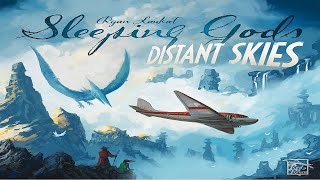
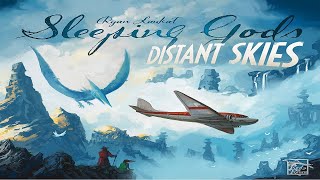
San Francisco, 1937: Your cargo plane flies through a portal in the sky, transporting you to a rugged landscape filled with bizarre creatures, scheming gods, and untold dangers. But can you find your way back before the portal closes?
Sleeping Gods: Distant Skies is a standalone sequel set in the world of Sleeping Gods. As in the original game, you and your friends trek through a vast landscape as you read branching storylines and meet vivid characters, but in this game you interact with the atlas on a deeper level — camping, exploring, overcoming obstacles, and searching for lost relics. The new action system allows you even greater agency while you travel and explore.
In addition to the exploration and quest system from the original game, Sleeping Gods: Distant Skies features a fresh spin on combat. Players now build a combat deck from which they draw a varied hand of cards to play, making each combat encounter a fresh and dynamic puzzle.
Although Sleeping Gods: Distant Skies builds on story elements in the first game, you do not need to play Sleeping Gods to enjoy this sequel. The game features new characters and storylines, explaining concepts from the original game as you encounter them.
Return to the world of Sleeping Gods and experience a thrilling tale that hinges on your choices in a truly open-world experience!
—description from the publisher
Part of the Sleeping Gods family — see Sleeping Gods for the combined view.


Images


- The game has engaging combat mechanics.
- The combat cards and their effects are interesting.
- The narrative and exploration elements are enjoyable.
- The riddle-solving aspect was satisfying when solved correctly.
- The game rewards players with useful items and abilities.
- Players can sometimes take significant damage.
- Managing deck size for combat can be a consideration.
- Running out of fuel for travel is a potential issue.
- The other game
Mechanics (from transcript analysis)
- Combat — Players engage in combat against enemies, utilizing combat cards, abilities, and managing damage.
- crafting — Players can craft items, contributing cards to challenges to improve the outcome.
- Deck Building — Players add cards to their combat deck, with decisions about deck size and mitigation discussed.
- exploration — Players move across a map, exploring locations and encountering events and challenges.
- Quest Completion — Players work to complete quests, which often yield rewards like new items or progress in the narrative.
- Resource Management — Players collect and spend resources like stamina, fuel, and items such as whiskey, torches, and tools.
- Riddle solving — Players encounter riddles that require a one-word answer to progress or gain rewards.
- Set Collection — Players collect specific items like totems, which can be turned in for rewards or used for special abilities.
- Skill checks — Players add their character's stat to a card draw to determine success or failure in various tasks.
Video topics + discussion points
Quotes (from this video)
- That's why I [redacted] love this game.
- Oh man I see why Gods like this.
- It turns out no I can't.
- I wish I had old Jessica.
- Running out of fuel, running out of fuel, it just works for everything.
References (from this video)
- Gained quest items
- Successfully solved a stone lock box and gained equipment (Lucan gloves)
- Acquired a horn frog ally
- Successfully completed quests by mending a coat and watching trees
- Obtained totems
- Successfully made a deal with demons to avoid a fight
- Gained useful adventure cards (Golden Milk, Tea of Gurgen)
- Successfully navigated treacherous terrain (mountains)
- Improved character stats and abilities through items and cards
- Lost players in fights against bears
- Encountered curses that reduce health
- Difficulty finding necessary items for totems (flowers, diamond, fire quartz)
- Plane took damage from an ice storm
- Obstacles like 'Darkness' requiring resources or damage
- Characters suffering from negative status effects (frightened, weakness, madness)
- Inability to explore certain areas without specific items like torches
- The threat of powerful enemies like the Bullman
- Resources are precious and decisions about using them are difficult
- Wandering encounter
- Seventh Continent
Mechanics (from transcript analysis)
- Combat — Players engage in battles, referencing strength and skills needed for fighting.
- exploration — Players move across a map, exploring different locations and encountering events.
- Item Crafting/Acquisition — Players can gain or craft items, such as an old coat or gloves.
- Plane Travel — The game involves a 'plane' that can take damage and requires repair actions.
- questing — Players undertake and complete quests to progress.
- Resource Management — Players manage fuel, health, stamina, and items like honey and whiskey.
- Skill checks — Actions often involve rolling dice against a target number based on character skills like Cunning, Crafty, or Savvy.
- Status Effects — Characters can gain negative status effects like 'frightened', 'weakness', 'madness', or 'venom'.
- Wandering Encounters — A mechanic where players draw and resolve specific encounters at certain locations or times.
Video topics + discussion points
Quotes (from this video)
- We just got done fighting some bears and beating their ass so that's what I'm going to tell myself.
- When you explore certain locations or read a story passage, you open the storybook to an illustration of the scene. This is called a Wandering encounter.
- It has a little bit of Seventh Continent cat but, you know, a structure.
- You gain you poop your pants weakness.
- We promised three demons that we would find food for them to eat, then they shrunk down into black crystals so that we would carry them with us.
- So you have chosen to serve Mikra? She is a weak god and a deceiver. I will destroy her, and you will suffer in pain for many days before the end.
- It was like a nightmare. Then this wound is likely a powerful curse, one that preys upon your fears and will deter you from your path.
References (from this video)
Mechanics (from transcript analysis)
Video topics + discussion points
Quotes (from this video)
- that's fair enough you know what nice um
- I thought that was going to go like a different direction I got like serious I was like
- that's how we're related
- the Cuban in me ni
- always has a secret that's the only way to stay ahead in the art business
- oh well sorry on before all of that
- well I don't want to do that
- oh my God
- autoerotic Su I'm looking
- you have won the game
- those are the twins they're going to be Cyclops food
- you think pterodactyls have possibly six eyes
- okay yeah well that's actually really nice to have because that means we can kind of just fly back and start heading up to the mountains again
- oh my God there's blood everywhere die surprise
- I wonder if it doesn't oh difficulty that's difficulty of the game never mind
- that was an excruciating comment
- that's how it was assume it's the same how will we be able to until we heal again
- God damn we did it
References (from this video)
- Engaging narrative and world
- Clean combat card system
- Interesting exploration mechanics
- Pretty illustrations
- Host dislikes reading large amounts of text
- Potential for confusion with mechanics if rules are not read
- A journey through a strange world, finding survivors and a way home.
- San Francisco, 1937
- Comic book introduction, storybook choices, and narrative events.
- Sleeping Gods
Mechanics (from transcript analysis)
- Action Point Allowance System — Players have a limited amount of 'time' each turn to spend on actions like explore and travel.
- Card Play — Players use combat cards and ability cards, which can be equipped to characters to grant new skills or effects.
- Combat System — Combat involves playing combat cards, placing damage tokens on enemy cards, and managing enemy counterattacks. The system includes mechanics like power tokens and synergy.
- Keyword System — Certain actions or discoveries yield keywords that can affect future events or options.
- Resource Management — Players collect common resources and quest resources, which are used for various effects and to complete quests.
- Set Collection — A primary goal involves collecting specific resources to rejuvenate 'dormant totems'.
- Skill checks — Players attempt challenges based on character skills like Perception and Moxy, often drawing 'fate' cards to modify the outcome.
Video topics + discussion points
Quotes (from this video)
- I cannot do it anymore. I cannot read like it kills.
- Props to voice actors because they are killing it.
- Find a path or gather your courage.
- This combat is a lot cleaner.
- Quest resources we need for the totems.
References (from this video)
- Streamlined mechanics (e.g., command tokens, resource management)
- Enhanced focus on characters
- Improved combat system (less fiddly, more deterministic)
- Addition of audio narration
- More discovery and content than the original
- Greater player agency and freedom
- Wandering challenges add a new layer of interaction
- Exploration is still a core, engaging element
- Randomness in combat deck draws can be disliked by some
- Treasure hunting cards require pinpointing locations based on art, which can be confusing
- The plane's fuel consumption for travel can be a concern
- Sleeping Gods
Mechanics (from transcript analysis)
- Audio Narration — The game features optional audio narration, enhancing the storytelling and immersion.
- Campaign — This is a campaign-driven game with a persistent narrative and evolving world state over multiple play sessions.
- Card-driven abilities — Character abilities and actions are driven by a deck of cards, allowing for flexible character building and tactical play.
- Deck Building (Combat) — Players construct a combat deck for their characters, influencing their options during combat encounters.
- Event deck — An event deck serves as a timer for the campaign and introduces various challenges and narrative elements.
- exploration — The game involves extensive exploration of a map, with players uncovering new areas and events as they progress through the campaign.
- grid-based combat — Combat takes place on a grid, requiring tactical positioning and strategic use of abilities to defeat enemies.
- Resource Management — Players manage various resources, such as stamina and fuel, which are crucial for performing actions and progressing.
- Wandering challenges — Introduces smaller, individual or party-based challenges that occur outside of main quests, adding more localized interactions and activities.
Video topics + discussion points
Quotes (from this video)
- I can't do campaigns if I don't have audio narration anymore
- The fiddlin and the lack one more resource to track and to figure out how to share the command tokens from the original got to be kind of a drag
- Combat is still the grid based combat well I'm not go to look through these cuz I don't know what we're going to fight but it's still that puzzle s combat with a Twist
- It feels like Freedom this is kind of give players the agency to play the game instead of being like well this character has to be played this specific way
- It's like yeah fantastic this works
References (from this video)
- Significant replayability due to numerous achievements and uncompleted content.
- Engaging narrative progression through quests and discoveries.
- Satisfying cooperative gameplay where players work together.
- The discovery of new mechanics like the sled for travel and totem charging.
- Rewarding exploration with useful items and quest progression.
- Complex rules regarding totem charging and resource usage were initially misunderstood.
- The game has a large amount of content, potentially leading to a long campaign.
- exploring an archipelago, survival, finding resources, dealing with threats
- the mountains, the Northern sea, Skull Town
Mechanics (from transcript analysis)
- Combat — Players engage in combat encounters, often resolved through dice rolls and card play.
- cooperative play — Players work together to achieve common goals.
- crafting — Players can craft items, which are discussed and used to overcome obstacles.
- Deck Building — Implied through drawing and managing cards for abilities and combat.
- Dice Rolling — Dice are used in various checks and combat to determine outcomes.
- event cards — Random events occur, presenting challenges or opportunities that players must deal with.
- exploration — The game involves moving to different locations on the map, discovering new areas, and interacting with them.
- map interaction — Players interact with a map by moving their plane and characters between locations.
- Quest System — Players undertake quests that provide objectives, rewards, and advance the narrative.
- Resource Management — Players must manage various resources like fuel, stamina, food, and crafting materials to progress.
- stamina management — Players must manage their stamina, which is used for various actions and can be recovered through camping or consuming resources.
Video topics + discussion points
Quotes (from this video)
- The walls of the cavern crack and squeal a silent symphony of shifting ice is the glacier migrating or is something else chittering in the dark recesses something else a bulbous body stutters into the light it's eight eyes watching you with a burgeoning hunger
- This entire damn time we could have been using these as as any of them as any of them pretty well the Jade eggs are the highest but these are the second highest
- Damn wow too many rules wow people are probably sitting there like what are you doing
- The sled lets you travel two only usable on page on M Pages 14 through 19 Ah hell yeah see that's really cool I don't think there was like a lot of stuff in the last game that gave you like excessive travel
References (from this video)
- Reached the end of the campaign.
- Received a positive final score.
- Successfully defeated the bosses.
- Achieved a favorable ending.
- Stamina is hard to recover without camping.
- Certain cards are expensive to play.
- Debate over using valuable resources.
- Uncertainty about the number of possible endings.
Mechanics (from transcript analysis)
- Card Play — Players use adventure cards and combat cards, discussing their costs and effects, and trading them.
- Combat — Players engage in combat against gods, using cards, dice rolls, and abilities to deal damage and defend.
- exploration — Players move to different locations, indicated by page numbers and keywords, to progress the game.
- Resource Management — Players use 'cards' and 'stamina' and discuss managing them, with meat being used to gain stamina.
- Resource tokens — Players collect and spend resources like 'crystals' and 'torches' to activate abilities and deal damage.
- scoring — A final score is calculated based on adventure cards, totems, passengers, quest cards, abilities, resources, and campaign ending.
- Status Effects — Players can gain or remove status effects like 'frightened' and 'weakened'.
Video topics + discussion points
Quotes (from this video)
- We're doing the bare ass minimum.
- Stamina goes by super quick and it's hard to recover without camping.
- We have to play the whole game in San Francisco.
- Our final score was 137.
References (from this video)
- Good boss fight that felt balanced.
- Miskra Shard proved effective in combat.
- Satisfying combat mechanics that encourage coordination.
- Coral sword is weak and brittle.
- Difficulty in obtaining necessary crafting resources (e.g., flower for balmstone).
- Combat can be complex and require careful planning.
- story book
Mechanics (from transcript analysis)
- Boss battles — The game features boss encounters, like fighting "Orfas", which are presented on multi-part pages with different zones to attack.
- Combat — Players engage in combat against enemies and bosses, utilizing various cards, abilities, and strategies to deal damage and block attacks.
- crafting — Players can craft items like a "balmstone" by collecting specific resources such as "berries" and "flowers".
- event cards — Players draw event cards that present challenges or story elements, such as "Quest 110" or a "curse wound" being inflicted.
- exploration — Players move around the map, exploring locations like "boiling lakes" and "shacks" to find resources and advance the story.
- quests — The game involves completing quests, like "Quest 129" and "Quest 131", which provide rewards and drive the narrative.
- Resource Management — Players manage various resources such as stamina, health, and specific items like "meat" and "fuel".
Video topics + discussion points
Quotes (from this video)
- We fought woolly mammoth and got a totem is pretty much what I gathered.
- The coral sword sucks ass.
- It's not my fault Ryan Lockett makes [ __ ] whole dice.
- That was a mirage that was a shadow clone.
- Hey listen alcohol the cause of and solution to all the world's problems.
References (from this video)
- Productive session with two totems obtained.
- Gained new quests and adventure cards.
- Successfully navigated several challenges and events.
- Slow progress towards the total number of totems needed.
- Some players express fatigue or dislike for certain aspects of the game.
- Encountered negative effects like poison and damage to the plane.
Mechanics (from transcript analysis)
- Combat Deck Customization — Players can customize their active combat deck by looking through owned combat cards and adding them to the deck before combat.
- crafting — Players use craft actions to potentially overcome challenges or achieve goals.
- event cards — Events are drawn that present challenges or opportunities for the players.
- exploration — Players explore different locations on the map to discover new areas and trigger events.
- Keyword Abilities — Certain actions or situations require specific keywords to be present or absent.
- Resource Management — Players collect and spend various resources like rope, whiskey, and Aug root.
- stamina management — Stamina is used for various actions, and players need to manage it for movement and other game effects.
- Totem Restoration — A core objective involves finding and restoring totems to progress and win the game.
Video topics + discussion points
Quotes (from this video)
- We gained Quest 44 boom murdering the art Thief.
- We have enough stamina so if we wanted to break in and see what that art is about at that Mansion we totally can.
- You guessed it but I is it cave is it shark you summoned from deep within yourself everything you know about this world your own world and how people generally tend to choose passwords which they think no one else will be able to guess.
- People are getting sick from these mushrooms but we we don't know why it's a major food source for the city says one of the farmers after examining the cave for a few hours you find a pipe in the ceiling leaking dark oily liquid.
- We're going to be so up in the mountains.
References (from this video)
- Gaining useful items like torches and adventure cards.
- Successfully completing checks and avoiding negative consequences.
- Engaging narrative events and choices.
- Ability to restore health and stamina through camping.
- Failing checks leads to significant negative consequences (health loss, low morale).
- Difficulty in achieving high check results.
- Some rewards are not what players were hoping for.
- The need to spend stamina for certain actions can be restrictive.
Mechanics (from transcript analysis)
- Deck Building — The discussion about thinning out the deck by removing starting cards suggests a deck-building element.
- event cards — Impending rock slides and lightning storms are introduced via event cards that present challenges and require player actions or passive effects.
- Map Navigation — Players move their plane across a map, deciding on destinations and exploring locations.
- quests — Players undertake quests, such as finding lost individuals or searching for art, which yield quest cards and rewards.
- Resource Management — Stamina, health, whiskey, adventure cards, and specific items like torches are tracked and spent for various actions or to mitigate negative effects.
- Set Collection — Players are looking for specific items like flowers and roots to complete objectives or craft items.
- Skill checks — Players frequently attempt checks (e.g., Savvy, Perception, Strength, Moxy) which often require contributing cards or stamina, with success or failure leading to different outcomes.
Video topics + discussion points
Quotes (from this video)
- Camping isn't going to help us enough.
- Whiskey gets rid of frightened and low morale.
- Threat is something that will'll just keep getting added to that.
- There's instant death mode if you want a real challenge.
- My fiancé runs to him gripping him in a tight hug.
- Let's kill these people this town is ours now.
References (from this video)
- The game offers a compelling narrative and exploration experience.
- Combat encounters are engaging and require strategic card play.
- The cooperative nature of the game allows for shared decision-making.
- The game provides a sense of progression through character upgrades and quest completion.
- The story has a clear direction, making it easier to follow compared to the first game.
- The game can be challenging, with some encounters being difficult.
- The scarcity of certain resources, like flowers for crafting totems, can be frustrating.
- Halo 2
- Star Wars
Mechanics (from transcript analysis)
- Card Play — Players outfit characters with ability cards and use combat cards during battles. Adventure cards are also drawn and used.
- Character progression — Characters can be outfitted with new abilities and gain skills like perception and strength. Players also manage character health and morale.
- Combat — Players engage in combat against various enemies, including a boss described as the Stormlock Beast, using cards and abilities.
- cooperative play — Players work together to overcome challenges and make decisions as a group.
- Deckbuilding — Players build their decks by removing starting cards and keeping powerful ones.
- Dice Rolling — Dice are rolled for various challenges and combat, with results influencing success or failure.
- exploration — Players explore various locations, including caves, tunnels, and mountains, to find items, complete quests, and encounter events.
- Narrative choices — Players make choices during encounters that affect the story and outcomes.
- questing — Players complete quests by finding keywords and fulfilling objectives, which award them with new quests, items, or progression.
- Resource Management — Players gather and spend resources like meat, honey, whiskey, rope, and torches to heal, craft items, or trade.
Video topics + discussion points
Quotes (from this video)
- It's like, 'Hey, this does this.'
- It's almost like, are we playing this right? Are we doing combat correctly?
- The flowers are our bane.
- This game flew by like it's already an hour and 15 minutes.
- What's the password?
- Welcome to the Rebellion Outreach office.
- My reference was, 'Oh, we break the wings off the plane to fly it through here.'
- The inscription uses flowery language to describe a beast with the neck of a snake, the body of a leopard, the feet of a deer and the bark of a hunting dog.
- It rears up blocking your view of the waterfall behind it and then leaps again barking like a dog as the snake head snaps at you and in just its rabbit penis.
- I don't know if I want to agree with that.
- King Truum may still rule the city's streets with violence and fear, but at least now we'll be free from his fret down here in the tunnels.
- Oh, holy [__] we might just straight up win this game.
References (from this video)
- More streamlined than the original
- Less fiddly mechanics
- Narrative-driven with a rich world
- Easier to jump into
- Wandering encounters enhance storytelling
- Easier setup and teardown
- Persistent unlocked cards for future games
- Ending felt disappointing, more like the end of a game than an adventure
- Combat felt too easy
- Treasure maps felt tedious and not always worth the effort
- Shared combat deck can be awkward when specific items benefit certain characters
- Exploration of a new world
- Sleeping Gods
Mechanics (from transcript analysis)
- boss fights — The game includes boss fights, though they felt trivialized in their playthrough.
- Campaign play — The game is a campaign game that is played over multiple sessions.
- Deck Building — Combat is based off a shared deck of cards.
- exploration — A core aspect of the game is exploring the world and discovering new locations and objectives.
- Resource Management — Players manage resources for the plane, which has an overall health.
- Set Collection — Collecting five totems is a primary objective to end the game.
- Skill cards — Players use skill cards, with a limit of three stamina tokens to use them.
- Travel Mechanics — Managing the plane and travel is a key component.
- Wandering Encounters — A new feature not in the original, these encounters add depth to the world and storytelling.
Video topics + discussion points
Quotes (from this video)
- overall the actual playing of it the actual learning of it I I I enjoyed slightly more
- overall distance guys I agree is better than the original
- the ending was just a little bit disappointing cuz it felt like the end of a game rather than the end of an exploration
- the wandering encounters were a huge enhancement to the storytelling
- I really can't think of a reason to bring it down from a 10
- the original s gods made 1.1 million
- sleeping Gods distant Skies that was on game found and that made 3.2
References (from this video)
- Cloud area above the main game map
Mechanics (from transcript analysis)
Video topics + discussion points
Quotes (from this video)
- so whether you're new to board gaming or whether you're an existing Avid long-time hobbyist discovering a new board game is incredibly gratifying it's almost that dopamine Rush that you get whenever you see a brand new game that tantalizes the senses and really engages you in a theme that you've been waiting for forever so long
- I can honestly say that I've probably only played about 70 of my collection and there's still 30 of my board game collection just sitting there Gathering dust
- If you want a game full to the brim of narrative branching decision points cool interesting combat mechanisms and games that you can literally dabble in for hours and hours and explore sleeping Gods is definitely that beast
- You know games like underwater cities have only sat in my collection where I've played them once even though I've really enjoyed that one experience it's not really enough to really fully experience the game itself
- The three times rule and what that means is basically whenever you learn a brand new medium to heavyweight game give that game three goes play it three times in a row and after the three times see if that motivation to want to play that game more is still there
- The hurdle for most people when it comes to playing those heavy games is the rules teach
- teach a brand new medium to heavyweight game once every two to three game sessions
- so this is a really easy fast storage solution for transporting and moving games
References (from this video)
- Free open world exploration
- Legend of Zelda-like freedom
- Endless possibilities and branching choices
- Cool creature grid combat system
- Combat deck adds a mini-game element
- Ability to save event cards for later
- Plane allows faster travel
- Explore new locations beyond the atlas
- Traveling by boatman used to take a lot of time
- Exploration of a new world with quests.
- A new world entered through a portal from San Francisco in 1937, full of bizarre creatures and lands.
- Sleeping Gods
Mechanics (from transcript analysis)
- Combat Grid — Creatures have a grid, and damage can be dealt to adjacent creatures by targeting specific parts of the grid.
- Deck Building — Players acquire and play Adventure cards from their hand, and use a combat deck to defeat creatures.
- Open world exploration — Players explore a world map, moving their ship and flipping atlas pages to continue exploration.
- Quest System — Players encounter story plots and pick up people along the way, undertaking quests.
- Time Track — A time track monitors actions like camping or exploring, with obstacles that can cause damage if not overcome.
Video topics + discussion points
Quotes (from this video)
- this video we go through my top five most anticipated games of 2023.
- The longer the loops are the more points they're actually going to score.
- this sense of scoring for long Loops is really something that fits so well into this theme I just think that they've taken this Domino mechanic and just really elevated it to another level
- it really had a Legend of Zelda when we can feel to it where you could just do whatever you want talk to whoever you wanted to talk to go down Quest encounter different story plots and pick up people along the way
- I think just the visual element of this game and the fact that you can customize it to make it feel unique to you and connect and embody the character as you explore this cool land of iridia is something that really has drawn me in
- Playing actions that benefits other people is something that is really cool in games like this that positive sense of interaction where you know what I'm gonna help myself I'm going to help you you and you it's kind of a really gratifying experience of getting bonuses all throughout the game
- I think we do need to think more about our planet especially when it comes to the amount of games that we have and the amount of plastic bags and plastic components that you included in games and you know I'm a strong supporter of games that are really sustainable environmentally friendly
References (from this video)
Mechanics (from transcript analysis)
Video topics + discussion points
Quotes (from this video)
- good day friends it's Danny here I'm a modern board gamer who loves sharing my passion for this hobby with you my friends and my family
- I really love board games that have a really strong theme kind of like reminds me of my choice of tea
- I really want to get to the table
- I gave in and I ended up buying the deluxe Master set version of this
- I am absolutely in love with the art
- there are quite a lot of games and I'm going to be spending a lot of time trying to explore some of the strategy that's involved and some of the worlds that they kind of evoke
- This is what makes this hobby such a beautiful Community really
References (from this video)
- Engaging story and exploration
- Meaningful player decisions
- Satisfying resource management
- Interesting combat mechanics
- High replayability due to sandbox nature
- Potential for emergent narrative moments
- Can feel generic compared to other story-driven games
- Combat can sometimes feel like a chore or too time-consuming
- Complexity can be overwhelming with many components
- Nostalgia factor may inflate positive reception of the original game
- Repetitive starting locations can be a drawback for subsequent playthroughs
- The core theme revolves around exploration, adventure, and survival as the players navigate a mysterious world, undertaking quests, encountering challenges, and managing resources.
- A world with various locations including villages, cities, mountains, and forests, with a general theme of adventure and exploration.
- The narrative unfolds through an adventure book, with players reading numbered entries that present story elements, choices, and consequences.
- Sleeping Gods (original)
- Tainted Grail
- Seven Continent
- Seven Citadel
- Tannhäuser
- Freelancers
- Near and Far
- Above and Below
- Now or Never
- Mice and Mystics
- Forgotten Waters
- Star Wars Rebellion
- War of the Ring
- Tiny Epic games
- Plad Hat games
Mechanics (from transcript analysis)
- Adventure Book — The game progresses by reading numbered entries in an adventure book, which present narrative, choices, and consequences.
- Combat — Combat encounters involve strategic card play, positioning, and resource management to defeat enemies.
- Deck Building / Card play — Players utilize ability cards for various actions, combat, and character upgrades, influencing their effectiveness in the game.
- exploration — Players navigate a map, moving their plane or characters to different locations to discover new encounters, quests, and story elements.
- Plane Movement — Players utilize a plane to travel between locations on the map, managing its fuel and potential damage.
- questing — The game involves undertaking and completing various quests, which often lead to new discoveries, rewards, and narrative progression.
- Resource Management — Players manage various resources like health, stamina, food (meat, sand honey), and special items (totems, quartz, diamonds) which are used for actions, healing, and overcoming challenges.
- Skill checks — Players perform skill checks (e.g., Cunning, Strength, Craft) by assigning character cards to tests, aiming to meet or exceed a target number.
Video topics + discussion points
Quotes (from this video)
- I love the adventure part of it.
- The combat is like the same, I think yeah, just Nostalgia.
- It's a good change of pace for a campaign game for me.
- It feels like the same same damn game.
- We're basically playing Lost the TV show here.
- My brain is slowly like rotting and it's I'm running like a wor a five or a six.
- It's a good question that how he's bringing up.
- It's like I just don't want a whole kex filled with literally the same designer same publisher and they all look the same.
References (from this video)
- Rich narrative and storytelling
- Engaging exploration and choice-driven gameplay
- Satisfying campaign conclusion
- Good replayability due to branching paths
- Improved combat mechanics compared to the original
- Challenging and strategic combat encounters
- Can be overwhelming due to complexity and numerous options
- Some found it very similar to the original Sleeping Gods
- Exploration, survival, and fulfilling a campaign narrative.
- A fantasy world with islands, towns, and a celestial portal.
- Storybook entries are read aloud, with player choices impacting outcomes.
- Sleeping Gods
Mechanics (from transcript analysis)
- Card-driven combat — Combat is resolved using cards, with players playing cards to attack and defend.
- Deck Building (Combat) — Players build and refine their combat decks throughout the campaign.
- exploration — The game involves exploring a map with various locations and encounters.
- Resource Management — Players manage resources like health and stamina to survive challenges and progress.
- Skill checks — Challenges are often resolved through skill checks using cards and dice rolls.
- Storybook — The game is driven by reading narrative entries from a book, which present scenarios and choices.
Video topics + discussion points
Quotes (from this video)
- We're home Jesse calls and a cheer erupts in the back of the plane
- this game is overwhelming to me though the fact that there's so many things in it so many choices so many things to do on a turn and places to go
- I do like I do like personally playing games I want to play them and some games I play too much of on stream I feel like you get the point but I do enjoy just hanging out and playing games and I want to play the games and sometimes people want to watch more of a specific game
- you're a consumer that is first I'm a consumer first I don't want to get ripped off I don't appreciate people ripping people off that's that's not great
- crowdfunding and board gaming is a freaking sad joke such a Shad sad joke
- it's like if you're sitting down you're just it's just like they just added filler and I'm like I remember those back in the Super Nintendo games playing a lot of like RPGs on in video game form and that's how they would just it' add length to it by just making you grind more
- I have a toothache for the last month now some people may notice yeah I may have been a little edgier lately
- hopefully next week I'll play some slay the Spire solo on stream which I've been wanting to do since like beginning of January
References (from this video)
- Story-heavy with multiple endings.
- Introduction booklet with comic for story.
- Handy booklet to track progress for pick-up-and-play.
- Combat system is cool.
- Plane on the board is cool.
- Adventurers sucked through a portal into a different land, needing to awaken sleeping gods to get back home.
- Story-heavy with multiple endings and branching paths.
- Elder Tour
Mechanics (from transcript analysis)
- Card Play — Players play combat cards each round.
- cooperative play — Players work together as a team.
- Dice Rolling — Used for challenges where drawing a card adds numbers to a stat.
- exploration — Moving around a map and exploring different locations.
- Set Collection — Defeating monsters by getting rid of all their heart squares.
- Storybook — An introduction booklet with a comic and walk-through of actions.
Video topics + discussion points
Quotes (from this video)
- Stick around at the end of the show because you know there's a music video that might have somebody in it that you might want to watch at the end.
- Technical difficulties. It's on. How about you guys start? Check. Check. Can you hear us over here at the table?
- So, in Sleeping Gods Distant Skies, you are adventurers. This is a one to four player game. You are adventurers who have been sucked through a portal or in a completely different land.
- The cool thing about this game is they give you an introduction booklet. So, there's a lot of moving parts. It has a little comic that gives you the story and everything.
- The combat in this game is kind of cool in uh where you'll have the your monsters and everything. But the way that you attack them is you uh you have these boxes and different boxes do different things.
- The way to defeat a monster is by getting rid of all of their heart squares.
- So, as you're doing quests and events and things like that, you're going to be opening this book to different sections. And it's very storyheavy. There's multiple endings.
- It reminds me of Elder Tour to a degree where you're a bunch of adventurers on a board and you're going around if you want to play this kind of game. You've got to be committed to like just spending a lot of time understanding what's going on, but also time just taking you to accomplish.
- This is a slot machine game, which is a obviously press your luck.
- So, your goal is to try and get three matching items and you'll get to keep those cards if they match.
- This game is for three to four players. We're playing three players right now. And is a trick taking game from all play.
- The interesting thing about Prey is the um numbers on the either side, they're different.
- The way you play this game, it's I think it's a 10 or 15 minutee game. Uh it is pretty quick.
- So, as soon as you stack a second of the same color on a spot, you immediately get a tree.
- Any area that you have started and is not complete by the end of the game is negative two points. That's bad. Any area that has m mismatched flowers is also negative two points.
- The way you play this game, uh, if you've ever played Furry Foodies or watched our video on it, it reminds me of that a lot.
- And whoever has the lowest sum wins. However, every number that is adjacent to an identical number gets removed.
- This is a sort of adventure type game, but it's cooperative. So, all about adventure. So, not quite like an exit or unlock. It's a little bit more story based.
- It was not I would not put it on the It was like light on a light level of but there are but there are choices that you need to make and there are clues in the story that will help you make better choices.
- So we will take turns giving clues and it's two random items and so you'll have a clue for the first item and a clue for the second item and they rhyme.
- All right. So first one is um rescue rangers and where you might die of dysentery.
- Crockpot beef meal and a breakfast food that might be from Paris made with bread.
- Swamps in Florida and inline skates.
- Canada dry or verers and legendary golden cup.
- Crass superhero setting for a musical.
- Mickey Mouse and Full House.
- North versus South. Maryland.
- Friends with Tiger sequel. Great army.
- Frankenstein dance. Uh, PMS woman.
- Beginning calendar. Hoohaha.
- Wholesome grocery store. Uh, the thing you hold when watering your garden.
- Join us Thursday night at 700 p.m. Eastern time for I think we're going to do Between Two Castles or Hutan. We're not sure which one we're doing.
References (from this video)
- Fixed concerns from the original Sleeping Gods
- Less punishing combat
- Provides a great sandbox adventure
- Trying to get home
- Alternative universe
- Reading passages from a storybook
- Sleeping Gods
Mechanics (from transcript analysis)
- Combat — Combat is described as fresh and exciting, and less punishing than the original.
- Crew skills — Utilizing the skills of your crew to complete challenges.
- exploration — Explore a new landscape, reading passages from a story book, having encounters, and completing challenges.
Video topics + discussion points
Quotes (from this video)
- I find that when I play games solo, I really enjoy having a reason to come back to them over and over again. And those campaigns are one of the best ways to get me to come back and play a game.
- Almost every single concern I had with the original Sleeping Gods was fixed in Distant Skies.
- As of this recording, I've yet to find a game that provides a better sandbox adventure.
- I just love how this game makes you feel clever as you find ways to defeat multiple threats in one turn.
- Although the game may look cute, the puzzles in the scenarios are no joke.
- Each scenario takes less than 20 minutes, so it's easy to get to the table as a solo player.
- Arkham Horror, the card game, is by far the best narrative driven campaign on this list.
- So many scenarios, I chuckle to myself on how clever a mechanic they used or a thematic tying that worked so well.
- With the revised boxes coming out now, it is easier than ever to pick this one up and give it a try.
- All of a sudden, Awaken Realms designed Dragon Eclipse, and now my dreams have come true.
- I cannot get enough of the puzzly and tactical combat, which is the backbone of this game.
- When you have the embers of a forsaken star expansion for Zia Legends of a drift system, this game becomes an epitome of a campaign sandbox game.
- The joy of leveling up your ship, running away from the scoundrel and racing the merchant for fame never gets old in a universe that's always changing in an unexpected ways.
- With the theme Lord of the Rings, the first thing that comes to mind is working together to defeat a common goal. That is exactly what Lord of the Rings the card game is about.
- I will never tire with finding synergies between different heroes or different cards and continuously appreciating the scenario design and how it challenges the players.
References (from this video)
- Good narrative game
- Puzzling battle mechanics
- Narrative-driven adventure
Mechanics (from transcript analysis)
- Battling — The combat mechanics are highlighted as a strong point.
Video topics + discussion points
Quotes (from this video)
- We're the best channel on YouTube. You should work with us.
- I don't have a good filter. I just, you know, you get excited, right?
- It's it's a representation of you. That's true.
- So for me, the why is 100% just spending time with my friends.
- It's it's a labor of love and it's just because we love board games and we love each other.
- I want the soul to still be there. I still want it to be at its heart friends just having fun and playing games.
- It's it's literally the thing that I put the most effort into ever, and it gave me the least amount of return.
- The incentives on this are so backwards and drive me absolutely. No, for sure.
- you know, like you said, you'll you'll put a lot of effort into a video and then it won't get a lot of views.
- If I had like one piece of advice, there's a lot of channels that could improve their audio.
- We never see you just naturally, right? which is hilarious because Ivy Studios is probably the most concerned with production across their videos, their playthroughs, their their actual games.
- Not being afraid to be told no because like that's the worst that's gonna happen is they're gonna say no.
- I want them to look up is there a Grove how to play on it. That's my that's my goal.
References (from this video)

- super positive review initially
- major issues with the pacing
- how the leveling up progresses past the halfway point
Mechanics (from transcript analysis)
Video topics + discussion points
Quotes (from this video)
- I love Spirit Island. One of my top games of all time. Amazing design, but it's a game that will often have a boring ending...
- if you make your game fun enough, like it's just a blast to play, you can forgive a lot.
- Pandemic has a lot of problems with this. Alpha player will creep in.
- I do think some games like you can design against alpha player without like totally hiding everything.
- The biggest one is like the more your game is a puzzle and there are sudden must-win like moves that need to be made.
- The only way the only reason it was uh beneficial was because of the asymmetry. If we both could do the same thing, it would just be kind of annoying to sit there and have a discussion on strategy past, you know, a couple minutes.
- I love the idea that this is a new starting point. We're going to be going they yes yes they want me to keep buying more stuff but we're going to go through what seasons essentially
- I mean Arkham is my favorite Arkham is my favorite game that I tell people not to buy.
References (from this video)
- Stand-alone sequel to Sleeping Gods
- Focus on discovery
- New action system and combat
- Looks good on Gamefound
- You have to have played the original Sleeping Gods to play this sequel.
- Exploration, Discovery, Overcoming obstacles, Searching for lost relics
- Rugged landscape with bizarre creatures, scheming gods
- Branching storylines
- Sleeping Gods
Mechanics (from transcript analysis)
- action system — Features a new action system.
- Combat — Features a new take on combat.
- legacy — Described as a stand-alone sequel to a legacy game.
Video topics + discussion points
Quotes (from this video)
- i looked away from the internet for like 10 days and all of a sudden there's more announcements than a sentient bulletin board in a megaphone factory
- hello i'm matthew and this is the watch it played gaming news
- you know life moves pretty fast if you don't stop to look around once in a while you might fly your cargo plane through a portal transporting you to a rugged landscape filled with bizarre creatures scheming gods and untold peril
- so yeah i just also i like katan and i'm excited about this
References (from this video)
- The game offers a compelling adventure that can evolve.
- The mechanics are considered neat and well-done, particularly the exploration and clue-finding aspects.
- The components are appreciated, specifically the sliders for tracking health.
- The game's narrative and story progression are enjoyed.
- The thematic elements are immersive, making the game feel like a video game experience.
- The game might become too easy midway through if not adjusted.
- There's a concern about getting lost in side quests and losing track of the main objective.
- The saving and setup process is described as a bit messy and potentially complex.
- Some players find the dice rolls to be unreliable or 'sucky'.
- Nightfall
- Betrayal: House on the Hill
- Fate Forge
- Chronicles of Crime
- Adventuria
Mechanics (from transcript analysis)
- App-Driven Games — Mentioned as a preference for games that tell stories and present challenges through an app.
- Campaign — The hosts discuss playing through a campaign game over a long period, mentioning it can take a year or more.
- Deckbuilding — Mentioned in the context of improving efficiency by thinning the deck and seeing powerful cards more often.
- Engine Building — Referenced as a type of game that benefits from deck optimization.
- Resource Management — The game is described as being about balancing resources, with a note that health is harder to restore than stamina.
- Riddles — The hosts engage with riddles within the game, requiring them to look at atlas pages and numbers to find answers.
- Set Collection — Implied through the collection of totems needed to complete quests.
- Skill checks — Discussed in relation to the difficulty and the need to have certain skills to overcome challenges.
Video topics + discussion points
Quotes (from this video)
- "This game's too easy man we need more veteran rules we're so good as we're all like basically one Health ready to fail the whole game cuz if we all hit zero it's over well then we have to do the defeat thing and no I just tear up the game we're over I throw the book in the fire and we're done"
- "The first map is the easiest map in the game which that's why I want to explore the whole D beginning map because we'll get to poke around is kind of like a little little buffet to to sample all the different stuff the game usually has to offer if it's designed well enough."
- "So the riddle is I bathe within the Crystal Lake that was here right Y and washed in Falling Water I based in uh moonlit midnight so there's a moon there and then continued farther I found my father waiting his bowels were green and great so like this big tree right here like obviously even like different colors it's bigger than all the other ones maybe uh under his Dark Forest so under the forest would be like this bace yeah and then uh the gem you seek awaits so technically number five is like under the forest I would assume but this is also under the forest kind of but like I think it really just means mean five so yeah I would just pick five."
- "We're going to have only yeah let's get all numbers in cards okay and then this guy yeah yeah yeah okay so I forgot about that sorry Linds I missed that so if I spend this to add a cunning is what I'm doing right that's legit you can do that yeah I only thought that was like skill checks and stuff"
References (from this video)
- Intriguing start to the campaign
- Visually appealing art
- Flexible campaign save system
- Engaging exploration and questing
- Potential for strategic card play
- Good replayability implied by quest system
- Overwhelming number of choices/quests
- Some perceived laziness in rulebook layout (e.g., riddle on the same page)
- Component management (health markers) can be fiddly
- Adventure in a strange world, survival
- San Francisco, 1937
- Story book with branching paths
- Sleeping Gods
- Nightfall
- Earthborne Rangers
- Arkham Horror: The Card Game
- Near and Far
- Above and Below
- Isle of Skye
- Rome
- Jurassic Park game
Mechanics (from transcript analysis)
- Campaign play — The game features a campaign that progresses over multiple sessions, with save/continue mechanics.
- Card Play — Players play ability cards and combat cards to influence skill checks and combat outcomes.
- Combat — Players engage in combat with enemies, using cards to block damage or deal damage, and potentially building a combat deck.
- Deck Building (Combat) — Players can modify their combat deck by adding or removing cards as they progress.
- exploration — Players explore different locations on a map, often triggering story events or challenges.
- Resource Management — Players manage resources like stamina, fuel, and items like meat, torches, and ropes.
- Set Collection — Players collect totems and specific ingredients as a primary goal to progress the narrative.
- Skill checks — Challenges are presented that require players to have specific character skills or play cards to succeed, with consequences for failure.
Video topics + discussion points
Quotes (from this video)
- "We're not a review channel we'll kind of talk about the games and stuff but as we play them live and you'll get our like raw feedback but like I'm going to play a game I'll be I'll critique it as I go I'll get frustrated with it but again what what frustrates me might be your your favorite thing"
- "I don't care if you buy this game I don't care if you like this game I don't care if you hate this game uh just so you know I I I don't care"
- "We're playing it blind we're going to go through the intro little book I'm not going to teach you the game you have like an official video that we watched again this morning we're not perfect with the rules again we've never played before"
- "The joys of a new adventure"
- "This is trash like this upsets me honestly that they're lazy enough to not literally mix up where things are in the book like it's cool that I don't have to turn and find answers they're like right there but like this is lazy this is like bad design"
References (from this video)

- Mechanics are engaging and enjoyable
- Story provides a satisfying secondary layer to gameplay
- Narrative-driven exploration with resource management and combat
- Open-world adventures in a mythic, explorative setting
- Open-world exploration with a strong storytelling backbone
- Distant Skies expansion reference to Sleeping Gods
Mechanics (from transcript analysis)
Video topics + discussion points
Quotes (from this video)
- there's a lot of asymmetry with different factions and why and how you might play the game
- it's an incredibly tight Resource Management engine builder Network builder in space
- the production on the Kickstarter Deluxe copy I got was unbelievable
- I was really surprised at the mechanics and how fun the resource management was how fun the combat was and then how the story which is I think primary for most people was a really nice secondary compliment to the actual gameplay
- Network building Resource Management resource production um deck building which I had no idea that there was a deck building element
- Dwellings of Eldervale but in space and better
References (from this video)
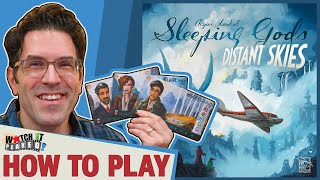
- The game is presented as a standalone title that does not require the previous Sleeping Gods game to play.
- It supports long campaign play with the option to save and resume later.
- The tutorial/setup demonstrates a rich, multi-layered system (atlas, journey log, story book, campaign structure).
- It provides flexible play (solo or multiplayer) with adjustable difficulty and session flow.
- Quest to return to Earth by exploring, surviving, and finding long-lost totems to gain the power needed to return home.
- The players are teleported to a strange new world with strange creatures, scheming gods, and a mystery to solve.
- Campaign-driven storytelling with an ongoing story across several sessions, including a story book and quest/totem mechanics.
- Sleeping Gods
Mechanics (from transcript analysis)
- camp and travel actions — Camping restores stamina and health and can remove a status; traveling moves the group on the atlas and may incur obstacle penalties.
- character abilities and equipment — Ability cards are equipped to characters by paying a cost in the form of discarding other abilities; up to eight can be equipped per character and they grant skill symbols and effects.
- Combat System — Combat rounds consist of players playing combat cards to characters, resolving effects, managing damage across spaces, and handling counterattacks and synergy tokens.
- Events — Event cards cause immediate effects and may require skill tests; challenges involve testing a skill against a value, spending stamina, and resolving outcomes with possible gains or penalties.
- events and challenges — Event cards cause immediate effects and may require skill tests; challenges involve testing a skill against a value, spending stamina, and resolving outcomes with possible gains or penalties.
- explore action and story book — Exploring turns to a numbered paragraph in the story book; the pages may link to wandering encounters and quests, with choices affecting the narrative.
- flight and plane management — The flight board moves the plane between atlas pages or distant locations, consuming time and fuel, and may trigger damage events or allow Eugene to pilot the plane via special cards.
- journey log — A journey log sheet tracks the campaign's starting date and player details, acting as a campaign timer and record for progress.
- Narrative Choice — Exploring turns to a numbered paragraph in the story book; the pages may link to wandering encounters and quests, with choices affecting the narrative.
- Player Board | Main Board — The flight board moves the plane between atlas pages or distant locations, consuming time and fuel, and may trigger damage events or allow Eugene to pilot the plane via special cards.
- Resource Management — Stamina tokens, health markers, and resource tokens (common and quest resources) are gained and spent to perform actions or gain benefits.
- resources and tokens — Stamina tokens, health markers, and resource tokens (common and quest resources) are gained and spent to perform actions or gain benefits.
- totems and quests — Quest resources restore totems and contribute to campaign objectives; quest resources are ranked and can be substituted for higher values when restoring totems.
Video topics + discussion points
Quotes (from this video)
- Sleeping Gods distant Skies is a campaign game however you can play for as long as you like in one sitting and then save the game to resume later
- this is a completely Standalone game and doesn't require the previous game in order to play
- you and your band of adventurers have been teleported to a strange new world
- the introductory scenario which we're going to skip here but you must play through this in your first game as it gives you the start of the campaign's story
References (from this video)

- Open and intuitive tutorial that lets players start playing before fully digesting the rulebook
- Engaging campaign pacing with an estimated 12–15 hour playthrough range
- Vivid world-building that evokes a Final Fantasy/Tomb Raider-like sense of exploration and wonder
- Respectful onboarding that reduces initial intimidation while preserving depth
- Rules can be dense; full mastery requires reading the rulebook post-hoc
- Some players may find the open-world approach with its depth daunting if they prefer tighter, modular play
- Adventure, exploration, survival, and a narrative-driven quest to escape a magical world.
- Open-world voyage across a mythic archipelago with air travel and skyways.
- Story-driven campaign with episodic encounters and evolving crew tasks.
- Final Fantasy
- Tomb Raider
Mechanics (from transcript analysis)
- Area Movement — Players move across a world map, zoom into locations like villages and ruins, and resolve events and encounters.
- Campaign progression — Structured progression as the crew advances the storyline toward an exit from the world.
- cooperative crew management — A fledgling crew of four (five in theory) collaborates to progress the campaign and manage resources.
- Narrative-driven encounters — Encounter-based storytelling that unfolds through a narrative framework and event cards.
- Open-world exploration — Players move across a world map, zoom into locations like villages and ruins, and resolve events and encounters.
- Thematic exploration — Exploration designed to evoke a specific nostalgic aura (Final Fantasy/Tomb Raider-inspired mood).
- Turn-based combat — Engaging enemies where players attack, disable, and then counterattack, requiring tactical management to survive.
Video topics + discussion points
Quotes (from this video)
- "Distant Skies. It's giving a very old Final Fantasy Tomb Raider feel."
- "you have this overworld, right? You go around on an airplane."
- "In the battle, what is it? It's turnbased."
- "I appreciated the open and play tutorial. It worked for me."
- "12 to 15 hours"
- "as someone who has not played the original Sleeping Gods I have played Primeval Peril really had no interest in going into Sleeping Gods Distant Skies"
References (from this video)
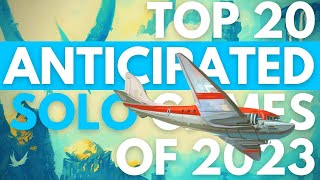
Mechanics (from transcript analysis)
Video topics + discussion points
Quotes (from this video)
- Cooperative campaign-based fantasy RPG board game
- I'm excited to see if he can capture maybe a little bit of that pandemic Magic
- this appears to be an engine building game
- oh the art the art in this looks incredible
- I'm a huge fan of sleeping gods and so a standalone sequel set in the same world
References (from this video)
- Exploration-driven adventure
- Still awaiting playtime opportunities
Mechanics (from transcript analysis)
Video topics + discussion points
Quotes (from this video)
- I still absolutely love this design
- the AI system is so smart
- it's on the totally table Todo list
- Frost Punk is incredible
- I absolutely plan to get to the table this year
- the slide puzzle mechanism I love
- Weather Machine remains one of my favorites
- Sleeping Gods no reason to believe that I won't love this one as well
References (from this video)
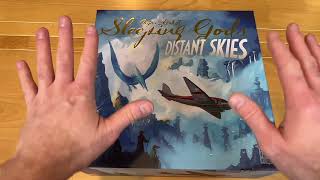
- expansive, immersive Sleeping Gods world with new exploration dynamics
- high component quality and tactile variety of tokens, maps, and figures
- strong replayability through multiple endings and expansive quest content
- retains the heavy rules and learning curve of the base game
- campaign length can be long, potentially intimidating for new players
- cooperative exploration and narrative-driven questing in a high-concept fantasy-sci-fi crossover world
- In the Sleeping Gods universe, players fly a plane across a vast, dreamlike world of islands and stormy skies, seeking a way to return home after entering this enigmatic realm.
- open-ended, branching adventures with multiple endings and journal-driven progression
- Sleeping Gods (base game)
Mechanics (from transcript analysis)
- adventure and quest cards — Quest cards drive the campaign and reveal locations, rewards, and potential perils; a large loot and totem system expands replayability.
- combat with a dedicated deck — Each character engages in combat using a specific combat deck that progresses with upgrades and interactions with enemy cards.
- Combat: Deck/Hand — Each character engages in combat using a specific combat deck that progresses with upgrades and interactions with enemy cards.
- cooperative deck system — Characters use a shared and individual action/deck system to resolve skill checks, combat, and exploration challenges.
- plane-based exploration — A customizable aircraft that can reach different locations on the map; fuel management and trajectory choices influence exploration options.
- storybook and journal progression — A journal and book-like adventure structure guide players through locations and decisions, enabling a saved progression across sessions.
Video topics + discussion points
Quotes (from this video)
- this is a super fun adventure game
- there are six different endings
- this one is going to be a lot shorter, about two hours
- we're going to be back with distant skies and primeval peril