



Songbirds Deep Dive
What the Community Thinks About Songbirds
Reviewers consistently describe Songbirds as a game that looks deceptively simple but carries surprising strategic depth. The community appreciates how approachable the game is while still delivering meaningful decisions and tension. Board Game Sanctuary highlights the incredible tension that emanates from every decision in the game, while Brains On Games praises it as hitting a sweet spot for both accessibility and strategy. Multiple reviewers compare Songbirds favorably to heavier games, noting that it delivers the same level of thoughtful gameplay but at a much faster pace. The game appeals across player types: it works as a charming introduction for non-gamers and newcomers, while also satisfying players seeking tactical depth and interaction.
Core Mechanics That Define Songbirds
Card Placement and Shared Grid Building
Songbirds centers on a 5x5 grid where players collectively build a shared playing space by placing cards from their hands. Each turn, a player simply plays one card adjacent to previously placed cards, but this seemingly straightforward action has cascading consequences. Berry tokens with point values are randomly placed around the grid's borders at the start of play. As rows and columns fill up, the bird with the highest total value in that row or column claims the berry token. Since every player is building into the same grid, each card placement directly interrupts or affects the next player's decision, creating a collective puzzle where individual choices ripple through the shared space. Reviewers describe this shared tableau as the core source of the game's tension and interaction. The mechanic ensures that all players remain constantly engaged because no player is working in isolation; the board state evolves with every move, forcing players to adapt their strategies on the fly.
The Favorite Bird Mechanic and Final Scoring
Songbirds employs a clever mechanic where players each hold one card as their final, unrevealed choice: their favorite bird. As the grid fills and rows and columns complete, berry tokens accumulate under different bird colors. When all 25 card positions are filled, each player reveals their final card, which determines which bird species they have been guiding toward victory. A player's score is the sum of all berry tokens collected by their chosen bird color, plus a bonus equal to the number printed on their favorite bird card. This mechanic creates extraordinary tension because players must decide early which bird to favor, but may shift their strategy as the game unfolds. A high card guarantees points if kept until the end, but sacrificing a powerful card early can strategically manipulate which birds collect berries in crucial rows and columns. Lower cards should never be underestimated either, as they can balance point totals and create ties that swing the game in unexpected directions. Reviewers emphasize that every card in a player's opening hand matters because each card remains a potential scoring tool or sacrifice throughout play.
The Songbirds Experience
Escalating Tension Throughout Play
What makes Songbirds memorable is the mounting tension as the grid fills. Players describe the experience as more intense than the game's cute art and quick playtime suggest. The randomly placed berry tokens mean that sometimes the most valuable scoring positions lie in corners, requiring forward planning because cards placed early may need to be saved for later turns. As the game progresses and the grid empties of available spaces, player choice narrows and the weight of each decision increases. Reviewers note that the tension builds because every card is used twice: each placement scores both horizontally and vertically, amplifying the impact of seemingly small choices. The fact that all players are manipulating the same shared matrix, rather than building individual tableaus, amps up competitiveness and creates a sense of jockeying for position, like trying to claim the best parking spot in a busy lot.
Elegant Simplicity Masking Depth
Reviewers consistently marvel at how cleanly Songbirds teaches and plays despite its strategic layers. The rules explanation takes only minutes, yet the game does not sacrifice meaningful decisions or require players to overthink. Instead, the simplicity of the core actions (play a card, check for completed rows and columns, score berries) serves as a container for genuinely interesting tactical puzzles. Players must balance immediate board positioning, long-term scoring prospects, and hidden information about their opponents' likely favorite birds. The game does not overwhelm with fiddly rules or excessive bookkeeping; it trusts the elegance of the card placement puzzle to generate replayability and engagement.
What Makes Songbirds Stand Out
Beautiful Presentation and Broad Appeal
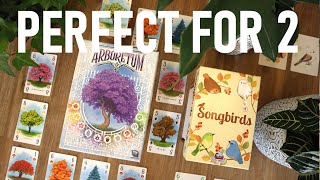
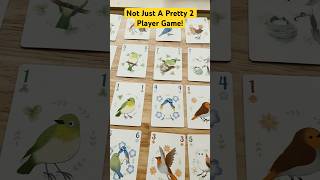
The game's bird artwork and cute aesthetic set it apart, especially in a hobby often dominated by fantasy and sci-fi themes. Reviewers note that the charming bird illustrations and colorful cards make the game visually appealing to non-gamers and families, similar to how Wingspan has drawn interest from players outside the hobby. The cards feature birds in different poses and with high-quality artwork; the same number cards across different suits include fairy tale-like quality where birds are nesting, flying, or interacting with other suits, creating a cohesive visual narrative. The berry tokens are nice and thick, tactile components that enhance the physical experience of play. One reviewer specifically praised the game as "just so cute," and the overall presentation makes it feel inviting and approachable despite its strategic bones.
Perfect Filler with Strategic Backbone
Reviewers emphasize Songbirds as an ideal filler game that plays in about 20 minutes yet delivers the same depth of decision-making found in much heavier titles. It serves as a bridge game for mixed audiences: easy enough for children age 8 and up and for non-gamers, but thinky enough for strategy players seeking a quick tactical challenge. Multiple reviewers compare it favorably to other quick, strategic games like Land vs. Sea, praising how it maintains accessibility without sacrificing strategic elements. The game works well for adults between longer, heavier strategy games, but it also functions as a complete experience for players seeking exactly this level of play. The fast playtime, easy setup, and quick teach mean the game reaches the table more often than heavier alternatives, and the strategic interactions ensure those plays feel rewarding rather than disposable.
Potential Drawbacks
Spatial and Table Space Requirements
The 5x5 grid plus border tokens requires a substantial amount of table space to play comfortably. Players need room not only for the grid itself but also for the berry tokens displayed along rows and columns, and space for players to hold their hands. Reviewers note that if your play surface is cramped, you will need to take care arranging the grid clearly and ensuring cards stay aligned. For players who prefer verbal or deductive games over visual-spatial puzzle solving, the grid-placement mechanic may not click as strongly.
Spatial Skills as a Barrier for Some Players
Reviewers who are stronger with verbal reasoning noted that players with different cognitive strengths may find themselves at a disadvantage. The game's visual-spatial component and working memory demands (tracking which cards have been played, which remain, and how cards align in the grid) create a skill curve. One reviewer found themselves consistently losing to an opponent with stronger spatial intuition. This is not necessarily a drawback for everyone; rather, it reflects that the game rewards a specific type of thinking and may involve some learning-curve frustration for players less practiced at grid-based spatial reasoning.
If You Enjoy Songbirds
Players drawn to Songbirds often appreciate other games that blend simple rules with meaningful interaction. Wingspan, another bird-themed game, shares Songbirds' approachable theme and beautiful artwork, though Wingspan operates at a much larger scale and complexity. Land vs. Sea similarly combines easy-to-teach mechanics with engaging strategic decisions and quick playtime. Arboretum offers a different take on tactical card placement where players compete more directly through hand management and bluffing; it shares Songbirds' tense decision-making and reward for careful play, though it is less forgiving for newcomers. If you enjoy the collective puzzle aspect where all players build a shared space, you might explore other grid-building games that emphasize shared construction and interaction.
What Reviewers Are Saying
"There is an incredible tension that emanates throughout this game in every decision you make."
— Board Game Sanctuary
"This is one of those games that hits this sweet spot for me, I have to tell you, because it's very easy to explain — I explained the rules in just a few minutes, super easy to explain, easy to understand — but there's still some strategic decisions. What a great filler — I think this is a perfect game to play in between longer, heavier strategy games for adults, but such a great strategy game for kids, you could play this with all ages, which is fantastic."
— Brains On Games
"In Songbirds, everyone is playing and building the same matrix and tableau, and this change really amps up the tension level, the competitiveness, and the level of interactions that players have. It almost feels like driving into a busy car park and trying to nab the best car spot first in the shopping center."
— Board Game Sanctuary